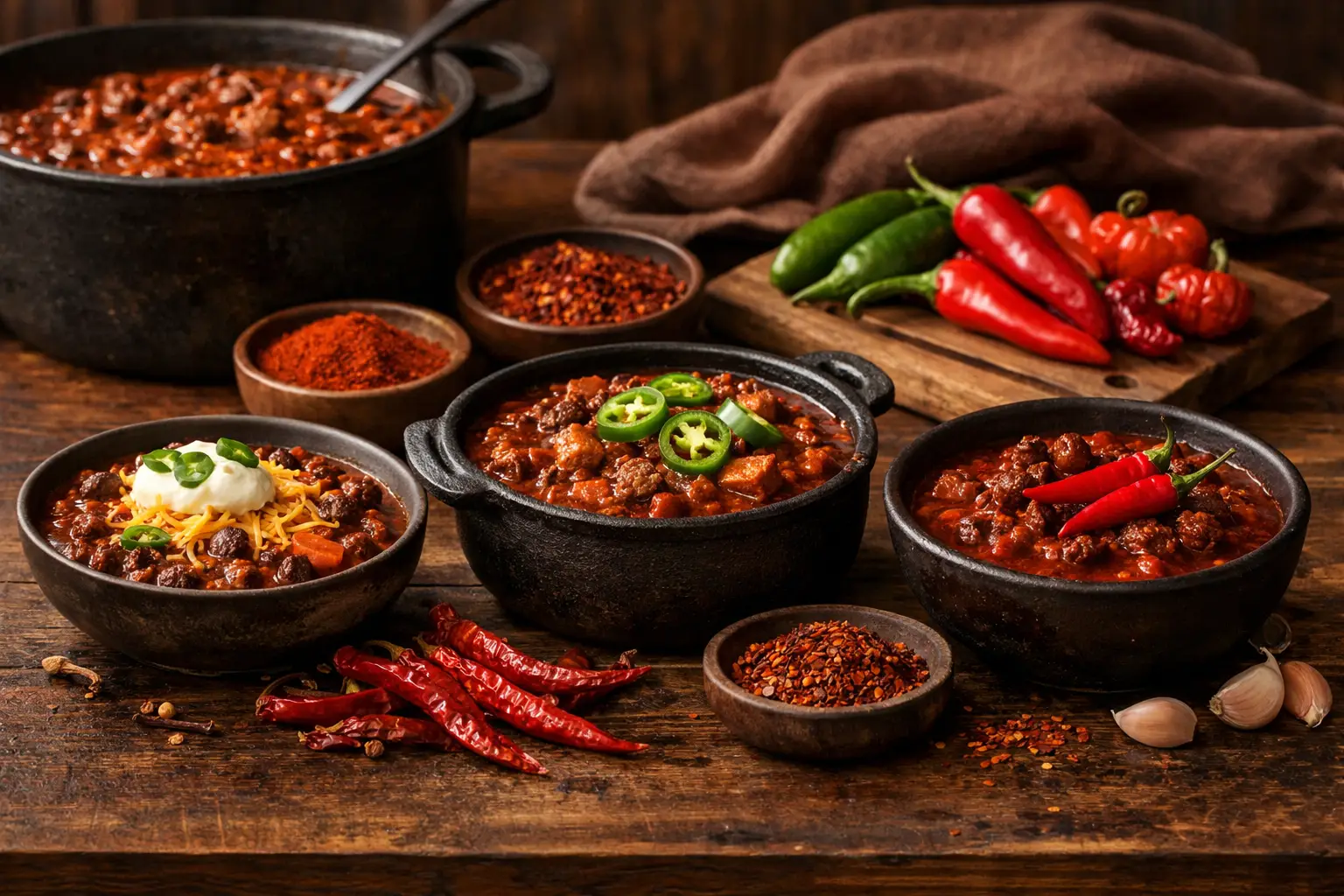
You can ruin a perfectly good pot of chili in one minute flat - not by under-salting it, but by pushing the heat past the point where anyone can actually taste the rest of the bowl. That is exactly why a guide to chili spice levels matters. Heat should shape the experience, not bulldoze it.
For some cooks, "spicy" means a gentle warmth that hangs around after each bite. For others, it means a forehead-sweating, nose-running event. Chili lives across that whole spectrum, which is part of what makes it such a great category to cook and compare. Every bowl tells a story, and spice level is one of the biggest plot points.
What chili spice levels actually mean
Most home cooks talk about heat as if it were one thing, but it is really a mix of intensity, timing, and flavor. A chili can hit hard right away and fade fast, or it can build slowly over a few bites. Another pot might not feel especially hot at first, then linger for ten solid minutes.
That difference usually comes down to the peppers you use, how you prepare them, and what else is in the pot. Fresh jalapenos bring a green, bright kick. Chipotles add smoky heat with depth. Cayenne sharpens things quickly. Dried ancho or guajillo often contribute more flavor than fire, especially compared with hotter players.
The real trick is remembering that spice level is not separate from flavor. In chili, heat is not just a dare. It is part of the profile, along with richness, acidity, sweetness, smoke, and savoriness. A medium-hot Texas-style red feels very different from a medium-hot white chicken chili with green chiles and cream.
A practical guide to chili spice levels
For everyday cooking, it helps to think in five broad tiers: mild, medium-mild, medium, hot, and very hot. You do not need lab precision here. You need a reliable way to match the bowl to the people eating it.
Mild
Mild chili has warmth more than burn. You notice the chili flavor, but it does not demand attention. This is the comfort-zone setting for mixed groups, weeknight family dinners, office potlucks, and anyone who likes chili but not a challenge.
Mild does not have to mean bland. In fact, the best mild chilis often lean harder on cumin, garlic, onion, oregano, tomato depth, or roasted pepper flavor. Poblanos, Anaheim peppers, mild green chiles, ancho powder, and sweet paprika can all build character without making the pot feel aggressive.
Medium-mild
This is where a lot of crowd-pleasing chili lives. You get a noticeable tingle, maybe a little warmth on the lips, but the heat stays in balance. If someone says, "I like a little kick," this is usually what they mean.
A medium-mild chili works well with jalapenos, mild chipotle use, or a restrained hand with chili powder blends. It also suits bean-heavy chilis, turkey chili, and recipes meant for topping with cheese, sour cream, or crackers.
Medium
Medium is the sweet spot for a lot of chili fans. The heat is obvious, but it still leaves room for the beef, beans, tomatoes, or roasted peppers to do their job. It is lively without turning dinner into a stamina test.
This level often comes from multiple heat sources layered together rather than one extreme ingredient. Think jalapenos plus chipotle, or serranos balanced with tomato and stock. Medium heat is also where regional style starts to matter more. A medium Texas Red can feel bolder and drier than a medium Midwestern chili loaded with beans and tomato.
Hot
Hot chili makes itself known. You are not guessing whether it is spicy. The burn builds, the bowl has real edge, and toppings start to matter more. This is where serranos, extra chipotle, cayenne, hot chili powders, and stronger dried chile blends begin to push the pot into enthusiast territory.
Hot can be fantastic, but it has less margin for error. Go too far without enough salt, fat, acidity, or body, and the heat starts to flatten everything else. A hot chili still needs structure. Otherwise it tastes like punishment with ground beef.
Very hot
Very hot chili is for people actively seeking heat. Habaneros, ghost peppers, scorpions, and other high-heat chiles belong here, though even these can be used intelligently. A very hot bowl should still taste like chili, not just capsaicin delivery.
This is also the most misunderstood tier. Some cooks assume higher heat equals more flavor or more credibility. It does not. If the point of the recipe is flavor first, very hot is rarely the automatic best choice.
Why one chili feels hotter than another
Even when two recipes use similar peppers, they may not land the same way. Fat softens heat perception, so a chili with beef chuck, cheese, or sour cream often reads milder than a lean, brothy version. Sugar and sweet vegetables can round off the edges. Acid, on the other hand, can make heat feel brighter and more immediate.
Texture matters too. A thick, slow-cooked chili with beans and meat can distribute heat more evenly, while a thinner chili may make each bite feel sharper. Time changes things as well. Overnight chili often tastes more integrated, but sometimes hotter too, because the spice has settled into the whole pot.
Then there is quantity. One minced serrano in a large Dutch oven is not the same as one serrano in a small batch. This sounds obvious, yet it is one of the easiest ways home cooks accidentally overshoot.
Choosing the right heat for the occasion
The best spice level depends on who is eating and what kind of chili you are making. A game-day crowd chili should usually sit around mild to medium, especially if guests are adding their own toppings. You can always put hot sauce, sliced fresh peppers, or chili crisp on the table. You cannot take heat back out once it is cooked in.
If you are making a regional-style pot where pepper character is central, you may want to push a little further. Green chili with Hatch-style peppers can handle more visible heat because that pepper flavor is part of the identity. A smoky beef chili with chipotle can also carry more intensity without feeling out of balance.
For beginners, medium-mild is a smart target. It gives you room to taste the pot as it cooks and decide whether it needs another layer. For serious heat-seekers, build upward in stages instead of dropping the hottest pepper you own into the base and hoping for the best.
How to control heat without dulling the chili
The cleanest way to manage spice is to layer it. Start with peppers or chili powder that give you flavor first, then add hotter ingredients gradually. This approach creates a bowl with dimension instead of blunt force.
Using a mix of fresh and dried peppers often works better than relying on one source. Dried chiles can bring fruit, smoke, and earthiness, while fresh peppers add brightness and sharper heat. Powdered cayenne is useful, but it is easy to overdo because it contributes heat faster than character.
If your chili gets too hot, dairy can help at the table, but inside the pot you have better options than dumping in random sugar. Increase volume with more tomato, broth, beans, or meat if the recipe can support it. Add fat if it fits the style. A little acid can rebalance the bowl, though too much vinegar or lime can make the heat feel louder rather than softer.
One practical move that experienced chili cooks use all the time is separation. Keep the base at a comfortable medium, then offer heat boosters on the side. That keeps the pot flexible and lets everyone tune their own bowl.
Common mistakes in a guide to chili spice levels
The biggest mistake is confusing chili powder with chile powder. Many grocery-store chili powders are blends with cumin, garlic, and oregano, and their heat can vary a lot. Pure ground chile powders behave differently, especially if you are working with ancho, guajillo, or cayenne.
Another mistake is judging the heat too early. Chili changes as it simmers. Raw pepper bite can mellow, but dried chile and powdered heat can spread more fully through the pot over time. Taste, wait, and taste again.
Seed obsession is another classic myth. Seeds are not the main source of heat. The membranes inside the pepper carry most of the capsaicin. Removing seeds helps a little mostly because some membrane comes with them, but it is not a magic reset button.
And finally, do not build your entire idea of spice around Scoville numbers. They are useful as a rough guide for peppers, but they do not tell you how a finished bowl eats. Chili is a system, not a spreadsheet.
Build your own spice-level baseline
If you cook chili often, the smartest move is to create your own baseline recipe and note exactly how much heat source you used. Write down whether that pot felt mild, medium, or hot to you and to the people who ate it. After two or three batches, your own scale becomes far more useful than generic labels.
That is where a chili-focused platform like ChiliStation earns its keep. When recipes are organized by style, heat level, and ingredients, it gets much easier to compare bowls that look similar on paper but eat very differently in real life.
The best chili spice level is the one that keeps people going back for another spoonful, because great heat should invite the next bite, not scare it off.