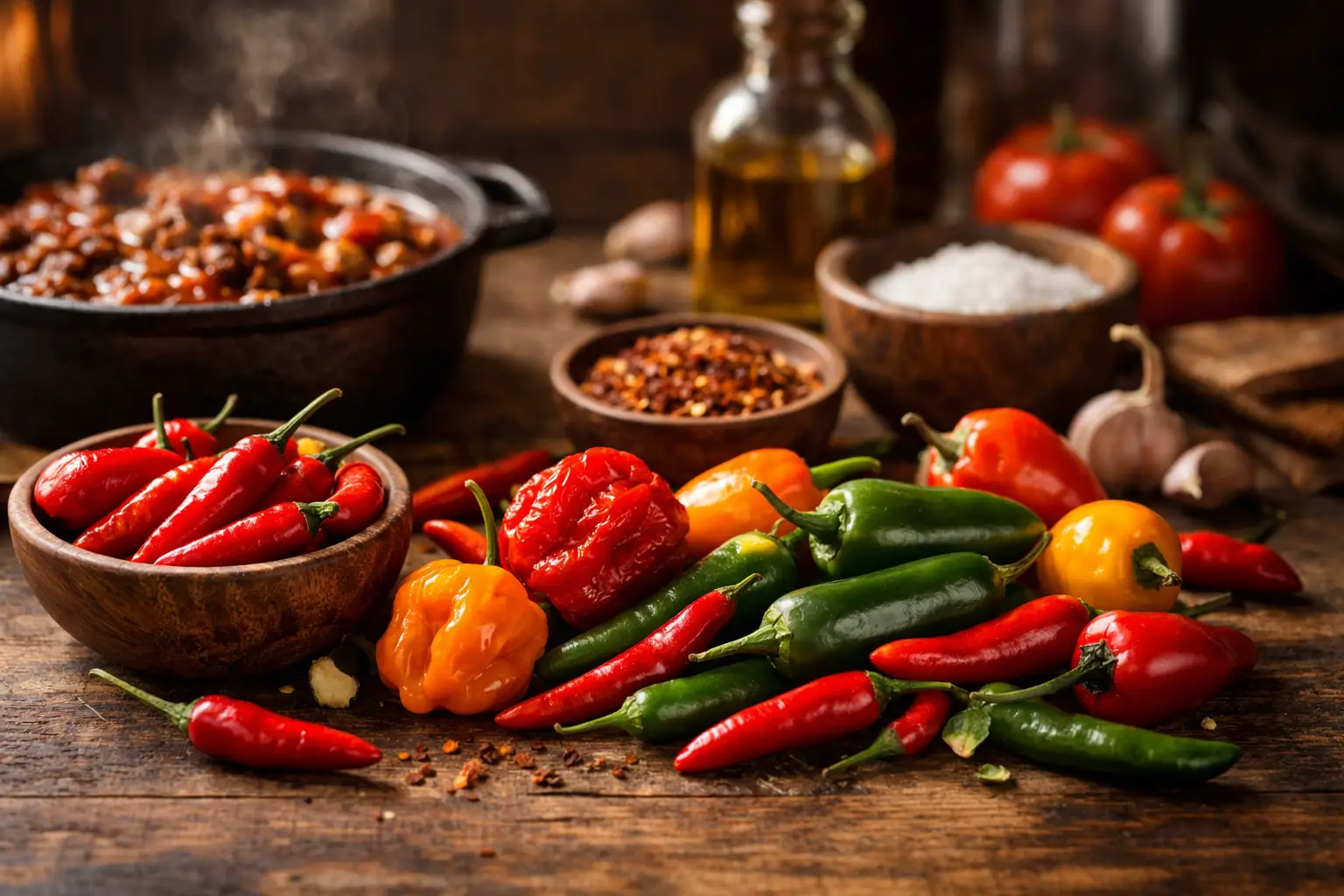
A pot of chili can go flat for one simple reason: the pepper choice was doing the wrong job. Too much sharp heat and not enough depth. Great color, but no real flavor. Smoky notes where you wanted brightness. If you came here for a real guide to choosing chili peppers, that is the heart of it - every pepper brings its own kind of heat, texture, and personality.
That matters whether you are building a Texas-style red, a Colorado green chili, a quick weeknight turkey pot, or a smoky bean-heavy batch for game day. The best pepper is not the hottest one on the shelf. It is the one that fits the bowl you want to serve.
A guide to choosing chili peppers starts with the job
Think about peppers the way you think about stock, meat, or spices. They are not just heat delivery systems. Some peppers are earthy and deep. Some are grassy and bright. Some are fruity enough to make a red chili taste almost jammy in the best way. Others add smoke, bitterness, or a clean punch that cuts through rich beef.
So before you grab whatever looks familiar, ask a more useful question: what do you want this pepper to do? If you want a rich red chili with dark, layered flavor, dried peppers usually carry more weight than fresh ones. If you want a lively green chili with bite and freshness, fresh peppers are often the better lane. If you want to fine-tune heat without shifting flavor too much, a smaller amount of a hotter pepper can be smarter than dumping in extra mild peppers and muddying the profile.
This is where home cooks often overcorrect. They chase a Scoville number, then wonder why the pot feels one-note. Heat matters, but flavor is the real headline.
Fresh vs. dried chili peppers
Fresh peppers bring brightness, vegetal notes, and a cleaner kind of heat. They are excellent in green chili, salsas, lighter stews, and recipes where you want the pepper to taste alive. Jalapenos, serranos, poblanos, Anaheim peppers, and Hatch chiles all play well here, though each swings in a different direction.
Dried peppers are deeper, rounder, and often more complex. As peppers dry, their flavors concentrate. You get more leather, earth, raisin, cocoa, smoke, and savory warmth depending on the variety. For many red chili styles, dried chiles are the backbone because they create color, body, and a flavor base that fresh peppers rarely match on their own.
Neither form is automatically better. It depends on the chili style. A bright pork green chili wants a different pepper strategy than a brick-red beef pot that simmers low and slow.
The peppers most home cooks should know
If you are building a working mental map, start with a handful of peppers instead of trying to memorize the entire produce aisle.
Jalapeno is the familiar all-rounder. It gives moderate heat, fresh green flavor, and enough presence to register without hijacking the dish. It works in everyday chili, especially if you want a balanced, crowd-friendly pot.
Serrano is jalapeno’s sharper, hotter cousin. It has a cleaner, more pointed heat and less of that rounded green flavor. Use it when you want brightness with a little more attitude.
Poblano is mild and flavorful, with an earthy, slightly sweet profile. It is a strong pick for green chili, chicken chili, and any bowl where flavor matters more than raw heat. If you want a pepper that adds body without turning the whole pot fiery, poblano earns its keep.
Anaheim and Hatch-style green chiles sit in a similar family, though Hatch peppers vary by heat level and have their own cult following for good reason. They bring a mellow, savory green chile flavor that feels built for stew. If your chili leans Southwestern, these are usually a smart place to start.
For dried peppers, ancho is one of the most useful. It is the dried form of poblano, and it brings mild heat with deep, fruity, earthy flavor. Think raisin, mild cocoa, and a warm red richness. Guajillo adds brighter red-fruit notes, a little tang, and moderate heat. It is fantastic when you want a red chili that tastes vivid instead of heavy. Pasilla leans darker and more mysterious, with notes that can read earthy, herbaceous, and slightly bitter in a good way.
Then there is chipotle, the smoked dried jalapeno. Chipotle is bold and unmistakable. It adds smoke, moderate heat, and depth fast. Used carefully, it makes a chili feel campfire-rich. Used carelessly, it can take over the whole bowl. This is one of those trade-off peppers.
Heat level is real, but it is not perfectly predictable
Here is the messy truth in any guide to choosing chili peppers: heat is inconsistent. A jalapeno can be almost sleepy or surprisingly aggressive. Hatch peppers can range from gentle to serious depending on the variety and growing conditions. Even dried chiles vary by source and age.
That is why smart chili cooks build heat in layers instead of going all in at once. Start with peppers that deliver the flavor profile you want. Then adjust upward with hotter additions if needed. This gives you more control than starting with a scorch-first pepper and trying to calm it down later.
If you are cooking for a mixed crowd, aim for medium heat in the pot and let people add more fire at the table. A chili that tastes great at medium heat will usually please more people than a bowl built around sheer intensity.
How to match peppers to chili styles
Beef chili, especially red styles, usually benefits from dried peppers with depth. Ancho and guajillo are classic for a reason. They build color and complexity without turning the pot bitter or harsh. Add a little chipotle if you want smoke, but do not let it bully the whole batch.
Green chili wants fresh green peppers front and center. Poblanos, Anaheims, and Hatch chiles give you that savory, roasted green chile flavor people chase. Serrano can sharpen the edge if the base tastes too mellow.
Turkey or chicken chili often does well with peppers that stay lively rather than overly dark. Poblanos, jalapenos, and green chiles keep the bowl bright enough for lighter proteins. Too many heavy dried chiles can make the flavor feel mismatched.
Vegetarian chili can go in either direction, but peppers matter even more because they help create depth in the absence of meat drippings. Dried ancho and guajillo build a fuller base, while fresh poblanos or jalapenos keep the bowl from feeling too dense.
If you are making a fusion-style chili - maybe with sweet potatoes, black beans, or unexpected spice blends - this is where restraint pays off. Choose one or two dominant peppers and let the other ingredients have room.
Flavor cues that help you shop faster
When you are standing in front of a pile of fresh peppers or a wall of dried chiles, broad flavor categories are more helpful than memorizing trivia.
If you want bright and grassy, reach for jalapeno, serrano, Anaheim, or Hatch-style green chiles. If you want earthy and mellow, poblano is a strong move. If you want dark red richness, ancho and pasilla are your friends. If you want red-fruit lift and a cleaner dried chile flavor, guajillo stands out. If you want smoke, chipotle is the obvious card to play.
One practical note: dried peppers should smell vivid. If they smell dusty or barely smell like anything, they are probably old and will taste flat. Fresh peppers should feel firm and look lively, not soft or wrinkled.
Blending peppers usually beats using just one
Single-pepper chili can work, but blends tend to taste more complete. Think of it like building a spice mix. One pepper might give you sweetness, another brightness, another heat. That layering creates the kind of bowl people remember.
A very usable red chili blend is ancho for body, guajillo for lift, and a touch of chipotle for smoke. A green chili blend might start with poblano and Hatch, then add serrano if the pot needs more spark. You do not need five different peppers to get there. Two or three well-chosen chiles often do more than a chaotic handful.
Common mistakes when choosing chili peppers
The biggest mistake is buying for heat and hoping flavor shows up later. Another is treating all dried red chiles as interchangeable. They are not. Ancho and guajillo do very different work in a pot.
A third mistake is skipping roasting or toasting when the pepper calls for it. Fresh green chiles often become sweeter and more rounded when roasted. Dried peppers usually wake up when lightly toasted before soaking and blending, though burning them will introduce bitterness fast.
And then there is over-smoking. A little chipotle is thrilling. A lot of chipotle can make every spoonful taste like the same loud note.
What beginners should buy first
If you are just getting serious about chili, build from a few reliable peppers instead of chasing rare varieties. For fresh, start with jalapeno, poblano, and Anaheim or Hatch if available. For dried, start with ancho and guajillo. That small lineup covers an impressive amount of ground and gives you real flexibility across red, green, meat-based, and vegetarian chili styles.
That is also where smart curation helps. A focused platform like ChiliStation makes it easier to see how different peppers show up across styles, which is often more useful than reading heat charts in a vacuum. Every bowl tells a story, but the peppers usually write the opening paragraph.
The next time a recipe calls for “chili peppers” without much guidance, do not treat that as a minor detail. Treat it like a design choice. Pick for flavor first, heat second, and the whole pot gets more interesting from there.