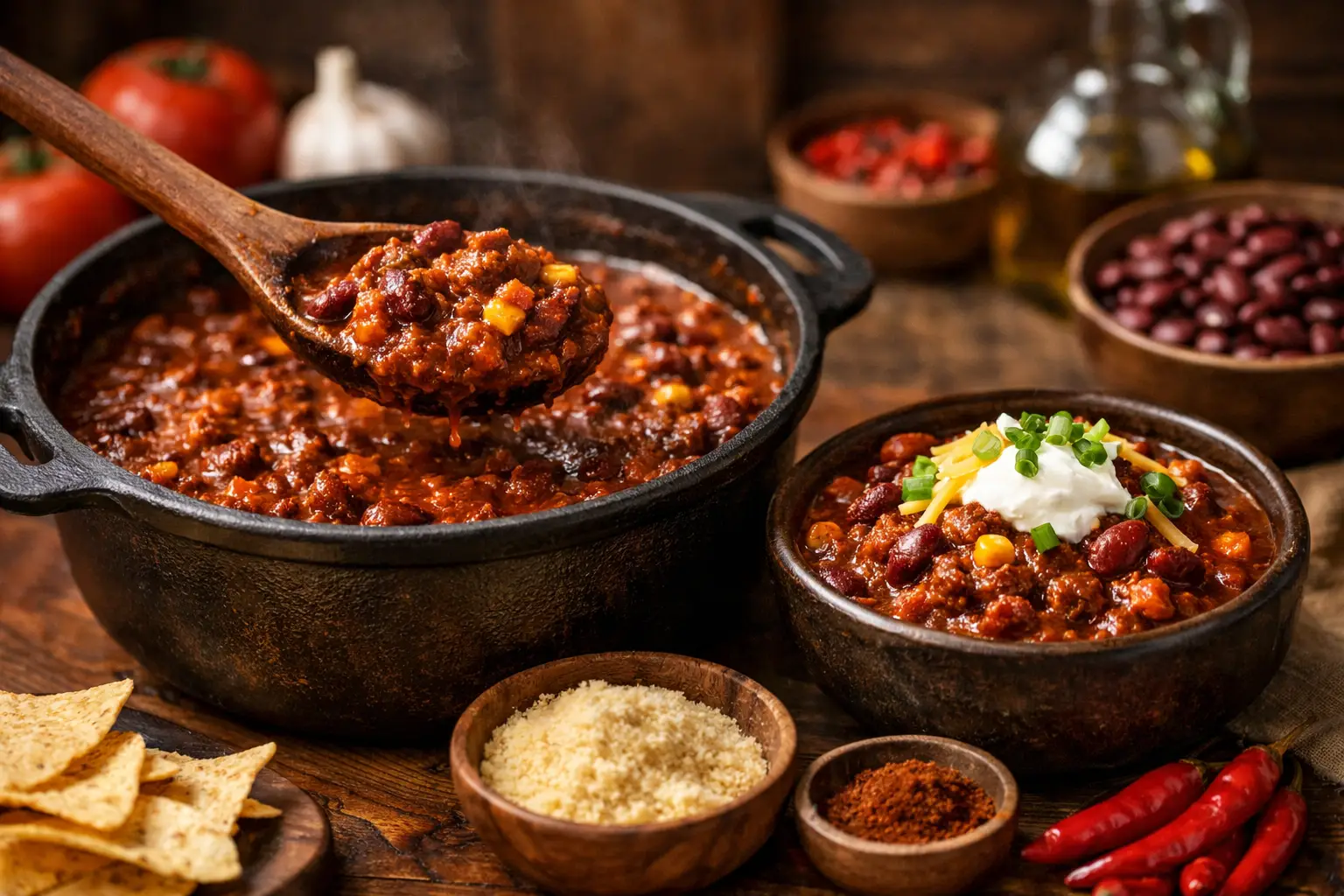
A pot of chili can smell absolutely right and still hit the bowl too thin. You scoop it up expecting a rich, hearty spoonful, and instead it runs like soup. If you’re wondering how to thicken homemade chili without flattening the flavor, the good news is that you usually do not need to start over. Chili gives you options.
The best thickening move depends on what kind of chili you’re making. A Texas-style beef chili wants a different fix than a bean-heavy weeknight pot, and a green chili has its own texture lane entirely. Some methods deepen flavor as they thicken. Others work fast but need a lighter touch. The trick is choosing the one that fits your bowl, not just the first pantry shortcut you see.
Quick answer
Start by simmering uncovered to concentrate flavor, then add one chili-friendly thickener: mashed beans for bean pots, masa or tomato paste for red chili, or a small cornstarch slurry when you are short on time.
How to thicken homemade chili without wrecking the texture
The first question is simple: is your chili too watery because there is too much liquid, or because the body is missing? Those are not the same problem.
If the flavor is already where you want it, and the chili just looks loose, simmering is usually your best move. Leave the pot uncovered over low to medium-low heat and let excess moisture cook off. Stir often enough to prevent sticking, especially if your chili has tomatoes, beans, or a decent amount of sugar from peppers and onions. This method concentrates everything already in the pot, which is why it feels so natural in chili.
If the chili tastes a little diluted along with being thin, simmering still helps, but you may also need an ingredient that adds body. That is where mashed beans, masa harina, tomato paste, or a starch slurry can earn their spot.
Start with the fix that tastes like chili
For most red chili recipes, the best thickener is one that already belongs there.
Simmer it down
This is the cleanest fix and often the right one. Fifteen to thirty minutes uncovered can turn a loose pot into something spoon-coating and deeply savory. The trade-off is time, and you need to watch the heat. A hard boil can make ground meat grainy and beans split more than you want.
Mash some of the beans
If your chili includes beans, scoop out a cup or two, mash them with a fork, then stir them back in. You get a thicker texture without adding a new flavor. This works especially well in pinto, kidney, or black bean chili, where a little natural starch goes a long way.
The downside is style. If you are making a bean-free Texas Red, this is obviously not the move. It also makes the chili feel a little softer and less brothy, which some people love and others do not.
Add tomato paste
Tomato paste thickens and boosts depth at the same time. A tablespoon or two can tighten up a pot while pushing the flavor toward richer, darker territory. This is great for beef chili, turkey chili, and weeknight tomato-based versions that need more backbone.
Use restraint here. Too much tomato paste can pull the chili away from pepper-forward flavor and into pasta-sauce territory, which is not the vibe.
Stir in masa harina
Masa harina is one of the smartest chili thickeners because it adds body and a subtle corn flavor that feels right at home. Whisk a tablespoon or two with warm water or broth first, then stir it in and simmer for several minutes.
This move is especially strong in Southwestern-style bowls and beef chili with dried chile flavor. It gives the pot a fuller, more grounded texture. The only caution is that masa has a distinct taste. If your chili is delicate or green and bright, it may shift the profile more than you want.
The fastest ways to thicken chili
Sometimes dinner is in ten minutes and the pot is still loose. That is when quick thickeners come into play.
Cornstarch slurry
Mix cornstarch with cold water until smooth, then stir it into simmering chili. Start small. One tablespoon of cornstarch with one tablespoon of water can make a noticeable difference.
This method works fast and does not require a long cook. But it can create a slightly glossy texture that feels more stew-like than classic chili. It is a practical save, not always the most soulful one.
Flour slurry or beurre manié
Flour can also thicken chili, either mixed with water or worked into soft butter before stirring in. It gives a more opaque, traditional body than cornstarch. It is useful when you want thickness with a softer finish.
The catch is raw flour taste. You need to simmer the chili for a bit after adding it so the starch cooks out. If you rush it, the pot can taste pasty.
Crushed tortilla chips or cornmeal
A handful of finely crushed tortilla chips can tighten chili quickly while adding a toasted corn note. Cornmeal does something similar, though it needs a little time to hydrate and soften.
This can be a great trick for casual game-day chili or smoky beef pots. It is less ideal if you want a very smooth texture, because both methods can leave a rustic feel.
Match the thickener to the chili style
Not every bowl wants the same finish. Chili is a broad church.
A Texas-style chili usually benefits most from reduction, a little masa, or even pureed chile paste if you have some on hand. The goal is concentrated meat and pepper flavor, not bean-driven creaminess.
A bean chili is more forgiving. Mashed beans, tomato paste, and simmering all make sense here, and they often work best in combination. If you want that hearty, diner-style spoon stand, this is your lane.
Turkey chili and chicken chili tend to be leaner, so they can read thin even when the liquid level is not extreme. Tomato paste, white bean puree, or a small cornstarch slurry can help create body without needing a long cook.
Green chili is its own beast. For pork green chili or Colorado-style bowls, flour is often a natural fit because it plays well with the gravy-like texture many people expect. A bit of mashed potato or pureed white beans can also work if you want thickness without pushing more red-tomato flavor into the pot.
What to avoid when thickening homemade chili
The biggest mistake is overcorrecting. Chili continues to thicken as it cools, especially if it contains beans, tomato paste, or starch. A pot that looks slightly loose on the stove may be just right in the bowl ten minutes later.
Another common miss is adding dry starch straight into the chili. That almost guarantees lumps. Always mix starches with cold liquid first, and whisk before adding.
Be careful with cheese as a thickener. Cheese can make chili feel richer, but it is not a reliable way to thicken the base, and it can turn greasy or stringy if pushed too far.
And watch the salt. If you reduce the chili for a long time or add salty ingredients like canned beans, broth concentrate, or tortilla chips, taste before seasoning again. Thick chili with overblown salt is a hard fix.
If your chili is thin for a reason, fix the reason
Sometimes the pot got thin because too much broth went in. Sometimes the tomatoes were especially watery. Sometimes the lid stayed on too long. And sometimes lean meat simply did not release enough collagen or fat to create that rich, clingy texture people associate with a great bowl.
That is why the best cooks do not treat thickening as a one-size-fits-all rule. They read the chili. If it tastes bold but looks loose, reduce it. If it needs body, use beans, masa, or paste. If time is short, use a slurry and move on with your night.
At ChiliStation, that is part of the fun of the category. Every bowl tells a story, and texture is a huge part of it. A Cincinnati-style pot should not feel like a chunky Texas Red, and a green pork chili should not eat like a bean-heavy tailgate batch. Thick enough is not a universal setting. It is a style choice.
The best move for most home cooks
If you want the short answer, here it is: start by simmering uncovered, then choose one flavor-friendly thickener if needed. For bean chili, mash some beans. For red chili, try a little masa or tomato paste. For emergency fixes, reach for a cornstarch slurry.
That approach keeps you in control of both texture and flavor, which is the whole point. Chili should feel like a finished bowl, not a rescued one. And once you get the hang of reading what the pot needs, you will stop worrying about whether it looks too thin halfway through cooking. You will know exactly how to bring it home.
The next time your chili leans soupy, do not panic and do not dump in random starch. Give the pot a minute, taste before you fix, and choose the thickener that belongs in that particular story.