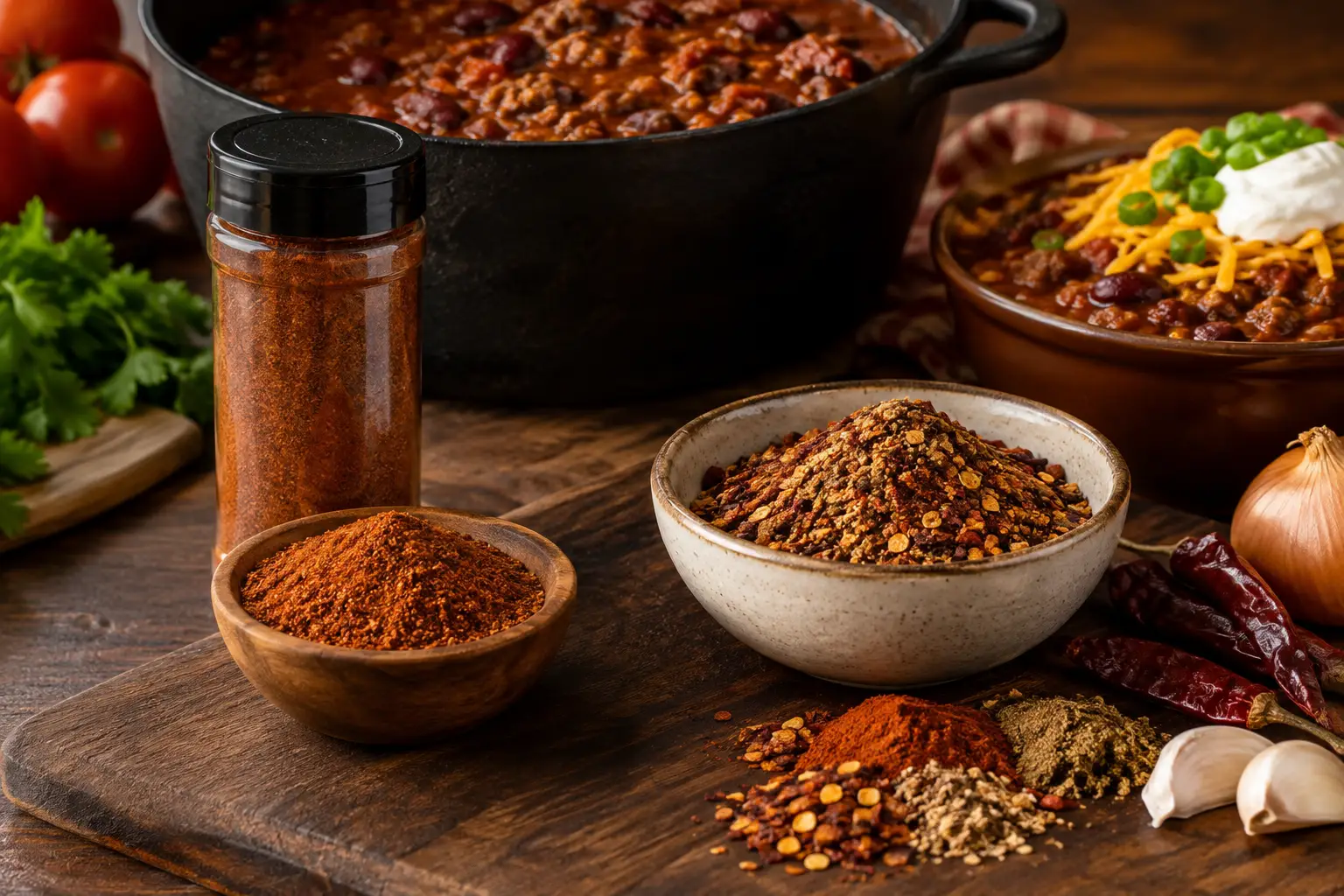
A packet can get dinner moving before the ground beef even hits the pot. A homemade spice blend can make that same pot taste unmistakably like yours. That is the real question behind chili seasoning versus homemade blend: are you chasing speed, a specific regional personality, or a bowl that changes every time you cook it?
Neither route is automatically better. The smartest choice depends on the chili in front of you, the people around your table, and whether you want a dependable weeknight classic or a flavor project with some serious swagger.
What Store-Bought Chili Seasoning Does Well
Commercial chili seasoning is built for consistency. Open a packet, and you get a familiar baseline of chili powder, cumin, garlic, onion, salt, and often a thickener such as cornstarch or flour. The formula is designed to work with a standard amount of meat, tomatoes, and liquid, which takes much of the guesswork out of Tuesday-night chili.
That predictability matters. Newer cooks can avoid a flat, under-seasoned pot, while busy cooks can put more attention toward browning meat, managing texture, and getting dinner on the table. If your household loves a particular packet flavor, using it is not cutting corners. It is cooking to your audience.
Packets also shine when chili is only one part of the plan. Think game-day dogs, a baked-potato bar, or chili mac for a crowd. When toppings, cheese, buns, and side dishes are competing for attention, a dependable seasoning base can be exactly enough.
The trade-off is control. Many blends lean salty, mildly sweet, and broadly savory. That profile works for an all-American bean chili, but it can blur the difference between a smoky Texas-style beef chili, bright Colorado green chili, or a Cincinnati-inspired pot with its unmistakable warm-spice edge.
Where Homemade Chili Blends Pull Ahead
A homemade blend lets you decide what kind of chili you are making before the pot starts simmering. That is a big deal because "chili powder" is not one universal flavor. It can be earthy and mild, raisiny and dark, fruity and hot, or sharp with cumin and oregano depending on the peppers and proportions involved.
For a deep red beef chili, you might build around ancho for dried-fruit richness, guajillo for clean red-pepper flavor, and a little chipotle for smoke. For turkey chili, coriander and a touch of smoked paprika can bring lift without weighing down the lean meat. For white chicken chili, you may skip red chili powder entirely and lean into cumin, oregano, green chiles, and white pepper.
Homemade also gives you control over salt. Salt-free spice blends let you season meat in stages and adjust the finished pot after tomatoes, broth, beans, and cheese have all added their own seasoning. That is especially useful if you cook with low-sodium stock or feed people with different dietary needs.
Then there is heat. A packet typically offers one lane: mild, original, or hot. A homemade blend gives you a dial. You can add warmth with ancho, zip with cayenne, floral heat with New Mexico chile, or smoke with chipotle. You can also keep the main pot gentle and put hot sauce, crushed chiles, or sliced jalapeños on the table for the heat seekers.
Chili Seasoning Versus Homemade Blend: The Flavor Test
The biggest difference is not convenience. It is dimension.
Most packaged seasoning tastes integrated from the first spoonful, but its flavor can land in a narrow middle: savory, tomato-friendly, a little cumin-heavy, and familiar. That is useful when familiar is the goal. It can also make very different recipes taste surprisingly similar.
A homemade blend can create layers that arrive at different moments. First comes the rounded pepper flavor, then toasted cumin, then a smoky or fruity finish. Toasting whole cumin seed, dried chiles, or oregano before grinding pushes that effect even further. Your kitchen smells like a chili joint before the simmer even begins.
Still, homemade does not guarantee greatness. Old spices lose their punch. Too much cumin can make a pot taste dusty. Too much smoked paprika can turn every bowl into campfire chili. A blend needs balance, and balance comes from tasting, taking notes, and accepting that not every experiment earns a repeat performance.
Cost, Time, and Pantry Reality
A single packet is inexpensive, and it is hard to beat when you need one quick meal. But if chili appears regularly in your rotation, homemade blends usually cost less per batch. Buying spices in larger jars or bags stretches across multiple pots, tacos, rubs, soups, and marinades.
The upfront cost can be higher if your spice cabinet is bare. You do not need to buy twelve ingredients to make good chili, though. Start with chili powder, cumin, garlic powder, onion powder, oregano, paprika, black pepper, and salt. That core set can make a satisfying, flexible blend.
Time is more nuanced than it seems. Measuring five or six spices takes a minute or two. Grinding toasted dried chiles takes longer, but it is a weekend move, not a mandatory step. Make a larger salt-free batch, label it, and your next few chili nights can be nearly as fast as reaching for a packet.
For many home cooks, the best answer is a hybrid pantry: keep packets for emergency comfort food and one homemade house blend for the recipes you make on purpose.
Match the Blend to the Chili Style
Every bowl tells a story, and seasoning is where that story gets its accent. Rather than asking whether homemade is always superior, match your approach to the chili category.
Classic Ground Beef and Bean Chili
This is packet territory if you want it to be. Tomato, beef, beans, onions, and a standard seasoning mix are a reliable, crowd-pleasing combination. To make a packet taste more personal, add one extra ingredient with purpose: a spoonful of cocoa for depth, chipotle for smoke, or a splash of cider vinegar at the end for brightness. Do not toss in all three unless you know the result you want.
Texas-Style Red Chili
Homemade is worth the effort here. Texas red is about beef and chiles, not a generic spice cloud. Use dried chile powders or rehydrated whole chiles with character, and keep cumin and garlic in supporting roles. A salty packet can work in a pinch, but it rarely delivers the full, beefy chile depth this style deserves.
White Chicken Chili and Green Chili
A red seasoning packet can send these styles in the wrong direction. Build with cumin, oregano, garlic, green chiles, and a gentle pepper heat instead. Homemade seasoning gives you a cleaner, greener profile and lets tomatillos, poblanos, Hatch chiles, or creamy beans stay in focus.
Cincinnati-Style Chili
This is another case for customization. The signature comes from warm spices used with restraint, often including cinnamon, allspice, clove, and sometimes cocoa. A standard chili packet will make something tasty, but it will not bring that distinct sweet-savory, spaghetti-ready identity.
A Simple Homemade Starting Blend
For a versatile red chili base, combine 2 tablespoons chili powder, 2 teaspoons ground cumin, 1 teaspoon paprika, 1 teaspoon garlic powder, 1 teaspoon onion powder, 1 teaspoon dried oregano, 1/2 teaspoon black pepper, and 1/4 to 1/2 teaspoon cayenne. Leave out salt, then season the pot as it cooks.
This is a starting point, not a rulebook. Want more smoke? Replace some paprika with smoked paprika. Want less heat? Skip the cayenne. Want a richer, darker bowl? Use ancho powder as part of the chili powder. Write down the adjustment that makes people ask for seconds. That is how a house blend is born.
The Better Choice Is the One That Fits Tonight
Use a packet when time is tight, the recipe is casual, or you want a known result. Make your own when the chili style is specific, sodium and heat need careful control, or the spices are part of the main event. There is room in a serious chili kitchen for both.
At ChiliStation, a quick scan across regional recipes makes the point clear: no single seasoning formula can cover every excellent bowl. Keep a packet for the fast nights. Keep a few good spices for the nights when you want your chili to taste like a place, a memory, or your own best idea.