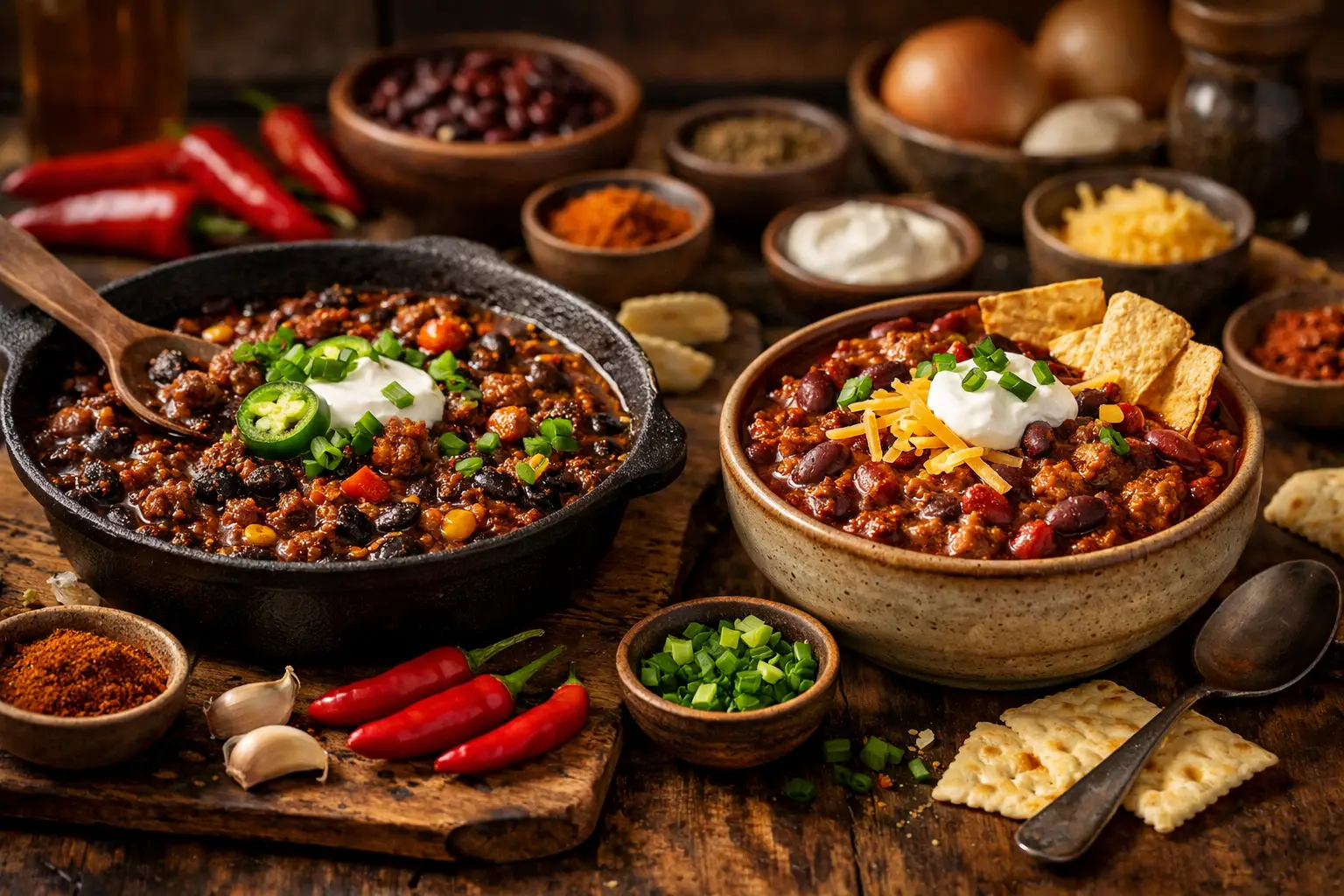
A chili recipe can look perfect on a screen and still be the wrong pot for a Tuesday night, a game-day crowd, or your friend who thinks one jalapeño is a five-alarm event. Knowing how to compare chili recipes means looking past the hero photo and the star rating. You are choosing a style, a texture, a heat profile, and a cooking commitment. Every bowl tells a story, but first it needs to fit your table.
Start by Comparing Chili Styles
The fastest way to narrow a big recipe collection is to identify what kind of chili you actually want. “Chili” is a gloriously broad category, and recipes with the same name can deliver completely different experiences.
A Texas Red is usually beef-forward, deeply spiced, and bean-free. It is built around dried chiles, browned meat, and a dark, concentrated sauce. If you want a serious, smoky bowl with a long chile finish, this is your lane. It also tends to reward patience, since the flavor develops through a longer simmer.
Colorado green chili heads in a brighter direction. Pork, roasted green chiles, tomatillos, and a looser stew-like texture make it feel lively and tangy rather than dark and earthy. It is an excellent choice for smothering burritos, piling over eggs, or eating with warm tortillas.
Then there is Cincinnati chili, the famously spiced, finely textured sauce designed for serving over spaghetti or hot dogs. Comparing it directly to a chunky beef-and-bean chili is like comparing a burger to a brisket sandwich. Both can be excellent. They simply solve different dinner problems.
Classic homestyle chili sits in the middle for many cooks: ground beef or turkey, tomatoes, beans, onion, and a familiar mix of chili powder, cumin, and garlic. It is flexible, crowd-friendly, and usually forgiving when you need to substitute what is already in the pantry. Modern recipes may add cocoa, coffee, beer, chipotle, pumpkin, white beans, chicken, or unexpected global flavors. Those additions are not gimmicks by default - they are clues about where the recipe is trying to go.
Before comparing anything else, ask one useful question: do you want a bowl that tastes traditional, regional, comforting, fresh, or a little wild? That answer removes half the noise.
How to Compare Chili Recipes by Flavor, Not Just Heat
Heat level gets attention because it is easy to label, but spice is only one piece of a chili’s personality. Two medium-hot recipes can taste radically different. One may be smoky and slow-burning from chipotle. Another may be sharp and fruity from fresh serranos. A third may bring more warmth than fire through ancho, cumin, and black pepper.
Read the chile list closely. Dried ancho and guajillo chiles usually suggest sweetness, raisin-like depth, and a brick-red color. Chipotles bring smoke. New Mexico or Hatch green chiles lean grassy and roasted. Habaneros and Scotch bonnets signal serious heat with tropical fruit notes, while cayenne often adds a cleaner, more direct burn.
Also look for the recipe’s balancing ingredients. Tomatoes bring acidity and body. Beer can add malt and bitterness. Coffee, cocoa, or bittersweet chocolate can push a beef chili toward dark, roasty depth. Brown sugar, honey, or molasses may soften the edge, though too much can make a savory chili taste like it took a wrong turn into barbecue sauce.
A good comparison separates “hot” from “flavorful.” If you are cooking for mixed heat tolerances, choose a recipe with deep chile flavor and moderate base heat, then offer hot sauce, sliced fresh chiles, or crushed red pepper at the table. That keeps the pot welcoming without making it bland.
Compare the Main Ingredient and the Texture It Creates
Protein changes more than nutrition. It determines the chili’s richness, texture, and how well it holds up after an hour or two on the stove.
Ground beef gives you a familiar, spoonable, crumbled texture and cooks relatively quickly. Chuck roast or stew meat creates a more luxurious, shreddable result, but it needs time for the collagen to relax. Brisket brings big beef flavor and can be spectacular for a weekend pot, though it is rarely the budget or speed choice.
Pork shoulder is a natural fit for green chili because it becomes tender without losing its presence. Chicken and turkey make lighter bowls, especially with white beans, green chiles, and a broth-based base. Vegetarian chili can be just as substantial when it layers beans with mushrooms, lentils, sweet potatoes, squash, or a meat alternative. The key is avoiding a one-note pot of soft beans and watery tomatoes.
Beans deserve their own comparison. Kidney and pinto beans are classic, sturdy choices. Black beans bring a slightly earthier character. White beans fit creamy chicken or green chili styles. Some regional traditions reject beans entirely, so decide whether authenticity matters for this particular meal. There is no need to start a bean debate when what you really need is dinner.
Texture often reveals itself in the method. Recipes that blend chiles, tomatoes, or beans will be silkier and more cohesive. Recipes with diced vegetables, whole beans, and cubed meat will feel chunkier. Neither is better, but a chunky chili is usually a bowl meal, while a smoother chili may work better as a topping for fries, dogs, burgers, or spaghetti.
Put Time and Equipment on the Same Scorecard
A recipe can be delicious and still lose because it asks too much of your evening. Compare active prep time separately from total cook time. A three-hour chili may only require 25 minutes of chopping and browning, which is easy on a Sunday. A 45-minute chili may demand constant attention, which is not always easier.
Use this quick scorecard when two recipes sound equally tempting:
| What to compare | What it tells you | | --- | --- | | Active prep | Whether the recipe fits the time you have right now | | Total cook time | How much flavor development and tenderizing to expect | | Equipment | Whether you need a Dutch oven, slow cooker, pressure cooker, or blender | | Ingredient reach | Whether the recipe is pantry-friendly or requires a specialty-store run | | Make-ahead value | Whether the leftovers will improve, freeze well, or feed the week |
Slow cooker recipes are excellent when you want hands-off comfort, though they may need an early stovetop browning step for deeper flavor. Pressure cooker chili is the move when you want tender meat and developed flavor on a tighter clock. Stovetop chili gives you the most control over reduction and seasoning. Oven-braised chili is especially useful for large, steady-simmer batches.
Do not dismiss recipes with a “rest overnight” note. Chili is one of the rare foods that often gets better after a night in the fridge. The spices settle in, the fat firms up for easy skimming, and the flavors stop competing for attention. If leftovers are part of the plan, a long-simmered beef or bean chili may beat a fast weeknight version.
Read the Method for Small Clues With Big Payoff
Ingredient lists tell you what goes in. The method tells you whether the recipe understands how flavor gets built.
Look for browning, not just cooking. Browning beef, pork, onions, or mushrooms creates savory depth that a pile-it-all-in recipe may miss. Toasting dried chiles, blooming spices in fat, or cooking tomato paste until it darkens are all green flags. These are small moves, but they are where a good chili starts to earn its swagger.
Pay attention to when ingredients enter the pot. Beans added early can soften and thicken the base, while beans added later stay more distinct. Fresh herbs, lime juice, vinegar, and cilantro usually belong near the finish because they bring lift. Dairy additions such as sour cream or cream cheese can make a chili rich, but they also pull it into a different style and may reduce its freezer friendliness.
Be skeptical of recipes that give only vague seasoning guidance, especially if they call for a lot of liquid. Chili should be tasted and adjusted as it reduces. Salt, acidity, sweetness, and heat shift during cooking. A recipe that encourages final adjustments is usually written by someone who has actually stood over the pot.
Compare Recipes for the Occasion, Not an Imaginary Perfect Bowl
The right chili for a chili cook-off is not always the right chili for a family dinner. For a crowd, prioritize a scalable recipe with familiar ingredients, moderate heat, and toppings that let people customize. For a cook-off, choose a distinct point of view: a Texas-style red with a careful dried-chile blend, a green pork chili with roasted Hatch chiles, or a rich vegetarian bowl that earns its place through real depth.
For meal prep, choose recipes that reheat cleanly and do not depend on crisp toppings or delicate dairy. For a casual “what is for dinner?” night, favor ground meat, canned beans, and a one-pot stovetop method. For football, cold weather, or an all-day hang, make the longer recipe. Let the house smell like someone is taking chili seriously.
At ChiliStation, filters for style, protein, region, and spice level can get you to a short list quickly. Then use the recipe details to make the final call. The best comparison is not about declaring one recipe universally superior. It is about matching the bowl to your craving with enough confidence to start chopping.
Pick the recipe that makes you hungry for the next step, whether that is roasting chiles, browning beef, or opening the first can of beans. A great chili begins long before the simmer - right when you recognize which story you want your pot to tell.