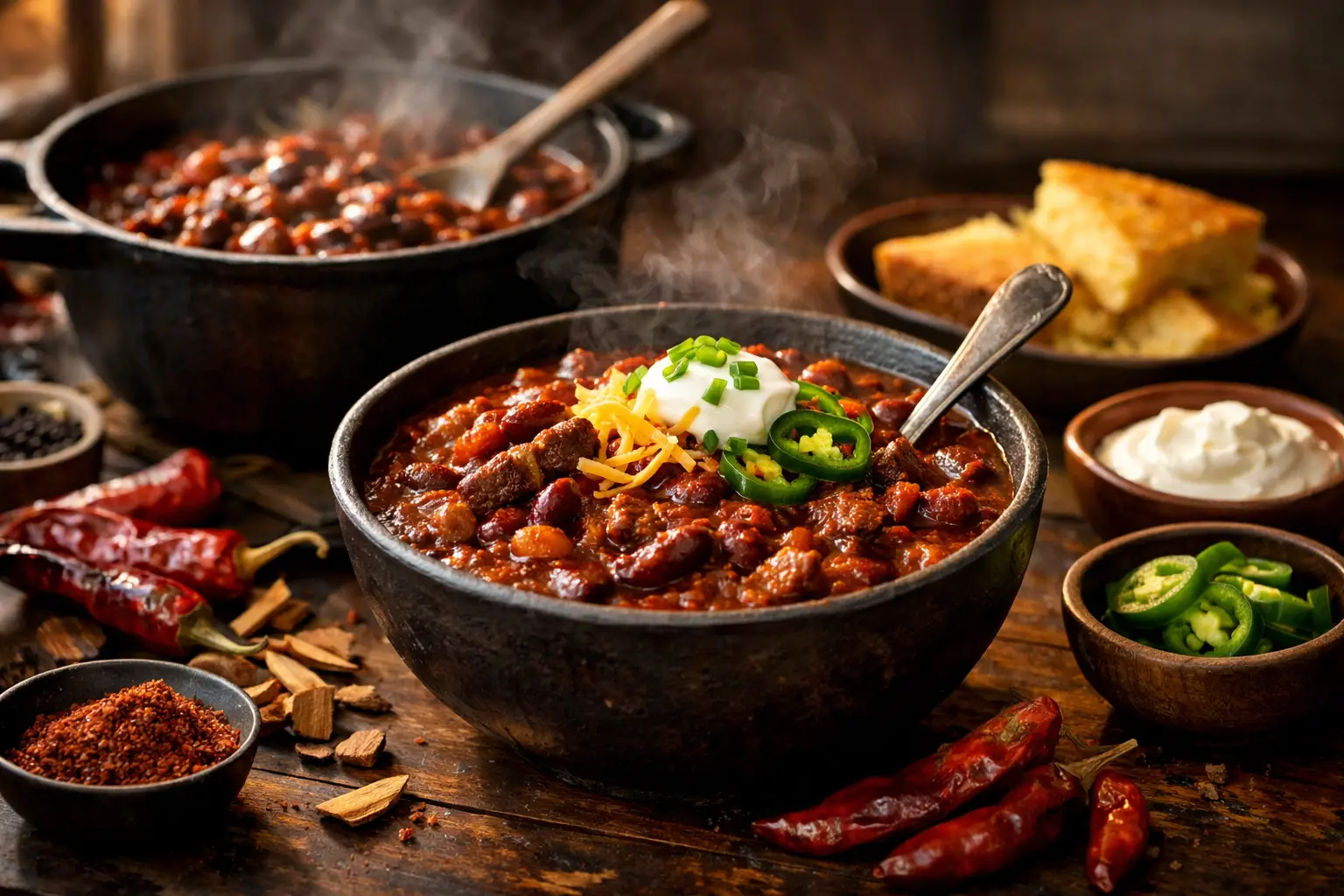
The difference between good chili and the kind people talk about the next day usually comes down to depth. A great smoked chili recipe doesn’t just bring heat - it layers in wood smoke, browned meat, chile flavor, and that slow-built richness that makes every spoonful feel heavier in the best way.
This style sits in a sweet spot for home cooks. It has the comfort of classic chili, but the smoker adds a campfire edge that makes the whole pot taste more intentional. If you already have a go-to beef chili, this is the version to make when you want bigger aroma, darker flavor, and a bowl that feels weekend-worthy.
What makes a smoked chili recipe different
Smoking changes chili in two ways. First, it adds actual smoke flavor, which is more rounded and natural than relying on liquid smoke or smoked paprika alone. Second, it changes how the ingredients develop over time. Meat picks up bark and caramelization, vegetables soften more gradually, and the entire pot takes on a deeper, slightly earthy profile.
That doesn’t mean every ingredient needs heavy smoke. In fact, too much can flatten the bowl. The best smoked chili recipe balances smoke with acidity, chile sweetness, and enough salt to keep everything vivid. Think of smoke as a supporting note, not the whole song.
You also have choices. Some cooks smoke the meat first, then finish the chili on the stovetop. Others build the whole pot in a Dutch oven and let it ride in the smoker for hours. Both work. If you want the strongest smoke character, cook the chili in the smoker for at least part of the time. If you want easier control, smoke the protein and finish indoors.
The flavor blueprint
A smoked chili recipe works best when each layer has a job. Beef gives body and richness. Onion and garlic create a savory base. Tomato adds sweetness and acid, though how much you use depends on whether you want a Texas-leaning bowl or a thicker, more modern style. Beans are optional and absolutely a style choice, not a rule.
The chile layer matters just as much as the smoke. Chili powder alone will get you somewhere decent, but ancho, chipotle, and pasilla give you more range. Ancho brings raisin-like depth. Chipotle adds smoke and heat. Pasilla leans dark and fruity. You don’t need all three, but a blend makes the bowl taste built rather than basic.
Then there’s the wood. Oak and hickory are strong and classic for beef. Cherry gives a softer, slightly sweeter smoke. Mesquite can be excellent, but it gets intense quickly, so it’s better for shorter cooks or for people who already know they like a punchier profile.
Smoked chili recipe: the core method
Start with 2 pounds of ground beef, or use a mix of ground beef and chuck roast cut into small cubes if you want more texture. You’ll also need 1 large onion, 1 bell pepper, 4 cloves of garlic, 2 tablespoons tomato paste, 1 28-ounce can of crushed tomatoes, 2 cups beef stock, and 1 to 2 cans of beans if that’s your lane.
For seasoning, use 3 tablespoons chili powder, 1 tablespoon ground cumin, 2 teaspoons smoked paprika, 2 teaspoons kosher salt to start, 1 teaspoon black pepper, 1 teaspoon dried oregano, and 1 to 2 chopped chipotles in adobo. If you have ancho powder or pasilla powder, swap some of the chili powder for those and the flavor gets more interesting fast.
Set your smoker to 250 degrees Fahrenheit. In a Dutch oven or other smoker-safe heavy pot, cook the beef until browned if you’re starting indoors. If you’d rather maximize smoke, spread the meat in a grill-safe pan and smoke it for 45 minutes first, then break it up and transfer it to the pot. Either path is valid. Browning gives you more fond and more control. Smoking first gives you a louder outdoor profile.
Once the meat is partially cooked, add the onion and bell pepper and cook until softened. Stir in the garlic, tomato paste, and spices, and let that mixture cook for a minute or two until it smells toasty and concentrated. Add crushed tomatoes, stock, chipotles, and beans if using.
Move the pot into the smoker uncovered for 1 hour so the chili can take on smoke. After that, cover it loosely and cook for another 1 1/2 to 2 hours, stirring once or twice. If the chili gets thicker than you want, add a splash of stock or water. If it feels thin near the end, uncover it and let it reduce.
Taste before serving. This is the point where a smoked chili recipe usually needs a small adjustment, not a dramatic rescue. A pinch more salt sharpens the bowl. A teaspoon of brown sugar can soften aggressive smoke or tomato acidity. A squeeze of lime wakes everything up. Hot sauce works too, but use it for heat, not for basic seasoning.
Ingredient swaps that actually work
This is a forgiving format, which is one reason smoked chili has such range. Ground turkey can work, but it needs help from extra aromatics, a little more fat, or a darker chile blend so it doesn’t eat flat. Smoked brisket chili is excellent if you have leftovers, though it’s richer and usually better with fewer beans and a lighter hand on added smoke.
If you want a more Texas-inspired bowl, skip the beans and use cubed chuck instead of ground beef. Let it go longer, and use less tomato. The result is meatier, darker, and more focused on chile flavor than sweetness.
If you like a slightly sweeter, crowd-friendly version, add poblano instead of bell pepper and a little brown sugar or even a small splash of maple syrup. Not enough to make it taste sweet, just enough to round the edges. That move especially helps when using hickory or mesquite.
Common mistakes that mute the bowl
The biggest one is oversmoking. Chili absorbs smoke well, which sounds great until every bite tastes like the inside of a firebox. If your smoker runs heavy, shorten the uncovered portion of the cook. You can always add more smoke next time, but you can’t pull it back once it’s in the pot.
The second mistake is underseasoning. Smoke can soften the perception of salt and spice, so chili that tastes fine at the beginning can taste muted after two hours outside. Season in stages, then taste again at the end.
Texture is the other watch point. Some smoked chili recipes end up greasy because the meat wasn’t drained at all, or watery because too much stock went in early. You want a spoon-coating consistency, not soup. If it’s too loose, uncover and reduce. If it’s too heavy, thin it gradually.
Toppings and sides that fit the style
A bowl this bold doesn’t need much, but contrast helps. Sharp cheddar, diced white onion, sour cream, scallions, and cilantro all work. Pickled jalapenos are especially good here because they cut through the smoke without competing with it.
For sides, cornbread is the obvious win, but a smoked chili recipe also plays well with baked potatoes, Fritos, or plain white rice if you want to stretch the meal. If the chili runs spicy and dark, keep the side simple. If the chili is milder, you can go bigger with jalapeno cornbread or skillet queso on the table.
When to make this version
Not every chili needs a smoker. Weeknight chili is often better on the stove because it’s faster and easier to control. But smoked chili earns its place when the meal is the event. Game day, backyard hangs, fall weekends, cookouts where the burgers feel too predictable - this is where it shines.
It’s also one of those recipes that improves after a night in the fridge. The smoke settles in, the spices blend, and the next-day bowl often tastes more complete than the first. That makes it a strong make-ahead play for parties or low-stress weekend cooking.
For cooks who like comparing styles, this bowl sits somewhere between barbecue culture and classic red chili. That’s part of the appeal. Every bowl tells a story, and this one says you wanted more than heat - you wanted atmosphere, texture, and a little bit of fire in the background.
If your usual pot tastes solid but familiar, this is the upgrade worth making. Start with balanced smoke, don’t rush the seasoning, and let the chili tell you what it needs in the last half hour.