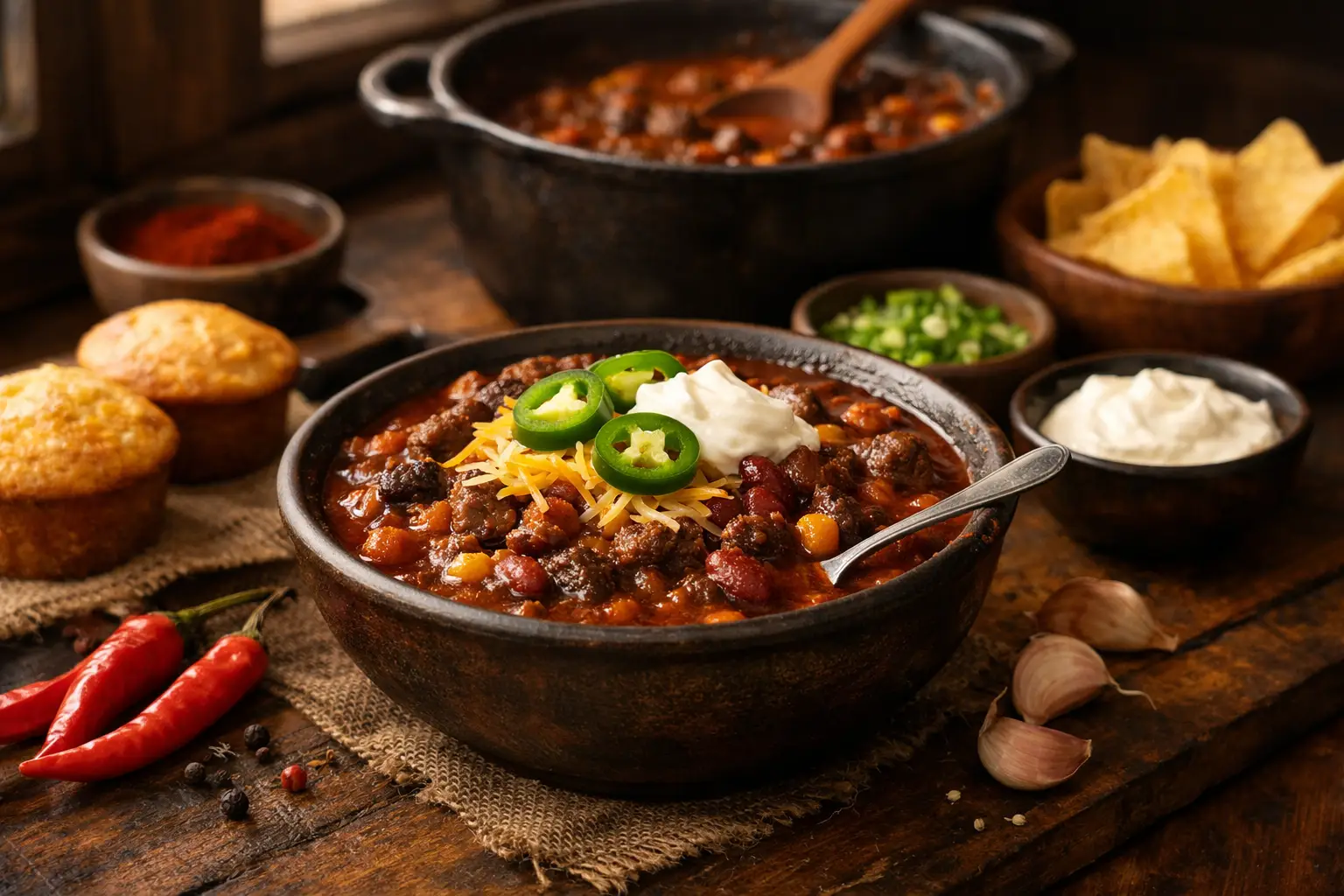
A great venison chili recipe lives or dies on one decision: whether you treat venison like beef. If you do, the pot can turn dry, sharp, or muddy fast. If you build around what venison actually brings - lean texture, minerality, and a cleaner wild flavor - you get a chili that tastes bold, deep, and intentional instead of just gamey with chili powder on top.
That is the sweet spot here. This version is built for home cooks who want a bowl with real chili presence, but not one that buries the venison under sugar, too many beans, or a random dump of spice. Every bowl tells a story, and this one is about balance: earthy meat, a dark red base, controlled heat, and enough richness to make the whole thing feel slow-cooked even if you pull it together in one afternoon.
What makes a venison chili recipe different
Venison is much leaner than beef, and that changes the entire approach. Beef chili often gets a head start from rendered fat, which carries spice and rounds out acidity. Venison gives you less margin for error. Brown it too hard or simmer it too long without enough moisture and fat, and it can tighten up.
That does not mean venison chili needs kid-glove treatment. It means the pot needs structure. Onion, garlic, tomato paste, and chili spices need time in the pan. A little added fat helps. Bacon grease, neutral oil, or even a spoonful of beef tallow can bridge the gap without turning the dish heavy.
The other question is how much of the venison character you want to keep. Some cooks love a full woodsy note. Others want something closer to a classic red chili with a slightly more interesting edge. Both are valid. The difference comes down to your spice profile and what you use for liquid.
The best flavor profile for venison chili
For most kitchens, the best lane is a red chili with moderate smokiness, restrained sweetness, and enough acid to keep the finish lively. That means ancho or regular chili powder for warmth, cumin for backbone, paprika for roundness, oregano for lift, and a small amount of chipotle or cayenne if you want a firmer kick.
Tomato paste matters here more than a big pour of tomato sauce. Paste gives you concentration and color without making the whole thing taste like spaghetti with cumin. Crushed tomatoes or diced tomatoes can work, but the pot stays tighter and meatier if they are supporting players instead of the whole base.
Coffee, dark beer, or beef stock all make sense, but they create different bowls. Coffee sharpens the earthy side. Beer adds bitterness and malt. Stock keeps the meat at center stage. If your venison is especially mild, beer is a good move. If it is strong and distinctly wild, stock is usually the cleaner choice.
Venison chili recipe
This is a medium-thick, bean-optional chili with enough body for a cold weekend and enough brightness to keep you coming back for another spoonful.
Ingredients
2 pounds ground venison
2 tablespoons oil or bacon fat
1 large yellow onion, diced
1 poblano pepper, diced
4 cloves garlic, minced
3 tablespoons tomato paste
2 tablespoons chili powder
1 tablespoon ground cumin
2 teaspoons smoked paprika
1 teaspoon dried oregano
1 teaspoon kosher salt, plus more to taste
1/2 teaspoon black pepper
1/4 to 1/2 teaspoon cayenne, depending on heat preference
1 14-ounce can crushed tomatoes
2 cups beef stock
1 tablespoon Worcestershire sauce
1 teaspoon unsweetened cocoa powder
1 15-ounce can kidney beans or pinto beans, drained, optional
1 tablespoon apple cider vinegar
Method
Heat a heavy Dutch oven or large pot over medium heat. Add the oil, then the onion and poblano. Cook until softened and just starting to take on color, about 6 to 8 minutes. Add the garlic and tomato paste and cook for another minute or two, stirring often, until the paste darkens slightly.
Add the chili powder, cumin, smoked paprika, oregano, salt, black pepper, and cayenne. Stir for 30 seconds. This step wakes the spices up and gives the whole pot a deeper base.
Add the ground venison and break it up with a spoon. Cook until it loses its raw color and starts to brown in spots. Because venison is lean, do not chase an aggressive crust at the expense of moisture. You want browning, not toughness.
Stir in the crushed tomatoes, beef stock, Worcestershire, and cocoa powder. Bring the pot to a gentle simmer, then lower the heat and cook uncovered for 45 minutes, stirring occasionally. If you want beans, add them for the last 15 minutes so they hold their shape.
When the chili has thickened and the flavors have settled, stir in the apple cider vinegar. Taste and adjust. Sometimes venison needs another pinch of salt. Sometimes it needs a little more acid. Let the pot sit for 10 minutes before serving.
Why this recipe works
The poblano gives the chili a green, mellow depth without turning it into a green chili. Tomato paste and cocoa powder build darkness without making the pot sweet. Worcestershire adds savory bass notes that help venison read as rich instead of lean.
The vinegar at the end is the quiet fix that many chili recipes skip. Venison can make a pot feel flat even when the spice is right. A little acid snaps the edges back into focus.
Beans are optional for a reason. If you want a more classic, meat-forward bowl, leave them out. If you want something heartier and more weeknight-friendly, add them. This is one of those real-world trade-offs where style and practicality both deserve a seat at the table.
How to keep venison chili from tasting too gamey
A lot of people overcorrect here. They add sugar, too much smoke, or so many toppings that the venison disappears. A better move is controlled balancing.
First, make sure the meat is handled well before it ever reaches the pot. Good venison that was processed cleanly tastes dramatically different from poorly handled venison. Second, use enough fat in the base. Not a pool of it, just enough to carry flavor. Third, give the chili some acidity at the end.
If your venison is still strong, there are two easy adjustments. Add a little dark beer in place of some stock, or increase the onion and garlic slightly. Both soften the edges without flattening the character that makes venison worth cooking in the first place.
Beans or no beans in a venison chili recipe?
This depends on what kind of bowl you want. If you are chasing a Texas-inspired red, skip them. The venison becomes the headline, and the texture stays focused and dense. If you are feeding a crowd, meal prepping, or just like a more familiar comfort-food profile, beans fit naturally.
Pinto beans tend to blend in more gently. Kidney beans bring firmer texture and a more recognizable weeknight chili feel. Neither is wrong. The only bad move is adding too many, which can make a lean meat chili feel oddly thin and starchy at the same time.
Best toppings for venison chili
Venison chili likes toppings that add contrast. Sour cream is especially good because it softens the edges of the meat and spice without muting flavor. Sharp cheddar works if you want a more classic comfort-food finish. Diced red onion adds bite. Cilantro adds freshness, though some cooks will always skip it on principle.
Cornbread is the obvious side, and for good reason. A baked potato is also excellent if you want to stretch leftovers into a different meal. This chili also holds up well over rice, though that makes it feel less like a pure chili experience and more like a practical dinner move.
Make-ahead, storage, and leftover notes
This chili is better the next day. That is not food-writer hype. Venison especially benefits from time because the spice, acid, and savory notes have a chance to settle into the meat.
Store it in the refrigerator for up to 4 days. Reheat gently with a splash of stock or water if it tightens up. It freezes well too, especially if you leave out the beans or keep them modest. Large amounts of beans can get a little soft after freezing and reheating, which may or may not bother you.
If you like to compare styles the way ChiliStation readers often do, this recipe sits in a nice middle lane: more rugged and savory than standard ground beef chili, less austere than a no-bean competition red, and easier to repeat than a long smoked version. It is a keeper because it respects the meat without making the whole meal feel precious.
The best part of a good venison chili is that it does not need gimmicks. Give it enough fat, enough spice, enough time, and one bright finish at the end, and the bowl takes care of the rest.