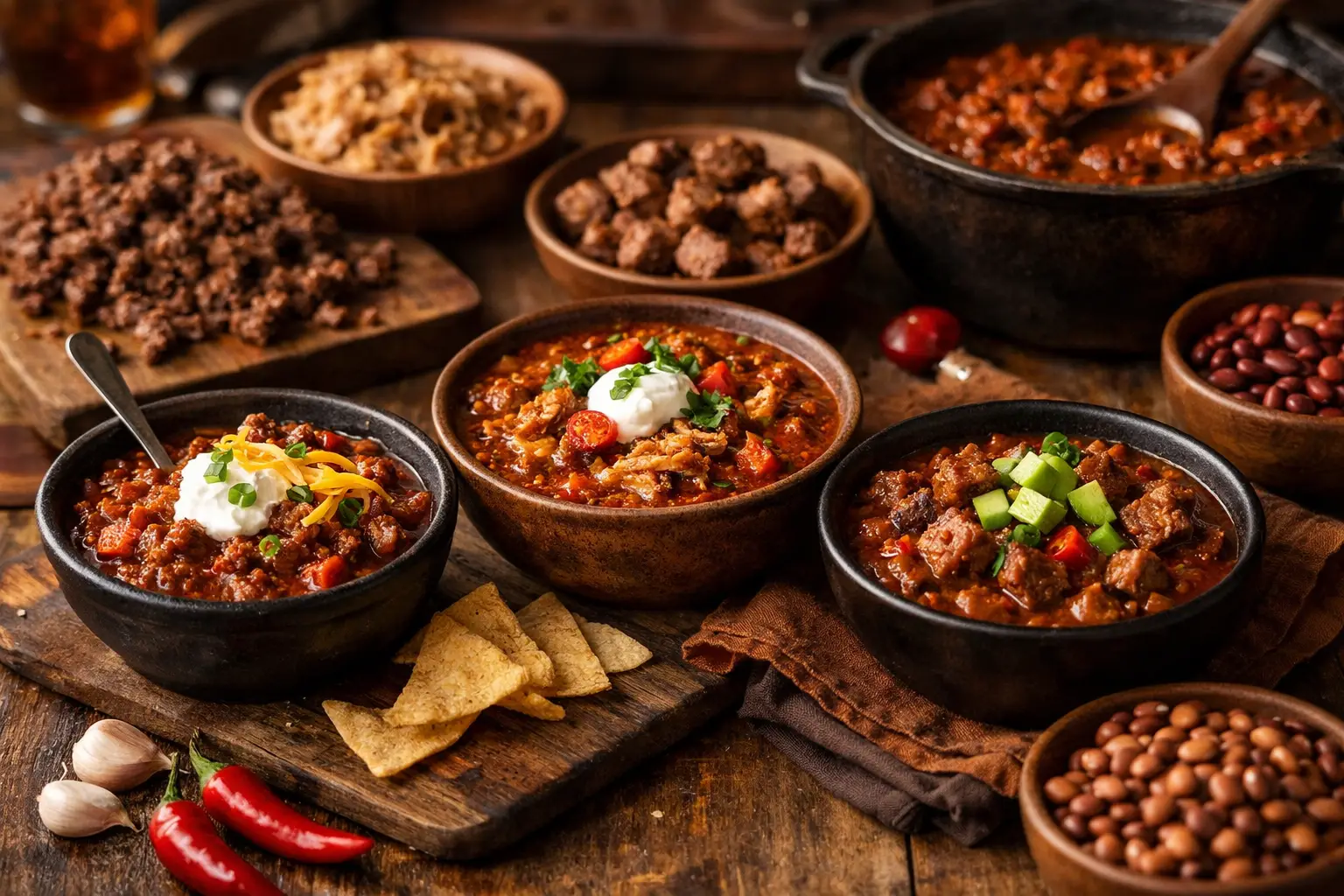
A pot of chili can go bold and beefy, lean and weeknight-friendly, smoky and slow-cooked, or bright with green chiles and chicken. That is why the question of what protein is best for chili does not have one fixed answer. The best protein depends on the kind of bowl you want at the end - thick and rich, lighter and cleaner, fiery and rustic, or packed with beans and pantry comfort.
At ChiliStation, we think every bowl tells a story, and protein is one of the biggest plot twists. It shapes flavor, texture, richness, cook time, and even how much spice your chili can carry without tipping out of balance. If you have ever followed a recipe and thought, this would be better with something else, you were probably right.
What protein is best for chili depends on the style
If you want the shortest possible answer, beef is the classic all-around winner. It brings depth, enough fat to carry spices, and that unmistakable chili-shop richness people expect from a red bowl. But classic does not always mean best for your dinner.
Texas-style chili often leans hard into beef, especially chuck or coarsely ground beef, because the meat is the main event. Cincinnati chili can also use beef, but the texture is usually finer and the flavor profile is built around spices that play differently than a smoky Southwestern pot. Colorado green chili opens the door to pork or chicken, where roasted green chiles do more of the heavy lifting. Bean-forward home-style chili can work with beef, turkey, or no meat at all.
So instead of chasing one universal winner, it helps to match the protein to the chili style, your cooking time, and the kind of leftovers you want tomorrow.
Beef is the benchmark for a reason
When people picture a classic bowl, they are usually picturing beef. Ground beef is easy, forgiving, and flavorful. Chuck, brisket, or stew meat push things into deeper territory, especially if you have time for a long simmer.
Ground beef is the best pick when you want a balanced, familiar chili with solid body and quick prep. An 80/20 or 85/15 blend tends to give you enough fat for flavor without turning the pot greasy. Leaner beef works, but you may lose some of the richness that makes chili feel like chili.
Cubed beef has a different personality. It creates a more rugged, slow-cooked texture and gives the pot a steakhouse-meets-smokehouse energy. The trade-off is time. Chuck needs patience to turn tender, and if you rush it, the meat can stay chewy while the rest of the pot is ready.
If your question is really, what protein is best for chili when you want the most classic result, beef is still the front-runner.
Best use case for beef
Choose beef for Texas red, game-day chili, cook-off style pots, and any version where deep red chile flavor and hearty texture matter most.
Turkey is better than its reputation
Turkey chili has spent years being treated like the responsible but less fun option. That undersells it. Ground turkey can make excellent chili if the recipe is built for it instead of pretending it is beef.
Turkey has a milder flavor and usually less fat, which means spices, peppers, onions, and garlic come through more clearly. It also means you need to pay attention to texture and moisture. Dark meat ground turkey gives you a better result than ultra-lean breast meat alone. It stays juicier and feels less crumbly in the bowl.
Turkey works especially well in weeknight chili, bean-heavy chili, and versions with extra vegetables like bell peppers, corn, or zucchini. It is also a smart choice if you want a lighter chili that still feels cozy instead of austere.
The catch is that turkey rarely delivers the same deep, beefy finish on its own. You can close that gap with tomato paste, roasted chiles, a little Worcestershire, or a longer simmer, but it will still eat differently. That is not a flaw. It is just a different lane.
Best use case for turkey
Choose turkey for lighter red chili, meal-prep pots, and chili recipes where beans, peppers, and spice are meant to share the spotlight.
Pork brings smoke, sweetness, and regional swagger
Pork is one of the most underrated chili proteins, especially outside green chili circles. It has natural sweetness, great affinity with roasted peppers, and enough fat to stay tender through a long cook.
Ground pork can make a rich, slightly softer chili than beef, with a savory depth that pairs beautifully with ancho, chipotle, and cumin. Cubed pork shoulder is a star in green chili and chile verde-inspired pots, where the meat slowly softens into the sauce and picks up every roasted, peppery note.
Pork also gives you room to get playful. A blend of pork and beef creates a fuller flavor than either one alone, and pork chorizo can turn a regular pot into something louder, smokier, and a lot more intense. The trade-off is that chorizo can dominate quickly, so it works better as part of the protein mix than the whole show unless you want a very specific result.
Best use case for pork
Choose pork for green chili, roasted chile-forward recipes, and any bowl where smoky, pepper-driven flavor matters more than a classic beef profile.
Chicken works best when the chili is built around brightness
Chicken is not usually the answer for a dark, heavy red chili, but it can be exactly right in white chili, green chili, or brothier Southwestern-style bowls. It absorbs flavor well and gives you a cleaner backdrop for green chiles, white beans, cilantro, lime, and creamy elements.
Chicken thighs are the stronger choice over breast meat for most chili recipes. They stay tender longer and bring more flavor. Breast meat can still work, especially in a quick chili, but it dries out more easily and can get stringy if simmered too long.
If your ideal chili includes tomatillos, poblanos, Hatch chiles, cannellini beans, or Monterey Jack, chicken starts making a lot of sense. If you are aiming for a dark red pot with serious chile powder depth, it is probably not your best move.
Best use case for chicken
Choose chicken for white chili, green chili, and lighter bowls with a fresh, pepper-forward profile.
Beans can be the protein, not just the backup singer
For some chili cooks, beans are non-negotiable. For others, they are fighting words. Either way, beans absolutely count as a protein choice, especially if you are making vegetarian chili or building a hybrid pot where meat is not doing all the work.
Black beans, kidney beans, and pinto beans each bring something different. Black beans hold shape and add earthy depth. Kidney beans bring that familiar diner-style visual and a firmer bite. Pinto beans go softer and creamier, which can help thicken the chili naturally.
A bean-only chili will never taste like beef chili, and it should not try to. The best vegetarian versions build richness with layered peppers, onions, garlic, tomato paste, spices, and often a touch of smoke. When done well, they feel complete, not like a compromise.
The real secret: blends often win
If you cook a lot of chili, you eventually stop asking for one best protein and start looking for the best combination. Beef plus pork gives you depth and juiciness. Turkey plus beans gives you lighter texture with enough substance. Chicken plus white beans creates a bowl that feels hearty without getting heavy.
This is where chili gets fun. One protein gives clarity. Two proteins can give complexity.
The only caution is balance. If both proteins are strongly seasoned or fatty, the pot can get muddy. You want contrast or support, not a traffic jam.
How to choose the right protein for your pot
Think first about the style, then about the cooking method. For a fast stovetop chili, ground meats are usually the smartest choice. For low-and-slow weekend chili, cubed chuck or pork shoulder can be worth every extra minute.
Next, think about how rich you want the bowl to feel. Beef and pork bring more natural depth. Turkey and chicken give you a lighter frame. Beans can swing either way depending on the spice base and what else is in the pot.
Then consider what flavors you want to lead. Red chile powders, cumin, and tomato tend to love beef. Roasted green chiles, tomatillos, and herbs shine with pork or chicken. A pantry-style spice blend with beans can go in almost any direction.
If you are still torn, start here. For classic red chili, use beef. For lighter everyday chili, use turkey. For green chili, use pork or chicken. For meatless chili, let beans be the star and build the pot with intention.
The best protein for chili is the one that fits the bowl you actually want to eat, not the one that wins some imaginary universal ranking. Pick for flavor, pick for texture, and pick for the kind of chili story you want your pot to tell tonight.