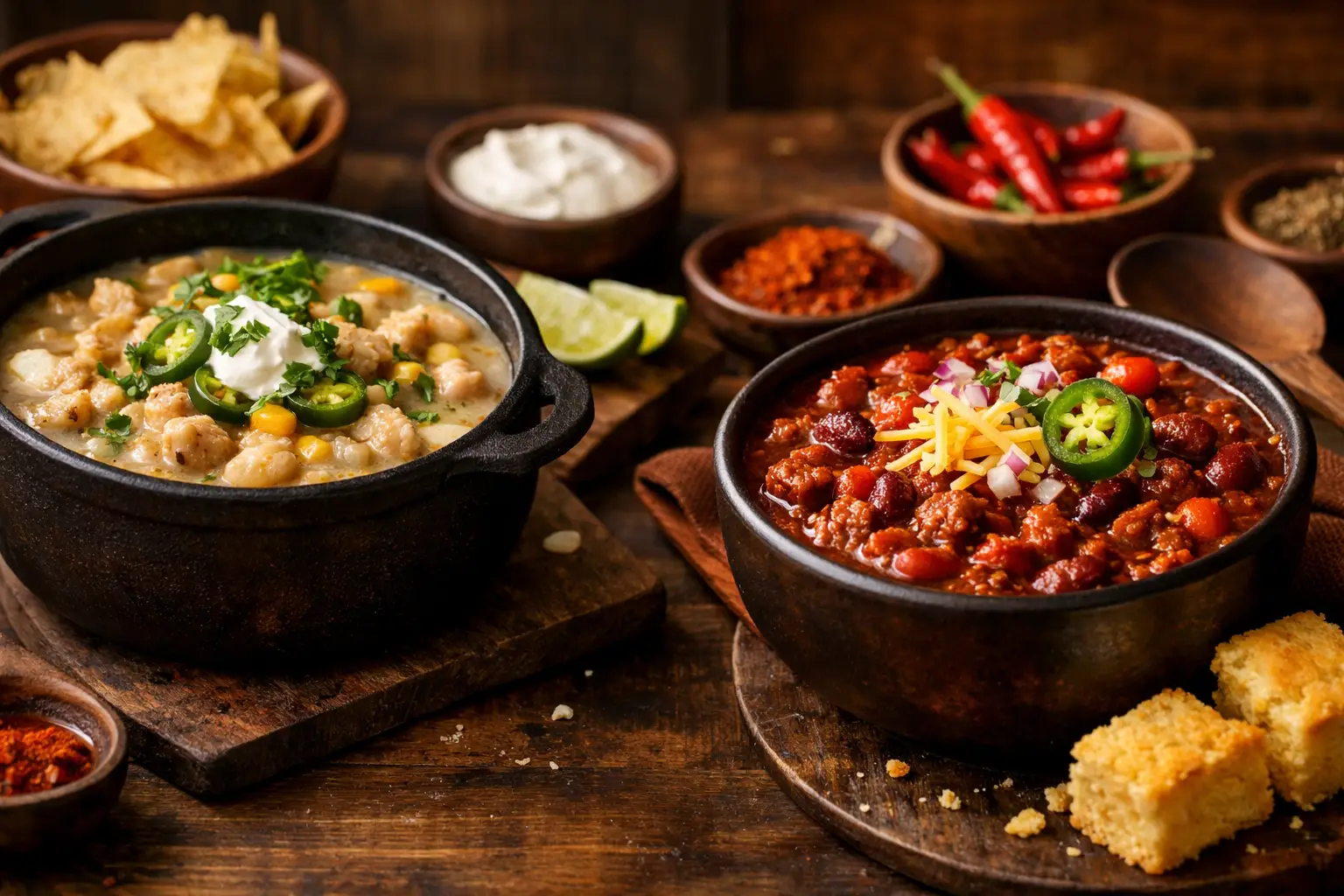
If you have ever stared at two very different bowls and wondered whether white chili vs red is just a color swap, the short answer is no. These are two distinct chili experiences with different flavor bases, textures, proteins, and moods. One leans creamy, mellow, and aromatic. The other usually hits deeper, richer, and more overtly chile-forward.
That difference matters more than people think. Choosing between them is not just about what looks good in the pot. It is about what kind of comfort food you want tonight, how much heat you enjoy, and whether you are craving a brothy spoonful or a thicker, red-stained classic.
White chili vs red: the core difference
Red chili is the version most people picture first. It is built around red chiles, tomatoes in many versions, darker spices, and often beef. Depending on the style, it can be thick and meaty like Texas red, bean-heavy like a weeknight ground beef chili, or somewhere in between.
White chili heads in a different direction. It usually features chicken or turkey, white beans, green chiles, onion, garlic, broth, and a creamy element that softens the edges. That creaminess might come from sour cream, cream cheese, heavy cream, or simply blended beans. The result is lighter in color but not necessarily lighter in flavor.
So yes, the visual contrast is obvious. But the bigger story is how each chili builds flavor from the ground up.
What makes red chili taste like red chili
Red chili is usually about depth and concentration. Dried chile powders, chili blends, cumin, paprika, garlic, and onion create a warm, savory backbone. Tomatoes often bring acidity and sweetness, though not every regional style uses them. Beef is common because it holds up well against those bold spices and long simmering.
When red chili is good, it tastes layered rather than just hot. You get earthy chile flavor, the richness of browned meat, and a slow-building warmth that sits comfortably in the bowl. It can be smoky, tangy, sweet-edged, or aggressively peppery depending on the recipe.
This is why red chili has such a broad range. A Midwestern ground beef-and-bean pot is not trying to be Texas red, and Cincinnati chili is playing an entirely different game with its spiced sauce-like texture. Red is a category, not a single recipe.
What makes white chili its own thing
White chili is not red chili with pale ingredients. It has a separate flavor logic. Instead of red chile powder leading the charge, white chili often starts with green chiles, cumin, oregano, garlic, and mild peppers. White beans bring creaminess and body. Chicken broth creates a looser, silkier base than the heavier tomato structure found in many red chilis.
Protein matters here too. Chicken is the classic pick because it fits the gentler profile, but turkey works well if you want something leaner and slightly heartier. Pork can show up, though less often. The point is that white chili usually aims for a bright, savory, peppery character instead of a dark, stew-like one.
That is also why toppings play a bigger role. Monterey Jack, cilantro, avocado, tortilla strips, lime, and sour cream all make sense because white chili leaves room for fresh contrast. It invites customization in a way that feels almost built in.
White chili vs red on texture
Texture is where the split gets even clearer.
Red chili is often thicker, especially after a long simmer. Ground or cubed meat, softened onions, reduced liquid, and beans if included all push it toward a hearty spoon-standing consistency. Some versions are almost closer to a meat sauce than a soup.
White chili usually lands looser and creamier. Even when it is thick, it tends to feel softer rather than dense. Shredded chicken pulls apart in the broth, and white beans break down in a way that adds body without the same heavy weight. It is comforting, but in a smoother, rounder style.
Neither texture is better. It depends on whether you want a bowl that eats like a cold-weather brick of satisfaction or one that still feels cozy but less heavy.
Which one is usually spicier?
This is the part where a lot of assumptions fall apart. Red chili is often hotter, but not always.
Red chili can range from mild and tomato-sweet to serious heat depending on the chile blend. White chili tends to read milder because of the creamy base and the use of green chiles, but that is not a rule. Hatch chiles, jalapenos, serranos, or a heavy hand with pepper can make a white chili punch well above expectations.
What changes is the way the heat shows up. Red chili heat tends to feel deeper and more lingering. White chili heat often feels brighter and sharper at first bite, especially when green chiles and fresh toppings are involved.
If you are feeding a mixed crowd, white chili is often easier to keep approachable. You can build heat with toppings or added peppers without making the whole pot intense.
Ingredients that usually signal each style
You can spot the likely direction of a chili before it even hits the stove.
Red chili often includes beef, red chile powder, tomatoes or tomato paste, cumin, onion, garlic, and sometimes beans. White chili usually includes chicken or turkey, white beans, green chiles, broth, cumin, onion, garlic, and some creamy or thickening component.
That said, chili loves regional debate. A no-bean Texas red is still red chili. A dairy-free white bean chicken chili is still white chili. The family resemblance matters more than strict rules.
When red chili is the better pick
Red chili is the move when you want something classic, bold, and deeply savory. It is the bowl for football Sundays, cold nights, meal prep, and anyone craving that familiar chili-house aroma filling the kitchen. It also tends to pair better with cornbread, shredded cheddar, and sturdy toppings that can stand up to a heavier base.
It is especially satisfying when you want richness from browned beef or a longer simmer. If your goal is a big-pot, second-day-is-even-better kind of meal, red chili usually wins on aging. Those flavors knit together beautifully overnight.
When white chili earns the spot
White chili shines when you want comfort without the same level of heaviness. It is great for people who like chili but do not always want tomato-forward flavor or beef. It also works well in transitional weather, game-day spreads where you want variety, or weeknights when rotisserie chicken can make dinner happen fast.
For newer chili fans, white chili is often a gateway bowl. It is friendly, flexible, and less intimidating than some dark, intensely spiced reds. But it is not boring. A good white chili has plenty of personality, especially when green chiles, garlic, and cumin are doing real work.
The real trade-off: tradition vs flexibility
Red chili usually carries more expectations. People have stronger opinions about what belongs in it, whether beans are allowed, how thick it should be, or what region gets final say. That history is part of the fun, but it can also make red chili feel like a battlefield.
White chili is freer. It is more open to weeknight shortcuts, creamy add-ins, different proteins, and modern spins. That flexibility is a strength if you cook by feel or like to improvise. If you are a purist, though, white chili may feel less anchored in a single tradition.
That is really the heart of white chili vs red. Red often feels like a statement. White feels like an invitation.
How to choose your bowl tonight
If you want rich, dense, slow-simmered comfort, go red. If you want creamy, brothy, chile-kissed comfort with a little more lift, go white. If your crowd includes both spice seekers and cautious eaters, white can be easier to customize. If you want a classic that tastes even better tomorrow, red has a slight edge.
And if you are the kind of cook who loves comparing styles, this is where a focused chili library becomes useful. A platform like ChiliStation exists for exactly this reason - not to tell you there is one correct chili, but to help you find the right one for the kind of meal, mood, and heat level you actually want.
The best bowl is the one that matches the night. Some evenings call for a deep red pot with serious backbone. Others want white chili with green chile sparkle, creamy beans, and a pile of toppings. Every bowl tells a story, and the smart move is knowing which story you are hungry for.