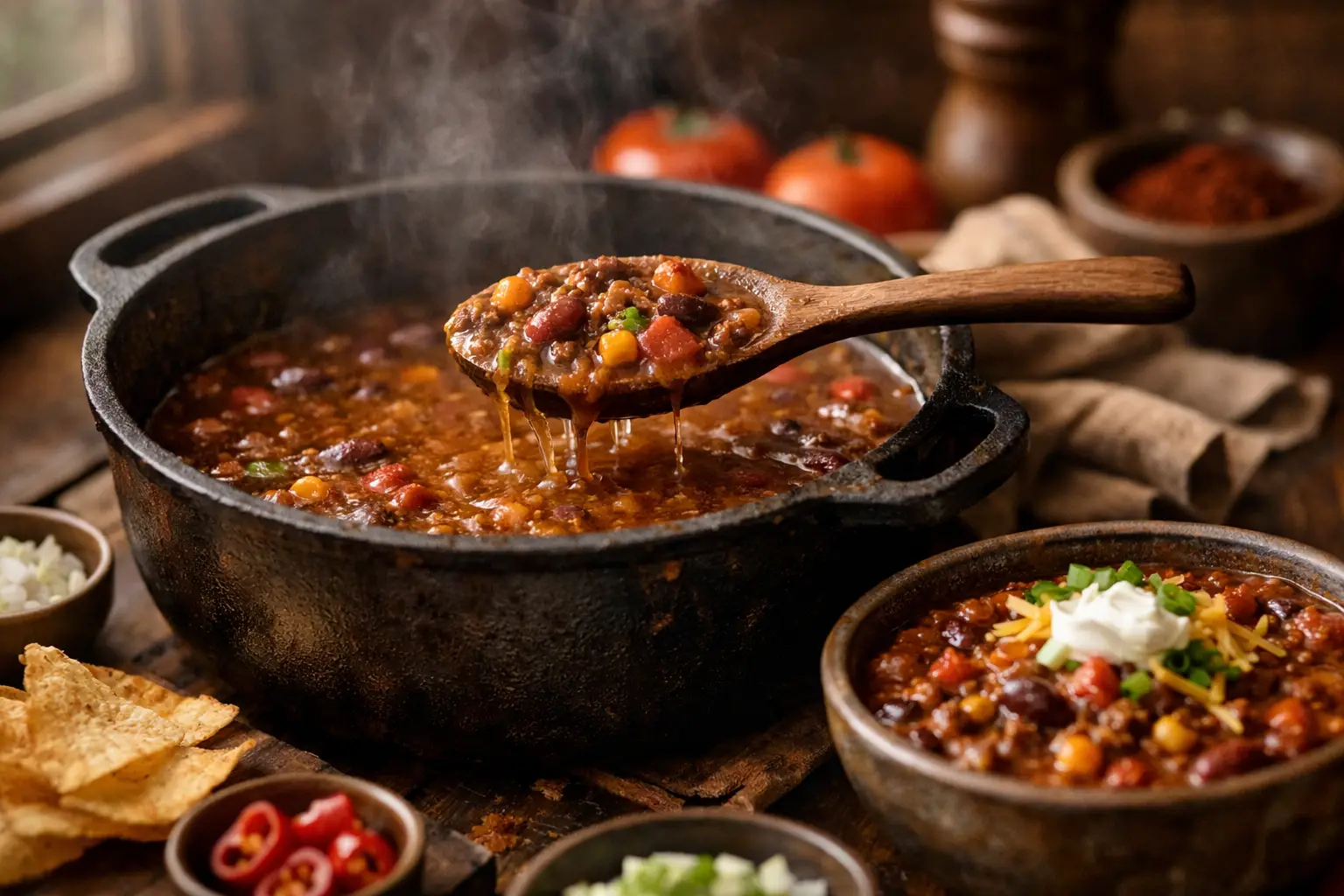
You spent hours building flavor, the kitchen smells incredible, and then you lift the lid and think, why is my chili watery? Brutal. A thin pot can taste great, but chili is supposed to have body - that rich, spoon-coating texture that makes a bowl feel like a meal instead of soup.
The good news is watery chili is usually fixable, and it almost always comes down to a handful of causes: too much liquid, not enough reduction, watery ingredients, or a recipe style that naturally runs looser than expected. Every bowl tells a story, but sometimes that story is just, I added one can too many.
Quick answer
Watery chili is usually too much liquid, not enough reduction, or ingredients that release moisture without building body. Simmer uncovered first; mash beans, add tomato paste, or stir in a masa slurry if you need a faster fix.
Why is my chili watery in the first place?
Most watery chili problems start before the simmer. If you pour in stock like you are making stew, use tomatoes that release a lot of juice, or skip the browning stage, your pot starts at a disadvantage. Chili thickens from reduction, starch, gelatin, pulverized vegetables, and suspended fats. When those elements are missing, the liquid stays loose.
Beans can be part of the issue too, but not in the way people think. Beans often help thicken chili if some of them break down. If they stay fully intact and the pot has a lot of extra broth, they are just floating in it. Ground meat can also work against you if it releases a lot of moisture and you do not cook that off early.
There is also a style question. Texas red is usually thicker and more concentrated. Some turkey chili, white chicken chili, or tomato-heavy weeknight versions can naturally lean thinner. So if you are asking why is my chili watery, part of the answer may be that the recipe was aiming for a lighter texture than the one you wanted.
The fastest ways to fix watery chili
If the flavor is good and the texture is the only problem, do not panic and definitely do not toss the pot. You have several solid rescue moves.
Simmer it uncovered
This is the cleanest fix because it does not change the flavor direction much. Take the lid off and let the chili reduce over low to medium-low heat, stirring often enough to prevent scorching. Ten to twenty minutes can make a big difference, but larger pots may need longer.
The trade-off is time. If dinner needs to happen now, reduction is not always the fastest route. Also, if the chili is already heavily salted or very spicy, reducing it further will concentrate those elements too.
Mash some beans
If your chili includes beans, scoop out a portion, mash them with a fork, and stir them back in. You can also mash some directly in the pot. This thickens the chili naturally and keeps the texture squarely in chili territory.
This works especially well for pinto, kidney, and black bean chili. It is less useful for bean-free styles like Texas chili, where a bean mash would change the identity of the dish.
Add tomato paste
Tomato paste is one of the best quick fixes for a tomato-based chili. It adds body, deepens color, and brings a more concentrated tomato flavor. Start with a tablespoon or two, stir it in thoroughly, and let it cook for several minutes before deciding if you need more.
This is a strong move if the chili tastes slightly flat along with being watery. If your chili is already quite acidic, though, too much paste can push it into sharp territory.
Use a starch, carefully
Cornmeal, masa harina, or a small cornstarch slurry can tighten up a pot fast. Masa harina is especially chili-friendly because it brings a subtle corn flavor that fits naturally in many Southwestern-style bowls. Stir in a little at a time and simmer long enough to hydrate it fully.
Cornstarch gets the job done, but it can create a gloss and texture that feels more like gravy than chili if you overdo it. That does not make it wrong. It just means it is better as a light correction than a full rebuild.
Ingredients that quietly make chili watery
Some ingredients are repeat offenders. Fresh tomatoes can dump a surprising amount of water into the pot, especially if they are out of season. Canned diced tomatoes also tend to be looser than crushed tomatoes or tomato sauce. If your recipe uses several cans of tomatoes plus stock, that liquid adds up fast.
Onions and peppers release moisture too. That is normal, but if you rush through the saute stage and add everything else before those vegetables cook down, their water ends up in the chili instead of evaporating in the pan.
Ground turkey and lean ground beef can be tricky in different ways. Turkey often sheds moisture and stays a bit pale unless you really let it cook. Very fatty beef brings richness, but if it is not browned properly, you can wind up with separated fat and liquid instead of a thick sauce.
Frozen ingredients do this as well. Frozen corn, peppers, or pre-cooked meat can release extra water as they heat. Convenient, yes. Texture-friendly, not always.
The cooking mistakes behind thin chili
A crowded pot is one of the biggest culprits. If you brown meat in an overfilled Dutch oven or slow cooker insert, the meat steams instead of sears. That means less flavor and more retained moisture from the start.
Another common mistake is covering the pot for too long. Lids trap steam, and trapped steam means the liquid has nowhere to go. That is useful early on if you are trying to soften ingredients, but at some point chili needs open-air simmer time to become chili.
Slow cookers can be especially sneaky here. They are excellent for low-effort chili, but they hold onto moisture by design. If your slow cooker chili is watery, the issue may not be the recipe itself. It may just need the lid cracked or removed near the end, or a finishing thickener stirred in during the last 30 minutes.
Then there is the temptation to keep adding liquid. A splash of broth here, more tomatoes there, maybe an extra can of beans with all the canning liquid still attached. This is how a focused, thick chili turns into a pot of good intentions.
How to prevent watery chili next time
Start with less liquid than you think you need. Chili should usually look a little tight early in the cook, because ingredients continue releasing moisture as they simmer. You can always add more broth later. Taking it out is slower.
Brown the meat until the moisture cooks off and you get actual color on the bottom of the pot. Give onions and peppers enough time to soften and lose their raw water before adding tomatoes. If you use canned beans, draining and rinsing them gives you more control over the final consistency.
Be selective with tomato products. Crushed tomatoes, tomato puree, and tomato paste generally build a thicker base than diced tomatoes packed in lots of juice. If you love the chunkier texture of diced tomatoes, pair them with paste or let the pot simmer longer uncovered.
And know your style. A Cincinnati-inspired chili can be smoother and looser than a chunky beef-and-bean pot. A green chili with pork and chiles behaves differently from a dark, dense red. Thick is not always the goal. The right texture depends on the kind of bowl you are chasing.
When watery chili is actually underdeveloped chili
Sometimes what reads as watery is really a flavor structure problem. If the broth tastes thin, the spices feel disconnected, and the meat seems separate from the sauce, the issue is not just excess liquid. The pot has not had enough time to come together.
Chili often improves in the last stretch of cooking, when fat, spices, tomato, and protein settle into one another. This is why day-two chili can feel thicker even without major evaporation. Resting gives starches and proteins time to bind the whole thing together. If your chili is close but not there, an extra simmer and a short rest may do more than any emergency thickener.
What not to do when your chili is watery
Do not dump in a huge amount of flour. It can leave a pasty taste and muddy texture. Do not crank the heat too high and walk away, either. Thickening by scorched bottom is not the move.
Also, resist the urge to over-correct all at once. If you reduce aggressively, add tomato paste, and stir in masa in the same ten minutes, you can swing from watery to heavy fast. Chili should feel rich, not cement-like.
If you want a reliable rule, fix texture in stages. Reduce first if you have time. Then use a natural thickener like mashed beans or tomato paste. Save starch slurries for the final adjustment.
The best chili has presence. It should settle into the bowl, cling to a spoon, and carry toppings without turning into soup under the cheese. So if your pot looks thin tonight, treat it like a course correction, not a failure. A watery chili is usually just one good decision away from becoming the bowl you meant to make.