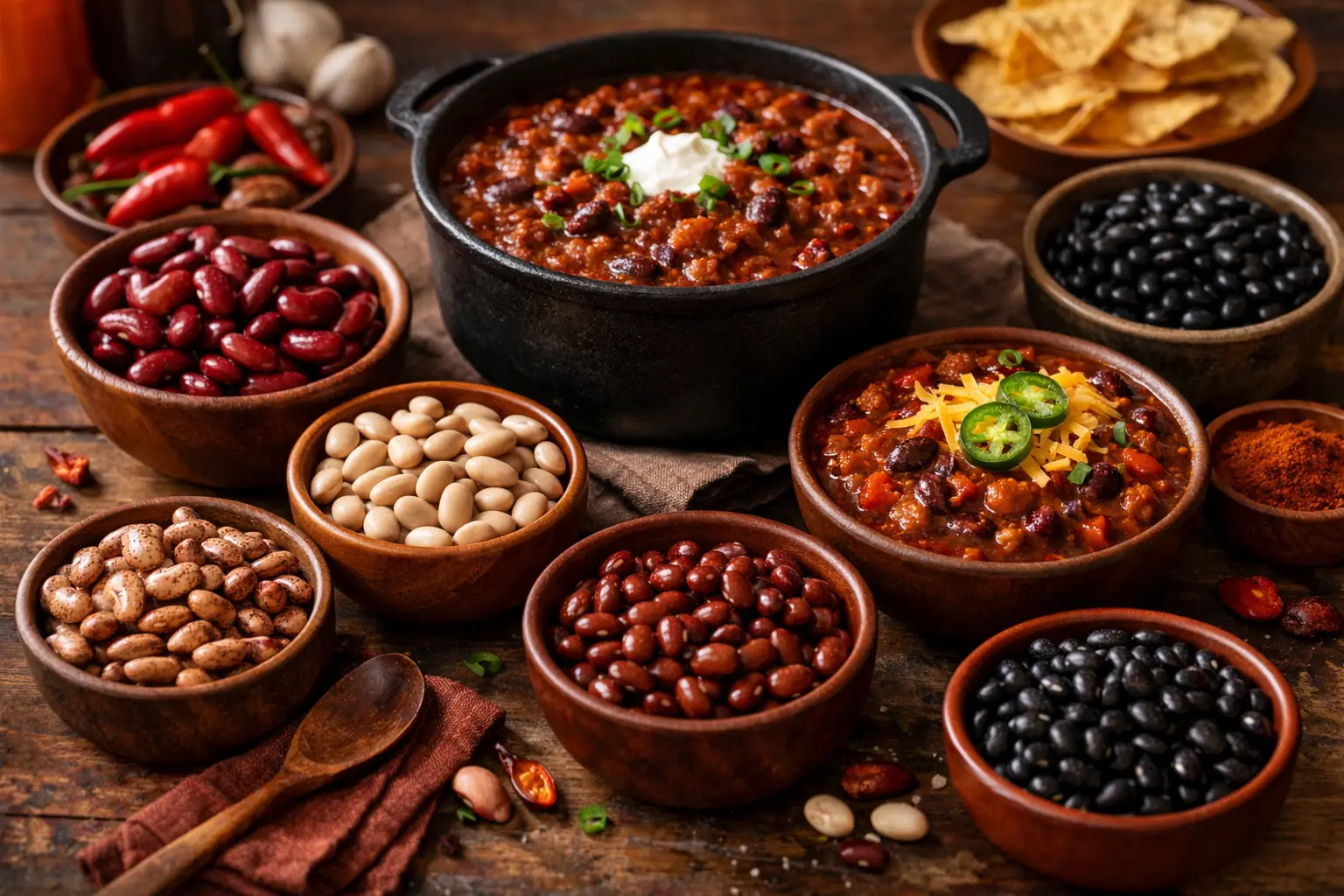
A pot of chili can go from flat to unforgettable based on one choice most cooks treat like an afterthought: the beans. If you’ve ever wondered about the best beans for chili, the answer is not just “whatever’s in the pantry.” Different beans bring different texture, starch, sweetness, and staying power, and those details shape the whole bowl.
That matters because chili is not one thing. A thick, smoky beef chili wants a different bean than a brothy turkey chili or a vegetable-heavy weeknight version. Every bowl tells a story, and the bean you choose can make that story hearty, creamy, earthy, or bold.
What makes the best beans for chili?
The best chili beans do three jobs at once. They hold their shape long enough to survive simmering, absorb flavor from the meat and spices, and contribute something of their own instead of just filling space.
Texture is the first filter. Some beans stay firm and distinct, which is great if you want clear contrast between meat, peppers, and sauce. Others soften into the pot and thicken the chili naturally. Neither is automatically better. It depends on whether you want your chili chunky, creamy, or somewhere in between.
Flavor matters just as much. Beans can be earthy, nutty, slightly sweet, or almost neutral. In a chili with aggressive spices, chipotle, dark beer, or a lot of tomato, a stronger bean can hold its ground. In a lighter chili, a milder bean lets the other ingredients lead.
Then there’s style. Bean choice gets tangled up with regional identity fast. Texas-style chili fans may argue for no beans at all, while Midwestern and home-kitchen classics often welcome them. If your goal is authenticity, the bean question changes. If your goal is the best weeknight bowl you can make, flavor and texture usually win.
7 best beans for chili
1. Kidney beans
If you picture a classic American bowl of chili, you’re probably picturing kidney beans. They’re the standard for a reason. Kidney beans are firm, meaty, and substantial, with enough structure to stand up to long simmering and big seasoning.
They work especially well in beef chili and slow-cooker chili because they don’t disappear into the sauce. Their mild earthiness plays nicely with cumin, chili powder, tomato, onion, and ground beef. If you want that familiar, diner-style or game-day chili look and feel, start here.
The trade-off is that kidney beans can feel a little stiff if the chili is undercooked or the sauce is thin. They shine most when the pot has enough time for everything to come together.
2. Pinto beans
Pinto beans are one of the smartest all-around choices for chili. They’re softer and creamier than kidney beans, and they bring a gentle earthiness that feels especially good in homey, comfort-first bowls.
They’re excellent in chili where you want the sauce to thicken naturally. As they cook, some beans break down and enrich the pot without turning it into mush. That makes pintos a great fit for beef chili, pork chili, and budget-friendly big-batch recipes.
If kidney beans are the classic visual cue, pintos are often the better eating bean. They create a more integrated spoonful. The only downside is that they can get too soft if you overdo the simmer, especially if you’re starting with canned beans.
3. Black beans
Black beans bring a deeper, slightly sweeter earthiness and a smoother texture than kidney beans. They’re a strong pick for chili with Southwestern flavors, turkey chili, chicken chili, or vegetarian chili loaded with corn, peppers, and smoky spices.
They also look great in the bowl. That dark color gives chili a little extra drama, especially when paired with red peppers, bright toppings, or lighter proteins. Flavor-wise, black beans can handle bold ingredients like chipotle, ancho, cocoa, and roasted garlic.
They’re less ideal if you want a traditional red-bowl profile. Black beans can pull the chili in a slightly different direction, which is either a plus or a mismatch depending on the style you’re after.
4. Cannellini beans
Cannellini beans are the move when your chili isn’t trying to be red and beefy. In white chili, green chili, or chicken chili, they’re one of the best options on the board. They’re tender, creamy, and mild, which lets green chiles, cumin, garlic, and shredded chicken stay front and center.
They also make a chili feel richer without adding cream or too much fat. Mash a small portion into the broth and you get body fast. That’s useful in lighter chili styles that need substance.
Would cannellini be the best choice for a dark, smoky beef chili? Probably not. They’re too delicate in both flavor and appearance for that job. But in the right lane, they’re elite.
5. Red beans
Red beans are often confused with kidney beans, but they’re not exactly the same. They’re a little smaller, a little smoother, and usually somewhat creamier. In chili, that gives you a classic look with a softer bite.
They work well if you want structure without the firmer chew of kidney beans. Think family-style chili, sausage chili, or recipes that lean a little more savory than spicy. Red beans soak up seasoning nicely and feel less rigid in the spoon.
If you like a chili that lands between chunky and creamy, red beans hit a very comfortable middle ground. They’re not as common as kidney or pinto, but they deserve more attention.
6. Great Northern beans
Great Northern beans are a practical pick for white chili and lighter chili variations. They’re firmer than cannellini, but still mild and creamy enough to blend into a broth-forward pot. If cannellini feel too soft for your taste, Great Northern beans are a nice compromise.
They play especially well with chicken, turkey, green chiles, and jalapenos. Their flavor is subtle, which helps when you want the aromatics and spice to do the heavy lifting.
Their weakness is the same as their strength: they’re understated. In a rich beef chili, they can get lost. In a bright, green, lighter-bodied chili, they make a lot more sense.
7. Chili beans
Yes, “chili beans” are a thing you’ll see on grocery shelves, usually canned beans packed in a seasoned chili-style sauce. They can be kidney, pinto, or other beans, and they’re built for convenience.
For a fast weeknight pot, they work. You get beans plus extra flavor right out of the can, which can save time if your pantry is running on fumes. For beginner cooks, they’re a low-stress option.
The catch is control. Because they come pre-seasoned, you’re locked into someone else’s salt and spice decisions. If you like to fine-tune your chili, plain canned or cooked dried beans give you more freedom.
How to choose beans based on your chili style
If you’re making classic ground beef chili, kidney beans and pinto beans are the safest bets. Kidney beans give you a more defined, chunky texture. Pinto beans create a softer, more blended bowl.
If your chili leans turkey, chicken, or vegetable-heavy, black beans make a lot of sense, especially when corn, peppers, or smoky spices are in play. For white chili, cannellini and Great Northern beans are the top tier.
If you like thick chili, go with pintos or add a mix where one bean holds shape and another breaks down a little. If you want cleaner texture and distinct bites, kidney or red beans will keep things more structured.
And if you’re cooking for a crowd, mixing two beans is often the sweet spot. One for backbone, one for creaminess. That’s a smart way to make a pot feel more layered without making the recipe more complicated.
Canned vs. dried beans for chili
Canned beans are convenient, consistent, and completely respectable for chili. Rinse them if you want a cleaner flavor and better control over salt, then stir them in late enough that they don’t overcook.
Dried beans offer better texture and often better flavor, especially if you cook them yourself until just tender before adding them to the pot. They’re ideal when chili is the main event and you want every component dialed in.
The main trade-off is time. Dried beans ask for planning. Canned beans ask for a can opener. Most home cooks should choose based on schedule, not guilt.
Should you use more than one kind of bean?
Often, yes. A mix of kidney and pinto beans gives you the best of both worlds - shape from the kidneys, creaminess from the pintos. Black beans and pintos also pair well in chili with smoky, spicy, or vegetarian leanings.
What you want to avoid is crowding the pot with too many personalities. Three-bean chili can work, but only if the rest of the recipe is simple enough to support it. Too many bean types can make the texture feel busy instead of balanced.
The bean mistakes that throw off a good chili
The biggest mistake is choosing beans without thinking about the style of chili you’re making. The second biggest is overcooking them, especially canned beans, until they split and vanish.
Another common miss is under-seasoning the beans themselves. Beans absorb a lot, and if your chili tastes dull, it may not be the spice blend - it may be that the beans never got enough salt and simmer time to take on flavor.
And yes, there is one more mistake worth naming: using beans in a chili style that clearly doesn’t want them, then calling it traditional. Make the chili you want. Just know what lane you’re in.
The best beans for chili are the ones that match the bowl you’re trying to build. If you want classic and sturdy, go kidney. If you want cozy and creamy, go pinto. If you want a darker, more modern twist, black beans are ready. Start with the texture you crave, and the rest of the pot gets easier from there.