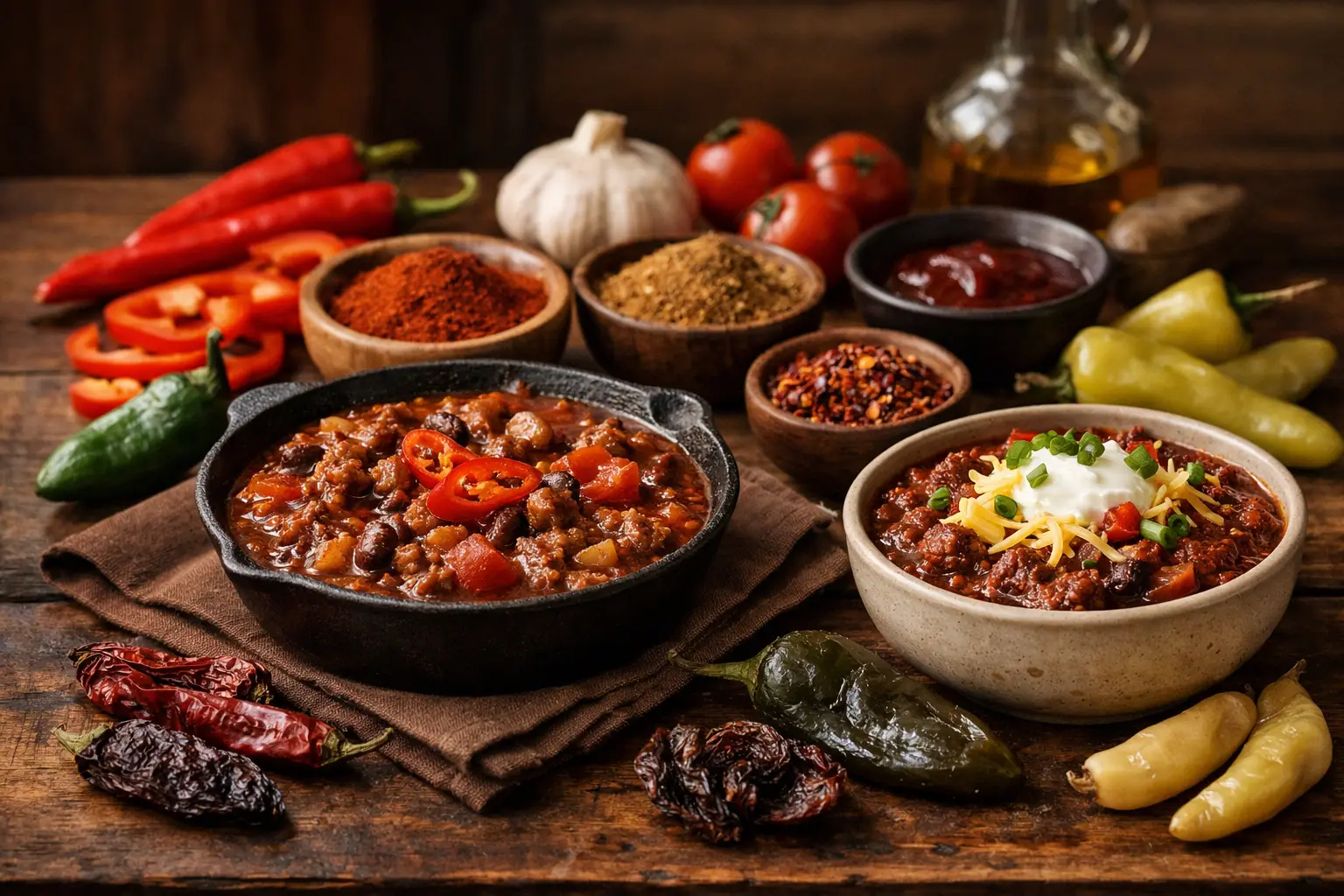
A missing pepper should not cancel chili night. The best chili pepper substitutes match the role that pepper plays in your pot: deep and raisiny for a Texas Red, bright and grassy for green chili, smoky for a chipotle-heavy turkey bowl, or simply hot enough to make the spoonful memorable. Heat matters, but it is only one part of the story.
A good swap keeps your chili moving in the right flavor direction without turning it into a completely different recipe. That means looking at freshness, smoke, sweetness, bitterness, color, and how the pepper behaves after a long simmer. Every bowl tells a story, and the pepper is usually one of its loudest characters.
Choose a Substitute by the Pepper's Job
Before reaching for the nearest hot sauce, decide what is missing. Dried chiles give red chili its backbone: they bring dark fruit, toasted earthiness, and brick-red color. Fresh green chiles add a clean vegetal bite and soften into the broth. Chipotles bring smoke as much as heat. Tiny hot peppers, from serranos to habaneros, are often there to sharpen the edges rather than build the whole base.
When a recipe calls for a dried chile, another dried chile is usually the cleanest substitute. When it calls for a roasted green chile, use another fresh or canned green chile rather than chile powder. Powder is useful, but it disperses differently and can make a broth taste flat if it replaces every source of pepper flavor.
Also, adjust for heat after the first simmer. You can always add cayenne, crushed red pepper, or hot sauce at the end. You cannot easily pull back a pot that has crossed from bold to punishing.
The Best Chili Pepper Substitutes, Matched by Style
1. For ancho chile, use guajillo or pasilla
Ancho chiles are dried poblanos, prized for their mild heat and notes of raisin, cocoa, and dried fruit. They are a classic base for red chili, mole-leaning sauces, and rich beef recipes. Guajillo is the best easy replacement when you still want a red, smooth chile sauce, though it is brighter and tangier than ancho.
Use one guajillo for each ancho, then add a small pinch of unsweetened cocoa or a few extra minutes of toasting if the recipe needs ancho's darker character. Pasilla is another useful option, with a more earthy, slightly bitter edge. It works especially well in pork chili and bean-forward pots.
2. For guajillo chile, use ancho or New Mexico chile
Guajillo has a clean, red-fruit flavor with mild-to-medium heat. It is one of the workhorse dried peppers for chili sauces because it contributes color without taking over the pot. Ancho makes a deeper, sweeter substitute, while dried New Mexico chile offers a more straightforward, earthy red-chile profile.
For a balanced swap, use an equal amount of ancho and add a little paprika for color. If you are making Colorado-style red chili, New Mexico chile is often the more natural move because it keeps the sauce focused, savory, and red rather than overly fruity.
3. For chipotle peppers, use smoked paprika plus cayenne
Chipotle is a smoked, dried jalapeno, so its signature is a two-part punch: medium heat and unmistakable smoke. If you do not have canned chipotles in adobo, combine smoked paprika with cayenne. Start with 1 teaspoon smoked paprika and 1/8 teaspoon cayenne for every chipotle pepper called for, then build from there.
The trade-off is texture and tang. Chipotles in adobo bring a thick, vinegary sauce that can wake up a slow-cooked beef or chicken chili. Add a teaspoon of tomato paste and a small splash of apple cider vinegar if your substitute needs that same dark, tangy attitude.
4. For jalapenos, use serranos or poblanos
Jalapenos sit in the friendly middle of the pepper world: green, crisp, and approachable. Serranos are the closest flavor substitute, but they carry substantially more heat. Use about half as much serrano, taste, then decide whether your pot wants more.
Poblanos are the better choice when you want jalapeno's fresh green presence without much fire. They are broad, mild, and especially good in white chicken chili, green turkey chili, and creamy bean pots. Roast or saute them first for a deeper, less raw flavor.
5. For serranos, use jalapenos with a little cayenne
Serranos are bright, pointed, and hotter than jalapenos. They work when a chili needs lively heat that still tastes green and fresh, not just aggressively spicy. Replace one serrano with one jalapeno plus a pinch of cayenne, especially if the peppers will simmer in the pot.
Do not add the cayenne until you know how hot the jalapeno is. Pepper heat varies wildly, and a jalapeno picked in August can be far more serious than one picked in spring.
6. For Fresno chiles, use red jalapenos or red bell pepper
Fresnos look like red jalapenos and often deliver a similar sweet-hot balance. A red jalapeno is the closest swap if you can find one. If not, use a green jalapeno for heat plus a little diced red bell pepper for color and sweetness.
This is a smart move for chili recipes where appearance counts, such as a bright red turkey chili or a game-day pot topped with fresh pepper rings. Green jalapeno alone works, but it changes the color story and tastes more vegetal.
7. For habaneros, use Scotch bonnets or a tiny amount of cayenne
Habaneros bring tropical fruit notes along with major heat. Scotch bonnets are the closest substitute and can be used one for one, but both peppers demand restraint. Add them whole to a simmering pot, then remove them once the heat reaches your comfort zone.
If cayenne is all you have, use only a pinch. Cayenne provides heat but not habanero's floral, fruity lift. A little orange zest or mango in a chili built around Caribbean flavors can help restore that missing brightness, but keep it subtle. This is chili, not dessert.
8. For Thai chiles, use serranos or crushed red pepper
Thai chiles are small, sharp, and hot. Serranos are the best fresh substitute because they preserve the green flavor and deliver a similar quick heat. One serrano can replace two or three Thai chiles, depending on size and your audience's heat tolerance.
Crushed red pepper works in a pinch, particularly in a quick skillet chili where the pepper does not need to be a visual feature. It is less fresh and more one-note, so pair it with garlic, lime, or cilantro if you are chasing a lively fusion-style bowl.
9. For New Mexico or Hatch chiles, use Anaheim or poblano
New Mexico and Hatch chiles bring the defining flavor to many green chilis: roasted, earthy, mildly sweet, and unmistakably Southwestern. Anaheim peppers are the easiest substitute because they share a similar mild green profile. Poblanos are darker, richer, and often easier to find.
For the best result, roast the substitute until the skin blisters, steam it briefly, peel, and chop. Canned fire-roasted green chiles are also perfectly legitimate for a weeknight pot. They will not have the full personality of fresh Hatch season, but they keep dinner on track.
10. For crushed red pepper, use cayenne or hot sauce
Crushed red pepper is mostly about straightforward heat, with a little texture from flakes and seeds. Cayenne is the closest substitute, but it is finer and can feel hotter by volume. Use half the amount of cayenne, let the chili simmer for five minutes, and reassess.
A vinegar-forward hot sauce is useful when the recipe can handle extra tang. It shines in bean chili, Cincinnati-inspired chili, and lighter chicken versions. In a long-cooked Texas Red, however, too much hot sauce can distract from the dried-chile depth you worked to build.
Build Better Swaps With Two Peppers
The most convincing substitutions often come from pairing peppers instead of forcing one chile to do everything. An ancho plus guajillo blend replaces a complex dried-chile base better than either pepper alone. A poblano plus jalapeno creates a green-chile effect with both body and heat. Smoked paprika plus cayenne handles chipotle when your pantry is otherwise bare.
Think in layers. Use a mild pepper for volume, color, and flavor, then use a hotter pepper or powder for control. This approach is especially helpful when cooking for a mixed crowd: the main pot stays welcoming, while hot sauce, sliced serranos, or extra chile flakes let heat seekers choose their own adventure.
Three Mistakes That Flatten a Chili
First, do not substitute powdered chile for whole dried chiles at the same volume. A tablespoon of chile powder can be much more concentrated than one dried pepper, and commercial blends may include cumin, garlic, oregano, or salt. Start small and taste.
Second, do not skip the prep that creates flavor. Toast dried peppers briefly before soaking and blending them. Roast fresh green peppers before adding them to the pot when their flavor is central. Those few minutes create the deep, rounded character that separates a decent chili from a recipe worth saving.
Finally, do not chase heat at the expense of balance. If a substitute makes the chili hotter than planned, soften the blow with more beans, tomatoes, broth, or meat. A little acidity and a dollop of dairy at serving time can help, but the best fix is building heat gradually from the start.
A missing chile is an invitation to cook by instinct. Let the style of chili lead, use the pepper you have with purpose, and taste as the pot develops. The result may not be a replica, but it can still earn a permanent spot in your chili rotation.