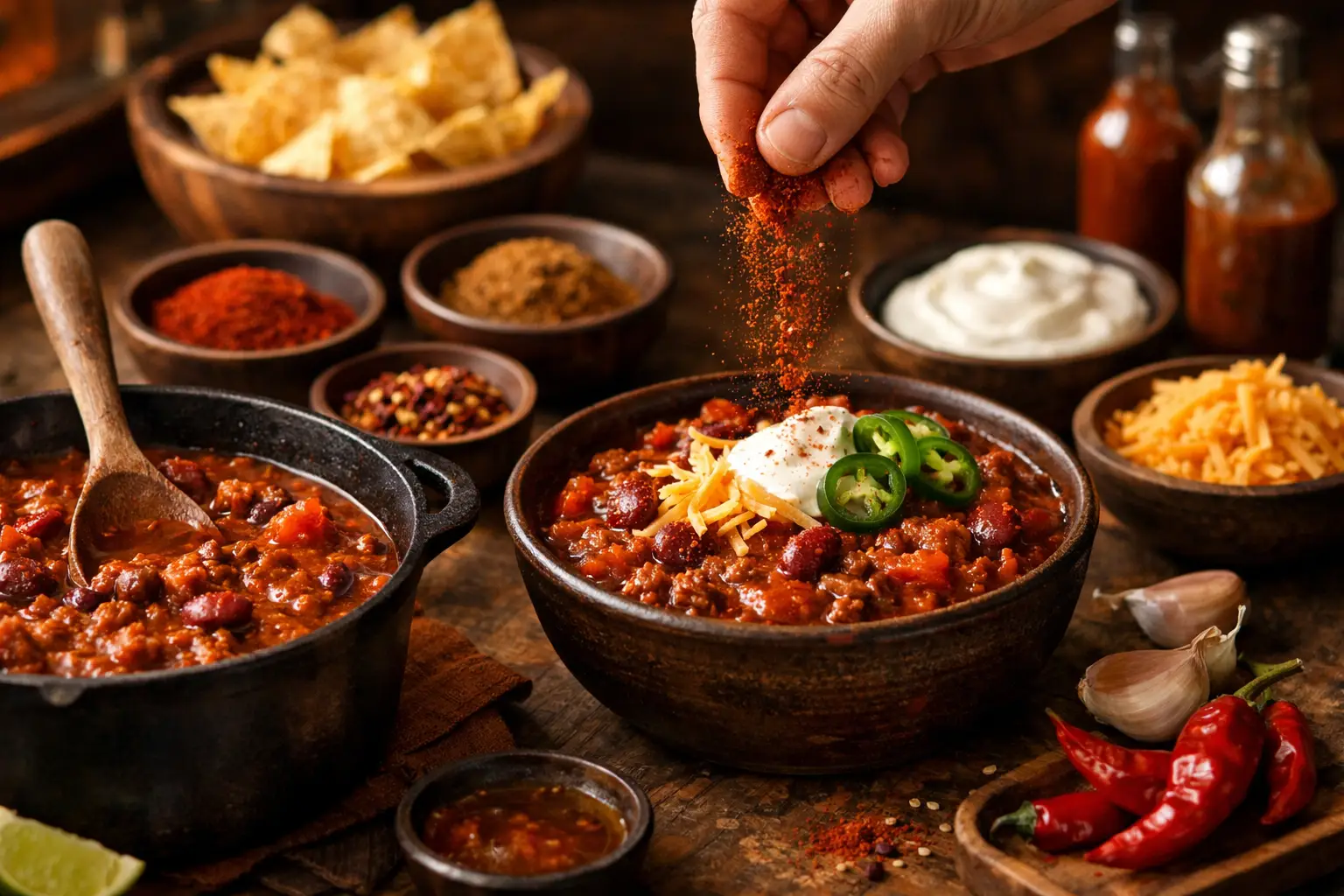
You taste the pot, pause, and think: that’s it? If you’re wondering how to fix bland chili, the good news is that flat chili is rarely a lost cause. Most bland bowls are not missing everything. They’re usually missing one or two key flavor signals - salt, acidity, heat, sweetness, savoriness, or texture.
Chili is a layered dish. That’s what makes it great, and that’s also why it can fall a little flat even when you used good ingredients. Ground beef, beans, tomatoes, peppers, and chili powder can still land soft and muddy if the balance is off. The fix is not dumping in more of every spice you own. The fix is figuring out what kind of bland you’re dealing with.
Quick answer
Bland chili is usually missing salt, acid, layered spice, or umami — not everything at once. Taste for what is flat, fix one signal at a time, and layer fresh spices so the pot wakes up without turning muddy.
How to fix bland chili by identifying the problem
Before you add anything, taste with intention. Chili can be bland in a few different ways, and each one points to a different fix.
If it tastes dull and lifeless, it probably needs salt. If it tastes heavy and sleepy, it likely needs acid. If it tastes thin and watery, it may need time to reduce or something rich and savory to deepen it. If it tastes like tomatoes and not much else, your spice base may be underdeveloped. And if it tastes technically seasoned but still unexciting, the problem may be texture rather than flavor.
That distinction matters. More cumin will not fix a chili that simply needs lime juice. Extra hot sauce will not help a pot that was never salted enough in the first place. Chili gets better fast when you solve the right problem.
Start with salt, because bland often means underseasoned
Salt is the least glamorous fix and the most common one. A pot of chili can hold a surprising amount of seasoning, especially if you used beans, tomatoes, stock, or unsalted meat. Add a small pinch, stir well, and taste again after a minute. Repeat slowly.
This is where many home cooks undershoot. They get nervous, stop too soon, and end up with a chili that tastes almost good. You want the flavors to wake up. Salt should not make the chili salty. It should make the beef taste beefier, the tomatoes more rounded, and the spices more present.
If your chili already contains salty ingredients like bacon, bouillon, soy sauce, or canned beans that weren’t rinsed, move carefully. But do not skip the test. Salt is often the switch that turns everything on.
Add acid when the pot tastes heavy
Rich chili can get stuck in the middle. It has body, warmth, maybe even decent heat, but it still tastes flat. That usually means it needs a bright edge.
A squeeze of lime juice works especially well in chili with beans, chicken, turkey, or green chiles. Red wine vinegar, apple cider vinegar, or a small spoonful of pickle brine can also sharpen the pot in a good way. You are not trying to make it sour. You are trying to cut through the richness so the other flavors become more distinct.
Tomato-heavy chili sometimes benefits from a tiny splash of vinegar even though tomatoes are acidic on paper. Cooked tomato products can taste sweet and dense after simmering. A fresh acid can bring back definition.
Wake up the spice base, not just the heat level
A lot of bland chili is not under-spiced. It is under-layered. There is a difference.
If your pot tastes dusty or one-note, add depth before you add raw heat. Chili powder alone can read flat if it is not supported by cumin, garlic, onion, oregano, smoked paprika, chipotle, or toasted chile flavor. A small amount of tomato paste cooked in a skillet until it darkens can add concentration fast. So can a pinch of cocoa powder, a little espresso, or a bit of adobo from canned chipotles.
The key is restraint. These are supporting notes, not a costume change. If your chili started as a classic beef-and-bean weeknight pot, you probably do not want to turn it into a smoky mole-adjacent experiment by accident.
If you do want more heat, choose the style of heat that fits your chili. Cayenne gives quick direct fire. Chipotle adds smoke and warmth. Fresh jalapeno or serrano adds a greener, brighter edge. Hot sauce can work, but many hot sauces also bring acid and salt, so they change more than one variable at once.
Build umami if the chili tastes thin
Sometimes chili tastes seasoned enough but still lacks depth. It hits your tongue, then disappears. That is usually an umami problem.
For beef chili, a little Worcestershire sauce can do real work. Soy sauce is another strong option if used lightly. Anchovy paste sounds dramatic, but in a small amount it melts into the background and boosts savoriness without making the chili taste fishy. Better Than Bouillon or a concentrated stock reduction can also help if the pot tastes watered down.
For vegetarian chili, mushrooms are a power move. Finely chopped mushrooms cooked until browned add body and savory backbone. Miso can also deepen a bean-based chili, especially one built around tomatoes and peppers. A little goes a long way.
This is one of those it-depends moments. If your chili is already dark, rich, and salty, pushing more umami can make it muddy. In that case, acid or sweetness may be the better route.
Use sweetness carefully to round out bitterness and harsh edges
Not every chili needs sweetness, but some absolutely benefit from it. If your pot tastes bitter from too much chili powder, burnt garlic, aggressive tomato paste, or canned tomatoes with a metallic edge, a small amount of sugar, honey, maple syrup, or even ketchup can smooth things out.
Small amount is doing a lot of work in that sentence. Start tiny. Chili should not taste sweet unless you are making a style that intentionally leans that way. The goal is balance, not dessert.
This is especially useful in turkey chili, vegetarian chili, and budget-friendly weeknight chili where canned ingredients dominate the flavor profile.
Fix the texture if the flavor is there but the bowl still feels flat
Flavor is only part of the chili experience. Texture carries excitement too.
If the chili is watery, simmer it uncovered longer. Reduction concentrates flavor better than almost any shortcut. If you need a faster fix, mash some beans into the pot or stir in a spoonful of masa harina. Crushed tortilla chips can work in a pinch. These additions thicken the chili and make it feel more cohesive.
If the chili is too uniform, add contrast. A bowl with tender meat, soft beans, and tomato broth can taste monotonous even when the seasoning is decent. That is where toppings matter. Raw onion, shredded cheddar, sour cream, scallions, cilantro, avocado, pickled jalapenos, or crushed corn chips can wake up the entire bowl.
This is not cheating. Chili is one of the most topping-friendly dishes in the comfort-food universe. Texture is flavor’s loud cousin.
How to fix bland chili without overcorrecting
The biggest mistake is panic seasoning. You taste bland chili, then add salt, hot sauce, cumin, garlic powder, paprika, cocoa, brown sugar, and vinegar all at once. Ten minutes later, the pot tastes confused.
Make one move at a time. Taste after each addition. If possible, ladle out a small bowl and test your fix there first. That lets you experiment without gambling on the whole batch.
It also helps to think in pairs. Salt and acid often solve dullness. Heat and sweetness can balance each other. Umami and reduction build depth together. Toppings and texture can rescue a chili that is technically flavorful but boring to eat.
The fix depends on the chili style
Not every chili wants the same rescue plan. Texas-style red often responds best to chile depth, salt, and a little acid. Bean-heavy ground beef chili usually needs seasoning balance and texture. White chicken chili can come alive with lime, green chiles, and a dairy finish. Vegetarian chili often benefits from stronger umami support and a more careful hand with sweetness.
That is part of the fun. Every bowl tells a story, and every bland bowl tells you what chapter is missing.
The best chili cooks are not the ones who memorize a magic ingredient. They are the ones who taste, adjust, and understand what the pot is asking for. If your chili tastes flat tonight, that does not mean the recipe failed. It means the final layer is still waiting for you to build it.