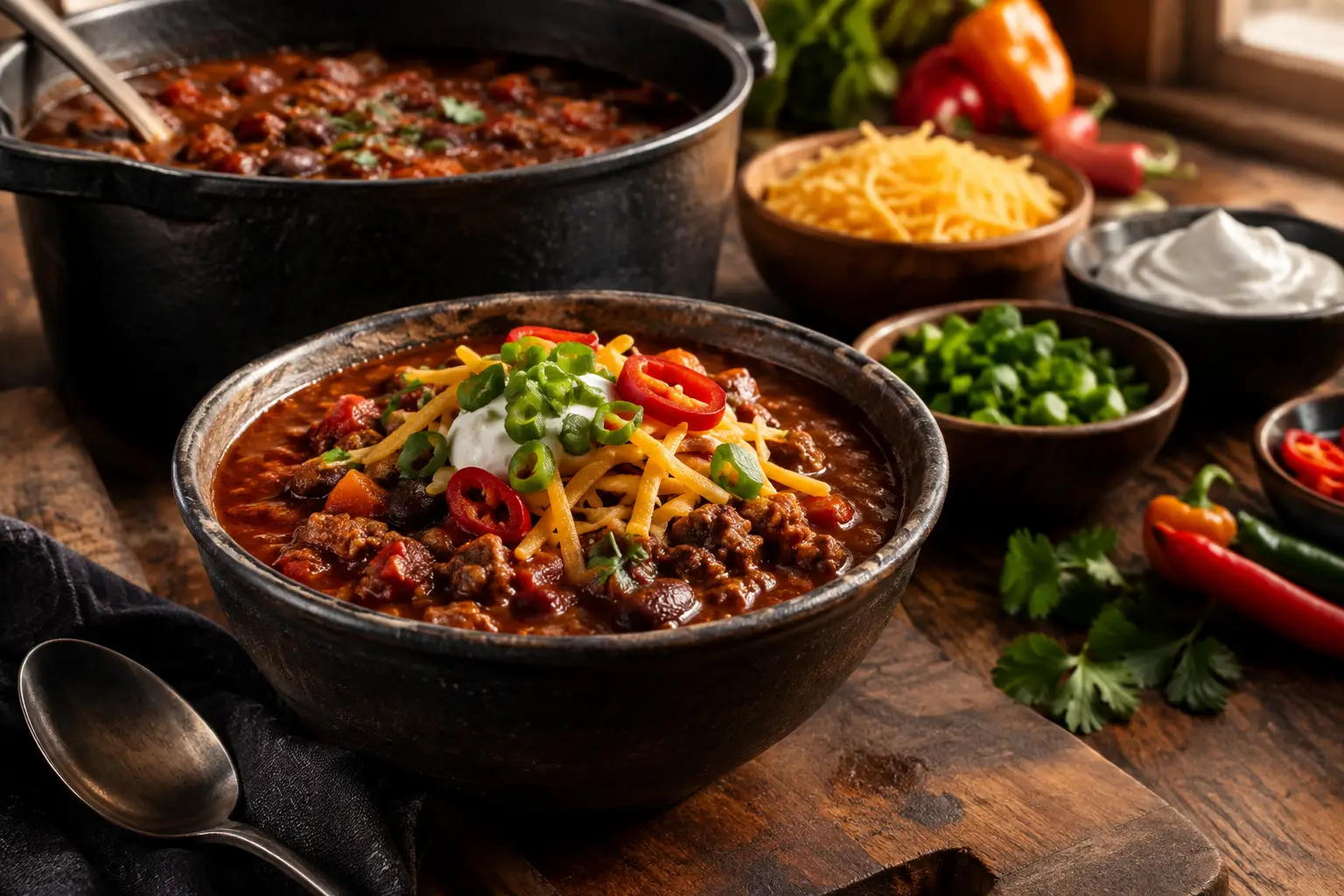
A bowl of chili can carry a hometown argument, a family memory, and a serious opinion about beans. That is exactly why chili fusion trends are so interesting right now: they are not replacing the classics. They are giving cooks more ways to build big, slow-cooked flavor while keeping one foot planted in the regional styles that made chili worth obsessing over in the first place.
The best fusion chili is not a random pile of trendy ingredients. It has a point of view. It borrows a spice profile, cooking technique, or signature condiment from another food tradition, then lets that influence sharpen the chili rather than bury it. Think gochujang adding fermented heat to beef and beans, Thai curry paste brightening a coconut chicken chili, or birria-style dried chiles bringing deep, roasty drama to a pork pot.
Every bowl tells a story. The new stories just have a few more stamps in the passport.
Why Chili Fusion Trends Have Real Staying Power
Chili has always been more flexible than its loyalists sometimes admit. Texas Red developed its own rules around beef and chiles. Cincinnati chili took Greek-influenced seasoning and turned it into a beloved, highly specific style. Colorado green chili makes a case for pork, roasted green chiles, and a thinner, spoonable texture. Regional chili history is full of adaptation.
That makes chili a natural landing place for modern home cooks who have a jar of chili crisp in the fridge, leftover adobo in the freezer, and no interest in making the same ground-beef recipe every Sunday. A familiar chili format gives experimentation some guardrails: build a flavorful base, balance heat with richness and acidity, give the pot time to come together, and serve it with intention.
Fusion also answers a practical need. Global pantry staples can create a new flavor lane without requiring a completely new cooking project. Miso adds savory depth where some cooks might reach for bouillon. Harissa brings smoky chile heat and warm spice to lamb or chickpeas. Jerk seasoning can push turkey chili toward allspice, thyme, and Scotch bonnet character. These are high-impact additions, but they work best when one flavor direction leads the pot.
The Flavor Lanes Defining Chili Fusion Trends
Korean-inspired chili brings funk, fruit, and heat
Gochujang has become a natural chili ingredient because it does several jobs at once. It delivers chile heat, sweetness, fermented depth, and a thick body that settles beautifully into a beef, pork, or mushroom chili. Pair it with soy sauce, garlic, ginger, and a little toasted sesame oil, then finish with scallions and crunchy kimchi for contrast.
The trade-off is salt. Gochujang, soy sauce, kimchi, and stock can stack sodium fast, so season in stages and use a low-sodium broth if possible. This style is especially good for cooks who like a medium-to-hot bowl with a slightly glossy, savory-sweet finish.
Mexican regional cues are getting more specific
“Mexican-inspired” is too broad to tell a cook much. The more exciting movement is toward recognizable regional building blocks: earthy mole-style notes, birria-like chile depth, salsa verde brightness, and smoky adobo character. A chili built around guajillo, ancho, and chipotle has a completely different personality from one driven by roasted tomatillos, poblano peppers, cilantro, and lime.
For a birria-leaning beef chili, toast dried chiles, blend them with garlic, onion, warm spices, and stock, then let chuck roast become spoon-tender in that red, fragrant base. For a greener route, use pork or chicken with tomatillos and Hatch or Anaheim chiles. The result may sit somewhere between stew, chili, and chile verde. That is not confusion. That is a very good dinner.
South Asian spices turn the warmth up, not just the heat
Indian-inspired chili makes sense because beans, lentils, tomatoes, onions, and long-simmered spices already speak the same comfort-food language. Cumin, coriander, turmeric, Kashmiri chile, garam masala, and ginger can make a turkey, lamb, or lentil chili feel plush and aromatic without forcing it into curry territory.
The key is timing. Bloom whole or ground spices in fat early, then reserve delicate finishing spices for the final minutes. A spoonful of yogurt, a squeeze of lemon, or a scatter of cilantro can wake up the whole pot. If you are using garam masala, go easy. It should perfume the chili, not turn every bite into a spice cabinet takeover.
Caribbean and West African influences favor depth and brightness
Peanut butter in chili is no longer a surprise to many cooks, but it still earns its place when used with restraint. In a West African-inspired chili, peanut butter can round out tomatoes, beans, sweet potatoes, and chicken or turkey, while ginger, garlic, chile, and greens keep the bowl lively. The texture becomes velvety, not heavy, if the broth stays loose enough.
Caribbean-leaning chili takes another route. Jerk seasoning, black beans, sweet potato, lime, and pineapple can work beautifully with chicken or turkey. The pineapple should be treated as an accent, though. Too much sweetness can make a chili taste like a slow-cooker party dip. A hit of vinegar or lime keeps the flavor focused.
New Proteins Are Changing the Shape of the Pot
Fusion chili is also moving beyond the standard ground-beef formula. Some of that is budget-driven, some is health-minded, and some of it is simply cooks realizing that chili has room for more than one kind of meat.
Chicken thighs bring richness to green, coconut, and curry-spiced chilies. Pork shoulder loves dried chiles, fermented sauces, and long braises. Lamb holds up to assertive spices like harissa, cumin, and cinnamon. Seafood chili, usually built around white fish or shrimp, can be fast, bright, and brothy, especially with roasted peppers, corn, lime, and a restrained dose of smoky chile.
Plant-forward bowls are getting more ambitious, too. The strongest versions do not pretend lentils or mushrooms are beef. They play to their strengths. Lentils provide earthy body, mushrooms add savor, black beans bring creaminess, and roasted squash offers sweetness that can stand up to smoky chipotle or tangy tamarind. A vegetarian chili earns its place through layers, not imitation.
How to Keep Fusion Chili From Becoming a Gimmick
A successful fusion bowl usually has one main cultural flavor direction and one supporting accent. Gochujang plus smoked paprika? Great. Gochujang, curry paste, jerk seasoning, and miso in the same Dutch oven? That is a culinary group chat with too many people typing.
Start with the question: what should the first spoonful taste like? If the answer is smoky and earthy, build around dried chiles, roasted vegetables, cumin, and beef or mushrooms. If it is bright and tangy, make tomatillos, lime, herbs, and green chiles the center. If it is deep and savory, use fermented ingredients, browned meat, and a long simmer. Let the toppings reinforce that direction instead of competing with it.
Texture matters just as much as flavor. Crunchy onions, toasted pepitas, crushed tortilla chips, scallions, pickled jalapeños, and fresh herbs can keep a rich fusion chili from tasting flat. Creamy toppings like crema, yogurt, avocado, or coconut milk can soften heat, but they should serve the pot rather than rescue it.
There is also no shame in calling a recipe a chili-inspired stew when it has moved far from the classic playbook. Labels help cooks know what they are getting. A hearty, spoon-coating beef-and-bean pot belongs in one lane; a fragrant coconut broth with chicken, chiles, and rice belongs in another. Both can be excellent. Clear expectations make them easier to crave.
Build Your Next Bowl Around a Flavor Passport
When you are browsing for dinner, start with the anchor you already know: protein, heat level, or cooking time. Then choose one flavor passport. Craving low-and-slow comfort? Try birria-style beef or harissa lamb. Need a weeknight pot? Coconut curry chicken chili or a gochujang turkey version can bring serious personality without an all-day simmer. Want a meatless bowl with real presence? Lentils, mushrooms, and a peanut-chile base are ready for the job.
ChiliStation is built for this kind of choosing. A Texas Red, a green pork chili, and a Korean-inspired beef bowl may all satisfy the same need for a warm, bold dinner, but they tell wildly different stories. Comparing those stories is half the fun.
The next great chili does not need to break every rule. Give it one strong idea, a balanced pot, and enough time for the flavors to recognize each other. Then put out the toppings and let the bowl speak for itself.