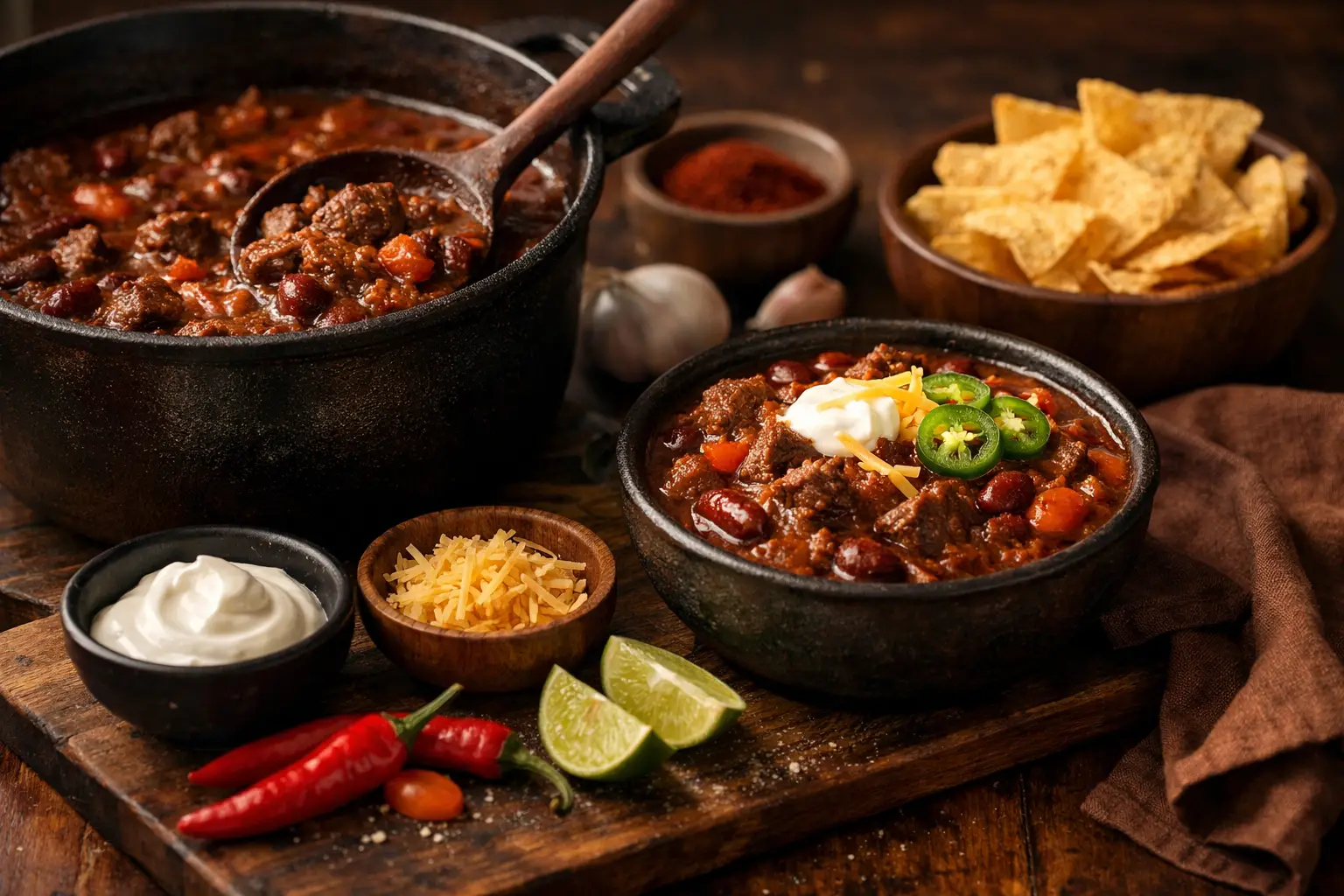
Some chili recipes ask ground beef to do all the work. This beef chuck chili recipe goes in a different direction - bigger texture, deeper flavor, and that slow-simmered payoff that makes the whole kitchen smell like you made the right call.
Chuck is one of the best cuts for chili because it brings real beef character to the pot. As it cooks, the collagen softens, the cubes turn spoon-tender, and the broth picks up body without feeling greasy. If you want a bowl that eats like comfort food but still has some muscle, this is the lane.
Why beef chuck works so well in chili
Beef chuck sits in the sweet spot between affordability and flavor. It has enough fat and connective tissue to stay moist during a long simmer, but not so much that your chili turns heavy or slick. Ground beef cooks faster, sure, but it can flatten the texture. Chuck gives you distinct bites of meat, which makes the whole pot feel more substantial.
This also changes the way the chili tastes. Instead of every ingredient blending into one uniform spoonful, you get layers - browned beef, softened onion, smoky chile powder, tomato richness, and whatever heat source you choose. That contrast is what makes a beef-forward chili memorable.
There is one trade-off. Chuck needs time. If dinner is 45 minutes away, this is probably not your move. But if you have a couple of hours and want weekend-level results, the return is huge.
Beef chuck chili recipe essentials
A great beef chuck chili recipe is less about fancy ingredients and more about choosing the right building blocks. Start with beef chuck roast cut into small cubes, usually around 1/2 to 3/4 inch. Smaller pieces cook down faster and fit better on a spoon, while still keeping that stew-like bite.
You also want onion, garlic, tomato paste, crushed tomatoes or tomato sauce, stock, and a chili spice base that tastes warm and full rather than dusty. A strong core usually includes chili powder, cumin, oregano, smoked paprika, and black pepper. From there, you can push the pot in different directions. Add chipotle for smoke, jalapeno or serrano for sharper heat, or a little cocoa for darker depth.
Beans are where the chili table starts debating. If you like a heartier, everyday bowl, kidney or pinto beans work well here. If you want a more Texas-leaning profile that keeps the spotlight on the beef, skip them. Both versions can be excellent. It depends on whether you want the chili to eat more like a beef stew or a pantry-friendly one-pot meal.
How to build deeper flavor from the start
The first big move is browning the chuck properly. Pat the meat dry, season it with salt, and sear it in batches in a heavy pot. If you crowd the pan, it steams. If you give it space, it browns. That browned crust is not a small detail - it is the base note of the whole chili.
Once the beef comes out, cook the onion in the same pot and scrape up the browned bits. Add garlic, then tomato paste, and let the paste darken slightly before the liquid goes in. This quick step takes the tomato flavor from bright and raw to richer and more integrated.
Spices benefit from a little direct heat too. Stir them into the onion mixture for 30 seconds or so, just until fragrant. It wakes them up and keeps the finished chili from tasting like the seasoning was dumped in as an afterthought.
The method that gets tender beef, not tough cubes
After the sear and the aromatics, return the chuck to the pot and add your tomatoes and stock. Bring everything to a gentle simmer, not a hard boil. Low and slow is what turns chuck into chili meat instead of chewy beef nuggets.
Cover the pot partially and let it cook until the beef is tender, usually around 1 1/2 to 2 hours depending on cube size and how steadily your chili simmers. Stir occasionally and check the liquid level. If it starts looking too tight before the beef is ready, add a splash more stock or water.
If you are using beans, add them later in the cook so they stay intact and do not disappear into the sauce. The final 20 to 30 minutes is usually enough for them to absorb flavor without getting mushy.
One smart move is to let the chili rest off the heat for 10 to 15 minutes before serving. It thickens slightly, the fat settles, and the flavors come into better focus. Chili is rarely at its best the second it stops bubbling.
A practical beef chuck chili recipe
For a 6-serving pot, use 2 pounds beef chuck roast, trimmed and cut into small cubes, 1 large yellow onion diced, 4 cloves garlic minced, 2 tablespoons tomato paste, 2 tablespoons chili powder, 2 teaspoons cumin, 1 teaspoon dried oregano, 1 teaspoon smoked paprika, 1/2 teaspoon black pepper, 1 can crushed tomatoes, 2 cups beef stock, 1 to 2 cans beans if using, and salt to taste. A diced jalapeno or 1 chipotle in adobo is a strong add if you want more personality.
Heat a Dutch oven with a little oil over medium-high heat. Salt the beef and brown it in batches, then set it aside. Lower the heat to medium, cook the onion until softened, stir in the garlic and tomato paste, then add the spices. Return the beef, pour in the tomatoes and stock, and bring to a simmer. Cook partially covered until the chuck is tender. Add beans near the end if you want them, then taste and adjust the salt.
If the chili looks thin at the end, uncover it and simmer a bit longer. If it gets too thick, loosen it with stock. Chili should have body, but it should still move in the bowl.
How to customize the pot without losing the plot
This style of chili is flexible, but not infinitely forgiving. If you add too many competing ingredients, the beef loses center stage. The best tweaks are the ones that support the chuck rather than distract from it.
For a smokier version, use chipotle and a little extra paprika. For a brighter, redder pot, lean on ancho or New Mexico chile powder. For a richer finish, a small square of dark chocolate or a pinch of cocoa can work, but keep it subtle. You are rounding the edges, not making mole.
Beer can replace part of the stock if you want a darker, more bar-style flavor. A splash of coffee can deepen the pot too. Both are useful, but both can dominate if you go heavy-handed. This is one of those it-depends calls. If your spice blend is already assertive, plain stock may be the better path.
Toppings that actually fit this chili
Because chuck chili is rich and beefy, toppings should bring contrast. Sharp cheddar, diced red onion, scallions, sour cream, pickled jalapenos, and cilantro all work. Cornbread on the side is a classic for a reason. So are saltines if you want old-school comfort.
What usually works less well is piling on too many heavy toppings at once. This is not the bowl for a mountain of cheese sauce and queso and extra beef. Keep some freshness in play.
Make-ahead, leftovers, and freezer value
A beef chuck chili recipe often tastes even better the next day. The beef relaxes, the spices settle, and the whole pot gets more coherent overnight. If you meal prep, this is one of the strongest candidates in the chili rotation.
Store leftovers in the fridge for up to 4 days, or freeze in portions for a future dinner that feels like a gift from your past self. If it thickens too much after chilling, just reheat it with a splash of stock or water.
For anyone building a personal chili playbook, this is one of those anchor recipes worth keeping around. It sits in a sweet spot between weeknight-friendly and special enough to share, which is exactly why versions like this stay popular on platforms like ChiliStation.
Common mistakes that flatten the flavor
The biggest miss is under-seasoning. Beef chuck can take more salt than people expect, especially in a tomato-based chili. Taste near the end and adjust. Another common problem is rushing the simmer. If the meat is still firm, the chili is not done.
Too much tomato can also push the pot away from chili and toward beef stew with chile powder. You want enough tomato for structure and acidity, not so much that it buries the spice blend. And if the heat tastes harsh instead of rounded, the chili probably needs more time, not more sugar.
A good bowl of chuck chili feels bold, thick, and calm at the same time. The flavors should taste settled.
When you want chili with real chew, real depth, and a little more presence than the usual ground-beef pot, chuck is the move. Give it the time it asks for, and it will give you a bowl that tastes like it means it.