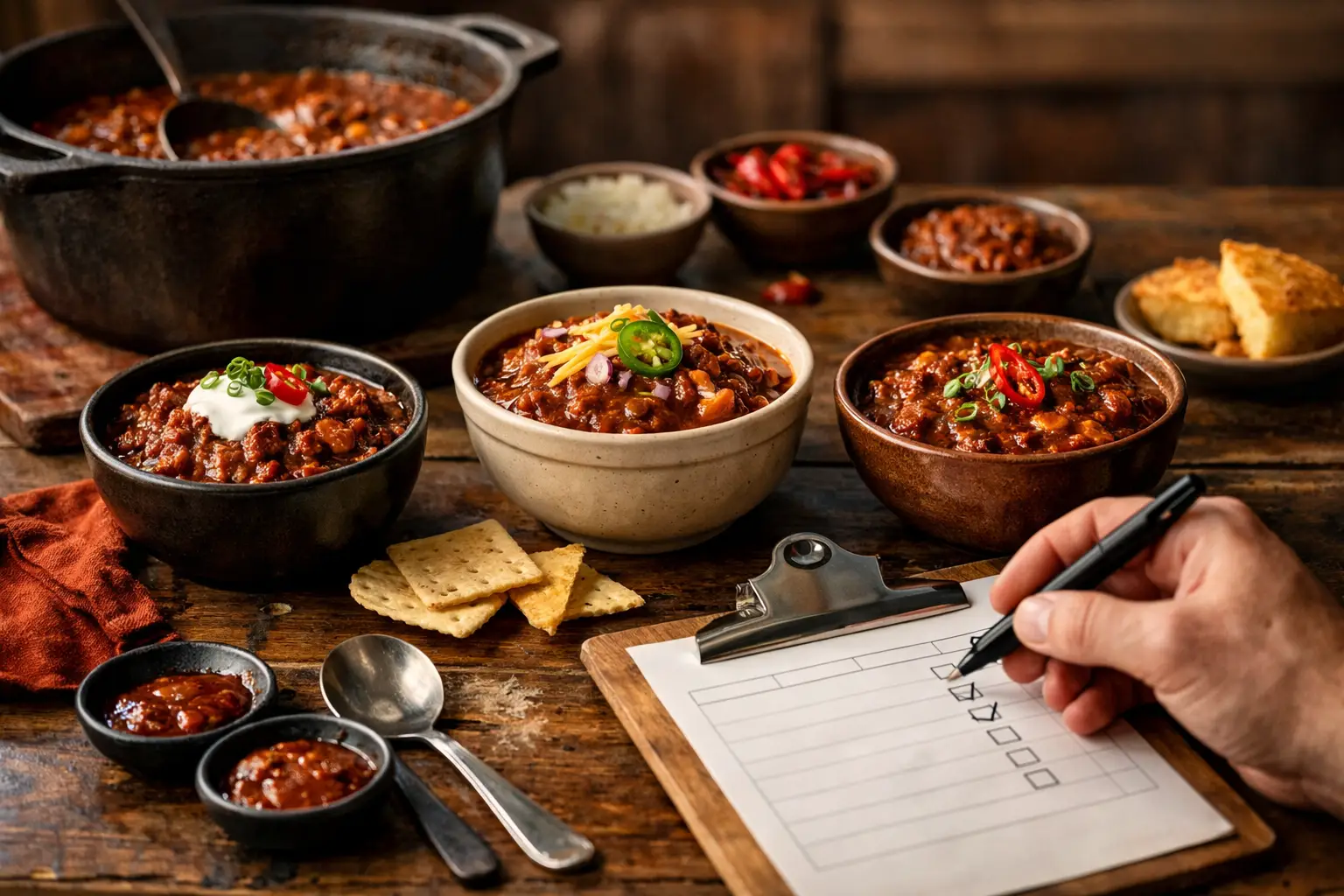
A great chili cook-off can turn on one spoonful: the first hit of toasted chile aroma, the way the meat breaks apart, the warmth that arrives after the flavor instead of bulldozing it. A chili judging scorecard gives those reactions structure. It helps judges reward the bowl that is genuinely delicious, not merely the hottest, reddest, or most familiar.
Every bowl tells a story. A Texas Red may lean into beef, dried chiles, and a no-bean point of view. Colorado green chili brings pork, roasted Hatch chiles, and a looser, stew-like texture. Cincinnati chili plays by its own spice-rack rules. A useful scorecard lets each style tell its story clearly while still holding every entry to the same standard: balance, care, and serious spoon appeal.
What a Chili Judging Scorecard Should Measure
The best scorecards focus on eating quality rather than a judge's personal recipe preference. That matters because chili is not one fixed dish. If a judge only loves thick, smoky beef chili, they can unintentionally punish a bright turkey white chili or a silky bowl of green chile pork before it has a chance.
For most community cook-offs, a 100-point system is easy to understand and easy to total. Give the most weight to flavor, then use the remaining points to capture the sensory details that make a bowl memorable.
| Category | Points | What judges should look for | |---|---:|---| | Appearance | 10 | Appetizing color, proper consistency, visible care in the bowl | | Aroma | 10 | Inviting chile, spice, meat, vegetable, and slow-cooked notes | | Flavor and balance | 35 | Depth, seasoning, harmony, and a clear point of view | | Texture | 20 | Properly cooked meat, beans or vegetables, and a satisfying body | | Heat management | 10 | Heat that supports flavor and fits the entry's stated style | | Finish | 15 | A clean, lasting aftertaste that invites another bite |
This format does not make appearance unimportant. A flat gray bowl or an oily surface can signal trouble before the first taste. Still, appearance should not outweigh flavor. Chili is comfort food, not a plated fine-dining audition.
Flavor deserves the biggest share
Thirty-five points for flavor makes the scorecard honest. Great chili has layers: chile peppers, savory depth, salt, acid, sweetness when appropriate, and spices that feel intentional rather than randomly loud. Judges should ask whether the ingredients work together and whether the bowl tastes complete.
A score in the top range should feel focused. It does not need to be complicated. A clean, beefy Texas Red with a deep dried-chile backbone can outscore a crowded recipe with ten spices fighting for attention. Likewise, a vegetarian chili can earn top marks when its beans, vegetables, and umami elements create real depth instead of tasting like a side dish in disguise.
Texture is more than thickness
Texture is where many promising entries lose ground. Meat should be tender but not mushy. Beans should be creamy or intact according to the recipe, never chalky. Vegetables should contribute body without turning watery. The sauce should cling to the spoon, whether it is thick and brick-red or looser and green.
There is a trade-off here. A chili that is too thick can taste pasty and muted; one that is too thin may read as soup. The right consistency depends on regional style, but it should always feel deliberate. Judges are scoring execution, not enforcing one preferred thickness.
Heat should have a job
Ten points is enough to recognize smart heat without turning the cook-off into a punishment contest. The question is not, Can this bowl make someone sweat? The question is, Does the heat improve the flavor?
A mild chili can score a perfect 10 when its stated aim is gentle warmth and it delivers exactly that. A fiery entry can also score high, but only if the peppers bring character along with intensity. Raw, bitter, or lingering burn that wipes out every other note should lose points. Heat is a supporting player, even when it has a starring role.
Build the Scorecard Before the First Ladle
A fair tasting starts with rules that are clear before anyone cooks. Decide whether the event has one open category or separate categories such as traditional red, chili verde, white chili, vegetarian, and creative chili. A single open category is fun and simple, but separate categories prevent wildly different styles from competing for the same set of expectations.
If you are honoring a specific regional tradition, define it in advance. A Texas Red category may prohibit beans. A green chili category might require green chiles as the dominant flavor. Do not surprise cooks at the judging table with rules that were never stated.
Give each entry a number and keep cooks' names hidden until scoring is complete. Blind judging will not eliminate every preference, but it keeps popularity, presentation reputation, and friendly table chatter from shaping the results. Serve entries in the same size cups or bowls, with a clean spoon for each sample.
Judges also need water and plain crackers or bread to reset their palates. Avoid strongly flavored palate cleansers. Pickles, citrus candy, coffee, and anything aggressively sweet will distort the next bite. If the field includes very hot entries, taste from mild to hot whenever possible.
How to Use the Chili Judging Scorecard at the Table
Ask judges to smell first, then take a small first bite before reaching for toppings. Cheese, sour cream, onions, and crackers can be available after the initial evaluation, but they should not rescue or redefine the entry. The chili itself is what is being judged.
A simple scoring scale prevents vague numbers. On a 10-point category, 9 or 10 means excellent and memorable; 7 or 8 means very good with minor issues; 5 or 6 means competent but uneven; 3 or 4 signals noticeable flaws; 1 or 2 means the category failed. For the 35-point flavor category, judges can apply the same proportion rather than guessing what a 27 means.
Encourage a short note beside every score. One sentence is enough: rich ancho flavor, but overly salty; terrific pork texture, needs brighter finish; bold heat, masks the green chile. Those notes make results easier to discuss, break ties, and share with cooks afterward.
Do not allow judges to revise their first score after hearing other opinions. Conversation is part of the fun, but groupthink is real. Collect scorecards before revealing totals, then invite the table talk.
A Ready-to-Use Chili Score Sheet
Put this compact version on a single page for each judge. Leave room for a note under every category, especially flavor and finish.
| Entry number | Appearance /10 | Aroma /10 | Flavor /35 | Texture /20 | Heat /10 | Finish /15 | Total /100 | |---|---:|---:|---:|---:|---:|---:|---:| | | | | | | | | |
Below the total, add two prompts: Best quality of this chili and One way it could improve. That small addition changes feedback from a cryptic 76 into something a home cook can actually use the next time the Dutch oven comes out.
For a larger event, use three to five judges per entry and average the totals. One judge may be unusually heat-sensitive or strongly attached to a particular regional style. Multiple independent scores smooth out those personal variables without making the process feel corporate.
Judge Regional Chili Without Flattening It
The fastest way to drain the joy from a cook-off is to make every chili taste the same. Chili's regional range is the whole point. A chili judging scorecard should reward clarity of identity, but only when the event rules call for it.
In an open category, judge the bowl in front of you. A Cincinnati-style entry should not lose points because it contains unexpected warm spices, and a white chicken chili should not be penalized for lacking the dark, smoky profile of a red chile stew. Score flavor balance, texture, aroma, and finish on their own terms.
In a style-specific category, authenticity can be folded into flavor and balance or added as a separate 10-point category. That approach works best for competitions built around a local tradition. It is less useful for a neighborhood potluck, where creativity may be half the fun.
The goal is not to crown the most traditional bowl every time. It is to recognize the bowl that delivers on its promise with confidence. A smoky black bean chili, a chunky venison red, and a creamy chicken verde can all be winners when they are cooked with intention.
A scorecard cannot replace a judge's palate, but it can point that palate toward the details that matter. Taste generously, score independently, and let the bowl with the best balance of flavor, character, and second-spoonful energy rise to the top.