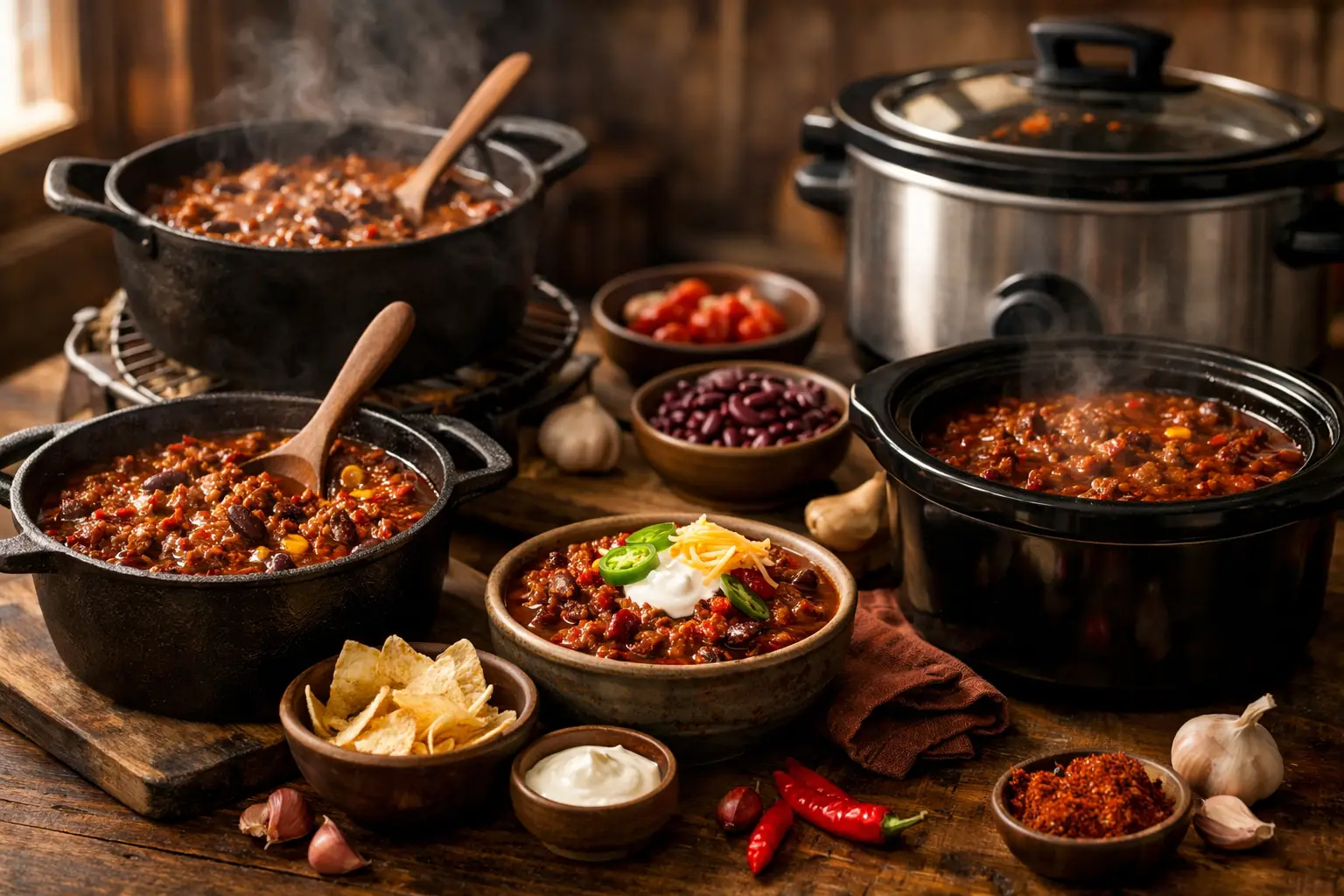
The same chili recipe can land as bright and brothy, thick and beefy, or deep and slow-built depending on how you cook it. That is why a real guide to chili cooking methods matters. The pot you choose changes texture, spice bloom, bean integrity, meat tenderness, and even whether your chili tastes weeknight-fast or Sunday-all-day.
If you have ever wondered why one batch tastes layered and rich while another feels flat, the answer is often method before ingredient list. Chili is flexible by nature, but not every style shines in every setup. A Texas Red with chunks of chuck behaves differently from a turkey bean chili, and a Colorado green chili wants a different kind of heat than a Cincinnati-inspired sauce. Every bowl tells a story, but the cooking method edits the plot.
Why cooking method changes chili so much
Chili is one of those dishes where time, moisture, and heat management do heavy lifting. Brown meat hard and early, and you build savory depth. Keep the heat low and steady, and collagen melts into body. Trap steam in a pressure cooker, and you get speed, but sometimes at the cost of a little texture contrast.
Spices also behave differently across methods. On the stovetop, you can toast chili powder, cumin, and oregano in fat for a fuller, rounder flavor. In a slow cooker, spices tend to stay a bit softer and less vivid unless you bloom them first. Oven chili develops a quieter, more even finish, while pressure cooking can push aromatics together quickly into a unified flavor that may need a final brightness boost.
That trade-off is the whole game. There is no single best method, only the best match for the chili you want.
Guide to chili cooking methods by kitchen setup
Stovetop chili
The stovetop is the control-freak favorite, in the best possible way. You can brown in stages, scrape up fond, adjust liquid as you go, and decide in real time whether your chili wants another 20 minutes or another splash of stock.
This method is ideal for classic beef chili, turkey chili, bean-forward vegetarian chili, and most weeknight pots. It is especially strong when your recipe depends on building flavor in layers. Browning onions until they pick up color, toasting tomato paste, blooming dried spices, then simmering everything together gives you a finished bowl that feels deliberate and balanced.
The main advantage is responsiveness. If your beans are soft but your broth is thin, you can simmer uncovered. If the heat level is climbing too fast, you can dilute and correct. The downside is attention. Good stovetop chili is not difficult, but it does ask you to stay nearby.
For most home cooks, this is the most versatile place to start. If you are trying a new recipe style and want to learn how it behaves, the stovetop teaches you the most.
Slow cooker chili
Slow cooker chili is built for low-effort comfort and long flavor mingling. It works especially well for shredded chicken chili, bean-heavy chili, lean ground meat chili, and any batch meant to feed a crowd with minimal babysitting.
The texture here tends to be softer and more unified. That can be a win if you want cozy, scoopable chili for game day or meal prep. It can be less ideal if you want distinct chunks of meat, lively vegetable texture, or aggressive roasted notes.
The biggest mistake with slow cooker chili is treating it like a dump-and-go method for every recipe. You can do that, but you often lose depth. Browning meat first and blooming spices before they hit the crock makes a noticeable difference. So does holding back some delicate ingredients, like fresh peppers or a finishing splash of vinegar, until the end.
Slow cookers also trap moisture. If your favorite chili leans thick, start with less liquid than you think you need. A batch that looks perfect at the beginning may finish looser than expected.
Dutch oven or oven-braised chili
If stovetop chili is all about control, oven chili is about steady, even heat. A Dutch oven in the oven gives you less risk of scorching and a gentle simmer that suits chunked beef, pork shoulder, and deeply savory red chilis.
This method shines when you want long cooking without constant stirring. The heat surrounds the pot rather than blasting the bottom, so collagen-rich cuts can soften beautifully while the sauce thickens at a calmer pace. That makes it a strong fit for Texas-style chilis and other meat-driven versions where texture matters.
There is also a flavor difference. Oven-braised chili often tastes more mellow and integrated than a fast stovetop batch. Not dull, just settled in. If your ideal bowl is dark, rich, and spoon-coating, this method deserves a spot in your rotation.
The catch is time and equipment. You need an oven-safe heavy pot, and you lose some of the immediate adjustability of the stovetop. Still, for weekend chili, it is a powerhouse.
Pressure cooker or Instant Pot chili
Pressure cooker chili is the speed demon. It is perfect when you want the richness of a longer cook but only have about an hour, including pressure build and release. It works particularly well for ground meat chili, dried bean chili, and some braised meat versions.
What pressure cooking does best is fast extraction. Meat tenderizes quickly, dried beans can cook without an overnight plan, and flavors marry fast. For busy cooks, that is a huge win.
But speed changes texture. Ground meat can become finer and more compact. Beans can go from perfect to too soft if timing is off. Layers can flatten a bit because everything cooks in such a compressed environment. The fix is simple: use saute mode for real browning at the start, and finish with intention. A little lime juice, hot sauce, chopped cilantro, shredded cheese, or a final simmer with the lid off can wake the whole pot back up.
For practical weeknight chili, this is one of the smartest methods in the game.
Matching the method to the chili style
Not all chili families want the same treatment. A thick beef-and-chile Texas Red benefits from stovetop simmering or oven braising because both methods respect the meat and let the sauce reduce gradually. Cincinnati-style chili, which is finer-textured and sauce-like, works beautifully on the stovetop where you can keep it loose and silky.
Colorado green chili likes a gentler hand with peppers and pork. Stovetop or Dutch oven methods usually give you the best control over color and texture. Chicken chili and white bean chili are slow cooker naturals if convenience is the priority, though stovetop versions often keep the beans from getting too mushy.
Vegetarian chili is the most flexible of the bunch. If you want distinct vegetables and brighter pepper flavor, use the stovetop. If you want a soft, blended, meal-prep pot, the slow cooker gets you there easily. Pressure cooking works too, but it can blur delicate ingredients unless you add some near the end.
The flavor moves that matter in any method
A good guide to chili cooking methods should also be honest about what does not change. Method matters, but a few moves improve almost every batch.
Browning is worth it. Whether it is beef, turkey, pork, mushrooms, or onions, color builds flavor. Spice blooming is worth it too. Toasting chili powder and cumin in fat for even 30 seconds gives the pot a fuller base.
Acid at the end is underrated. Chili can taste heavy even when it is technically seasoned well. A splash of vinegar, a squeeze of lime, or a spoonful of salsa can sharpen the whole bowl. Texture contrast matters just as much. If everything in the pot is equally soft, the chili may taste flatter than it should, even if the seasoning is right.
And then there is resting time. Chili is famous for tasting better the next day because flavors settle, fat redistributes, and the texture tightens. If your method leaves the chili a little loose on day one, that is not always a problem. It may be exactly right by tomorrow.
How to choose the best method for tonight
If you want maximum control and the clearest flavor development, go stovetop. If you want a low-lift batch for a busy day, use the slow cooker. If you are chasing rich, slow-built depth for a meat-heavy chili, reach for a Dutch oven. If time is tight and you still want serious comfort, the pressure cooker earns its counter space.
That is really the heart of it. The best chili method is not the trendiest one or the one with the most gadgets. It is the one that matches your recipe, your schedule, and the kind of bowl you actually want to eat. Start there, trust your taste buds, and let the pot teach you the rest.