A pot of chili can have good ingredients and still land flat. I've tasted plenty of bowls — mine and other people's — that had everything right on paper and still landed flat. You taste it, stir, taste it again, and something is missing. If you’ve ever wondered what makes chili taste better, the answer usually isn’t one magic ingredient. It’s balance - heat, salt, acid, sweetness, texture, and time all pulling in the same direction.
The best bowls taste layered, not loud. You want depth from browned meat or toasted vegetables, warmth from spices that bloom instead of burn, and enough contrast to keep each bite interesting. Great chili is rarely about making it hotter. It’s about making it fuller.
Quick answer
Better chili usually comes from balance — depth from browning, spices that bloom instead of burn, salt and acid in the right places, and texture that matches the style. Fix one layer at a time rather than dumping in more heat.
What makes chili taste better in real cooking?
Most chili problems come down to one of three things: underdeveloped base flavor, poor seasoning balance, or a texture that doesn’t match the style. A Texas Red wants concentrated chile flavor and a rich, meaty finish. A bean-heavy weeknight chili often needs brightness and body so it doesn’t eat like stew with extra powder dumped in. A green chili leans on freshness, pork richness, and the right level of tang.
That means the fix depends on the bowl you’re trying to build. Still, a handful of moves improve almost every style.
Start by building a stronger base
If your chili tastes thin, look at the first 20 minutes, not the last 2. Browning meat deeply creates the savory backbone people describe as rich or satisfying. Gray, crowded meat gives you much less to work with. Let it sear. Let onions soften until sweet, not just translucent. If you’re using peppers, cook them until they stop tasting raw.
Tomato paste helps here too, but only if you cook it long enough. A spoonful stirred into the pot for a minute or two can taste metallic and sharp. Let it darken slightly. That quick caramelized edge adds weight fast.
If the chili is meatless, the same rule applies. You still need a developed base. Mushrooms, onions, peppers, and even squash get better when they pick up color before the liquid goes in.
Bloom the spices instead of dumping them in
Chili powder added to broth will flavor the pot. Chili powder toasted briefly in fat will change the whole character. The same goes for cumin, oregano, paprika, and ground chiles. Blooming spices wakes up fat-soluble flavor compounds and gives the chili a rounder, more integrated taste.
There is a line, though. Spices go from fragrant to bitter quickly. Thirty seconds to a minute is often enough. If the pot looks dry, add a little oil or stir in tomato paste at the same stage to protect the spices while they toast.
This is a hill I'll stand on: dried chiles beat generic chili powder for depth. Ancho brings raisiny sweetness, guajillo red-fruit brightness, chipotle smoke — once you've built a pot on them, the powder-only version tastes flat next to it. You do not need all of them. One or two chosen on purpose usually tastes more focused than a chaotic spice cabinet approach.
Salt, acid, and sweetness matter more than extra heat
A lot of cooks respond to bland chili by adding more chili powder. Sometimes that works. Often it just makes the pot dusty. The better move is to check seasoning structure.
Salt is the first lever. Enough salt makes the beef taste beefier, the beans taste creamier, and the spices taste clearer. Too little salt makes everything seem muted. Add it in stages, especially if your broth, canned tomatoes, or beans already carry sodium.
Acid is the second lever. A squeeze of lime, a splash of vinegar, or even a few spoonfuls of crushed tomatoes added late can sharpen a heavy pot. This is especially helpful in rich beef chili, turkey chili, and bean-forward versions that need lift. Acid should brighten the bowl, not announce itself.
Then there’s sweetness. Not sugary sweetness, just enough to round harsh edges. Onions cooked well do a lot of this naturally. Sometimes tomatoes need help, especially if they taste too sharp. A small pinch of brown sugar, honey, or even grated carrot can soften acidity. Use restraint. Chili should not taste sweet, just balanced.
What makes chili taste better when it tastes bitter or harsh?
Bitterness usually points to burned spices, over-reduced tomato paste, too much chile powder, or aggressive smoke. The fix is rarely more seasoning. Try a little salt first, then a touch of acid, then a small amount of sweetness if needed. If the pot is too concentrated, broth can help more than any pantry trick.
Harsh heat is different. If the burn feels one-note, add fat or dairy at serving, or stir in a bit of masa, beans, or tomato to spread the heat out. Capsaicin hits harder when a chili lacks body.
Texture is flavor’s wingman
You can season a pot perfectly and still end up with disappointing chili if the texture is off. Thin chili tastes weak, even when the ingredients are good. Over-thick chili can feel muddy and heavy.
The best texture depends on style. Texas Red should cling to the spoon. Cincinnati-style chili is looser and silkier. Chunky beef chili wants some chew. Turkey chili often benefits from extra body because the meat is leaner.
To thicken thoughtfully, let the pot simmer uncovered before reaching for a shortcut. If it still needs help, mash some beans into the liquid, stir in a spoonful of masa harina, or blend a small portion and return it to the pot. Each option changes the texture in a different way. Masa adds earthy corn flavor. Mashed beans create creaminess. Reduction keeps flavor pure but takes longer.
On the flip side, if the chili feels stodgy, a little stock, tomato, or even water can loosen it without ruining the pot. You can always simmer it back down.
The secret extras that actually earn their spot
Some add-ins have real payoff. Others just make chili confusing. The best extras support the core flavor instead of fighting for attention.
A little cocoa powder or dark chocolate can deepen beef chili, especially versions built around dried red chiles. You shouldn’t taste dessert. You should notice a darker, fuller finish. Coffee can do something similar, though too much makes the chili taste muddy. Beer works when it complements the style - malty in heartier red chili, lighter if you want less bitterness.
Worcestershire sauce, soy sauce, or fish sauce can add savory depth in tiny amounts. This is where restraint matters. One teaspoon can make a pot taste more complete. Too much turns the whole thing into a pantry experiment.
Smoke is another powerful tool. Chipotle, smoked paprika, fire-roasted tomatoes, or charred peppers can all add it. But choose one lane. Layering every smoky ingredient at once can flatten the freshness and make the bowl feel heavy.
What makes chili taste better at the very end?
The finish matters because chili dulls a bit as it simmers. Long cooking builds depth, but it can also blur the top notes. A final adjustment wakes everything up.
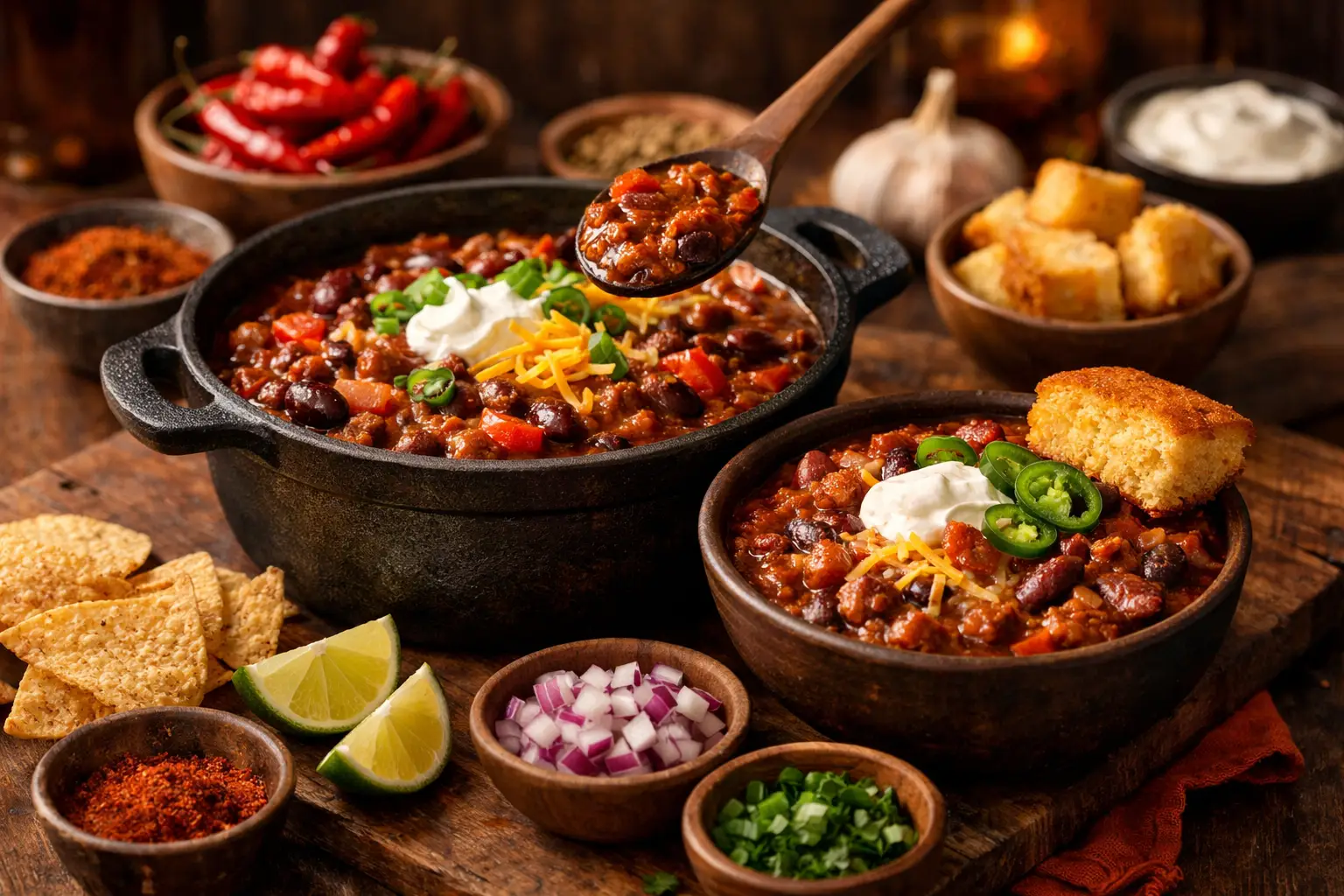
Taste for salt. Then taste for brightness. Then think about contrast. Fresh cilantro, sliced scallions, raw onion, shredded cheddar, sour cream, avocado, pickled jalapenos, or crushed tortilla chips don’t just decorate the bowl. They add coolness, crunch, tang, or freshness that the pot itself may lack.
This is where style and mood come in. A no-beans beef chili with cheddar and diced onion hits differently than a green chili finished with lime and cilantro. Neither is more correct. They just tell different stories.
Let it rest if you have time
Chili is one of those dishes that often improves after a pause. An hour off the heat helps the flavors settle. Overnight is even better for many red chilis because the spices integrate and the texture tightens. That said, bright green chilis can lose some of their fresh edge if held too long, so the ideal rest depends on the recipe.
If you’re cooking for the next day, underseason very slightly at first, then adjust after reheating. Salt and heat can feel stronger once everything has had time to mingle.
Common chili mistakes that keep flavor from popping
One mistake is trying to fix blandness with only more spice. Another is skipping browning because you’re in a hurry. A third is using too much liquid too early, then chasing intensity later. Chili likes concentration.
The other big one is not tasting in stages. Taste after browning. Taste after the spices bloom. Taste once the tomatoes and broth settle in. Taste again near the end. Chili rewards small corrections more than dramatic rescue moves.
If I can only fix one thing before a pot goes out, here's my order: salt first, then acid, then — for next time — better browning. It's the fastest path from 'fine' to 'finished.'
At ChiliStation, that’s part of the fun of the category. Every bowl has its own logic. Beefy and brick-red, green and porky, bean-packed and weeknight-friendly - the details change, but better chili almost always comes from the same instinct: build flavor early, balance it late, and know what kind of bowl you want before you start chasing perfection.
If your next pot tastes close but not quite there, don’t reach for random extras first. Ask what it needs more of - depth, salt, brightness, body, or contrast. The answer is usually already sitting in the pot, waiting for a smarter nudge.