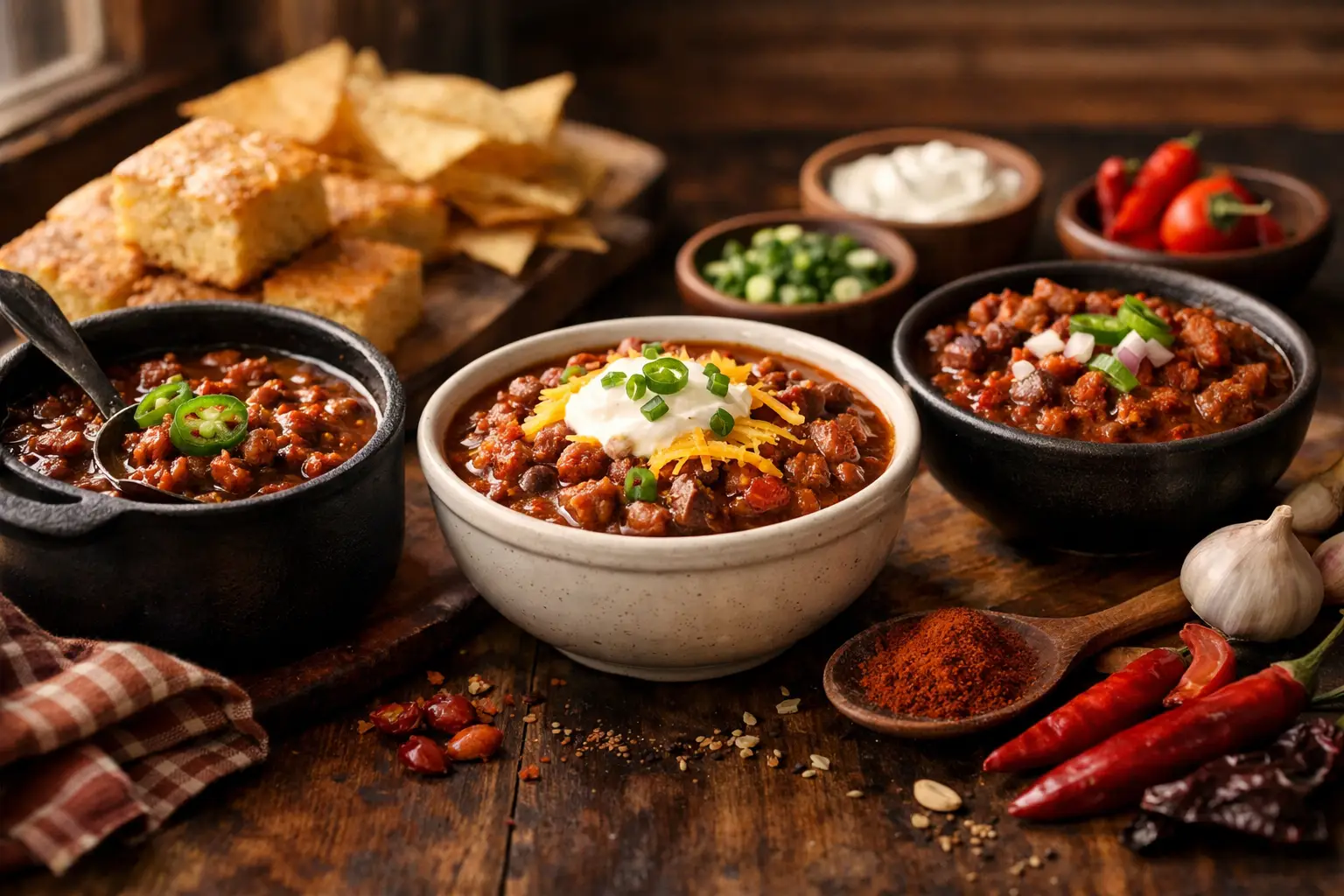
A cookoff table can hold a dozen pots that all call themselves chili, but they are not playing the same game. One is a strict, no-bean Texas Red built for a blind judging cup. Another is a thick, family-style beef chili loaded with beans. A third is green, porky, and fragrant with roasted Hatch chiles. This guide to chili cookoff styles helps you read the room before you start chopping - because every bowl tells a story, and every contest has its own rules.
Why Cookoff Style Matters Before You Cook
The biggest cookoff mistake is not underseasoning. It is entering the wrong chili in the wrong category.
Some sanctioned competitions reward a very narrow definition of traditional red chili. Others celebrate the kind of hearty, spoon-standing pot that wins the neighborhood block party. Community events may offer a dedicated vegetarian category, a green chili division, or a people's-choice vote where aroma, color, toppings, and personality matter as much as technical precision.
Before choosing a recipe, find out who is judging, whether entries are blind, and whether the event follows a formal chili organization rulebook or its own local format. Ask about permitted ingredients, garnish rules, timing, reheating, sample cups, and whether beans are welcome. A spectacular chili can still miss the mark if it is built for the wrong lane.
The Main Chili Cookoff Styles
Texas Red: The Classic Competition Bowl
Texas Red is the style most people picture when they hear "competition chili." It is a red chile-forward beef chili with a clean, concentrated profile. Traditionally, beans, pasta, rice, and other fillers do not belong in the pot. The bowl should taste like beef and chiles first, with cumin, garlic, oregano, and other spices used in support rather than as a loud solo act.
Texture is a serious part of the score. Meat should be tender but not shredded into oblivion, and the gravy should coat the spoon without turning pasty, oily, or soupy. Judges are usually looking for a rich brick-red color, a balanced aroma, and a finish that builds warmth without punishing the palate.
This is a precision style. A dramatic ingredient can be tempting, but a recognizable flavor such as sweet barbecue sauce, heavy smoke, or an aggressive cinnamon note may read as a distraction. If the event is tied to a formal red-chili tradition, restraint is often the flex.
Homestyle Chili: The Crowd-Pleaser Category
Homestyle chili is where many home cooks shine. It is broader, more forgiving, and closer to the chili many Americans make on a weeknight or serve on game day. Ground beef, beef chunks, turkey, chicken, sausage, beans, tomatoes, peppers, corn, and layered spice blends may all be fair game, depending on the event.
That freedom does not mean anything goes. Great homestyle chili still needs a clear center. Choose a dominant identity: smoky beef and black bean, turkey white bean, classic tomato-and-kidney-bean, or a slow-cooked steak chili. Then make every other choice support it.
For a public tasting, homestyle often has an advantage. Familiar ingredients and a hearty texture can win repeat spoonfuls from voters. The trade-off is that a busy pot can become muddy fast. If you use several meats, three bean varieties, beer, cocoa, coffee, and five kinds of peppers, give the flavors time to settle and taste repeatedly as it cooks.
Green Chili and Chile Verde: Bright, Roasted, and Regional
Green chili brings a different kind of drama. Instead of dried red chiles and dark beef gravy, it leans on roasted green chiles, tomatillos or tomatoes in some versions, garlic, onion, and usually pork. Colorado-style green chili may be looser and stew-like, while chile verde often highlights larger pork pieces and a vivid green sauce.
The goal is brightness with depth. Roasted chile flavor should be present, but bitterness from charred skins or raw heat from undercooked peppers can throw the bowl off. Pork shoulder is a common favorite because it turns tender over a long cook while contributing enough richness to carry the tang of tomatillos.
Green chili is ideal when a cookoff offers a regional or specialty division. It can also dominate a people's-choice table because its color and aroma stand apart from a row of red bowls. Just do not assume it qualifies in a traditional red-chili category. It usually does not.
White Chili: Creamy, Gentle, and Easy to Misjudge
White chili typically features chicken or turkey, white beans, green chiles, broth, and warming spices. Some versions stay brothy and light; others finish with cream cheese, sour cream, or a dairy-rich base. It is a natural fit for a homestyle, poultry, or specialty category.
The challenge is avoiding a flavor profile that feels flat or overly rich. White chili benefits from acid, such as lime, and from measured heat that wakes up the beans and poultry. If dairy is part of the plan, add it carefully near the finish. A long simmer can dull fresh flavors and create a heavy texture that becomes less appealing in small tasting cups.
Vegetarian and Vegan Chili: Built, Not Substituted
A strong meatless chili is not a regular beef recipe with the beef removed. It needs its own architecture. Mushrooms bring savory depth, lentils add body, beans provide substance, and roasted vegetables contribute sweetness and texture. Dried chiles, toasted spices, tomato paste, and a well-made vegetable stock can create a deeply satisfying base.
This style is especially powerful in open-category and community cookoffs, where a memorable bowl can surprise voters who expect vegetarian chili to be an afterthought. Keep the texture intentional. Too many soft ingredients create a one-note bowl, while a mix of creamy beans, tender lentils, and a few firmer vegetables gives each bite shape.
A Practical Guide to Chili Cookoff Styles and Judging
Most blind judges evaluate some version of aroma, appearance, consistency, taste, and aftertaste. The wording varies, but the lesson is steady: a winning chili needs balance from the first smell through the final finish.
Aroma arrives before the spoon. Let the chile, meat, and spices smell inviting rather than greasy, burnt, or sharply alcoholic. Appearance is not about garnish in most blind formats, since garnish may be prohibited. It is about appetizing color, a clean surface, and a consistency that looks cared for.
Taste carries the most weight, and heat should serve flavor. A chili that is painfully hot may earn a few impressed reactions at a casual event, but it can fatigue judges who must sample many entries. Aim for a controlled build. The best heat arrives after the initial flavors have had their moment.
Consistency is where cooks frequently lose points. Beans can break down, fat can separate, and starches can turn a pot gloppy during a long hold. Cookoff chili often needs a final adjustment shortly before serving: a splash of stock if it tightened too much, a brief simmer if it is loose, or careful skimming if fat has risen to the top.
Choose Your Category, Then Build Your Bowl
Start with the contest rather than your favorite recipe. A strict Texas Red event calls for beef, red chiles, and disciplined simplicity. A neighborhood fundraiser may reward a loaded homestyle chili with a broad, friendly flavor. A regional category is your moment to bring the roasted-green-chile energy. If there is a people's-choice award, consider how the chili tastes in a two-ounce sample after the tenth stop on a tasting circuit.
Test your recipe at least once under cookoff conditions. Make the full batch, hold it for the same amount of time, and serve it in small cups. What tastes perfect from a big bowl at home can feel salty, thick, or too fiery in a tasting portion. Recruit a few honest tasters, especially people with different heat tolerances, and ask what they remember 10 minutes later.
At ChiliStation, that is the fun of the category: there is no single best chili, only the right bowl for the right table. Bring a chili with a point of view, respect the rules of the division, and make every spoonful worth talking about.