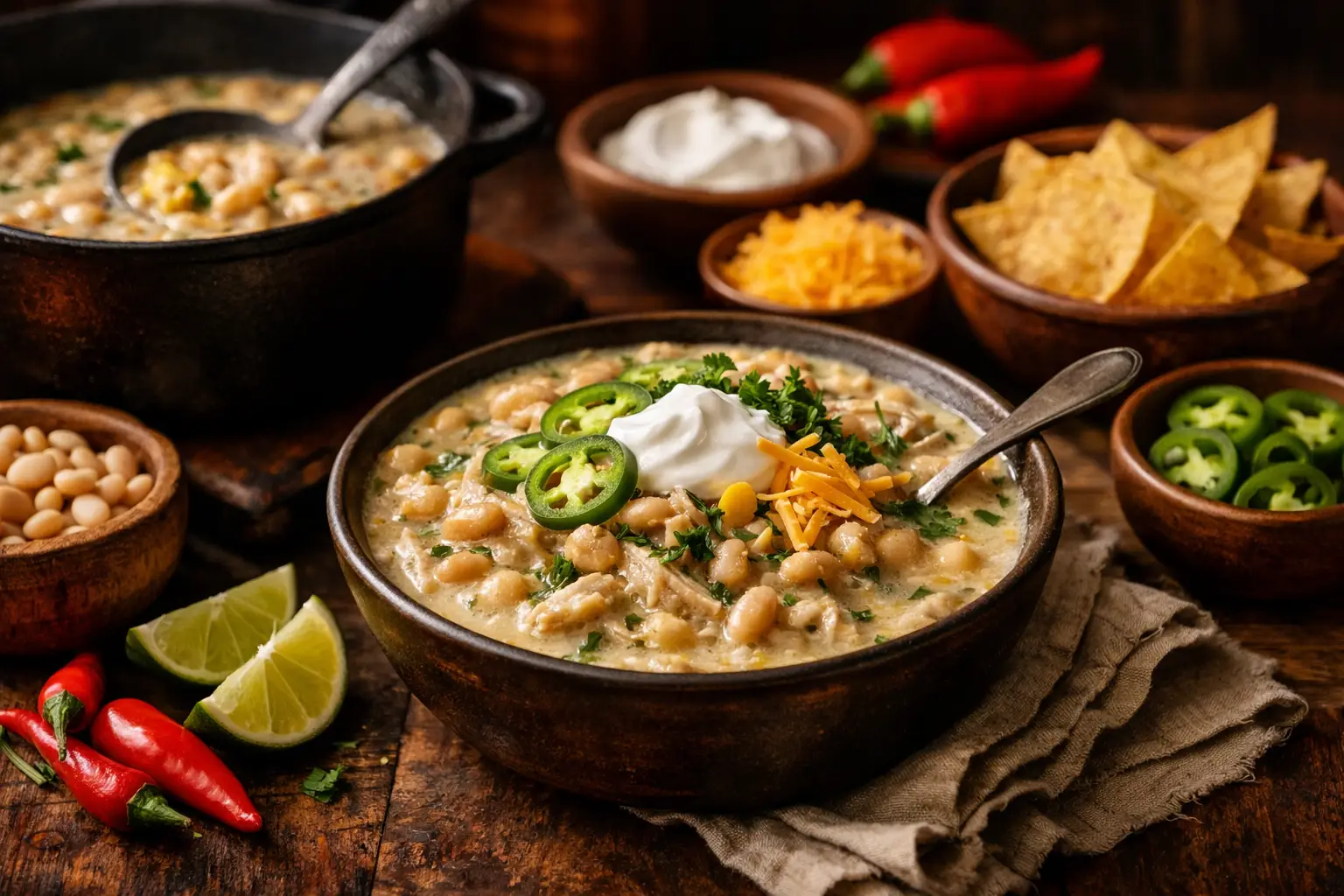
Some chili recipes announce themselves from across the room with dark red color and a hit of dried chile. White chili takes a different route. It lands softer, creamier, and a little brighter - but still absolutely counts as chili. That contrast is exactly why white chili has earned such a loyal following among home cooks who want comfort without making the same pot every weekend.
What is white chili?
White chili is a chili built around pale ingredients and gentler heat. Instead of tomatoes, red chile powders, and beef-forward depth, you usually get chicken or turkey, white beans, broth, onion, garlic, cumin, green chiles, and some creamy element that rounds everything out. That creamy note might come from sour cream, cream cheese, heavy cream, or simply beans broken down into the broth.
The result is not bland chili and it is not just soup with branding. Good white chili still has body, spice, and that slow-building comfort a bowl of chili should bring. It just gets there with a different flavor map.
Why white chili tastes different
The biggest shift is the absence of tomato and red chile dominance. Traditional red chili often builds its identity on earthy dried peppers, browned meat, and concentrated richness. White chili leans into green chiles, cumin, coriander, oregano, garlic, and the mellow starch of white beans.
That changes the whole experience. The flavor is a little fresher, a little more herbal, and often creamier on the finish. If red chili feels deep and smoky, white chili feels plush and savory. Neither is better across the board. It depends on what you want from the bowl.
White chili is also friendly to cooks who like adjustable heat. You can keep it mild with canned green chiles and black pepper, or push it hotter with jalapenos, poblanos, serranos, or a roasted Hatch chile mix. That flexibility is part of the appeal.
The core building blocks of white chili
Most strong versions share a familiar structure. You start with onion and garlic for the aromatic base, then add your protein, spices, beans, broth, and chiles. The details vary, but a few ingredients do most of the heavy lifting.
Protein choices in white chili
Chicken is the classic pick, especially shredded chicken breast or thigh meat. Thighs bring more flavor and stay tender longer, while breast keeps the pot a little leaner. Turkey works well too, especially if you want something lighter but still hearty.
There are also vegetarian versions that skip meat entirely and let white beans carry more of the texture. In those bowls, the trick is building enough flavor with sauteed aromatics, chile peppers, spices, and maybe a bit of corn or hominy for extra character.
Beans matter more than people think
Cannellini beans are the most common choice because they hold their shape while still turning creamy around the edges. Great Northern beans are slightly firmer and a little cleaner in flavor. Navy beans can work, but they tend to soften faster and can make the pot feel thicker sooner.
If you like a silkier finish, mash a portion of the beans into the broth. That gives you body without needing a lot of dairy. If you want a chunkier, more stew-like bowl, keep the beans mostly whole.
The chile component
Green chiles are the signature move here. Canned diced green chiles are convenient and dependable, but roasted fresh poblanos or Hatch chiles can add real dimension. Jalapenos bring sharper heat. Anaheim peppers keep things mild and aromatic.
This is one of those it-depends decisions. If you want weeknight ease, canned chiles are perfectly legitimate. If you want a more layered pot for guests or a weekend cook, roasted fresh peppers are worth the extra few minutes.
Creamy or brothy? Both are valid
One reason white chili can be polarizing is that people mean different things when they say it. Some want a thick, creamy, almost spoon-coating version. Others want a lighter broth with beans and chicken clearly defined. Both styles show up often, and both can be excellent.
A creamy white chili usually includes dairy and feels richest. It is crowd-pleasing, especially in colder weather, and pairs well with toppings like Monterey Jack, avocado, tortilla strips, or scallions. The trade-off is that too much dairy can mute the chile flavor and turn the bowl heavy.
A brothy version lets the beans, spices, and peppers stay more distinct. It can feel brighter and more balanced, especially if finished with lime juice and cilantro. The trade-off there is texture. Without enough starch or reduction, it can drift toward soup territory.
The best middle ground is often a chili that gets its body from blended beans plus a modest amount of cream or sour cream at the end. You keep the lush texture without losing definition.
How to make white chili taste like more than chicken and beans
This is where a lot of recipes either level up or flatten out. White chili rewards layering. Browning the meat helps. Cooking spices in the fat before adding broth helps more. Roasting or sauteing peppers adds sweetness and depth that canned ingredients alone cannot fully replicate.
Acid matters too. A squeeze of lime at the end can wake up the whole pot. So can a little pickled jalapeno brine if you like a tangy edge. Salt is another common weak spot. Because white chili often includes dairy and beans, under-seasoning shows up fast.
Texture is just as important as flavor. Shredded chicken gives you strands throughout the bowl, while ground turkey creates a more even bite. Whole beans feel rustic. Partially mashed beans feel thicker and more restaurant-style. The right choice depends on whether you want cozy and casual or polished and scoopable.
Best toppings for white chili
White chili loves contrast. Rich base, bright toppings. Soft beans, crunchy finish. This is one category where garnishes do real work instead of just making the bowl look camera-ready.
Cilantro adds freshness. Lime adds snap. Shredded cheese deepens the comfort factor. Sliced avocado cools the heat and makes the texture even better. Tortilla chips or strips bring crunch, while diced red onion adds bite.
If your pot is already very creamy, go lighter on dairy toppings and heavier on acid and crunch. If your batch is brothy and lean, cheese and sour cream can round it out beautifully.
When white chili is the smarter pick than red chili
Not every chili craving calls for the same style. White chili shines when you want something hearty but not heavy in a beef-and-tomato way. It is especially good for game day spreads where you want a second chili option, for weeknights when rotisserie chicken can speed everything up, and for diners who prefer milder spice without giving up flavor.
It also works well as a gateway chili. If someone claims they are not really a chili person, white chili is often the bowl that changes their mind. The flavors are approachable, the heat is easier to manage, and the toppings make it customizable without feeling fussy.
That said, if you are craving smoke, dried chile complexity, or that dense brick-red intensity, white chili will not scratch the same itch. It is not a substitute for Texas red. It is its own lane.
Common mistakes that flatten white chili
The first is treating it like a blank canvas that does not need structure. White ingredients still need bold seasoning. Cumin alone will not carry the pot. You need alliums, peppers, salt, and usually at least one finishing note like lime or cilantro.
The second is overloading the dairy. Cream cheese can make white chili luxuriously thick, but too much pushes it toward dip. Start lighter than you think.
The third is using dry, overcooked chicken. White chili does not have the same camouflage that a dense tomato base gives red versions. Texture issues show up immediately. If you are simmering for a while, thighs are usually the safer move.
Why white chili keeps showing up in recipe collections
Because it solves a real cooking problem. It offers comfort, uses accessible pantry ingredients, welcomes shortcuts, and still feels different enough to be exciting. For cooks who like to compare styles, it is one of the clearest examples of how broad the chili category really is.
That is part of the fun at ChiliStation. Every bowl tells a story, and white chili tells one of adaptation - less about strict tradition, more about the way home cooks build new classics from familiar parts. It can be weeknight-simple or layered and slow-built. It can lean mild, spicy, creamy, or bright.
If your chili rotation has gotten predictable, white chili is the easiest way to change the mood without leaving the comfort zone. Start with good beans, real chile flavor, and enough acid to keep the richness honest, and the bowl tends to take care of the rest.