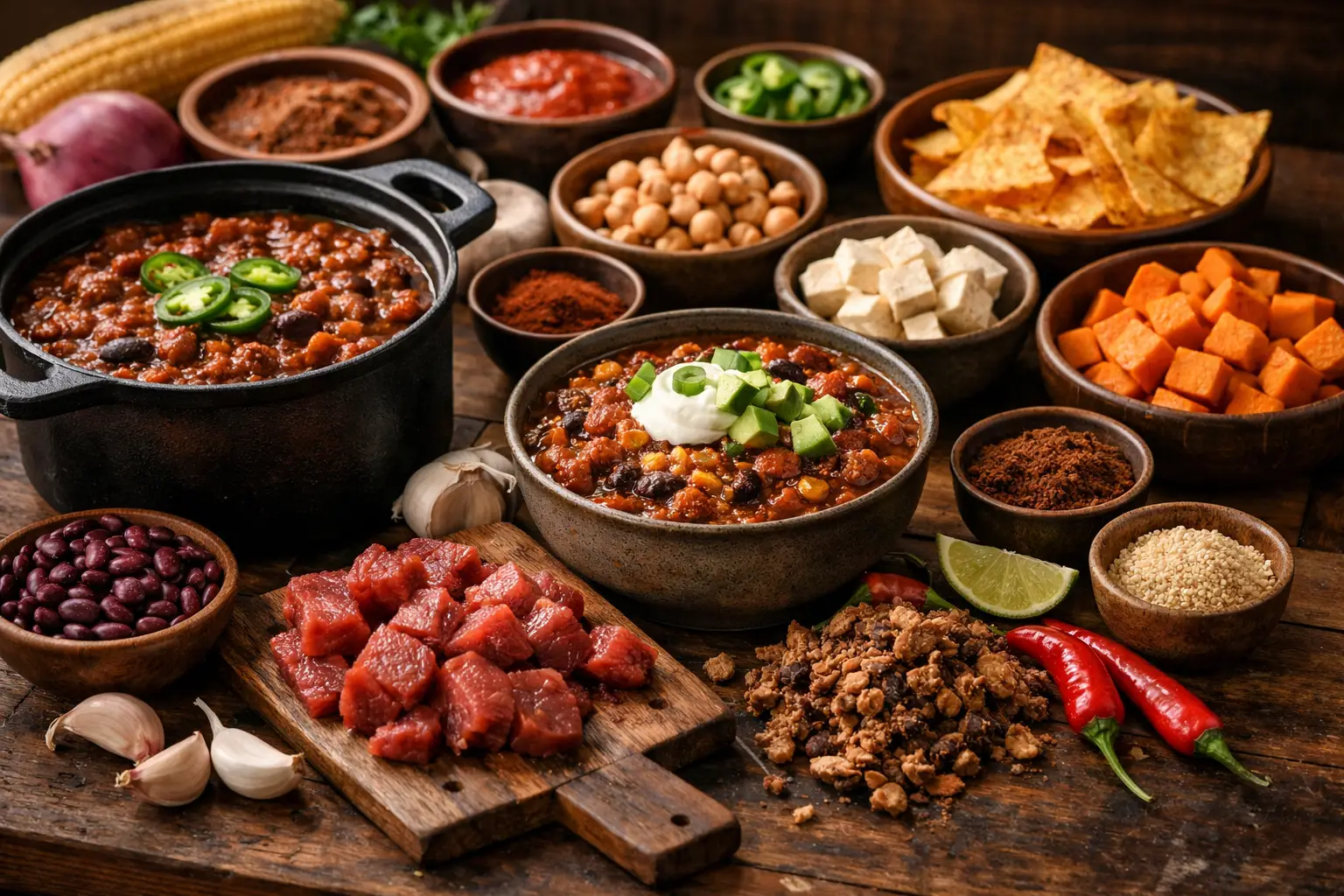
Ran out of kidney beans halfway through prep? Realized your ground beef is still in the freezer? This guide to chili ingredient swaps is built for exactly that moment - when dinner is already in motion and you need a smart pivot, not a lecture. Great chili is flexible. The trick is knowing which swaps keep the bowl true to the style you want, and which ones take it somewhere new.
Chili has more range than almost any comfort-food staple. Texas Red plays by one set of rules. A big pot of bean-heavy weeknight chili plays by another. Green chili, turkey chili, Cincinnati chili - each bowl tells a story, and ingredient swaps can either support that story or rewrite it. Neither is wrong. You just want to swap with your eyes open.
Quick answer
Swap by role, not just ingredient: match body, heat, richness, acidity, and texture. Fresh single chiles and quality canned goods upgrade a pot faster than random substitutions.
A guide to chili ingredient swaps that actually works
The easiest way to make better substitutions is to think in roles, not just ingredients. In most chili recipes, every component is doing one of five jobs: building body, bringing heat, adding richness, creating acidity, or delivering texture. If you replace an ingredient with something that does the same job, your chili usually stays balanced.
That matters because chili is a layered dish, not a single-flavor dish. Swap one thing and you may need to adjust another. If you trade beef for turkey, you often need more fat or deeper seasoning. If you replace canned tomatoes with fresh, you may need more salt and cooking time. Good swaps are rarely one-for-one in flavor, even when they are one-for-one in quantity.
Bean swaps
Beans are one of the easiest places to improvise, especially in home-style chili. Kidney beans, pinto beans, black beans, and cannellini beans can all work, but they change the personality of the pot.
Kidney beans are classic because they hold their shape and bring a firm, almost meaty bite. Pinto beans feel softer and creamier, which is great in a looser, cozier chili. Black beans add an earthier flavor and a darker look. Cannellini beans are mild and delicate, better for white chicken chili than a smoky red bowl.
If you are swapping canned for cooked dried beans, the main issue is texture. Cooked dried beans are often firmer and more flavorful, but they can soak up liquid fast. Plan to add extra broth or water as the chili simmers. If you are leaving beans out entirely, as in a Texas-inspired pot, you need to replace that body somehow. More meat, a longer simmer, or a small amount of masa harina can help fill the gap.
Meat swaps
Ground beef is the standard weeknight move, but it is far from the only path. Ground turkey makes a lighter chili, though it tends to taste flatter unless you build in extra flavor. A little more onion, garlic, chili powder, and salt usually fixes that. Ground chicken works similarly but can disappear into the background if the rest of the pot is too mild.
Pork adds sweetness and richness, especially in chili verde or red chili with smoky dried chiles. Sausage can be a strong substitute for ground beef if you want instant seasoning, but it also brings more salt and often fennel or sage, which can push the flavor away from classic chili territory. That can be delicious. It just will not read like a neutral swap.
Cubed chuck or stew beef can replace ground meat when you want a heartier, slow-cooked result. The trade-off is time. A chili built for ground meat can be done in under an hour. A chili with beef chunks usually needs a longer simmer to become tender. If you make that swap, do not rush the pot.
For vegetarian chili, lentils, mushrooms, and meat alternatives each solve a different problem. Lentils bring protein and body. Mushrooms bring savory depth. Plant-based crumbles mimic texture but can taste heavily seasoned right out of the package. If you use them, pull back on the salt until you taste the full pot.
Chili pepper swaps are about heat and flavor
This is where most substitutions go sideways. Peppers are not just there to make chili hot. They add fruitiness, smokiness, bitterness, grassiness, or sweetness depending on the type.
Jalapenos are bright and grassy. Serranos are hotter and sharper. Poblanos are mild, earthy, and ideal when you want volume without a huge heat jump. Anaheims are even milder and work well in green chili or family-friendly batches. If a recipe calls for jalapenos and you only have poblanos, you can still make it work, but you may want a pinch of cayenne or extra chili powder to restore the edge.
Dried chile swaps require a little more care. Ancho chiles bring sweetness and raisin-like depth. Guajillos are brighter and redder, with a clean chile flavor. Pasillas are darker and more woodsy. Chipotles in adobo add smoke, heat, and tang all at once. You can swap among them, but the bowl will shift. An ancho-heavy chili feels round and warm. A guajillo-heavy one feels livelier. A chipotle-forward version can dominate everything if you are not careful.
If you are using chili powder instead of whole dried chiles, remember that store blends vary a lot. Some are mild and cumin-heavy. Others lean hotter or saltier. Taste early, then taste again after simmering.
Tomato swaps
Tomatoes do more than add liquid. They bring sweetness, acidity, and structure. Crushed tomatoes create a smooth, integrated base. Diced tomatoes keep things chunkier. Tomato sauce gives body without texture. Tomato paste is concentrated and best used as a supporting player, not the entire foundation.
If you only have fresh tomatoes, use them - but expect a lighter, less concentrated chili unless you cook them down properly. Plum tomatoes tend to work best. Watery slicing tomatoes can make the pot thin unless you simmer longer.
No canned tomatoes at all? A combination of tomato paste and broth can get you surprisingly close. Start small with the paste, cook it briefly with the aromatics, then add broth in stages. You want depth, not pasta sauce energy.
For white chili or green chili, tomatoes may not belong in the first place. If you are borrowing swaps from red chili recipes, stop and check the style you are making. Sometimes the best substitute is none at all.
Onion, garlic, and aromatic swaps
Yellow onion is the workhorse. White onion tastes sharper and cleaner. Red onion can work in a pinch, but it is slightly sweeter and less traditional in cooked chili. Shallots are fine for smaller batches, though they are milder and more delicate.
Fresh garlic is ideal, but garlic powder is a perfectly respectable backup in a busy kitchen. The flavor is less punchy and more diffuse, which actually helps in smoother, long-simmered chili. Onion powder works the same way. If you are using dried versions, add them with the spices rather than at the very end.
Celery and carrots are less common in classic chili, but they can help build sweetness and body, especially in turkey or vegetarian versions. Purists may object. Your spoon probably will not.
Spice swaps can save a flat pot
Most chili seasoning lives in a familiar zone: chili powder, cumin, paprika, oregano, black pepper, and sometimes cayenne. If you are missing one, you can usually recover.
No cumin means your chili may lose that warm, earthy center. A little coriander will not replicate it, but it can keep things from tasting hollow. Smoked paprika can stand in for some of the depth you might miss from chipotle or fire-roasted ingredients. Oregano varies more than people think. Mexican oregano is more citrusy and assertive than Mediterranean oregano, so the swap works, but the flavor changes.
Cayenne is pure heat. Chili powder is heat plus flavor. Red pepper flakes are a rough substitute for cayenne, though they can leave visible flecks and a slightly different burn. Hot sauce can also work, but then you are adding acid and salt too.
Liquid and richness swaps
Broth, beer, water, and even coffee all show up in chili for good reason. Broth adds savoriness. Beer can bring bitterness and malt. Coffee deepens darker chiles and beefy pots. Water is neutral but sometimes exactly what you want if the rest of the ingredients are already intense.
If a recipe calls for beef broth and you use chicken broth, the chili will usually survive just fine, especially if the meat and spice base are strong. If you use water, consider a longer simmer or a pinch more salt. That extra time helps the pot taste less improvised.
For richness, bacon fat, oil, butter, and rendered meat fat all behave differently. Bacon fat adds smoke and salt. Butter softens edges but is less typical. Olive oil works, but its flavor stands out more in lighter chilis than in bold, red, beefy ones.
When a swap changes the style on purpose
Some of the best chili is born from a substitution that pushes the recipe into a neighboring lane. Ground beef becomes chorizo and suddenly the bowl is louder, smokier, and spicier. Pinto beans become black beans and the chili feels deeper and more Southwestern. Poblanos replace jalapenos and the whole thing gets greener, softer, and more roasty.
That is the fun part. A strict recipe can give you one reliable destination. Smart swaps open up the map.
The key is to notice what your substitute adds besides convenience. More salt? More smoke? Less fat? Less acid? Once you ask that question, you stop cooking by panic and start cooking by style.
If your chili tastes flat after a swap, it usually needs one of four things: salt, acid, heat, or time. Salt sharpens. A squeeze of lime or a splash of vinegar wakes up a dull pot. More chile or hot sauce restores energy. More simmering lets watery substitutions settle into the background.
At ChiliStation, that is the real appeal of chili as a category: it is structured enough to have identity, but flexible enough to reward improvisation. You can miss an ingredient and still land a great bowl.
So the next time your pantry throws a curveball, do not treat it like a failure. Treat it like a style choice, taste as you go, and let the pot tell you what it needs.