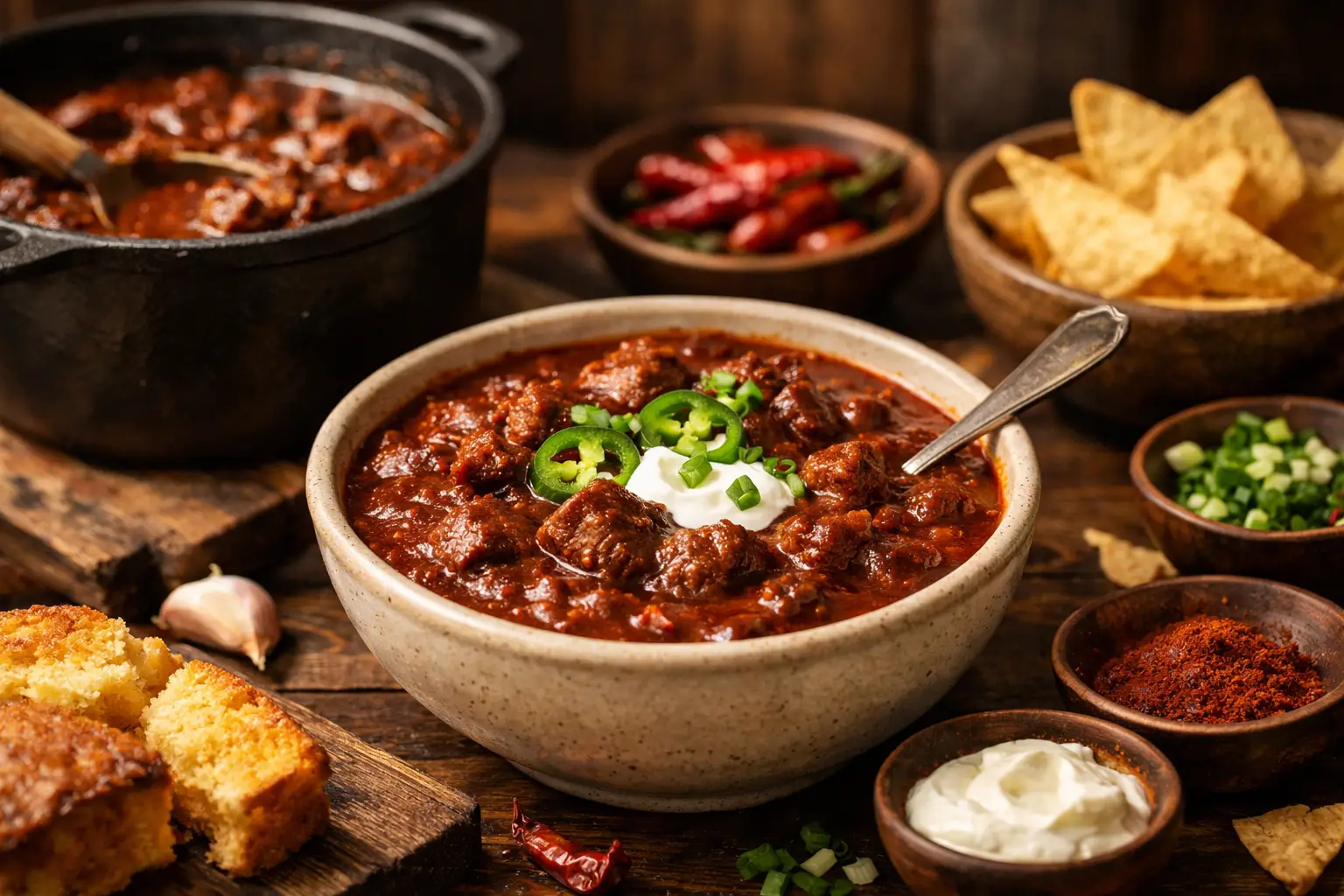
A real bowl of Texas Red does not need a parade of ingredients to make its point. It arrives dark red, beefy, fragrant with toasted dried chiles, and unapologetically direct. This guide to Texas Red chili is for cooks who want that kind of bowl: no bean distraction, no timid seasoning, and no mystery about why some pots taste flat while others taste like they have been working all afternoon.
Texas Red, also called chili con carne, is a regional style with strong opinions attached. The most recognizable version centers on beef and a chile-forward gravy, usually thickened naturally by blended chile flesh and a long simmer. Tomatoes, beans, and even ground beef can spark debate depending on who is holding the spoon. The useful rule is simpler: make the beef and chiles the headline, then let everything else support them.
What Makes Texas Red Chili Different?
Texas Red is not just regular chili without beans. Its flavor structure is more focused. Instead of leaning on tomato sweetness, canned sauce, or a crowd of vegetables, it builds depth through dried chiles, browned beef, aromatics, spices, and time.
The finished pot should be brick red to mahogany, with a gravy that clings to chunks of tender meat. It can be fiery, but heat is not the only goal. Great Texas Red has a rounded chile flavor: earthy, fruity, a little bitter in a good way, and rich enough to keep you reaching for another spoonful.
That is why ingredient choices matter more here than in a pantry-cleanout chili. With fewer moving parts, every shortcut shows. Powdered seasoning can help in a pinch, but it will not deliver the layered aroma of toasted, soaked dried chiles.
The Texas Red Chili Building Blocks
Beef: Choose Flavor Before Leanliness
Chuck roast is the classic choice for a reason. It has enough fat and connective tissue to become spoon-tender during a long simmer, while still tasting unmistakably beefy. Cut it into roughly 1-inch cubes for a stew-like bowl, or use a mix of cubed chuck and coarse-ground beef if you want a heartier, more textured result.
Avoid very lean stew meat unless you are prepared to add extra richness. Texas Red needs some fat in the pot. It carries chile flavor and gives the finished gravy a fuller body. Brisket can be excellent too, especially for a barbecue-adjacent version, but it needs careful timing so it does not dry out.
Dried Chiles: The Real Red in Texas Red
A strong chile blend is the difference between red gravy and actual Texas Red. Start with dried ancho chiles for raisiny depth and mild heat. Add guajillos for brightness and a clean red-fruit quality. New Mexico chiles bring earthiness, while a small amount of chile de árbol, pequin, or chipotle can push the heat and smoke.
There is no single sacred combination. That flexibility is part of the fun. For a mellow, deeply savory pot, lean on ancho and New Mexico. For a brighter, livelier bowl, increase the guajillo. For serious heat, add hot chiles sparingly and taste the sauce before it hits the beef.
Remove stems and most seeds, briefly toast the chiles in a dry skillet, then soak them in hot water until pliable. Blend them with some soaking liquid, onion, garlic, and perhaps a little broth until very smooth. Strain the puree if you want a silkier, competition-style gravy. Skip straining if you prefer a more rustic pot.
Seasoning: Support the Chiles, Do Not Smother Them
Cumin, oregano, garlic, black pepper, and salt belong in the conversation. Mexican oregano is especially good here, offering a citrusy, slightly floral edge that wakes up the heavy flavors. Some cooks add paprika for color, a little cinnamon for warmth, or a pinch of cocoa for bitterness and bass notes.
Use those extras with restraint. A Texas Red should not taste like mole, taco seasoning, or sweet barbecue sauce. If you can identify every spice individually, the pot probably needs more integration time or fewer competing flavors next round.
How to Build a Better Pot of Texas Red
The order matters. First, brown the beef in batches in a heavy Dutch oven. Crowding the pot steams the meat, which means you lose the browned bits that make the final gravy taste meaty and complete. Let the beef develop real color, then set it aside.
Cook onion in the rendered fat until softened and browned at the edges. Add garlic briefly, then bloom any dry spices for just long enough to smell their aroma. Pour in the chile puree and cook it down for several minutes before adding stock. This step takes the raw edge off the blended chiles and concentrates their flavor.
Return the beef to the pot, add enough beef stock to mostly cover it, and simmer gently until tender. A hard boil can make the meat seize and turn the sauce greasy. Low, patient bubbling is the move. Most chuck-based pots need around two to three hours, though the exact time depends on the size of your beef cubes and how steadily your pot holds heat.
As it cooks, the sauce should reduce into a glossy gravy. If it gets too thick before the beef is tender, add stock a splash at a time. If the beef is done but the sauce is loose, simmer uncovered. Do not rush straight to flour or cornstarch. The chile puree and reduced stock usually provide the body you need.
The Flavor Checks That Save a Flat Chili
Texas Red often tastes merely good after an hour, then becomes great near the end. That final stretch is where you adjust deliberately instead of adding random ingredients.
If it tastes dull, it may need salt rather than more spice. If it tastes heavy, a small splash of cider vinegar can sharpen the whole bowl without making it sour. If the heat feels harsh, more simmering may mellow it, or a little additional ancho can round it out. If it tastes bitter, the chiles may have been over-toasted, but a touch of sweetness from caramelized onion or a tiny pinch of brown sugar can help rebalance the pot.
The best move, when time allows, is to chill it overnight. The fat settles, the gravy tightens, and the chile flavor moves deeper into the beef. Reheat slowly the next day and adjust salt again. Every bowl tells a story, and Texas Red tells a better one after a night in the fridge.
What to Serve With Texas Red Chili
The chili is the main event, but the right side can make a bowl feel complete. Warm flour tortillas are a natural match for scooping up the gravy. Saltines, cornbread, or sturdy tortilla chips work too, depending on whether you want classic comfort or game-day energy.
For toppings, keep the choices bright and cooling: chopped white onion, sliced jalapeños, shredded cheddar, sour cream, or a squeeze of lime. Purists may argue that toppings hide the chili. Fair enough. But a bowl made for friends, tailgates, or a cold Sunday afternoon does not need to pass a purity test to be excellent.
Common Texas Red Mistakes
The biggest mistake is treating dried chiles like an optional garnish. They are the engine. A pot built only on chili powder can still be tasty, but it will have a narrower, dustier flavor than one made with a fresh chile puree.
The second mistake is adding too much liquid at the start. Texas Red is not soup. Begin with enough stock to braise the beef, then let the pot tell you whether it needs more. Finally, resist the urge to toss in beans because the pot looks sparse. Beans make a fine chili, just not the focused beef-and-chile experience this style is known for.
For more regional bowls and chile profiles worth comparing, ChiliStation is built for the kind of cook who wants to know not only what to make, but what style they are actually tasting.
Make your first Texas Red with a simple chile blend and good chuck, then take notes. Next time, shift the ratio toward guajillo, add a hotter chile, or try brisket. The pot will keep teaching you - one red, glossy, seriously satisfying bowl at a time.