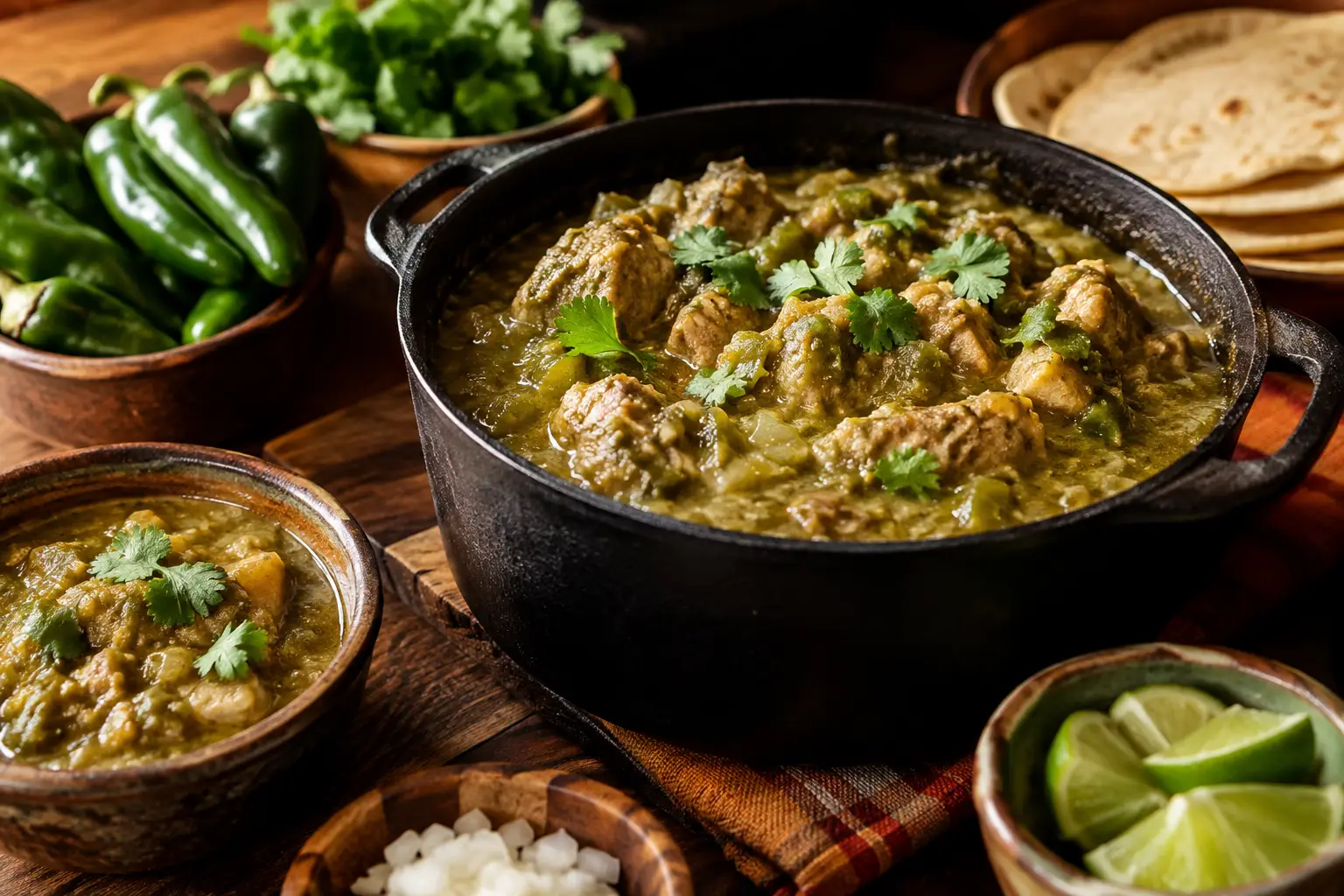
The first rule of how to cook chili verde is simple: do not rush the green sauce. This is not red chili wearing a different color. Chili verde gets its personality from tangy tomatillos, roasted green chiles, garlic, and a slow simmer that turns pork shoulder fork-tender without dulling that bright, electric flavor. Every bowl tells a story, and this one starts with a sheet pan full of blistered green ingredients.
Chili verde sits proudly in the Colorado green chili and New Mexico-inspired family, but there is room to make it your own. Some cooks want it thick enough to spoon over burritos. Others prefer a brothy stew loaded with pork and potatoes. The common thread is a deeply savory green chile sauce with enough acidity and heat to keep you coming back for one more bite.
How to Cook Chili Verde: Build Flavor in Layers
For a generous pot serving six to eight, start with 3 pounds of boneless pork shoulder, cut into 1 1/2-inch chunks. Pork shoulder is the move because its fat and connective tissue become lush during a long simmer. Pork loin cooks faster but can turn dry, while chicken thighs make a lighter, quicker variation that still works beautifully with green sauce.
You will also need:
- 1 1/2 pounds fresh tomatillos, husks removed and fruit rinsed well
- 4 poblano peppers and 2 jalapeños or serranos
- 1 large white or yellow onion, 5 garlic cloves, and 2 cups chicken stock
- 1 teaspoon ground cumin, 1 teaspoon Mexican oregano, and 1 tablespoon kosher salt, plus more to taste
- 2 tablespoons neutral oil and a small handful of cilantro
- 1 tablespoon lime juice, plus warm tortillas, rice, or beans for serving
Tomatillos are not unripe green tomatoes. They have a papery husk and a naturally tart, almost citrusy bite that gives chili verde its signature zip. After peeling off the husks, rinse away their sticky coating under warm water. That small step keeps the sauce clean-tasting instead of waxy.
Roast the Green Team
Set your broiler to high or heat the oven to 450°F. Spread the tomatillos, poblano peppers, jalapeños, onion chunks, and unpeeled garlic cloves across a rimmed baking sheet. Roast until the tomatillos soften and split and the peppers develop dark blisters, usually 12 to 18 minutes under the broiler. Turn the peppers as needed, but do not obsess over perfectly even char. A little unevenness tastes like real cooking.
Move the roasted peppers to a bowl and cover it for 10 minutes. The trapped steam loosens their skins. Peel away most of the blackened skin, remove stems, and decide what to do with the seeds. Leave poblano seeds alone if you like. For jalapeños and serranos, remove some or all of the seeds if you want a friendlier heat level.
Blend the peeled garlic, roasted vegetables, cilantro, cumin, oregano, salt, and 1 cup of stock until smooth. Taste it now. It should be sharp, roasty, and a little louder than you expect. The pork and simmering time will round it out. If it tastes flat, add a pinch more salt before adding more lime. Salt usually reveals tomatillo flavor better than acid does at this stage.
Brown the Pork Before It SimmerS
Pat the pork dry and season it well with salt and black pepper. Heat oil in a Dutch oven or heavy pot over medium-high heat, then brown the pork in batches. Give each batch room. Crowding the pot steams the meat, and steamed pork misses out on the browned edges that make the finished chili taste full-bodied.
The pork does not need to cook through here. Once it has a deep golden crust on several sides, transfer it to a plate. Pour the green sauce into the pot and scrape up the browned bits with a wooden spoon. Let the sauce bubble for two or three minutes. This quick fry deepens the roasted flavor and takes away any raw edge from the blended tomatillos.
Return the pork and any collected juices to the pot. Add the remaining stock, stirring until the meat is mostly submerged. Bring everything just to a simmer, then lower the heat, partially cover, and cook for 1 1/2 to 2 hours. Stir occasionally, especially toward the end, when the sauce begins to reduce and cling to the pork.
Your chili verde is ready when the pork breaks apart easily with a fork and the sauce tastes savory, green, and balanced rather than aggressively tart. Finish with lime juice, then taste again for salt. This last adjustment is the difference between a good pot and a table-silencing one.
Choose Your Chili Verde Texture
There is no single correct thickness for chili verde. If you are serving it in bowls with tortillas, keep it loose and stew-like. Add an extra splash of stock if it tightens too much during cooking. If it is headed for smothered burritos, enchiladas, or eggs, simmer uncovered for another 10 to 15 minutes until the sauce coats a spoon.
For a thicker, more rustic version, use an immersion blender to partially blend the finished pot. Blend briefly, not completely. You want tender pork chunks and a sauce with body, not green baby food. Another classic move is adding diced potatoes during the final 35 to 45 minutes of cooking. They absorb chile flavor and turn the pot into serious cold-weather comfort food.
Heat is also personal. Poblanos bring mellow, earthy chile flavor, while jalapeños offer a familiar medium burn. Serranos are smaller but considerably feistier. If you are cooking for mixed heat tolerances, make the base sauce mild-to-medium and pass sliced serranos, hot sauce, or crushed red pepper at the table. Everybody gets the bowl they actually want.
The Mistakes That Mute Chili Verde
The most common mistake is skipping the roast. Raw-blended tomatillos can make a decent sauce, but roasting adds sweetness, smoke, and dimension. Another is using too much stock at the beginning. You can always loosen chili verde later; reducing an overly thin pot takes time and can overcook the pork.
Watch the acidity, too. Tomatillos vary. Some batches are pleasantly bright, while others are intensely sour. If your chili tastes too tart after it has simmered, start with a pinch of sugar or a little more salt. If that is not enough, stir in a few tablespoons of rich chicken stock or a small knob of butter. More lime is rarely the fix for a sauce that is already sharp.
Finally, resist serving it the second the pork turns tender if you have time to wait. Chili verde often tastes even better after resting for 20 minutes, and it is spectacular the next day. The sauce settles into the pork, the chiles mellow, and the whole pot becomes more unified.
Serve It Like a Green Chile Loyalist
A warm stack of flour tortillas is the obvious partner, ideal for scooping up pork and sauce. Corn tortillas bring a toastier, more earthy contrast. Spoon chili verde over cilantro rice, pile it onto crispy breakfast potatoes, or use it to blanket a bean-and-cheese burrito. A cool topping such as crema, sour cream, avocado, or crumbled cotija gives the heat a welcome counterpoint.
For leftovers, refrigerate the chili in a covered container for up to four days. Reheat it gently with a splash of stock or water, because the sauce will thicken in the fridge. It also freezes well for up to three months, making it a smart make-ahead pot for future taco nights, game days, and those evenings when only a bold green bowl will do.
Make your first batch faithful to the roasted tomatillo-and-pork blueprint, then let your own regional loyalties take over. More hatch chiles, potatoes, chicken thighs, extra serrano heat - chili verde has enough character to welcome the argument.