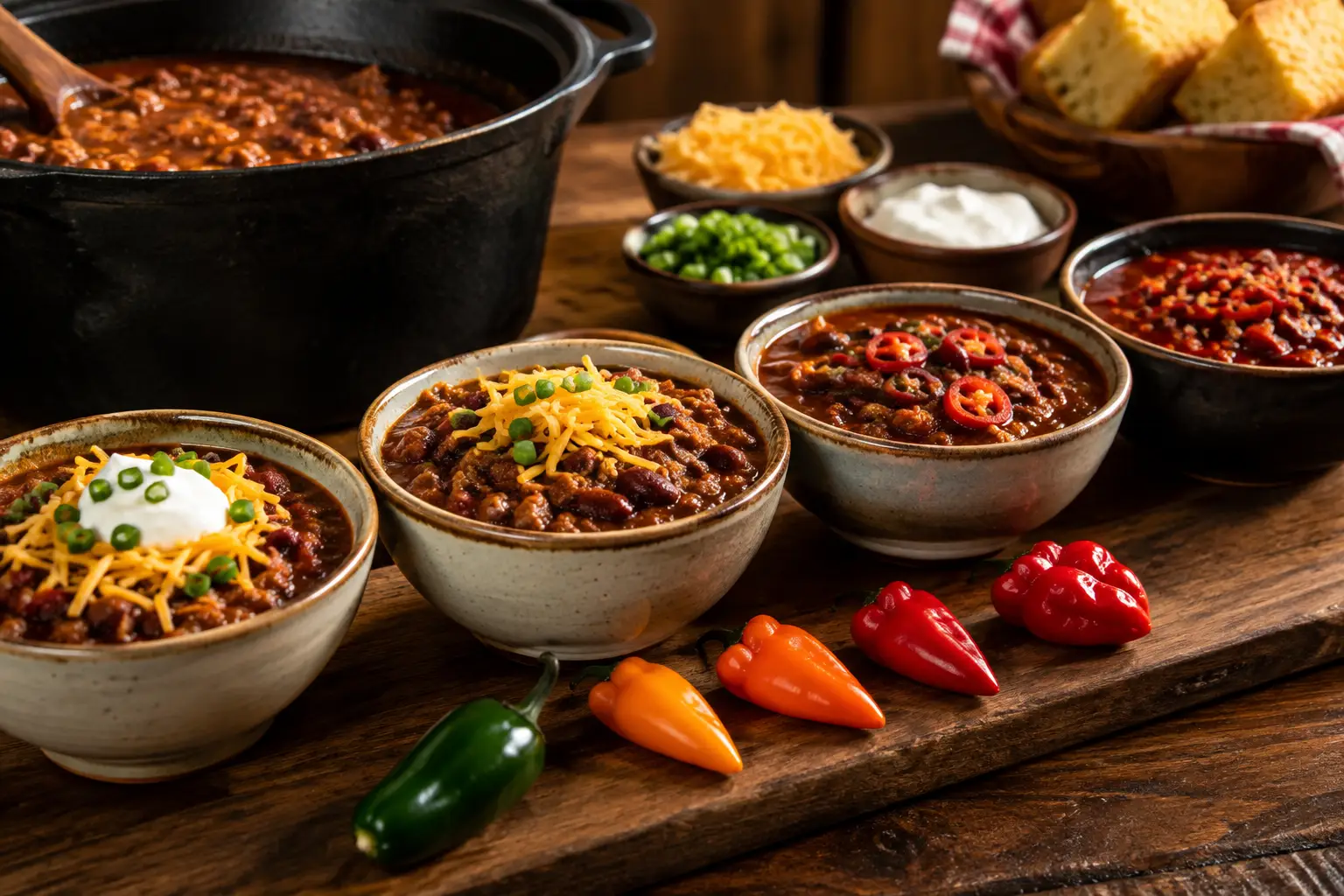
A chili can smell like a warm welcome, then land like a five-alarm challenge. That gap is why chili heat levels deserve more attention than a vague promise of “spicy.” The right level is not just about how many jalapeños went into the pot. It is about the pepper’s character, the kind of chile used, when it is added, what else is in the bowl, and who is bringing a spoon to the table.
For some cooks, heat means a gentle tingle behind a rich beef-and-bean chili. For others, it means a smoky red bowl that builds slowly, or a bright green chili that announces itself before the first bite is finished. Every bowl tells a story, and the pepper sets the volume.
Chili Heat Levels Start With the Pepper
The Scoville scale measures the capsaicin in peppers, which is the compound responsible for that familiar burn. It is useful shorthand, but it is not the whole playbook. One jalapeño can be mild and grassy; another from the same batch can be surprisingly fierce. Growing conditions, ripeness, seeds and inner membranes, and even a pepper’s age can shift the experience.
More importantly, a Scoville number cannot tell you whether a chile tastes fruity, earthy, grassy, smoky, or sharp. A bowl built around poblano peppers may be low on heat but full of roasted depth. Chipotles bring moderate heat with a campfire edge. Habaneros can blaze, but they also carry a distinct tropical fruitiness that can make a Caribbean-inspired chili sing when used with restraint.
Think of peppers as flavor ingredients first and heat controls second. That mindset makes it easier to choose a recipe that fits the night rather than chasing the biggest number on the label.
Mild: Big Flavor, No Stress
Mild chili is not bland chili. It is the lane for people who want a second bowl, families feeding mixed crowds, and cooks who want seasoning complexity without a sweating contest. Bell peppers, Anaheim chiles, poblano peppers, New Mexico chiles, and small amounts of jalapeño can build a friendly base.
A mild Texas-style beef chili might lean on dried ancho and guajillo chiles. Neither is especially aggressive, but together they offer raisin-like sweetness, tang, and a deep brick-red color. Colorado green chili often gets its personality from roasted Hatch or Anaheim chiles, pork, and a savory broth. The warmth is there, but the roasted pepper flavor stays in command.
Mild is also the smart choice when toppings matter. Sharp cheddar, sour cream, scallions, cornbread, and crushed crackers get room to contribute instead of becoming emergency heat control.
Medium: The Crowd-Pleasing Sweet Spot
Medium heat is where many classic game-day pots live. It gives a clear chile presence, a lingering warmth, and enough bite to feel exciting without taking over conversation. Jalapeños, chipotles in adobo, serranos used carefully, and a measured amount of cayenne are common players here.
The key word is measured. A medium chili should build as you eat, not hit all at once. Browned beef or turkey, tomatoes, beans, and stock soften and spread the heat, while fat from meat or cheese helps round its edges. A spoonful of chipotle can create a deeper, smokier result than adding several fresh hot peppers, especially in a thick red chili.
This level is flexible across styles. It works in a bean-forward weeknight chili, a turkey white chili with green chiles, or a Cincinnati-inspired bowl where warm spices and a little chile heat have to coexist. If you are serving a group with varied tastes, medium is often the best starting point. Put hot sauce, sliced fresh chiles, or chile crisp on the table so heat seekers can make their own move.
Hot: Intentional, Not Punishing
Hot chili should still taste like chili. That sounds obvious, but it is easy to lose the plot when adding serranos, Thai chiles, habaneros, ghost peppers, or potent powdered chile blends. At this level, heat needs a counterweight: savory meat, sweetness from tomato or onion, acidity from lime or vinegar, and enough salt to keep flavors defined.
A habanero is a great example of the trade-off. Used whole or in large amounts, it can turn a pot into a high-stakes meal. Used in a small amount, especially alongside fruit, sweet potato, or black beans, it brings a floral, citrusy spark that few milder peppers can match. The goal is not to make guests prove something. The goal is to create a bowl that makes them take another bite.
Fresh chiles tend to produce a more immediate, pointed heat. Dried chiles can feel rounder and more integrated, especially after soaking and blending into a sauce. Chile powders vary wildly, too. A teaspoon of standard chili powder is not remotely equivalent to a teaspoon of pure cayenne or habanero powder. Read the label, then taste as you go.
Full Firepot: For the Heat-First Crowd
The hottest chili recipes are for people who actively want the rush. Superhot peppers such as ghost peppers, scorpions, and Carolina Reapers belong here, and they demand a light hand. Their heat can linger for a long time, making it hard to correct if the pot goes sideways.
If you cook with superhots, start tiny. A fraction of a pepper or a pinch of powder can affect an entire Dutch oven. Wear gloves when handling fresh peppers, keep your hands away from your face, and do not assume a long simmer will tame the burn. Cooking can mellow raw sharpness, but capsaicin is stubborn.
A smart approach is to make a flavorful hot base with more familiar chiles, then add superhot pepper in small increments near the end. Better yet, reserve a portion of the finished chili and turn that into the firepot version. You get one dinner with two heat tracks, and nobody has to sit out.
How to Control Chili Heat Without Losing Flavor
Heat is easier to add than remove, so build in layers. Start with the dried chiles, fresh peppers, or chile powder that define the recipe. Let the pot simmer long enough for those flavors to settle into the meat, beans, and sauce. Then taste. A chili that seems mild after 20 minutes can develop more presence after an hour.
If a bowl needs more heat, add it with purpose. Chipotle adds smoke. Cayenne offers clean, direct fire. Fresh jalapeño adds green brightness. Serrano brings a sharper kick. A fermented hot sauce can add tang along with heat. Pick the ingredient that improves the flavor profile, not merely the Scoville count.
When chili gets hotter than planned, dilution is the most reliable fix. Add more unsalted stock, tomatoes, beans, meat, or the recipe’s base ingredients, then adjust the seasoning again. Dairy toppings can soften the sensation in each serving, while lime, vinegar, and a touch of sweetness can rebalance flavor. Sugar alone will not erase capsaicin, and piling on salt usually makes a rough situation worse.
Match the Heat to the Chili Style
Regional style gives you a useful clue about the best heat range. Texas Red is often more about layered dried-chile depth than reckless heat, though a hot version can absolutely bring the thunder. Chili verde shines when roasted green chiles keep their fresh, earthy personality. White chicken chili usually benefits from moderate warmth that does not bury the creamy broth or delicate chicken.
Bean-heavy vegetarian chili can carry bolder spice because beans, squash, corn, and tomatoes offer softness and sweetness. Cincinnati chili is a different beast: its aromatic spice profile needs balance, so extreme heat can drown out the cinnamon, allspice, and clove notes that make it recognizable. Fusion chili has the widest runway. Go smoky with chipotle and cocoa, bright with salsa verde and serrano, or sweet-hot with pineapple and habanero. Just give the main idea room to speak.
The occasion matters, too. A potluck chili should usually land mild to medium, with heat choices on the side. A cookoff entry can take more risks, but judges still remember flavor after the burn fades. For a cold-night dinner with friends who know their peppers, a hot chili might be exactly the point.
A Better Way to Choose Your Next Bowl
Before choosing a recipe, ask three quick questions: Do you want warmth or a real burn? Do you prefer smoky red chiles or bright green ones? Is everyone eating the same pot? Those answers narrow the field faster than searching for “best chili recipe” and hoping for the best.
At ChiliStation, heat level works best as one filter among several. Pair it with protein, region, cooking method, and time. A mild, slow-cooked pork green chili solves a different dinner problem than a hot, quick turkey chili with chipotle, even if both promise comfort in a bowl.
Your perfect heat level is the one that leaves you tasting the chile, the meat, the spices, and the long-simmered goodness - then reaching for one more spoonful.