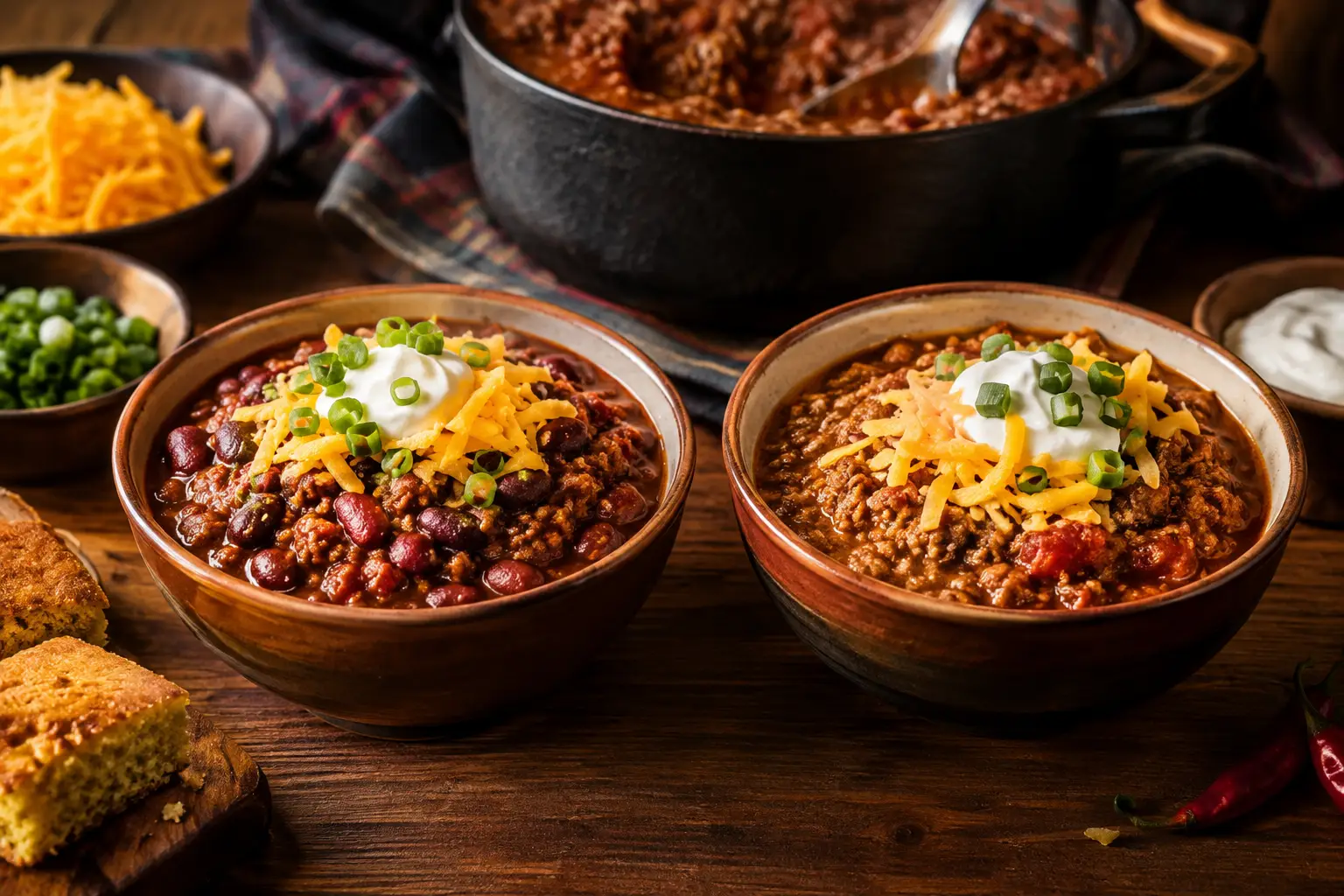
The first spoonful settles the beans chili vs no beans debate faster than any argument. One bowl is thick, hearty, and built for piling into a weeknight dinner. The other is meat-forward, chile-driven, and unapologetically intense. Neither is automatically better. They are different chili experiences with different jobs to do.
That is the fun of this particular food fight. Chili is not one fixed recipe, and every bowl tells a story: a regional tradition, a family rule, a pantry reality, or a cook who simply wanted dinner ready before the game started. The right choice comes down to the flavor, texture, and occasion you want on the table.
Beans Chili vs No Beans: The Real Difference
Beans change more than the ingredient list. They add creamy pockets, earthy flavor, and enough body to turn chili into a one-bowl meal. Kidney beans, pinto beans, black beans, and cranberry beans each bring their own personality, but all of them soften the sharper edges of chiles, tomato, and spice.
No-bean chili puts the spotlight somewhere else. Without beans, the beef, pork, turkey, or game has more room to speak. So do the chiles. A deeply browned beef chili with dried ancho, guajillo, and chipotle becomes more concentrated and stew-like when there is no bean starch or mild bean flavor in the mix.
Think of it as a question of composition. Bean chili offers contrast: tender meat, savory sauce, creamy beans, and often a bright tomato note. No-bean chili leans into concentration: richly seasoned meat suspended in a chile sauce that can be smoky, brick red, fiery, or darkly earthy.
What Beans Bring to the Bowl
Beans are not filler when they are treated well. They make chili more substantial, stretch a pound of ground beef into a crowd-friendly pot, and create the kind of leftovers that improve overnight. For home cooks feeding families, that matters. A pot with beans is often economical, satisfying, and easy to portion for lunches.
They also help manage heat. If you love the flavor of jalapeño, serrano, chipotle, or cayenne but do not want every bite to hit like a dare, beans provide a calm, creamy counterweight. This is especially useful in turkey chili and chicken chili, where the protein is lighter and can benefit from extra body.
The trade-off is clarity. Beans absorb seasoning, so bean chili usually needs more salt, spice, and simmering time than a no-bean pot. Add canned beans too early and they can go soft enough to disappear into the sauce. Add them near the end, after the meat and chile base have developed, and they stay distinct.
For a classic red chili, pinto and kidney beans are dependable choices. Black beans pair naturally with smoky chile, corn, lime, and Southwestern-style flavors. White beans belong beautifully in chicken chili, especially alongside green chiles, cumin, oregano, and a little tang from tomatillo or lime.
Why No-Bean Chili Hits Different
No-bean chili is for cooks who want the chile paste, meat, and long simmer to do all the heavy lifting. The texture should be lush, not watery, with tender chunks or crumbles of meat coated in a sauce that clings to the spoon.
This style rewards ingredient attention. Since there are fewer places for flavor to hide, choose a protein with real character and build depth in layers. Brown the meat hard. Bloom ground spices briefly in fat. Use dried chiles when you can. Balance their bitterness and fruitiness with stock, a touch of sweetness, or a small hit of acid.
A no-bean chili can also feel more special-occasion than pantry-night. Beef chuck chili, venison chili, and Texas Red-style bowls often take time to simmer properly, and that time translates into serious payoff. The bowl is less about bulk and more about depth.
Still, no beans does not mean no texture. Cubed chuck provides chew. Coarsely ground beef creates a rugged, spoonable consistency. Masa harina can add gentle corn flavor and thicken the sauce, while crushed tortilla chips can work in a pinch. The goal is not a thin soup. It is a chile-rich bowl with enough structure to support onions, cheese, or a warm flour tortilla on the side.
Regional Chili Traditions Shape the Argument
The beans question gets loud because regional identity is involved. In Texas Red, beans are generally not part of the traditional bowl. The emphasis is beef and a red chile gravy, often made from dried chiles rather than a heavy tomato base. Calling that style beanless is not a judgment on beans. It is simply the point of the style.
Elsewhere, beans are deeply at home. Many American home-style chili recipes use kidney or pinto beans because they are practical, comforting, and delicious. A Midwestern game-day chili may be tomato-forward, loaded with beans, topped with shredded cheese, and served with crackers. That bowl has its own legitimate lineage and loyal following.
Then there are the styles that refuse to fit the binary. Cincinnati chili is a finely textured, warmly spiced meat sauce often served over spaghetti, with beans appearing as part of certain "way" combinations rather than cooked directly into every pot. Colorado green chili may be centered on pork and roasted green chiles, but beans can show up depending on the cook and the meal. Chili has rules, until it does not.
Respecting a named regional style means understanding what makes it recognizable. Cooking for yourself means making the bowl you are excited to eat. Those two ideas can coexist just fine.
Choose Your Chili by the Moment
For a busy weeknight, beans usually win. They make the pot go further, cook quickly when canned, and turn leftovers into burrito filling, nacho topping, stuffed sweet potato filling, or a freezer-ready lunch. A ground beef and pinto bean chili can be deeply satisfying without an all-afternoon simmer.
For a cookout, chili bar, or football crowd, bean chili is also the flexible move. Offer toppings like diced onion, scallions, shredded cheddar, sour cream, pickled jalapeños, cornbread, and hot sauce. Guests can build their own bowls, and a mild-to-medium base keeps the crowd happy.
For a chili cook-off or a weekend project, no-bean chili makes a stronger statement. It gives you room to showcase a particular chile blend, a special cut of beef, or an ambitious low-and-slow method. The flavors read more clearly, which is exactly what serious chili fans often want from a tasting bowl.
If you are serving chili over rice, spaghetti, fries, or a baked potato, either route works. The deciding factor is richness. A thick no-bean beef chili can be ideal over fries or spaghetti. A bean-heavy chili makes a more complete baked potato topping, especially when dinner needs to feel generous without adding much extra meat.
How to Make Either Style Taste Intentional
The biggest mistake is treating beans as an afterthought or skipping them without replacing the body they would have provided. If you use beans, season the entire pot confidently and let the flavors mingle. If you skip them, use a little more meat, deepen the chile base, and give the sauce time to reduce.
Start with a clear flavor lane. For a smoky red chili, build around ancho, chipotle, cumin, and beef. For a brighter green chili, use roasted poblano or Hatch-style green chiles, garlic, oregano, and pork or chicken. For a cozy pantry chili, tomatoes, chili powder, ground beef, onions, and beans remain a powerhouse combination.
Taste near the end before making big adjustments. Chili often needs salt more than another spoonful of chili powder. If it tastes flat, try a small splash of vinegar, lime juice, or hot sauce. If it tastes harsh, a longer simmer can help, as can a small pinch of sugar or a little extra fat from cheese or sour cream at serving time.
And if your table is divided, do not force a winner. Make a no-bean base, then offer warmed beans on the side for anyone who wants them. It is not surrender. It is smart chili hosting.
The best bowl is the one that matches your mood: bean-rich and comforting when you want abundance, or chile-forward and intense when you want every spoonful to bring the heat.