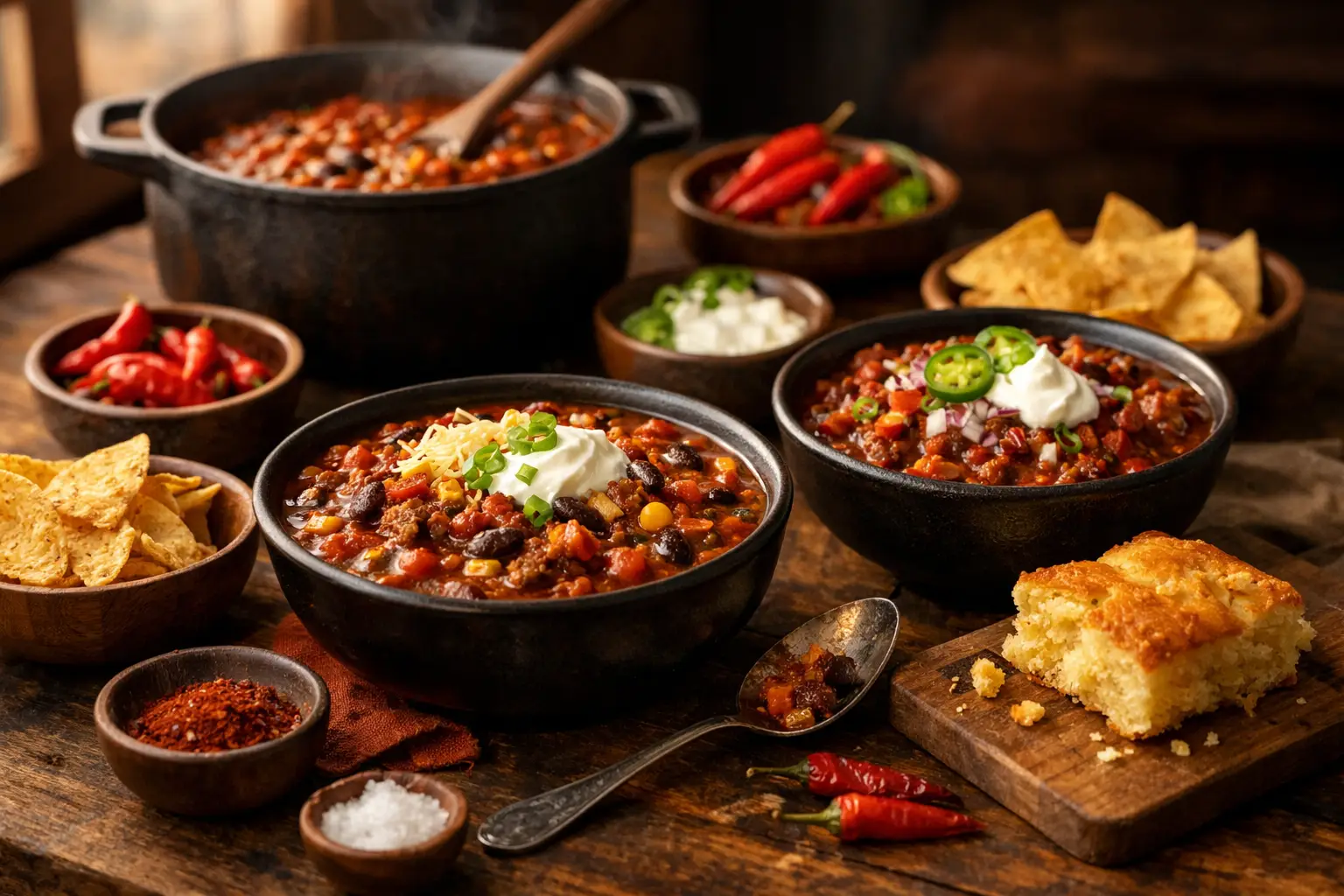
A winter chili plan should begin with one question: what kind of comfort are you after tonight? The best chili recipes for winter are not all built for the same job. Some are dark, beefy, and slow-cooked for a snow-day table. Others are bright with green chiles, ready before a weeknight turns into takeout. Every bowl tells a story, and the right one depends on your time, heat tolerance, and what is already waiting in the pantry.
The best chili recipes for winter, sorted by craving
1. Texas Red for the full slow-simmer experience
Texas Red is the move when you want chili to be the main event. Think beef chuck, dried chile peppers, garlic, cumin, and a long, low cook until the meat yields to a spoon. Traditional versions skip beans, which lets the chile paste and beefy richness take center stage.
It is not the fastest pot, but that is exactly the point. Make it when the afternoon is open, cornbread is nonnegotiable, and you want a bowl with serious regional identity. A little masa harina near the end can add body without turning the chile gravy heavy.
2. Classic beef-and-bean chili for crowd-pleasing comfort
For game day, family dinner, or a freezer-friendly Sunday cook, classic beef chili earns its permanent spot. Ground beef, beans, tomatoes, onion, and chili powder create the familiar, big-batch bowl most people mean when they say “chili.”
This style is flexible in the best way. Use kidney beans for a traditional look, pinto beans for a creamier bite, or a mix of both. The trade-off is that canned tomatoes and commercial chili powder can flatten the flavor if the pot is rushed, so give it at least 45 minutes to mingle and finish with salt, acid, and a pinch of sugar only if the tomatoes taste sharp.
3. White chicken chili for a lighter winter bowl
White chicken chili brings a different kind of cozy. Chicken, white beans, broth, cumin, and green chiles make a mellow, creamy pot that feels substantial without the weight of a tomato-and-beef version.
Use rotisserie chicken when speed matters, or poach chicken thighs in the broth for more flavor. Some recipes rely on cream cheese, while others puree part of the beans for a naturally creamy texture. The bean route tastes cleaner and reheats better; the cream cheese route is richer and more dip-adjacent. Both deserve a finish of lime, cilantro, and crunchy tortilla chips.
4. Colorado green chile for pork lovers
Colorado green chile is built around roasted green chiles, usually paired with pork, onion, garlic, and a savory broth thickened just enough to cling to a spoon. It can land somewhere between chili and stew, which is part of its magic.
This is the bowl for cooks who prefer a roasted, vegetal pepper flavor over deep red chile intensity. Pork shoulder gives the sauce time to become plush, but leftover roasted pork or pulled pork can make a smart shortcut. Serve it with warm flour tortillas, over burritos, or piled onto eggs the next morning.
5. Cincinnati chili for a topping-heavy night
Cincinnati chili plays by its own rules. The sauce is finely textured and warmly spiced with notes that may include cinnamon, allspice, cloves, and cocoa, then served over spaghetti or hot dogs. It is less about chunky spoonfuls and more about a wildly specific plate-building ritual.
Start with a three-way: spaghetti, chili, and a mountain of shredded cheddar. Add beans for a four-way or onions for a five-way. Chili purists may argue, but winter is a long season and there is room for regional originals that refuse to blend in.
6. Turkey chili when you want cozy without the heaviness
Ground turkey chili can be bright, hearty, and deeply satisfying, but it needs a little help to avoid tasting lean. Brown the turkey well, then build flavor with onion, garlic, tomato paste, smoked paprika, and enough chili powder to give it backbone.
Black beans and corn take this in a Southwestern direction, while white beans and roasted peppers make it feel more Mediterranean-adjacent. Add a small amount of dark beer, stock, or even grated zucchini for moisture if the pot seems tight. This is a strong meal-prep choice because the flavor improves overnight.
7. Sweet potato black bean chili for meatless comfort
A meatless chili should not feel like a compromise bowl. Sweet potatoes bring heft and gentle sweetness, while black beans deliver protein and a creamy contrast to tomatoes, chile powder, and smoky spices.
The key is balancing that sweetness. Chipotle in adobo, pickled jalapeño brine, or a squeeze of lime keeps the pot lively. If you want a thicker chili, let some sweet potato edges break down naturally rather than adding flour or starch. Top it with avocado and pepitas for texture that holds up against the soft vegetables.
8. Smoky chipotle beef chili for heat seekers
When mild is not on the menu, chipotle beef chili brings smoke, fruitiness, and a slow-building burn. Chipotles in adobo do more than make a pot spicy: they add the dark, campfire-like flavor that makes winter chili taste bigger than its ingredient list.
Go carefully with the adobo sauce before adding extra peppers. Heat is easier to layer in than pull back. A spoonful of brown sugar, a square of dark chocolate, or a splash of coffee can deepen the sauce, but use one supporting note, not all three. The goal is complexity, not a pantry dare.
9. Pumpkin chili for a fall-to-winter crossover
Pumpkin chili is for the cook who likes a little seasonal curveball. Pumpkin puree melts into the base, lending body and a subtle earthy sweetness to beef, turkey, or beans. It should not taste like pie.
Keep the spices savory with cumin, smoked paprika, oregano, and chiles. Beans and ground turkey make an especially good pairing here, while a sharp cheddar topping cuts through the pumpkin’s softness. This is also a useful choice for feeding people who claim they do not like pumpkin until they ask for seconds.
10. Bison chili for a lean, deeply savory pot
Bison has a clean, mineral-rich flavor that makes a memorable chili, especially when paired with smoky dried chiles and a modest amount of beans. Because it is leaner than beef, avoid aggressive boiling or overly long cooking once ground bison is in the pot.
A beef or mushroom-forward stock adds depth without masking the meat. This is a good candidate for a Texas-inspired beanless batch, though it also works beautifully with pinto beans. Treat it as a flavor-forward variation, not a health-food rewrite.
11. Vegetarian three-bean chili for the reliable pantry pot
Three-bean chili is the answer when the forecast is ugly and the grocery run is not happening. Canned beans, tomatoes, onion, spices, and a few freezer vegetables can become dinner with very little ceremony.
Use different beans for contrast: black beans for earthiness, pinto beans for creaminess, and red kidney beans for structure. A tablespoon of cocoa powder or a splash of soy sauce can add dark savoriness, especially if you are not using meat. This is the kind of pot that welcomes improvisation, but do not skip the final tasting round. Beans need enough salt and acid to wake up.
12. Chili verde with beans for a bright, tangy finish
Chili verde, whether made with chicken, pork, or beans alone, is a smart choice when red chili fatigue sets in. Tomatillos bring tartness, while poblano peppers, jalapeños, cilantro, and lime create a greener, fresher profile.
Roasting the tomatillos and peppers first makes a major difference. It adds char and sweetness while keeping the sauce vivid. If your household has mixed spice preferences, make the base mild and pass sliced serranos or hot sauce at the table. A great chili does not need to punish everyone equally.
How to choose your winter chili
Choose Texas Red, bison chili, or smoky chipotle beef when you want depth and a slow-cooked project. Pick white chicken chili, turkey chili, or three-bean chili when a fast, practical dinner matters more. Green chile and chili verde are for cooks chasing roasted pepper flavor, while Cincinnati chili is for anyone willing to put a glorious amount of cheese on dinner.
Also consider the leftovers. Bean-heavy chili usually freezes and reheats beautifully. Creamy white chili can thicken in the fridge, so loosen it with broth. Chili made with fresh toppings like avocado, cilantro, chips, or cheese should be stored plain and finished bowl by bowl.
The best winter pot is the one that matches the night: low and slow when you have time, pantry-powered when you do not, and bold enough that tomorrow’s leftovers feel like a win.