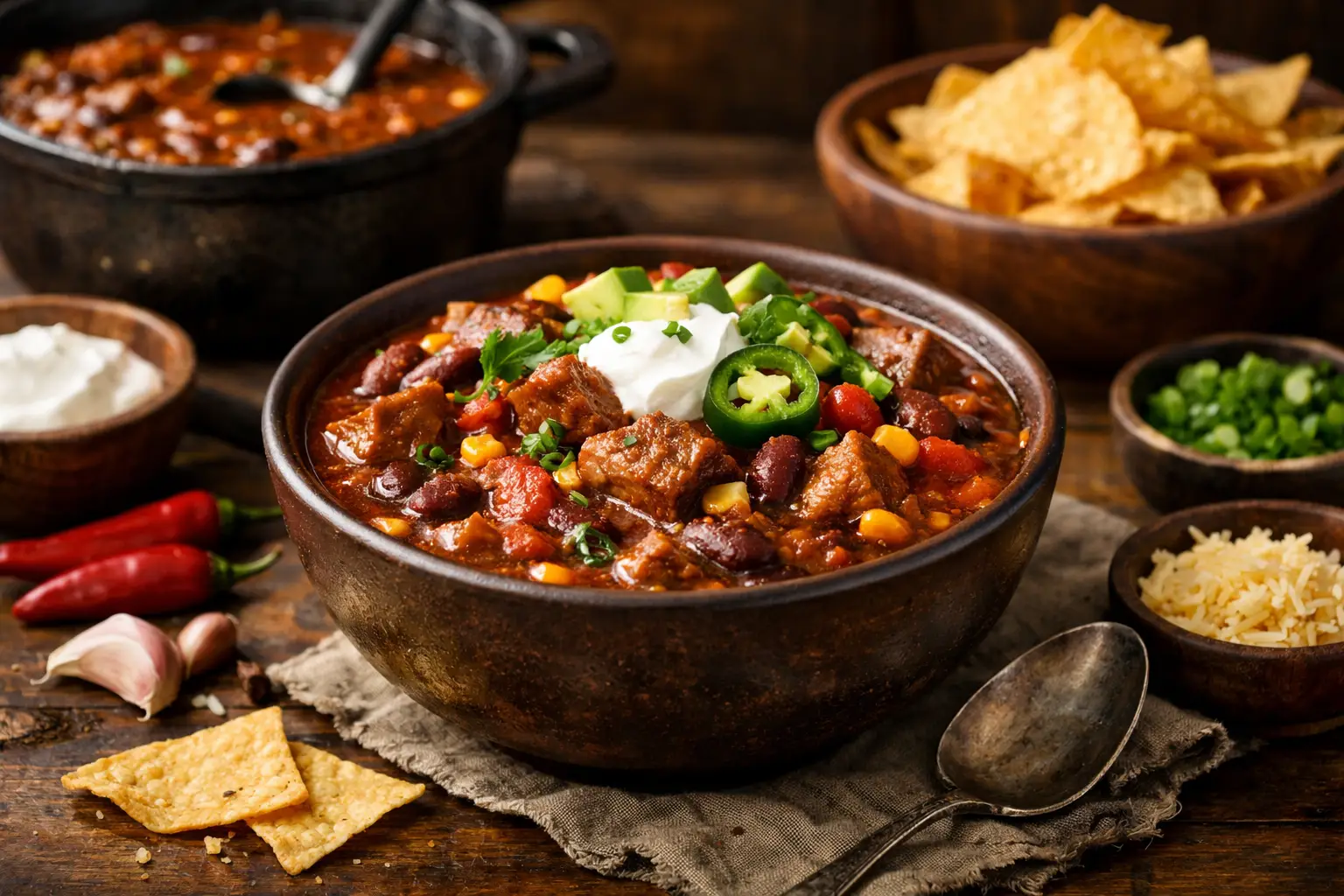
A great pork chili recipe hits differently from the usual beef pot. Pork brings a softer, richer texture, takes on chile flavor beautifully, and gives you room to steer the bowl smoky, tomatoey, brothy, or deeply stew-like depending on the cut and the cook time. If your chili rotation needs something with more character and a little less predictability, pork is a smart move.
What makes pork chili especially fun is that there is no single correct lane. You can build it with shoulder for a long-simmered, spoon-coating finish, or use ground pork for a faster weeknight version that still tastes full and savory. Add beans if that is your kind of bowl. Leave them out if you want the meat and chile base to carry the whole show. Every bowl tells a story, and pork gives you a lot of story to work with.
Why a pork chili recipe works so well
Pork has a natural sweetness that plays well with dried chiles, cumin, garlic, onion, and tomato. It also brings enough fat to create body, but not so much that the chili turns heavy if you balance it properly. That balance is the key. Beef often pushes chili toward deep and dark. Pork can do that too, but it can also stay brighter and more layered.
The cut matters. Pork shoulder is the classic choice if you want tender chunks that break down at the edges while still keeping some structure. Ground pork is easier and quicker, with a texture closer to classic American chili. Pork loin can work in a pinch, but it is lean and less forgiving. If you go that route, you need a shorter cook and a little extra fat from oil or bacon.
This is also one of the most adaptable chili styles for heat level. Pork welcomes green chiles, chipotle, ancho, guajillo, and even a little cayenne without tasting one-note. You can build a mild, family-friendly pot or a deeper, smokier bowl with real bite.
Start with the right kind of pork
If you want the best texture, choose pork shoulder. Cut it into small cubes, season it generously, and brown it in batches. That browning stage matters because pork develops sweet, savory edges that become part of the base. If you crowd the pot, you steam the meat instead of building flavor.
Ground pork is the practical pick for speed. It browns quickly and distributes evenly through the chili, which makes every bite consistent. The trade-off is texture. You lose the satisfying chunkiness of braised shoulder, so the final bowl feels more familiar and less stew-like.
There is also a middle path: half shoulder, half ground pork. That blend gives you body from the ground meat and tender bites from the cubes. For a lot of home cooks, that is the sweet spot.
Building flavor without overcomplicating it
The backbone of a strong pork chili recipe is onion, garlic, chile powder, cumin, and something with depth such as tomato paste, crushed tomatoes, or a small amount of broth. After browning the pork, cook the onion until softened, then add garlic and spices just long enough to bloom. Stir in tomato paste if you are using it and let it darken slightly. That little extra minute creates a deeper, more cooked-in flavor.
From there, think about what kind of chili you want in the bowl. Crushed tomatoes make it rounder and slightly sweeter. Broth gives it a looser, more savory profile. Roasted green chiles push it toward a brighter Southwestern direction. Chipotle in adobo adds smoke and gentle bitterness, which can be excellent with pork if you do not overdo it.
Beans are optional, not mandatory. Pinto beans feel especially natural here because they match pork’s softer, earthy side. Black beans can work, but they make the bowl firmer and a little more assertive. If you skip beans entirely, reduce the liquid slightly so the chili still finishes thick and confident.
A practical pork chili recipe that gets the texture right
For a pot that serves about six, start with 2 pounds of pork shoulder cut into small cubes or use 1 1/2 pounds ground pork if you want a faster version. Season the meat with salt and black pepper. Heat a heavy pot with a little oil and brown the pork in batches, then remove it.
Add 1 diced yellow onion and cook until soft. Stir in 4 minced garlic cloves, 2 tablespoons chili powder, 2 teaspoons ground cumin, 1 teaspoon smoked paprika, and 1 tablespoon tomato paste. Cook for about a minute, stirring constantly. Add one 28-ounce can of crushed tomatoes, 1 to 2 cups chicken broth, and 1 can of drained pinto beans if you want them. Return the pork to the pot. If you like a smokier edge, add 1 chopped chipotle pepper with a spoonful of adobo sauce.
Bring it to a gentle simmer, then lower the heat and cook uncovered or partially covered until the pork is tender and the chili thickens. For pork shoulder, that usually means 75 to 90 minutes. For ground pork, 35 to 45 minutes is often enough. Taste near the end and adjust with more salt, a pinch of sugar if the tomatoes feel sharp, or a squeeze of lime if the pot needs a little lift.
That is the core formula, but it is not rigid. If you want a chunkier, more rustic bowl, use less tomato and more broth. If you want it richer, let it reduce longer. Chili is one of those dishes where patience usually improves the result, but knowing when to stop matters too. Cook it too far and the pork can lose its identity.
Common mistakes that flatten the bowl
The most common problem is underseasoning. Pork can carry a lot of spice and salt, especially in a chili format, so a timid hand usually leaves the pot tasting vague. Another issue is relying on heat without depth. A lot of hot powder or cayenne gives you fire, but not necessarily flavor. Dried chiles, smoked paprika, cumin, and browned meat create the kind of heat that feels built, not dumped in.
Watery chili is another frequent miss. If the liquid looks right early on, it may still be too loose by the time the pork is tender. Give it time uncovered near the end. On the flip side, if the pot gets too thick too soon, add broth in small amounts instead of one big splash.
And then there is the bean question. Beans are fine here, but too many can crowd out the pork and make the bowl feel more like a pantry filler than a protein-forward chili. If pork is the star, let it stay the star.
Toppings that actually help
Pork chili loves contrast. Sour cream cools heat and adds tang. Sharp cheddar gives it a familiar comfort-food finish. Diced red onion adds bite. Cilantro brightens the pot. Crushed tortilla chips are great when the chili is brothy, less useful when it is already very thick.
If your chili leans smoky and red, shredded cheese and scallions usually fit best. If it leans greener with roasted chiles, lime and cilantro do more for the bowl. This is where a curated chili mindset helps. The best toppings are not the most toppings. They are the ones that match the style you built.
Make-ahead, leftovers, and the second-day effect
Pork chili is excellent the next day. The spice settles, the pork relaxes into the sauce, and the whole pot tastes more integrated. If you are cooking for game day, a cold weekend, or a casual dinner with friends, making it ahead is a power move.
Store it in the fridge once cooled, then reheat gently on the stove. Add a little broth if it tightens too much overnight. Freezing works well too, especially for bean-free or lightly beaned batches. Very bean-heavy chili can get a bit softer after thawing, which is not a disaster, just a texture shift.
For home cooks who like to compare styles, pork chili is one of the most rewarding categories to play with. It sits at the crossroads of classic red chili, green chile stew energy, and slow-cooked comfort food. That is exactly why it belongs in a serious chili rotation, and why it keeps showing up on platforms like ChiliStation where the fun is not just cooking one bowl, but finding your bowl.
If you make this pork chili recipe once, you will have a solid dinner. If you make it twice and tweak the cut, chile blend, or bean ratio, you will start to understand what kind of pork chili is actually yours.