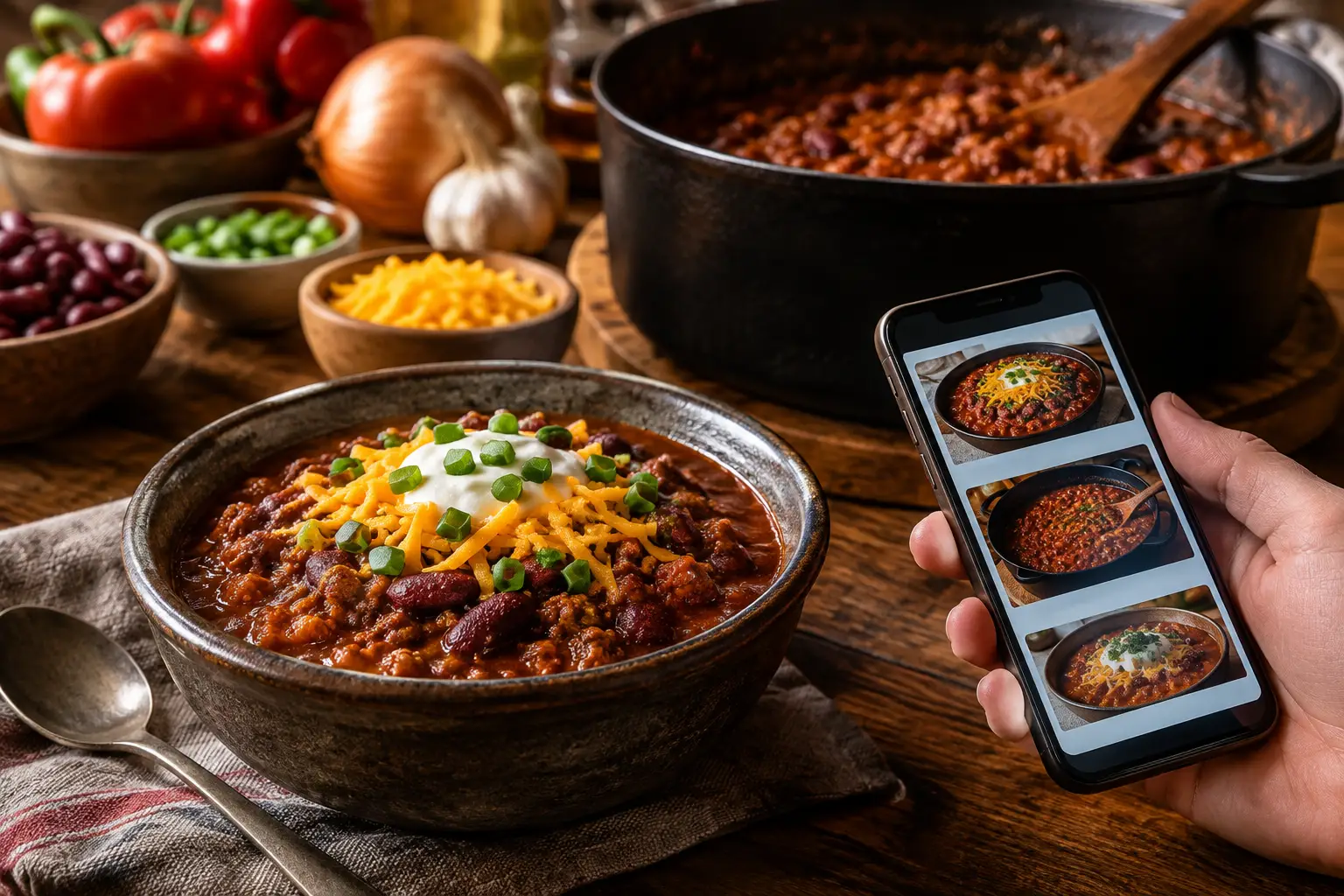
A generic recipe app can hand you 4,000 search results for “chili” and still leave you staring at your phone at 5:45 p.m. Chili recipe apps should solve the real question: What kind of bowl are you craving, and which recipe fits the night you have? A slow-simmered Texas Red for a cold Sunday is not the same assignment as a 30-minute turkey chili after work.
The best chili discovery tools do more than collect recipes. They sort the category with purpose, helping you move from broad appetite to a recipe that makes sense for your ingredients, schedule, crowd, and heat tolerance. Every bowl tells a story. A useful app helps you find the story you want to cook.
What Chili Recipe Apps Need to Do Well
Chili is not one thing. That sounds obvious until you see how many recipe platforms flatten it into a single search term. Bean-heavy weeknight chili, brick-red beef chili, Hatch green chile stew, Cincinnati-style chili, white chicken chili, and smoky vegetarian chili belong in the same big family, but they cook, taste, and serve very differently.
A worthwhile app recognizes those differences before you open a recipe. It should let you browse by the details that actually change dinner: protein, chili style, region, cooking method, prep time, spice level, and dietary needs. Those filters turn endless scrolling into a decision.
That matters especially when you are cooking for other people. “Medium heat” can mean pleasantly peppery to one cook and full forehead-sweat to another. A good platform gives clues about the chile peppers, the amount of spice, and whether the heat is rounded out by tomatoes, beans, dairy, or a long braise. Heat level without flavor context is only half the picture.
Look for a real chili taxonomy
The strongest chili recipe apps organize recipes around meaningful categories, not just catchy names. If you want no-bean Texas Red, you should not have to sift through 15 bean chili recipes to get there. If your freezer has ground turkey, that should be a useful starting point, not a limitation.
Four filters earn their place every time:
- Style and region, from Texas Red and Colorado green chili to Cincinnati-style chili and white chicken chili
- Protein or plant base, including beef, chicken, pork, turkey, venison, and vegetarian options
- Method and time, such as stovetop, slow cooker, pressure cooker, smoker, or a fast weeknight pot
- Heat level, ideally paired with a clear note about which peppers create it
These categories do not remove the fun of discovery. They make surprise more useful. Once you have narrowed the field to a slow-cooker pork chili with medium heat, you can choose between a tomatillo-forward New Mexico-inspired bowl and a smoky chipotle version with confidence.
Regional Context Is More Valuable Than Another Star Rating
Ratings can help, but they are a blunt instrument. A five-star chili may be excellent and still be completely wrong for someone seeking a specific regional profile. It might be sweet and tomato-rich when you wanted the deep chile-pepper character of a Texas-style pot. It might be a crowd-pleasing ground beef chili when you were hoping for chunks of braised chuck and no beans.
That is why editorial context is a major advantage. Before you cook, an app should tell you what the recipe is trying to be. Is it thick enough to spoon over a hot dog? Does it lean earthy from ancho and cumin, bright from green chiles and lime, or savory-sweet from cinnamon and allspice? Is it traditional in spirit, a practical shortcut, or a full-on mashup?
A short, confident description can save a disappointing dinner. “Smoky, beefy, bean-free, and built for a long simmer” tells a home cook far more than a thumbnail and a 4.8 score. The best platforms treat recipes as distinct bowls with identities, not interchangeable content cards.
Know when ratings are useful
Community feedback still has a place. It is especially handy for practical questions: Did the stated cook time hold up? Did a recipe need more salt? Was the spice level accurate? Did the leftovers improve overnight?
Read ratings for patterns rather than treating them as a final verdict. One person complaining that a Cincinnati chili tastes unusual may simply be discovering that it is supposed to taste different from a Texas bowl. Comments are most valuable when they explain what cooks changed and why, rather than declaring every variation “wrong.”
Choose the App That Matches How You Cook
There is no single best kind of chili recipe app because home cooks arrive with different missions. The best choice depends on whether you need speed, depth, or a place to build your own recipe memory.
If you usually cook from a short grocery list, prioritize ingredient filters and recipe notes that tell you what is optional. A recipe that calls for three dried chiles can be fantastic, but an app should help you understand whether substitutions will preserve the character of the bowl or send it in a new direction.
If you cook for game days, potlucks, or freezer meals, batch-size controls and make-ahead guidance matter more. Chili is famously better the next day, but not every recipe scales neatly. Ground spices, salt, thickening ingredients, and hot peppers can become aggressive when doubled without thoughtful adjustments.
If you collect recipes like baseball cards, look for tools that make saving and comparing easy. You may want a folder for “cold-weather reds,” another for “Sunday projects,” and a third for “fast chili that still tastes like it tried.” The ability to add notes is a quiet power feature. Your future self will appreciate “use two chipotles, not three” and “served 10 with cornbread.”
For cooks who want inspiration beyond the usual weeknight bowl, specialization wins. A focused chili destination such as ChiliStation can make the category feel legible, with recipes organized by style, protein, region, and spice rather than tossed into the same giant pot.
Watch for Recipe Quality Signals
A polished photo is nice. A trustworthy recipe is better. Before committing to a pot, scan for signs that the creator understands the cooking process.
First, check whether the method explains the purpose of the steps. Browning meat is not just a box to tick - it builds flavor through fond. Blooming dried spices in fat wakes them up. Simmering uncovered versus covered changes thickness and concentration. Recipes that explain these choices give you room to cook, not merely obey.
Second, see whether the ingredient list matches the promised style. A quick chili can absolutely be delicious, but it should not pretend to deliver the same depth as a chile paste made from toasted, soaked dried peppers. Neither approach is morally superior. It depends on whether you have 35 minutes or three unhurried hours.
Finally, pay attention to serving guidance. A bowl of Texas Red may want diced onion, shredded cheese, crackers, and zero apology. Green chili might call for warm tortillas. Cincinnati-style chili has its own layered ritual. The right topping is not just decoration - it completes the experience.
Make Discovery Part of the Cooking
The most satisfying chili apps do not make you choose between tradition and experimentation. They give you enough context to cook a classic bowl faithfully, then enough variety to wander when the mood strikes. Start with the chili you know, then follow its flavor trail.
Love a standard beef-and-bean chili? Try a darker, chile-forward red next. Already devoted to white chicken chili? Move toward pork verde with roasted green chiles. Want more smoke without turning dinner into a five-alarm event? Look for ancho, guajillo, chipotle, or smoked paprika descriptions, then compare how each recipe handles sweetness and acid.
Save the recipes that make you curious, not only the ones you plan to cook this week. A great chili collection becomes a personal map of cold nights, football Sundays, family requests, and those rare afternoons when you have time to let a pot quietly become something bigger. Pick a bowl with a clear point of view, make it your own, and write down what made it worth repeating.