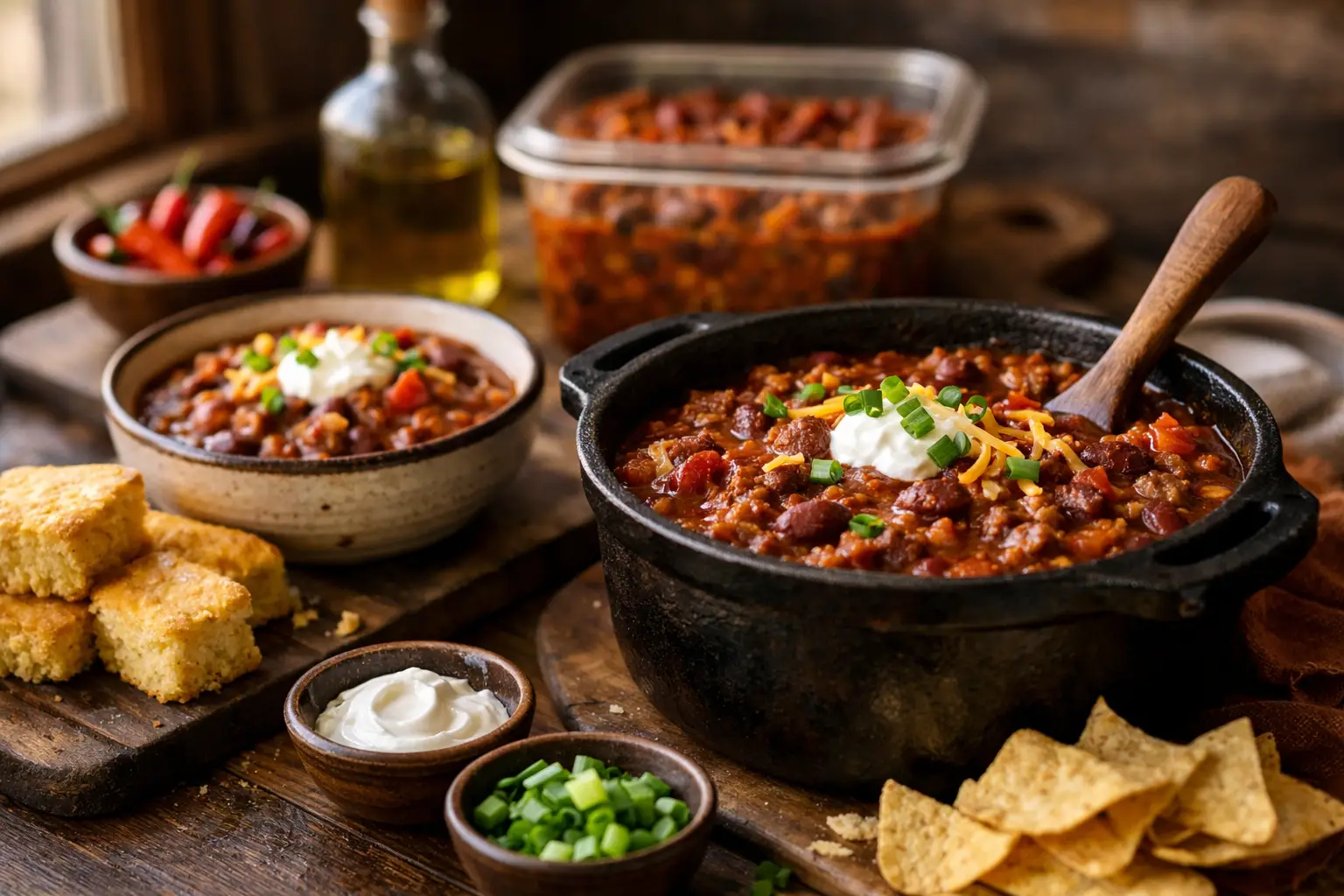
The pot is quiet, the kitchen smells like toasted cumin and slow-cooked onions, and dinner is still a day away. So, can chili be made ahead? Absolutely. In fact, for many styles, making it ahead is the move that turns a good bowl into a deeper, more settled, spoon-worthy one.
Chili is built for a rest. The spices have time to mingle, the meat absorbs more of the sauce, and sharp tomato or chile notes round into something richer. That said, a next-day Texas Red needs slightly different handling than a bright, porky Colorado green chili or a bean-heavy weeknight classic. Every bowl tells a story, and the best make-ahead plan respects the style.
Why Chili Tastes Better the Next Day
Fresh chili can taste exciting but a little unfinished. Right after cooking, you may notice one ingredient calling all the shots: chile powder, garlic, smoke, acid, or salt. An overnight rest gives those loud individual notes time to become a complete flavor.
This is especially true for red chilis with dried chiles, ground beef or chuck, tomatoes, and warm spices. The fat carries flavor through the pot, while the starches in beans or cornmeal can lightly thicken the base. By day two, the sauce often clings better to the meat and tastes less like a collection of ingredients.
The trade-off is freshness. Green chilis built around roasted Hatch chiles, tomatillos, cilantro, or lime can lose some of their high, grassy spark after a long rest. They still make excellent leftovers, but save a portion of fresh chile, cilantro, lime juice, or green onion for reheating. Add that finishing lift just before serving, and the bowl keeps its color and personality.
Can Chili Be Made Ahead for a Party?
Chili is one of the smartest party foods you can cook because the hard work happens before guests arrive. Make it one or two days ahead, chill it properly, then reheat it slowly while you set out toppings. You get a less frantic kitchen and a more flavorful main dish.
For a game-day chili bar, keep the pot itself focused and let the toppings create the range. A rich beef-and-bean chili can meet shredded cheddar, diced white onion, pickled jalapenos, sour cream, crushed corn chips, hot sauce, and avocado without losing its identity. If you are feeding a mixed crowd, make the base medium rather than volcanic. Put the serious heat on the table in the form of fresh chiles, chile oil, or a sharp hot sauce.
A slow cooker works beautifully for holding hot chili once it has been thoroughly reheated. It is not the best shortcut for bringing a cold, dense pot up to a safe serving temperature, though. Reheat first on the stovetop or in smaller batches, then move it to the slow cooker on warm for the party window.
Cool and Store It Like You Mean It
Great make-ahead chili starts with good cooling habits. Do not leave a huge Dutch oven on the counter for hours while it gradually drifts toward room temperature. A deep pot holds heat stubbornly, and that is where food safety gets less forgiving.
Let the chili stop steaming aggressively, then transfer it into shallow containers so it cools faster. Refrigerate it within two hours of cooking. If you made a serious batch, divide it into meal-size portions rather than wrestling with one giant container later. Smaller portions cool, reheat, and freeze more evenly.
Keep refrigerated chili for three to four days. If you are planning farther ahead, freeze it. Most chilis hold their quality well in the freezer for about three months, particularly hearty beef, turkey, bison, and bean versions. Leave a little room at the top of each container because the chili expands as it freezes.
If your chili has dairy stirred directly into the pot, such as cream cheese or heavy cream, it can still be frozen, but the texture may separate slightly when reheated. Stirring gently over low heat usually brings it back together. For the cleanest result, make the chili base ahead and add dairy at the finish.
The Best Make-Ahead Timeline
For tomorrow night’s dinner, cook the chili fully today, cool it, and refrigerate it. The next day, scrape off any hardened fat if you want a leaner bowl, then reheat slowly with a splash of stock, water, or crushed tomatoes if it has become too thick.
For a Saturday gathering, Thursday night is the sweet spot for many red chili recipes. That gives the flavors a full day to settle without pushing too close to the refrigerator limit. Make a green chili on Friday if you want its roasted chile character to stay especially vivid.
For freezer meal planning, freeze the chili after it has cooled completely. Thaw it overnight in the refrigerator, not on the counter. Then reheat it until it is piping hot throughout, stirring from the bottom where dense chili tends to heat last.
Reheating Without Flattening the Flavor
Low and steady wins. Put refrigerated chili in a heavy pot over medium-low heat, stir often, and add liquid only as needed. Chili thickens in the fridge because fats firm up and beans, meat, and vegetables continue to absorb moisture. A few tablespoons of broth at a time gives you control; dumping in a full cup can turn a proud, thick chili into soup.
Taste after the chili is hot, not before. Cold food masks salt and spice, so seasoning a chilled spoonful can lead to an over-salted final pot. Once hot, adjust strategically. A pinch of salt can wake up a muted batch. A small splash of cider vinegar or lime juice can cut richness. More chile powder may bring heat, but it can also taste raw if it does not simmer long enough. For a deeper chile note, stir in a little adobo sauce, toasted ground cumin, or a spoonful of chile paste and give it ten minutes to settle.
Microwaving works for individual portions, especially weekday lunches. Cover the bowl loosely, heat in short intervals, and stir between each one. The center of a thick serving stays cool longer than the edges, so patience matters.
What to Add Later, Not Earlier
The toppings should almost always wait. Shredded cheese, sour cream, scallions, cilantro, avocado, Fritos, tortilla chips, and cornbread belong at serving time. Their contrast is part of the fun: cool against hot, crunchy against silky, bright against smoky.
A few ingredients inside the pot also benefit from a delayed entrance. Add tender herbs near the end of reheating. Stir in lime juice after the heat is off. If you are using canned beans and prefer them intact rather than soft and broken down, cook the chili base ahead and add the beans during the final reheating period.
Pasta changes the equation for Cincinnati-style chili. Make the spiced meat sauce ahead with confidence, but cook the spaghetti fresh. The same goes for rice, baked potatoes, and fries. Keep the foundation and the starch separate until it is bowl-building time.
Choose the Right Chili for the Rest
Nearly every chili can be made ahead, but some are absolute leftovers legends. Beef chili with dried red chiles, smoky chipotle, beans, or long-simmered aromatics tends to improve dramatically. Turkey chili benefits too, though it may need a little extra broth when reheated because lean meat gives up less fat. Vegetarian chili is a strong make-ahead candidate, especially when beans, sweet potatoes, mushrooms, or lentils have time to absorb the sauce.
Green chili, white chicken chili, and seafood-forward versions are the ones to watch more closely. They are still practical make-ahead options, but their fresher flavors and more delicate proteins reward a shorter lead time. Make the base ahead if needed, then fold in cooked chicken, cream, herbs, or tender vegetables closer to dinner.
The real beauty of make-ahead chili is that it gives you options. Cook a bold pot when you have the time, then let tomorrow’s dinner be about choosing your heat level, stacking the toppings, and claiming the bowl that tastes most like you.