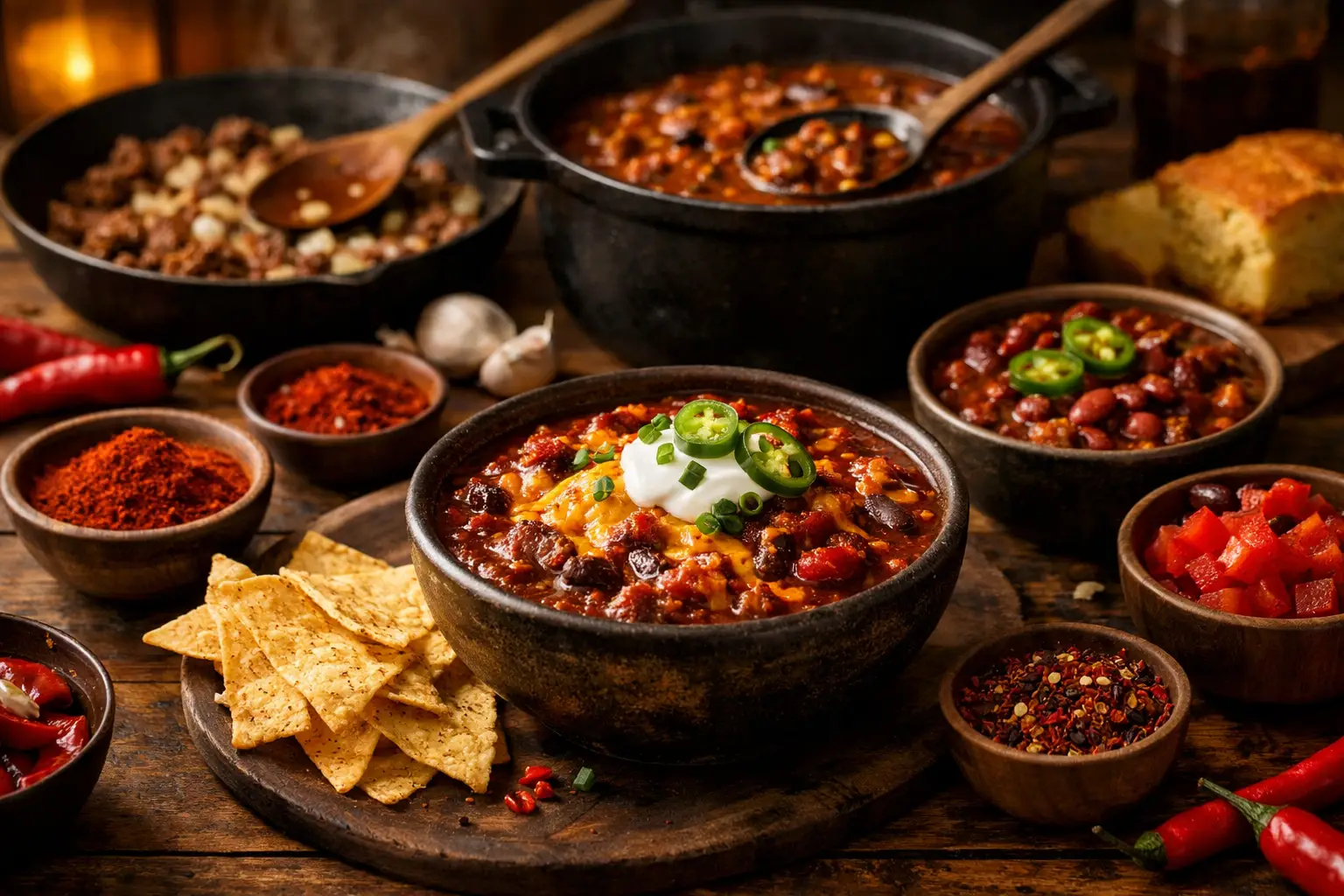
A chili can have plenty of ingredients and still taste flat. The difference is rarely a secret spice blend. It is timing. Knowing how to layer chili flavor means giving each ingredient a job, then adding it when it can do that job best: toasted chiles for depth, aromatics for a savory foundation, tomatoes for body, and a bright finish that wakes up every spoonful.
Every bowl tells a story, whether you are building a smoky Texas Red, a porky green chili, or a weeknight ground beef pot with serious game-day energy. Layering is what gives that story a beginning, middle, and finish instead of one loud, muddled note.
How to Layer Chili Flavor From the Bottom Up
Think of chili as a sequence, not a dump-and-simmer recipe. The early stages create browned, savory bass notes. The middle develops chile character, spice, richness, and texture. The final minutes bring contrast: salt, acidity, fresh chile heat, and brightness.
This does not mean every chili needs every flavor. A classic Texas-style bowl may lean hard into dried chiles and beef, while a Cincinnati-style chili reaches for warm spices and a smoother, sweeter profile. The goal is not to make every pot taste the same. The goal is to make its chosen style taste intentional.
Start with a flavorful cooking fat
Begin with a little fat in a heavy pot: beef drippings, bacon fat, neutral oil, or olive oil depending on the recipe. Fat carries flavor and helps aromatic ingredients release their best qualities. It is also your first chance to establish the bowl’s personality.
Brown meat in batches if your pot is crowded. Crowding steams meat instead of searing it, and you lose the browned bits that make a chili taste like it has been cooking all afternoon. Let the meat develop a dark crust, then remove it briefly if needed while you build the rest of the base.
For vegetarian chili, use the same principle with mushrooms, plant-based crumbles, or even a portion of the beans. Brown them until they pick up real color. You are creating savory depth before the liquid enters the pot.
Build the Savory Foundation with Aromatics
Once the meat is browned, cook onions in the rendered fat and scrape up the fond from the bottom of the pot. That caramelized residue is concentrated flavor, not kitchen debris. Add garlic later, when the onions have softened, because garlic can turn bitter fast over high heat.
Celery, bell pepper, poblano, jalapeño, serrano, and tomatillo can all join this stage, but choose them based on the kind of chili you want. Bell pepper brings sweetness. Poblanos add earthy green flavor. Fresh hot chiles contribute both heat and a clean, lively edge. Tomatillos bring tartness and body to green chili.
Do not rush this step. Raw-tasting onion and garlic will not disappear completely during a simmer. Give them five to 10 minutes to soften and turn fragrant before moving on.
Bloom spices, but protect them from burning
Ground spices need a short moment in hot fat to become more aromatic. Chili powder, cumin, smoked paprika, coriander, oregano, and black pepper all benefit from 30 to 60 seconds of blooming after the aromatics are cooked.
The trade-off is real: spices burn quickly. Keep the heat at medium or medium-low, stir constantly, and add a splash of stock, beer, tomato puree, or soaking liquid as soon as the spices smell toasty. If the pot smells acrid rather than warm and fragrant, the spices have gone too far.
Warm spices such as cinnamon, allspice, clove, or cocoa can create a signature flavor, especially in Cincinnati-inspired chili or mole-adjacent recipes. Use them with restraint. They should make people wonder why the bowl tastes so complete, not announce themselves from across the table.
Use More Than One Kind of Chile
Heat is only one dimension of chile flavor. Layering fresh, dried, and powdered chiles can make a bowl taste wider and deeper without turning it into a punishment.
Dried chiles are the backbone of many red chilis. Ancho brings raisiny, mild depth; guajillo brings bright red-fruit character; pasilla can taste dark and earthy; chipotle adds smoke; árbol contributes direct, sharp heat. Toast dried chiles lightly in a dry skillet, remove seeds and stems if desired, then soak them in hot water until pliable. Blend them into a smooth puree with a little soaking liquid, stock, onion, or garlic.
Chile powder is useful for consistency and quick flavor, especially in a faster weeknight pot. Fresh chiles shine late in the process, when their grassy, fruity heat can stay distinct. A good strategy is to use a dried chile puree for the main flavor, a quality chili powder for support, and a small amount of fresh chile near the end for lift.
That approach also helps you manage heat. You can make a deeply chile-forward pot with only moderate fire by choosing mild dried varieties. If your crowd has mixed spice tolerances, build the main pot around flavor and serve hot sauce, minced serrano, or chile flakes at the table.
Add Body and Umami Without Making Chili Heavy
Tomatoes, stock, beans, beer, and meat juices turn the flavor base into chili, but each changes the final bowl. Crushed tomatoes create a familiar, rounded texture. Tomato paste brings concentrated sweetness and savory depth when cooked for a minute or two in the pot. Stock thins and carries flavor, while beer can add malt, bitterness, or brightness depending on the style.
Umami should be felt more than identified. Worcestershire sauce, fish sauce, soy sauce, miso, mushroom powder, roasted mushrooms, and a little coffee can all deepen a pot. Use one or two, not every option in the pantry. Too many competing boosters can make chili taste salty, dark, and vaguely processed.
Beans add creaminess and mellow the heat, but they also dilute intensity as they cook. If you are making a bean chili, season in stages and expect to adjust near the end. If you are cooking a no-bean Texas Red, a longer reduction and a well-blended chile sauce become even more important for body.
Simmer for Integration, Then Season Again
After you add the main liquids and return the browned meat, simmer gently. A hard boil can break up delicate ingredients and make lean meat tough. A lazy bubble gives the flavors time to meet without turning everything into mush.
Taste after 30 minutes, then again near the end. Early tasting tells you whether the chile base is balanced. Late tasting tells you what the finished pot actually needs. Salt is not a one-time addition, especially when stock, canned tomatoes, beans, and reduced liquid are involved.
If the chili tastes thin, reduce it uncovered rather than immediately adding more spices. If it tastes bitter, try a small amount of sweetness from browned onions, tomato paste, or a pinch of sugar, then add salt and acid carefully. If it tastes dull, it is often missing salt or acidity, not more heat.
Finish with Contrast, Not More Weight
The last five minutes can transform a good chili into a bowl people talk about. Add a small splash of cider vinegar, lime juice, red wine vinegar, or pickle brine to sharpen heavy flavors. The right acid depends on the style: lime is a natural fit for green chili, while cider or red wine vinegar works beautifully in red chili.
Fresh cilantro, sliced scallions, minced raw onion, crushed tortilla chips, shredded cheese, sour cream, and avocado are not just decorations. They create temperature, texture, and flavor contrast. Choose toppings that support the pot rather than bury it. A smoky beef chili may want sharp cheddar and onion; a bright pork green chili may want cilantro, lime, and a cool spoonful of crema.
At ChiliStation, the best recipe collections make this easy to see: regional style is not a label slapped on at the end. It is built through the chile choices, aromatics, cooking liquid, and finishing touches.
Let the Pot Rest Before You Judge It
Chili almost always improves after a short rest, and often gets even better overnight. As it cools, the fat and liquid settle, the chiles integrate, and sharp spice edges soften. Let the pot sit off the heat for 15 to 20 minutes before serving if you have the time.
Then taste one last spoonful. Add the final pinch of salt, the final squeeze of lime, or the extra spoonful of chile puree only after you know what the whole bowl is saying. That is how a chili goes from hot and hearty to layered, memorable, and worth making again.