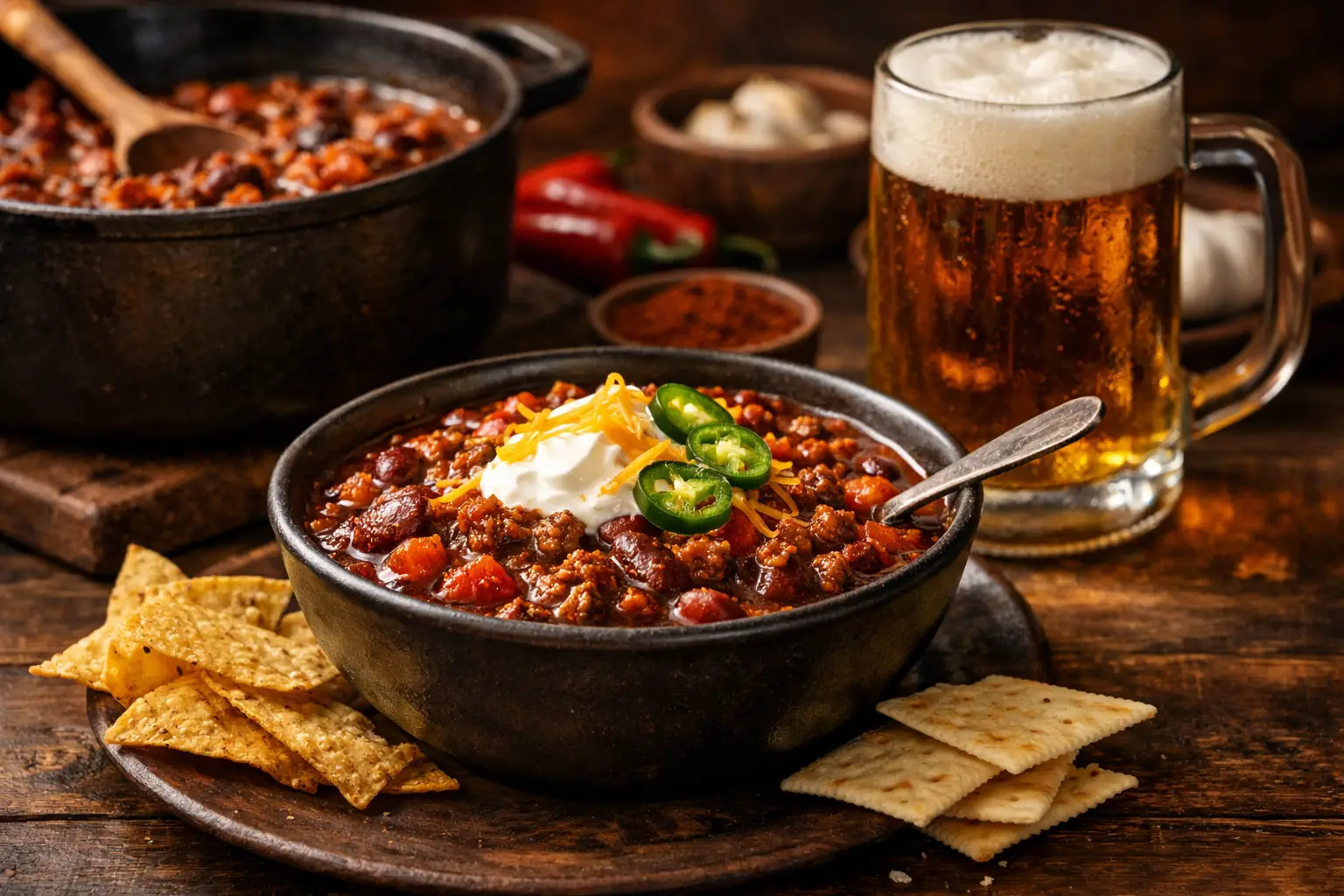
A good chili can handle a lot - more heat, more smoke, more time on the stove. A bad beer choice, though, can throw the whole pot sideways. The best chili recipe with beer does not taste like a brewery accident. It tastes deeper, rounder, and just a little more bold, with malt and bitterness working in the background instead of hijacking dinner.
That distinction matters, because beer in chili is one of those ideas people love in theory and overdo in practice. Pour in the wrong bottle, reduce it too hard, and your rich, savory pot suddenly leans sharp or bitter. Get it right, and beer becomes one of the easiest ways to give a weeknight chili more backbone without adding extra complexity to the cooking.
What a chili recipe with beer should taste like
Beer is not there to make chili taste boozy. It is there to support the usual heavy hitters - browned meat, chile powder, cumin, tomato, garlic, onion - with a little extra grainy sweetness, roast, or gentle hop bitterness. Think of it as a flavor amplifier.
In most home kitchens, that means the best result lands somewhere between familiar and upgraded. The chili still reads as chili first. You notice more depth in the broth, a slightly fuller finish, and better balance between spice and richness. If the first thing you taste is IPA, the pot has gone off course.
This is also where style matters. A bean-heavy game day chili, a lean turkey chili, and a no-beans Texas-style pot do not all want the same beer. Every bowl tells a story, and the beer should match the story you are trying to tell.
The best beers for chili
For most cooks, amber ale, lager, brown ale, or a darker Mexican beer are the safest bets in a chili recipe with beer. They bring malt, toast, and subtle bitterness without fighting the spices. If your chili is built around beef and smoky dried chiles, these styles usually slide right in.
A stout can be great too, especially in beef chili with cocoa, chipotle, or deep tomato flavor. It adds roast and a faint bittersweet edge. The trade-off is that stout gets intense fast, so it works best when the rest of the chili is equally assertive.
Pale ales and IPAs are where things get tricky. Some cooks like the sharper, hoppier profile, but reduced hops can turn aggressively bitter. If you are using a hop-forward beer, keep the amount modest and make sure the chili has enough fat, sweetness, or tomato body to absorb it.
Light macro lagers are not useless, but they are subtle. They add some moisture and a little grain note more than real character. If that is what is in the fridge, use it. Just do not expect it to transform the pot.
When to add beer, and how much
Timing is where a lot of beer chili goes from smart to sloppy. Add the beer after you have browned the meat and softened the onions, then let it simmer with the spices and tomatoes. That gives the alcohol time to cook off and the malt flavors time to settle into the base.
For a standard Dutch oven batch serving six to eight, 8 to 12 ounces is usually enough. One bottle or can is the sweet spot. More than that can work, but only if the rest of the ingredient list is scaled to handle it. If you dump in 24 ounces of beer without enough meat, stock, tomato, or chile depth, the pot can taste thin and oddly bitter.
It also helps to use beer as part of the liquid, not all of it. A split between beer and stock gives you control. Stock brings body, while beer brings personality.
A practical formula that rarely misses
If you want a reliable starting point, go with ground beef or chuck, onion, garlic, tomato paste, crushed tomatoes, stock, chili powder, cumin, oregano, smoked paprika, and one bottle of amber ale or lager. Beans are optional depending on your style loyalties and your crowd.
Start by browning the meat well. Not gray, not steamed - browned. That fond on the bottom of the pot is part of the architecture. Add onion and cook until softened, then stir in garlic and tomato paste until both smell sweet and toasty.
Now bloom the spices in the fat for 30 seconds or so, just until fragrant. Add the beer and scrape up every browned bit from the bottom. Then add tomatoes and enough stock to loosen the pot into a thick but simmerable consistency.
At that point, chili becomes a patience game. Let it simmer gently for at least 45 minutes, and preferably longer if you are using larger cuts of beef. Stir now and then, taste toward the end, and adjust. If it feels flat, it may need salt. If it feels sharp, a pinch of brown sugar or a little more tomato can soften the edges. If it feels too loose, uncover and reduce.
Where beer helps most
Beer shines in chili that needs a bridge between spicy and savory. It is especially useful when your chili has strong roasted notes, dried chile complexity, or rich meat. The malt smooths out the rough edges and makes the broth taste more complete.
It can also rescue leaner chilis from feeling thin. Turkey chili, for example, often benefits from an amber lager because it adds body without making the dish heavy. In a black bean chili, a dark lager or brown ale can deepen the pot in a way that feels almost meaty.
This is why beer works better as a supporting ingredient than a gimmick. It gives chili a low-note richness that is hard to fake with water and not always desirable with extra tomato.
Common mistakes that make beer chili disappoint
The biggest mistake is choosing beer by personal drinking preference instead of cooking fit. A beer you love cold on the porch may be terrible once reduced with cumin and tomato. Highly bitter beers are the classic trap.
The second mistake is not cooking it long enough. Raw beer flavor is harsh and distracting. Even 20 extra minutes can make the difference between rough and integrated.
The third is forgetting balance. Chili is a layered food. Beer adds bitterness and malt, so the rest of the pot has to answer with salt, umami, heat, acid, and sometimes a little sweetness. If one side gets too loud, the whole thing feels crooked.
Customizing by chili style
If you make Texas-style chili, keep the beer restrained and let the chiles lead. A dark lager or amber ale is usually enough to deepen the broth without muddying the pepper flavor. This is a place for control, not excess.
If your style is classic ground beef and beans, you have more room to play. Amber ale is the all-around winner here because it supports tomato, beef, and spice without any one note getting weird. It is the dependable weeknight pick.
For smoky chili with chipotle, stout can be excellent, especially if you are using beef chuck and cooking low and slow. Just keep an eye on bitterness. A small amount of brown sugar, cocoa, or even finely diced carrot can round out the roast.
For lighter chili - turkey, chicken, white bean - go with lager or a mellow pale ale. You want lift and grain flavor, not a dark, heavy finish.
The toppings matter more than people admit
Once beer is in the pot, toppings become part of the balancing act. Sour cream, shredded cheddar, diced onion, scallions, cilantro, or crushed tortilla chips all change how the beer note reads in the final bowl.
Rich toppings soften bitterness. Fresh toppings brighten malt. Something crunchy helps if the chili is especially deep and stew-like. If your pot leans intense, serving it with cornbread or over rice can make it feel more rounded without changing the recipe itself.
That is part of what makes chili so endlessly sortable and shareable. Tiny shifts in the base, the beer, or the finish can move the bowl from tailgate classic to cold-weather slow simmer to full-on weekend project.
Is beer always worth adding?
Not always. If you are making a very bright chili verde, a delicate white chicken chili, or a super clean vegetarian chili built around fresh peppers and herbs, beer may blur more than it helps. Broth, roasted vegetables, or tomatillo can do a better job in those cases.
But if your goal is a heartier, darker, more layered pot, beer earns its place fast. It is not mandatory, and it is definitely not magic. It is just one of the better tools for giving a chili more bass in the flavor mix.
The smart move is to treat beer like seasoning with liquid attached. Pick a style that fits the pot, use a moderate amount, and simmer long enough for everything to come together. Do that, and your next batch will taste less like a novelty and more like the version you meant to make all along.