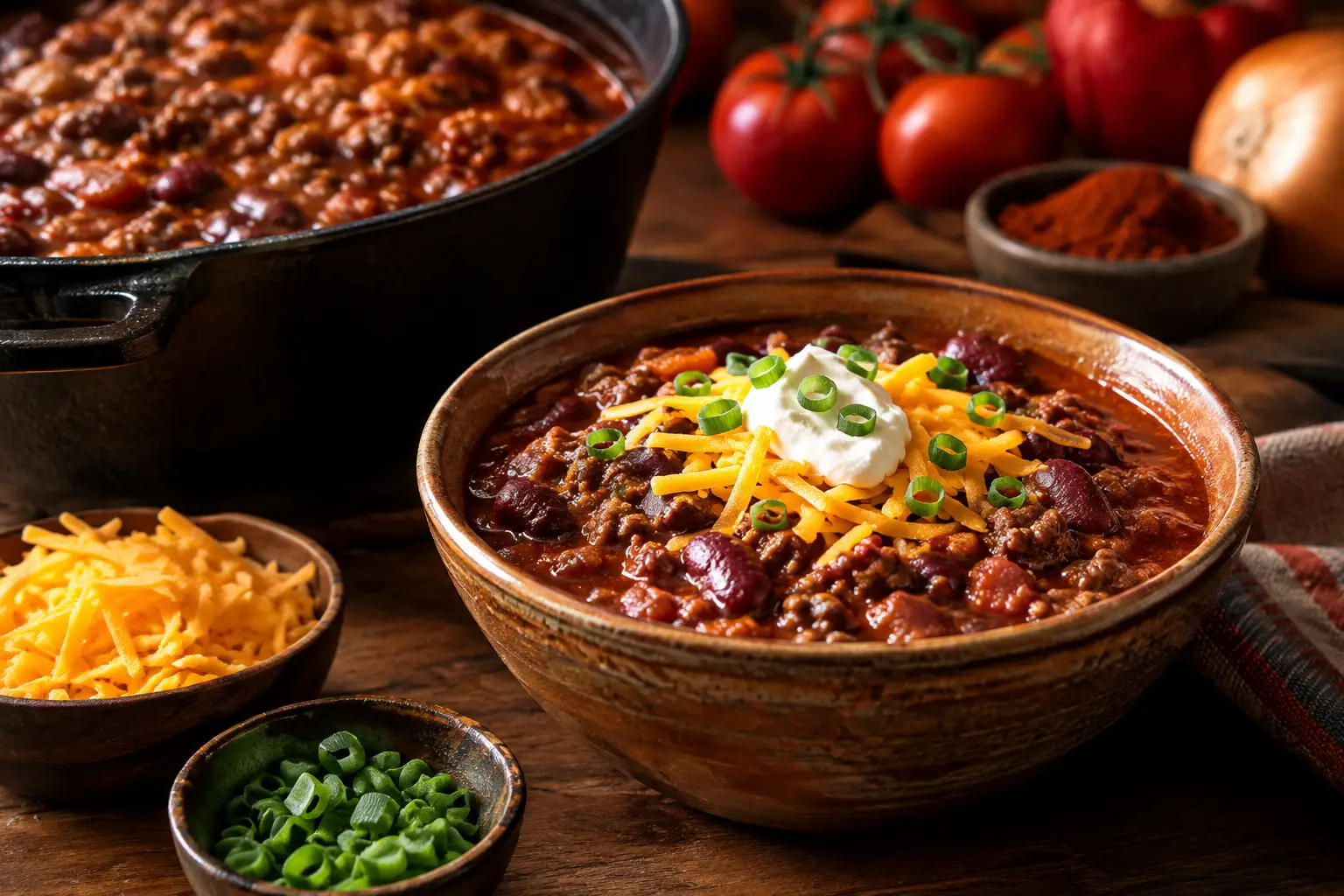
A great chili does not announce itself with heat alone. It opens with aroma, settles into richness, then leaves a clear impression: smoky and beefy, bright and porky, sweetly spiced, deeply earthy, or sharp with fresh green chile. Those distinct chili flavor profiles are why two pots can both be called chili yet feel like entirely different meals.
Every bowl tells a story, and the best way to choose a recipe is to know what story you are hungry for. Are you after a thick, no-bean Texas red that lets dried chiles and beef do the talking? A tangy, tomato-forward weeknight chili? Or a Colorado-style green chile that brings roasted pepper flavor before the heat arrives? Once you can read a chili by its flavor cues, recipe browsing gets a whole lot more delicious.
What Builds a Chili Flavor Profile?
Chili is a layered dish, not a one-note burn. The profile comes from the relationship between the main chile, the protein or beans, the base, the fat, the seasoning, and the finishing ingredients. Change one of those parts and the whole bowl shifts.
Dried chiles are usually the biggest personality driver. Ancho chiles bring raisiny sweetness and a mellow, dark-fruit depth. Guajillos lean brighter, with a clean red-chile flavor and light tang. Pasillas can taste earthy and almost cocoa-like. Chipotles add smoke because they are smoked jalapeños, while árbol chiles bring a more direct, pointed heat. A blend often tastes more complete than a single pepper because it gives you both bass notes and sparkle.
Then comes the base. Tomatoes push chili toward acidity and familiar red-sauce comfort. Stock and chile puree create a meatier, more chile-centered pot. Roasted green chiles bring a fresh, vegetal character that canned tomato simply cannot imitate. Onions, garlic, cumin, oregano, and spices fill in the middle, while a final hit of vinegar, lime, hot sauce, or raw onion can keep a rich bowl from tasting heavy.
Heat matters, but it is only one axis. A mild poblano can bring more flavor than a spoonful of generic crushed red pepper. Think of spice level as the volume knob, not the entire song.
The Major Chili Flavor Profiles
Smoky, earthy, and beef-forward
This is classic Texas Red territory. The ideal bowl is dense and savory, with browned beef, a brick-red chile sauce, and enough fat to carry the flavor across your palate. Dried chiles give it depth, cumin adds warmth, and smoke may come from chipotle, smoked meat, or a restrained hand with smoked paprika.
The trade-off is richness. A chili built around chuck roast, beef stock, and dark chile paste can become flat if it never gets a lift. A little vinegar, a sharper chile such as guajillo, or a topping of diced onion creates contrast without turning the pot into something acidic.
Choose this profile when you want a serious cold-weather bowl, a cookoff-style centerpiece, or chili that feels built for cornbread and a second helping. Beans are often absent in Texas-style versions, but the real defining feature is the chile-and-beef focus, not an argument over ingredients.
Bright red, tangy, and crowd-pleasing
For many home cooks, “chili” means a tomato-based pot with ground beef, beans, onions, and a friendly medium heat. This profile is balanced rather than austere: savory meat, soft beans, tomato acidity, chili powder, and a little sweetness from the vegetables or added sauce.
Its strength is flexibility. Ground turkey, chicken, bison, lentils, and meatless crumbles all work here because the sauce does much of the flavor-building. The risk is tasting generic. If the ingredient list relies entirely on broad chili powder and canned tomatoes, the result can be red but blurry.
Give this style a sharper identity with one deliberate move. Bloom your spices in oil, use fire-roasted tomatoes, stir in a spoonful of adobo sauce, or finish with cider vinegar. You do not need all four. One clear signal is often better than a crowded pantry dump.
Green, roasted, and pork-friendly
Green chile chili runs on a different kind of energy. Instead of the deep dried-fruit character of red chiles, it offers roasted pepper flavor, gentle bitterness, garlic, and a bright vegetal finish. Hatch chiles are famous here, but poblano, Anaheim, jalapeño, serrano, and tomatillo can all shape the bowl.
Pork is a natural partner because its richness softens the green chile’s edge. Chicken works beautifully too, especially in a lighter white chili format with white beans and broth. Tomatillos add tang and body, while potatoes can turn the whole thing into a stew-like, deeply comforting meal.
This profile depends heavily on the chiles themselves. A mild batch of roasted green chiles may need extra serrano or jalapeño for heat, while a hot batch may need more stock, beans, or dairy to keep it in balance. Taste before you commit. Green chile is not a fixed Scoville promise.
Sweet-spiced, savory, and wildly specific
Cincinnati chili earns its own lane. It is thinner than a Texas red, often served over spaghetti, and seasoned with a distinctive blend that may include cinnamon, allspice, clove, and sometimes cocoa. The goal is not to taste like dessert. Those warm spices create an aromatic, slightly sweet-savory sauce that plays especially well with cheddar, onions, and beans.
This is a profile for cooks who enjoy regional food with a point of view. It can surprise people expecting a smoky bowl of chili, which is exactly why it works. Treat it as its own tradition instead of judging it by Texas Red rules.
Other sweet-savory directions can come from beer, molasses, brown sugar, roasted squash, or sweet potato. Used carefully, these ingredients round out bitter chiles and tart tomatoes. Used heavily, they can make the pot taste like barbecue sauce. The difference is restraint.
Creamy, mellow, and high-comfort
White chicken chili occupies the coziest corner of the category. White beans, chicken, broth, green chiles, cumin, and creamy elements such as sour cream, cream cheese, or blended beans make it silky and mild-leaning. It is often less chile-driven than red chili, but it still benefits from contrast.
Fresh lime, cilantro, pickled jalapeños, pepper jack, or a crisp scoop of corn chips prevent the texture from becoming too soft and uniform. If you want a more pronounced chile identity, use roasted poblanos or a hotter green chile rather than just increasing cumin.
This profile is a strong choice for a family dinner, game day spread, or a potluck where full-throttle heat is not the assignment. Put hot sauce on the table and let people build their own finish.
How to Read a Recipe Before You Make It
A recipe title rarely tells you enough. Scan the ingredients for clues about the bowl you will actually get. Multiple dried chiles usually signal depth and complexity. Tomato paste plus canned tomatoes suggests a thicker, tangier red chili. A long simmer with chunks of beef points toward richness and body, while ground meat and beans usually mean a faster, more scoopable weeknight style.
Also look for the balancing move. Does the recipe include vinegar, lime, beer, coffee, cocoa, sugar, or dairy? These are not random extras. They tell you how the recipe handles bitterness, acidity, sweetness, or fat. A tablespoon of coffee can deepen a dark beef chili without making it taste like a latte. A spoonful of cocoa can add bitterness and color, but too much can become obvious fast.
At ChiliStation, filtering by region, protein, and heat level gets you close. Flavor cues are what help you make the final call. “Smoky chipotle,” “roasted green chile,” “sweet-spiced,” and “tomato-forward” are not decorative descriptions. They are a preview of the pot.
Build Better Balance in Your Own Pot
When chili tastes dull, adding more salt is not always the answer. First identify what is missing. A rich, heavy chili may need acid. A sharp tomato chili may need a little fat or sweetness. A bitter chile puree may need time, stock, or a touch of sugar. A thin chili may need reduction, mashed beans, or a small amount of masa harina rather than more tomato paste.
When it tastes hot but not flavorful, add chile character before adding more heat. Roasted poblanos, ancho powder, guajillo puree, or a spoonful of adobo can make the bowl more vivid. If it tastes flavorful but too hot, dilute with broth and beans, then restore seasoning slowly. Dairy can soften the experience, but it will also steer the flavor profile toward creaminess.
Do not rush the resting time, either. Chili often tastes better after 20 minutes off the heat, and many red chilis become even more unified the next day. That is not kitchen folklore. Fat, spices, and chile compounds need time to settle into one another.
The next time you choose a recipe, start with the flavor you want lingering after the last spoonful. Smoky beef and dried chile depth? Bright green heat? Tangy tomato comfort? Pick that destination first, then let the ingredients take you there.