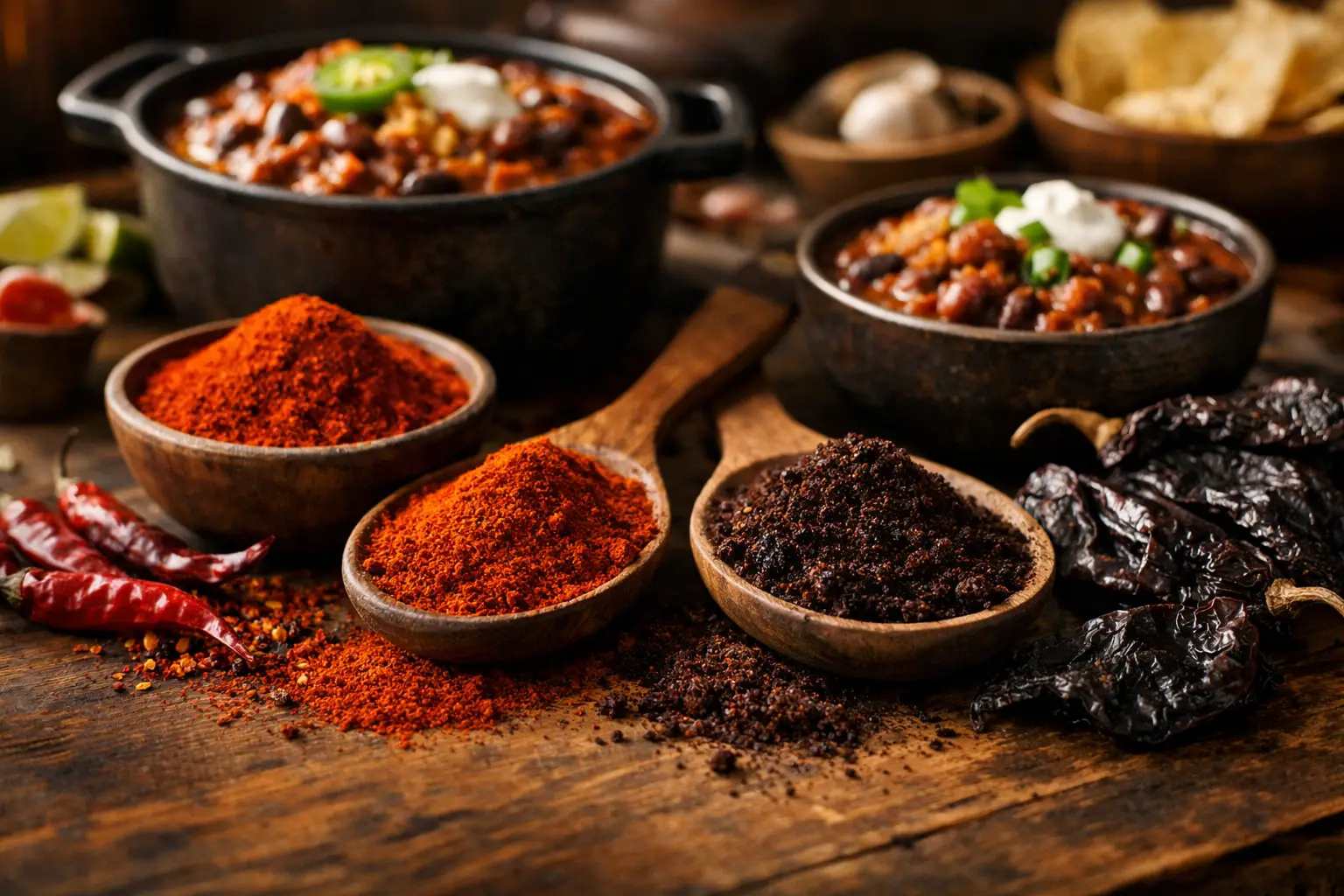
A pot of chili can turn flat in a hurry when the spice cabinet gets treated like a lineup of interchangeable red powders. In the chili powder vs ancho powder debate, the difference is not just heat. It is the difference between a familiar, savory spice blend and the deep, dusky flavor of one specific dried chile. Choose well, and your bowl gets the kind of layered character that makes people ask what you put in it.
Chili powder and ancho powder are not the same thing
Chili powder, as it is commonly sold in US grocery stores, is usually a blend. Ground dried chiles are mixed with spices such as cumin, garlic powder, oregano, onion powder, and sometimes salt or other seasonings. The exact formula varies by brand, but the point is consistent: chili powder is designed to bring a ready-made, all-purpose chili profile.
Ancho powder is simpler and more specific. It is made from dried poblano peppers that have been ground into a fine powder. Poblanos are mild green peppers when fresh; once dried, they become ancho chiles, with a darker color and a fuller, sweeter personality. There is no built-in cumin, garlic, or oregano in pure ancho powder.
That distinction matters most in recipes with a short ingredient list. If you swap one for the other without adjusting anything else, your chili may still taste good, but it will tell a different story.
Chili powder vs ancho powder at a glance
| Feature | Chili powder | Ancho powder | |---|---|---| | What it is | A blend of ground chiles and seasonings | Ground dried ancho chiles | | Flavor | Savory, familiar, cumin-forward, varied by brand | Earthy, mildly sweet, raisiny, lightly smoky | | Heat | Mild to medium, depending on the blend | Mild | | Color | Brick red to reddish brown | Deep red-brown | | Best use | Fast weeknight chili, tacos, seasoning blends | Texas-style red chili, mole-inspired sauces, richer beef or bean chili |
Neither one is automatically better. Chili powder is the efficient pantry player. Ancho powder is the flavor builder when you want more control and more chile character.
What each powder tastes like in the pot
A standard chili powder blend brings instant recognition. It has the warm, savory aroma many American cooks associate with chili night: cumin, garlic, dried herbs, and a moderate chile presence. That makes it an excellent starting point for turkey chili, ground beef chili, vegetarian chili, and any recipe where dinner needs to happen without a spice-mixing side quest.
The trade-off is that blends can be less predictable. One brand may be bright and cumin-heavy, while another tastes darker, saltier, or more aggressively garlicky. If you have ever made the same recipe with a new container of chili powder and wondered why it suddenly tasted different, the blend is probably the reason.
Ancho powder delivers a more focused note. Think dried fruit, black tea, toasted earth, and a gentle smokiness rather than a sharp hit of spice. It gives red chili a darker, rounder base without making the bowl painfully hot. That is especially useful with beef chuck, short ribs, black beans, sweet potato, or roasted squash, all of which can carry ancho's mellow depth.
Ancho can feel almost quiet on its own, though. It brings character, not a fully assembled seasoning profile. For a balanced chili, it often needs company: cumin for warmth, garlic for lift, oregano for herbal edge, and another chile powder if you want more heat or a brighter pepper flavor.
When to reach for chili powder
Use chili powder when you want a reliable shortcut. It earns its place in a one-pot ground beef chili, a quick chicken chili, a taco-seasoned bean pot, or a game-day batch where you are already balancing tomatoes, broth, meat, and toppings.
It is also the better choice when a recipe specifically calls for chili powder and does not separately list cumin, garlic, and oregano. In that context, the recipe likely expects a commercial blend to do several jobs at once. Replacing it with pure ancho powder can leave the final bowl underseasoned, even if the color looks right.
For cooks who like to adjust as they go, bloom chili powder in a little oil with your onions or meat before adding liquid. Thirty seconds to a minute over moderate heat wakes up the spices and helps erase that raw, dusty edge. Keep the heat controlled, because garlic and chile powders can scorch fast.
When ancho powder is the move
Reach for ancho when your chili needs depth more than heat. It is a natural fit for a beef-forward red chili, especially one built around dried chiles, stock, and a long simmer. It also plays beautifully in chili recipes that lean slightly sweet or earthy, including black bean chili, lentil chili, and chocolate-kissed mole-style pots.
Ancho powder is a strong choice when you want to build your own chili blend instead of relying on a store-bought formula. Start with ancho as the base, then layer in cumin, Mexican oregano, garlic, and a hotter chile such as cayenne, chipotle, or árbol to suit your crowd. This approach gives you control over salt, heat, and that all-important question: smoky or not smoky?
Do not expect ancho to provide the same fire as cayenne or a hot chili powder blend. Its heat is generally gentle. If your ideal bowl has a real back-of-the-throat kick, ancho needs a hotter partner.
How to substitute one for the other
The safest answer is: substitute by purpose, not just by measurement.
If a recipe calls for ancho powder and you only have chili powder, use the same amount as a starting point, then reduce or skip some of the recipe's cumin, garlic, and oregano if they are listed separately. Taste before adding salt, since some chili powder blends include it. The flavor will be more seasoned and less distinctly ancho, but the dish will remain on track.
If a recipe calls for chili powder and you only have ancho powder, use ancho at a one-to-one ratio, then add the missing support spices. For every tablespoon of ancho powder, try adding about 1 teaspoon cumin, 1/2 teaspoon garlic powder, and a pinch of oregano. Add cayenne or chipotle only if you want more heat. This is not a laboratory formula - brands and palates vary - but it gets a chili back into balanced territory.
If you are replacing chili powder in a recipe that uses several tablespoons, pause before making a straight ancho swap. That quantity of chili powder may be carrying most of the recipe's seasoning. Build in stages, simmer, and taste after the flavors have had time to settle.
A better way to build chili flavor
The most memorable pots rarely rely on a single red powder. They layer different kinds of chile flavor: one for body, one for brightness, and one for heat. Ancho brings body. A standard chili powder blend can bring familiar savory structure. Chipotle adds smoke, New Mexico chile contributes a cleaner red-pepper flavor, and cayenne supplies direct heat.
For a classic crowd-pleasing bowl, start with chili powder and add a little ancho powder for richness. For a more chile-driven pot, make ancho the foundation and season around it. That second route is especially rewarding in Texas Red-inspired chili, where the chile base should taste as intentional as the beef.
At ChiliStation, every bowl tells a story, and your spice choice sets the opening scene. Keep both powders in the pantry, label them clearly, and let the recipe tell you whether it needs a fast savory backbone or the slow-burn depth of ancho.