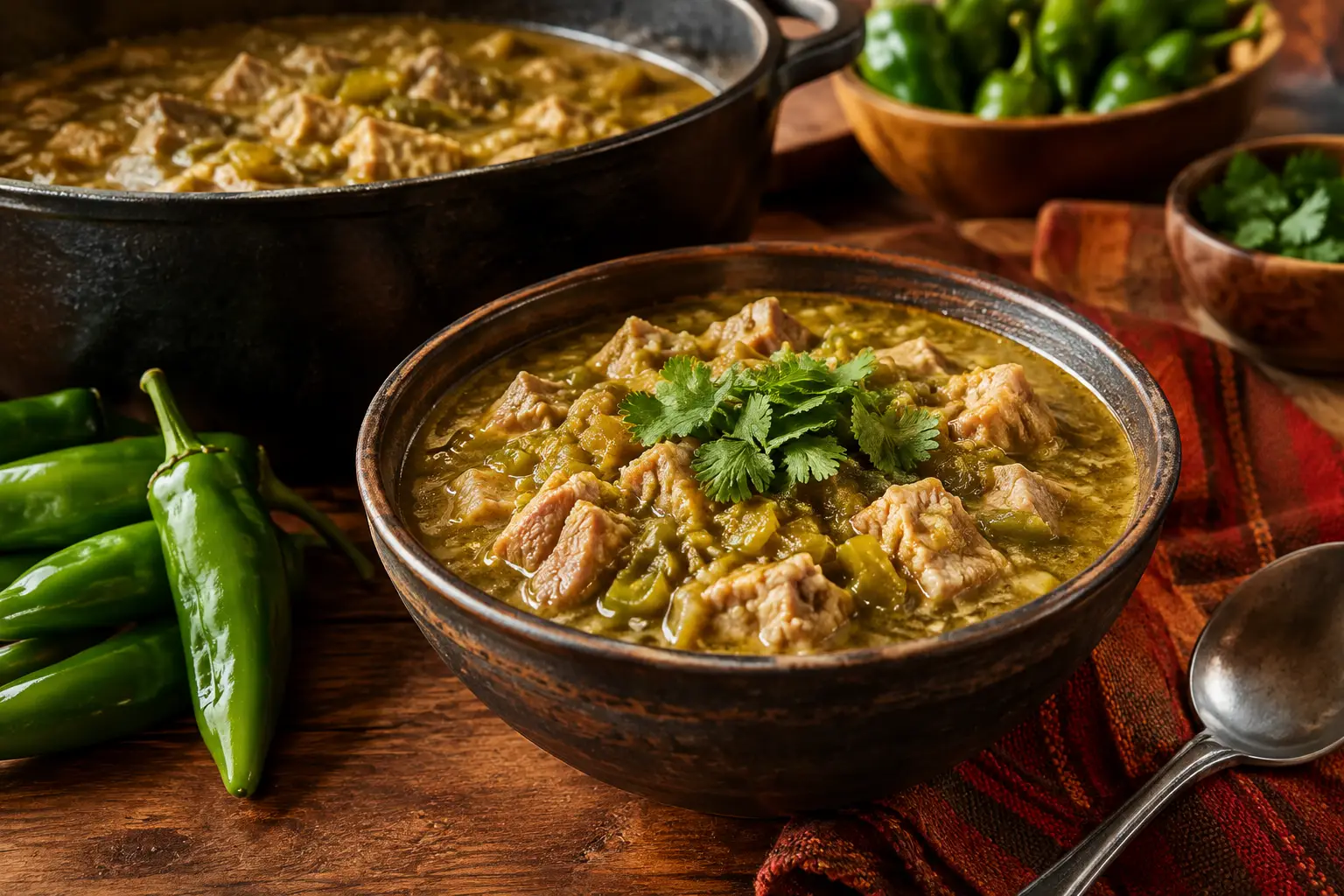
Colorado green chili is the kind of bowl that makes a breakfast burrito feel like an event. It is thick enough to cling to eggs, potatoes, and tortillas; bright enough to wake up slow-cooked pork; and proudly regional enough to start a friendly argument before the first spoonful. Every bowl tells a story, and this one starts with roasted green chiles.
What Defines Colorado Green Chili?
Colorado green chili, often written locally as green chile, is a pork-forward stew built around roasted green chiles, onion, garlic, stock, and a thickened broth. It is not simply red chili made green. The flavor profile is fresher, greener, and more tangy, with smoky pepper skin, savory pork drippings, and enough body to smother rather than merely sauce.
The best versions balance three forces: chile flavor, pork richness, and texture. Too much stock and it becomes soup. Too much flour and it turns pasty. Too much tomato can push it toward a generic Southwestern stew. The target is a spoon-coating chili with visible chile pieces, tender pork, and a roasted pepper flavor that stays front and center.
Heat is part of the personality, but it should not be the entire personality. A good bowl can range from mellow to seriously fiery depending on the chile variety, roast, and whether seeds and membranes stay in the pot. The point is not to prove anything to your tongue. The point is to make you reach for another tortilla.
Chile or chili? Both belong at the table
In Colorado, the spelling "green chile" often signals the roasted pepper itself and the regional dish built around it. "Chili" is the broader American spelling many recipe seekers use, especially when looking for a hearty bowl. At ChiliStation, that distinction is useful rather than precious: search language may vary, but the craving is unmistakable.
What matters more is understanding that this is a green-chile stew with local roots, not a bowl of chili con carne tinted with jalapeños. The pepper should be the lead singer.
The Ingredients That Carry the Bowl
Pork shoulder is the classic starting point because it has enough fat and connective tissue to become tender without drying out. Cubed pork gives Colorado green chili its satisfying, stew-like bite. Ground pork can work for a faster weeknight version, but it changes the texture and loses some of that slow-simmered payoff.
Then come the chiles. Roasted Pueblo chiles bring a Colorado connection and a fuller, sometimes fruitier flavor. Hatch chiles are beloved across the Southwest and widely available frozen or canned, with grassy heat and dependable roasted character. Anaheim peppers are a practical fallback when sourcing is limited, though they are generally milder and less complex. A mix can be smart: use a mild base chile for volume, then add hotter peppers to steer the heat.
Onion and garlic lay down the savory foundation. Stock stretches the chile puree and pork juices into a proper gravy. Many cooks also use tomato, tomatillo, or both, but this is where family recipes split. Tomato can add sweetness and color; tomatillo brings tartness and a more pronounced green snap. Neither is mandatory. If your chile has extraordinary depth, restraint may be the better move.
A small amount of flour is a common thickener, usually cooked briefly with the pork and aromatics before stock goes in. Some cooks prefer masa harina for corn flavor and a softer body. Others reduce the pot naturally and let blended chiles do the work. Each route is valid, but texture tells the truth: the finished chili should flow from a ladle, not sit like wallpaper paste.
How to Build a Bowl With Real Depth
Start by browning the pork in batches. This is not busywork. Crowding the pot steams the meat, while proper browning creates the browned bits that give the broth its bass notes. Once the pork is out, soften onion in the rendered fat, add garlic briefly, and stir in flour or another thickener if your recipe uses one.
Add stock gradually, scraping up every caramelized bit from the pot. Then bring in the roasted, peeled, chopped green chiles. Some cooks blend a portion of the chiles with stock for a smoother base and fold in the rest for texture. That hybrid approach delivers the best of both worlds: a thick, unified broth with recognizable pepper pieces in every spoonful.
Return the pork, season with cumin, oregano, salt, and black pepper, then simmer until the meat is fork-tender. Keep the spice cabinet focused. Cumin belongs, but a heavy hand can flatten the chile flavor. Oregano adds a savory herbal edge. Garlic should support the peppers, not take over the room.
Taste near the end, after the broth has reduced and the pork has released its flavor. This is when salt, acidity, and heat need final adjustment. A little lime juice can sharpen a rich pot, while more chopped roasted chile can restore fresh pepper character. If the chili is thin, simmer uncovered before adding more thickener. If it is too thick, loosen it with warm stock rather than water.
Colorado Green Chili Is a Smothering Specialist
A bowl is only the beginning. Colorado green chili earns its local legend status when it lands on other food. It can blanket a breakfast burrito, cover crispy chile rellenos, turn fries into a late-night masterpiece, or give a cheeseburger the kind of messy credibility napkins were made for.
For breakfast, serve it over eggs, hash browns, and warm flour tortillas. For dinner, pair it with pinto beans, rice, cornbread, or a stack of tortillas ready to swipe through the last bit of sauce. A cool topping such as sour cream, shredded cheese, or diced avocado can help if the chile runs hot, but avoid piling on so much that the roasted peppers disappear.
This is also a strong make-ahead chili. Like many slow-simmered dishes, it usually tastes even better after a night in the refrigerator. The flavors settle, the pork absorbs more seasoning, and the fat has time to integrate into the broth. Reheat gently and add a splash of stock if it has tightened up.
Choosing Your Colorado Green Chili Style
The right recipe depends on what you want the bowl to do. If you are feeding a crowd or planning burrito night, choose a thicker pork shoulder version with a medium heat level. If you want a quick weeknight fix, look for ground pork or shredded rotisserie chicken, knowing the result will be lighter and less traditional. Vegetarian green chili can be excellent when beans, potatoes, roasted chiles, and a deeply flavored vegetable stock take the place of pork, but it needs enough fat and seasoning to avoid tasting flat.
Pay attention to the chile format, too. Fresh-roasted peppers provide the best aroma and texture when they are in season. Frozen roasted chiles are the all-star convenience choice. Canned chiles are useful in a pinch, especially for a small batch, but they often need help from fresh garlic, good stock, and a little extra roasted pepper flavor.
And be honest about heat tolerance. "Hot" is not a universal measurement. One cook's cozy medium can be another cook's forehead-sweat emergency. When serving guests, build a flavorful mild-to-medium base and offer hotter chopped chiles or hot sauce at the table.
Colorado green chili does not need to be fussy to be memorable. Give the chiles the spotlight, let the pork take its time, and cook the pot until it tastes like it belongs on everything in reach.