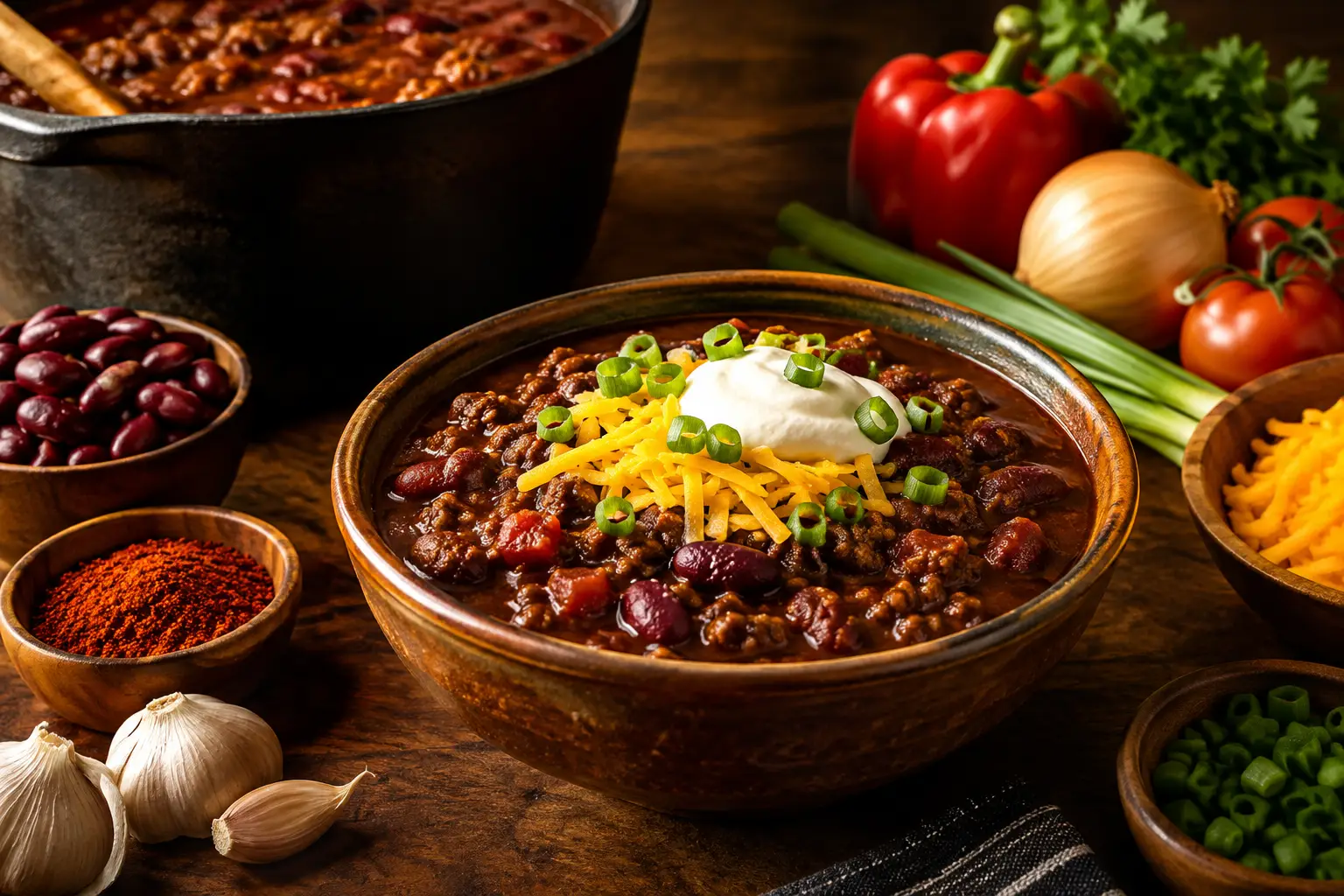
A chili can be loaded with flavor and still leave you feeling ready for a second bowl, not ready for a nap. The secret is not stripping it down or pretending chili should taste like salad. It is choosing healthy chili ingredients that bring real body, texture, and depth: fiber-rich beans, savory lean proteins, vegetables that disappear into the sauce, and toppings that earn their spot.
The best healthy chili is still chili. It should smell like toasted spices, have enough richness to cling to a spoon, and deliver the kind of slow-building heat that makes people hover near the pot. Whether your lane is Texas-style red, green chile stew, white chicken chili, or a weeknight turkey-and-bean classic, a few smart ingredient choices can make the bowl work harder for you.
Healthy Chili Ingredients That Carry the Bowl
Start with the foundation, because chili is less about one miracle ingredient than a lineup that plays well together. A healthy bowl usually balances protein, fiber, vegetables, fat, acid, and heat. Miss one and the flavor can feel flat, thin, or oddly heavy.
Beans are the obvious MVP. Kidney beans bring that familiar, sturdy chili texture, while black beans add a slightly earthier edge. Pinto beans are creamy and mellow, which makes them especially good alongside smoky chipotle or roasted poblanos. Chickpeas can work in white chili, though their firmer texture is not for everyone. If you use canned beans, rinse them well to cut down on excess sodium and the starchy canning liquid.
Beans are not mandatory, of course. A Texas Red stays bean-free by tradition, and that identity matters. For a lighter beanless chili, build body with extra onions, peppers, tomatoes, and a modest amount of lean beef, bison, turkey, or chicken. You can also use diced mushrooms or finely chopped walnuts for a deeper, meatier feel without turning the pot into a vegetable soup.
Lean ground turkey is a natural choice for everyday chili because it takes on seasoning quickly. The trade-off is that very lean turkey can taste dry if the spice base is weak. Brown it properly, use enough onion and garlic, and give it a bold partner such as ancho chile powder, smoked paprika, or chipotle in adobo. Ground chicken behaves similarly.
Lean beef offers more classic chili richness, especially in a red chili built around cumin and dried chiles. Choose a leaner grind when you want to reduce saturated fat, but do not fear a little fat entirely. It carries flavor. Draining excess rendered fat after browning is often a better move than choosing meat so lean that it never develops a proper crust.
For plant-forward bowls, lentils are a serious contender. Brown or green lentils hold their shape and bring a satisfying, earthy bite. Red lentils melt down more, making them useful when you want to thicken a vegetarian chili without relying on cream or flour. Crumbled tofu, tempeh, and plant-based grounds can also work, but season them aggressively. Chili should never taste like an apology for the meat version.
Build Flavor With Vegetables, Not Just Salt
Onion, garlic, and peppers are the non-negotiable flavor base. Give them time in the pot before adding liquid. That early cooking step builds sweetness and savory depth that no last-minute shake of seasoning can fully replace.
Tomatoes bring acidity, moisture, and a familiar red-chili backbone. Crushed tomatoes create a saucier texture, while fire-roasted diced tomatoes add a little charred personality. Tomato paste is especially useful in healthier chili because a tablespoon or two intensifies flavor without requiring a lot of fatty meat or salty packaged seasoning.
Then bring in the vegetables that make a bowl more filling without making it feel crowded. Diced zucchini and yellow squash soften into tomato-based chili. Bell peppers add sweetness and color. Carrots bring a quiet sweetness that can balance bitter dried chiles, especially in turkey chili. Corn is perfect in white chicken chili or Southwestern vegetarian versions, though it adds a more noticeable sweetness.
Mushrooms deserve special respect here. Finely chopped cremini or portobello mushrooms can disappear into ground beef or turkey while adding moisture and umami. They are one of the best ingredients for stretching meat without making the chili feel skimpy. If your household has a mushroom skeptic, chop them small and let the chile paste do the talking.
Greens are a flexible finishing move. Stir spinach or chopped kale into the pot during the final few minutes. Spinach nearly vanishes, while kale keeps more chew. Neither belongs in every regional style, but both make sense in a practical weeknight chili where nutrition and leftovers matter.
Let Chiles Do the Heavy Lifting
Healthy does not mean bland, and chili peppers are where the whole pot finds its voice. Fresh jalapeños give a grassy, direct heat. Serranos run hotter and brighter. Poblanos bring a mild, roasted green flavor that shines in chicken, pork, and white bean chili.
For deeper red chili, dried chiles are worth the small extra effort. Ancho chiles taste dark, fruity, and raisiny. Guajillos are tangier and cleaner. Pasillas bring an earthy, almost cocoa-like complexity. Toast them briefly, soak them in hot water, then blend into a smooth paste with garlic, onion, or broth. That paste creates restaurant-level depth without needing bottled sauces loaded with sodium or sugar.
Chile powder can absolutely carry a weeknight pot, but check the label. “Chili powder” is usually a blend, not simply ground chile, and salt levels vary. Use it as a convenience tool, then sharpen the flavor with cumin, oregano, coriander, smoked paprika, and black pepper. A little cocoa powder or brewed coffee can deepen a beef chili, but use either with restraint. You want a shadowy background note, not mocha stew.
Watch the Sneaky Heavy Ingredients
The less healthy parts of chili often arrive through shortcuts, not the main ingredients. Packets, bouillon cubes, canned sauces, and heavily salted stocks can send sodium climbing fast. Lower-sodium broth, no-salt-added tomatoes, and rinsed beans give you more control. Taste near the end, after the chili has reduced, before adding extra salt.
Sugar is another ingredient that can quietly take over. A pinch can round out an acidic tomato chili, especially when canned tomatoes are sharp, but a sweet chili is rarely the goal. Let roasted peppers, carrots, onions, and slow simmering provide most of the natural balance.
Cream, cheese, bacon, and sausage are not villains. They are flavor accelerators. The question is whether they are the main event or a deliberate accent. A small crumble of cotija, a spoonful of Greek yogurt, or a few crispy turkey bacon bits can give a bowl the richness people want without burying the rest of the ingredients.
Toppings That Add Contrast and Nutrition
A healthy chili topping should do more than decorate. Avocado adds creamy texture and satisfying fat. Plain Greek yogurt brings cool tang and more protein than standard sour cream. Fresh cilantro, scallions, radishes, and diced onion make a long-simmered chili taste alive again.
For crunch, try toasted pumpkin seeds, crushed baked tortilla chips, or a small handful of shredded cabbage. Cabbage may sound unexpected, but it is especially good on green chile and turkey chili, where its crisp bite keeps the bowl from feeling too soft. A squeeze of lime is equally powerful. Acid wakes up spice, beans, meat, and tomatoes in one move.
If you are serving chili for a crowd, set out toppings separately. That lets the person chasing extra jalapeños build their fire-breathing bowl while the mild-chili crew keeps things calm. It also preserves leftovers better, since fresh herbs and creamy toppings are best added just before eating.
Match the Ingredient List to Your Chili Style
There is no single healthy chili formula because each style has its own logic. A beefy Texas-inspired red can lean on lean beef, dried chiles, onions, and tomatoes, skipping beans without losing substance. A white chicken chili might use shredded chicken, white beans, roasted poblanos, corn, and Greek yogurt for creaminess. A vegetarian chili can go big with black beans, lentils, mushrooms, sweet potato, and a smoky ancho-chipotle base.
The key is to avoid adding every healthy ingredient at once. Black beans, lentils, sweet potato, kale, zucchini, corn, and quinoa may all be nutritious, but together they can blur the chili’s identity. Pick a direction, choose two or three supporting players, and let the chile profile lead.
Your best pot might be a lean turkey chili with pinto beans and poblano, or a dark vegetarian bowl powered by mushrooms and ancho. Cook the version you will actually crave on a Tuesday, then make enough for tomorrow’s lunch. Every bowl tells a story, and the smart ingredients are the ones that make you want to come back for another chapter.