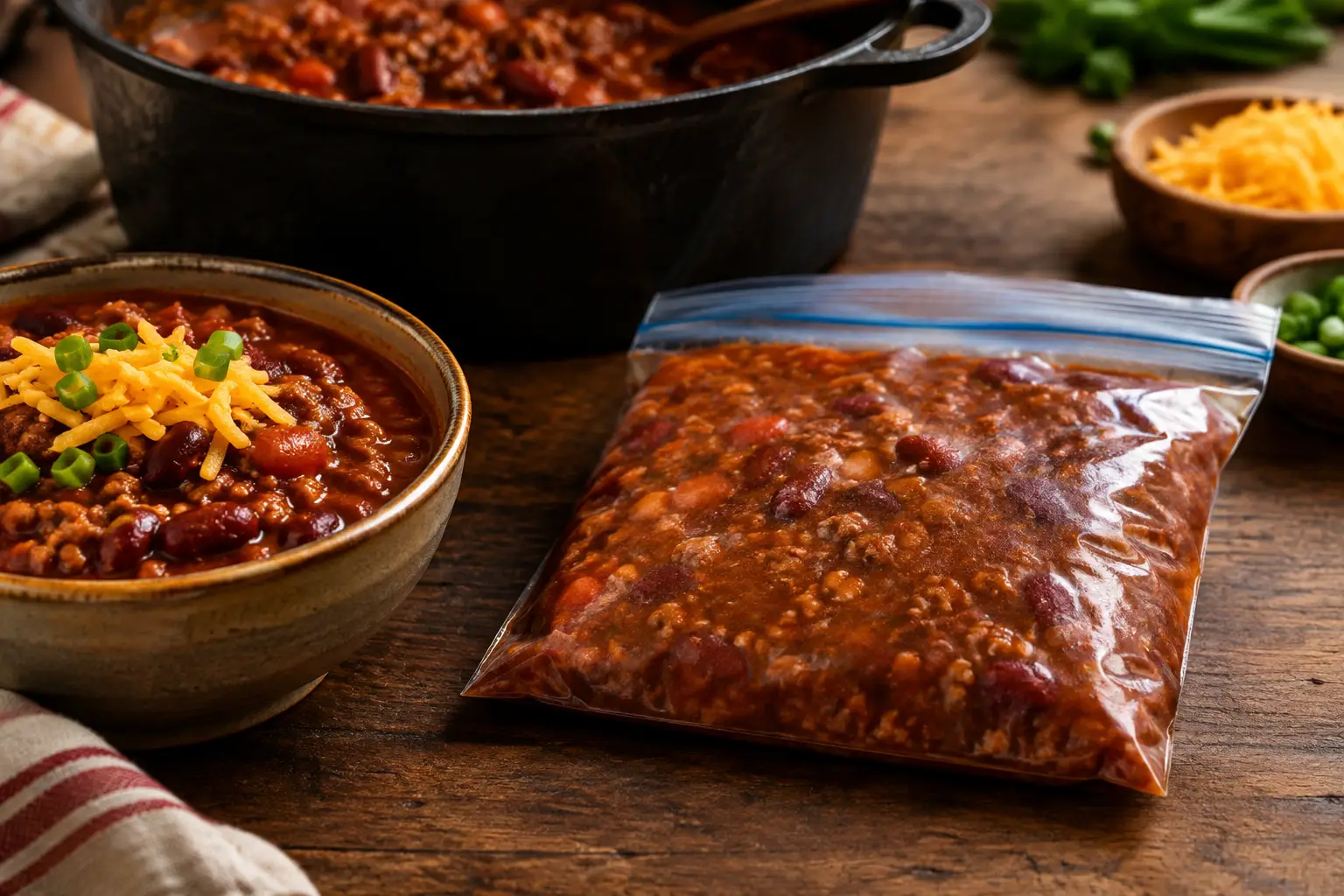
A big pot of chili has a way of making more food than expected - especially once the beans, tomatoes, meat, and toppings start piling up. So, can you freeze chili beans? Absolutely. Whether you mean a finished bean chili or a can of seasoned chili beans stirred into your signature pot, freezing is one of the smartest ways to protect a future weeknight dinner.
The catch is that beans are sturdy, but not invincible. Freeze them well and your thawed chili will still be thick, savory, and ready for cornbread. Freeze them carelessly and you can end up with split beans, watery sauce, and a container that has absorbed every freezer smell in the neighborhood.
Can You Freeze Chili Beans After Cooking?
Yes. Cooked chili with beans freezes very well for about three to four months when packed properly. It is one of the more freezer-friendly comfort foods because its sauce helps shield the beans from drying out, while its bold spice profile holds up better than delicate dishes do.
The texture may change a little. Kidney beans, pinto beans, black beans, and white beans can soften after freezing and reheating, particularly if they were already cooked until very tender. In a thick, long-simmered chili, that is rarely a deal-breaker. Many cooks actually prefer the way a thawed chili tastes because the chile powder, cumin, garlic, and tomato have had extra time to settle into the pot.
This is a better fit for a hearty Texas-style bean chili, a weeknight turkey chili, or a smoky black bean version than for a recipe where whole, firm beans are the main event. If you want every bean to stay distinctly intact, undercook the beans slightly before freezing or add a fresh can of beans when you reheat.
Cool It Fast Before It Hits the Freezer
The biggest freezer mistake happens before the lid ever goes on. Do not put a steaming-hot Dutch oven directly into the freezer. It can raise the freezer temperature, partly thaw nearby food, and leave the center of the chili warm for too long.
Instead, move the chili out of the large pot and into shallow containers. Let it cool briefly on the counter, then refrigerate it within two hours of cooking. Once it is chilled, portion and freeze it. If you need to speed things up, set the pot or containers in an ice-water bath and stir occasionally.
Avoid leaving chili out all evening because you are waiting for it to reach room temperature. Beans and ground meat do not need a long countertop hangout. Faster cooling protects both the food and the flavor.
Portion for the kind of night you actually have
A gallon-size container of frozen chili sounds efficient until you are feeding one person after work. Freeze chili in portions that match your routine: single bowls for lunch, two-serving containers for an easy dinner, or larger family-size portions for game day.
Leave about half an inch of headspace in rigid containers since chili expands as it freezes. For freezer bags, press out as much air as possible and lay them flat on a baking sheet until solid. Flat chili packs stack neatly, thaw faster, and make your freezer look less like a frozen mystery zone.
Label every container with the date and what is inside. “Chili” is not always enough six weeks later. Write the style too: beef and kidney bean, turkey white bean, vegetarian three-bean, or Colorado green chili with pintos. Every bowl tells a story, and a clear label helps you pick the right one.
The Best Containers for Freezing Chili Beans
Airtight freezer-safe containers and heavy-duty freezer bags are both excellent choices. Containers are ideal for chili you want to keep upright and spoon out later. Bags are better when space is tight or when you want fast thawing.
Glass containers can work if they are specifically freezer-safe and have enough room for expansion. Regular glass jars are riskier, especially when filled to the shoulder. A cracked jar is a rough reward for good meal prep.
Skip thin takeout tubs and lightly covered bowls. They allow air in, which leads to freezer burn and dull, stale-tasting chili. Chili’s strong aroma also means it deserves a serious seal. Your frozen waffles should not taste like ancho and onion.
Should You Freeze Canned Chili Beans?
An unopened can of chili beans does not need freezing. Store it in a cool, dry pantry and use it by the date on the can. Freezing an unopened can is not recommended because the liquid can expand and compromise the can or its seal.
If you opened a can of chili beans and have leftovers, transfer them out of the can first. Refrigerate them in a covered container and use them within a few days, or freeze them for later. They can be frozen on their own, though they will be softer after thawing than they were straight from the can.
For the best result, freeze leftover canned chili beans in a little of their sauce. That moisture protects them from drying out. When you are ready to use them, add them to soup, chili, tacos, or a skillet of rice rather than expecting them to be the star of a crisp bean salad.
How to Thaw and Reheat Chili Without Breaking the Beans
The gentlest method is thawing chili overnight in the refrigerator. A single-serving bag may thaw by morning; a large container can take a full day or two. This is the best route when you want beans that retain as much shape as possible.
For a faster dinner, reheat frozen chili directly in a saucepan over low heat. Add a splash of water, broth, or tomato sauce if it looks thick, cover the pot, and stir often as the edges loosen. Keep the heat moderate. Aggressive boiling and constant hard stirring can turn tender beans into a paste.
The microwave works well for individual portions. Use a microwave-safe bowl, cover it loosely, and heat in short bursts, stirring between each round. Reheat until the center is piping hot. If the sauce has separated slightly, do not panic. A few gentle stirs and a splash of broth usually bring it back together.
Do not thaw chili on the counter, and do not refreeze chili that has been sitting out or has already been thawed for too long. If thawed chili has stayed refrigerated, you can technically refreeze it, but the beans will get noticeably softer each time. Better to reheat what you plan to eat and keep the rest frozen in smaller portions.
Small Fixes for Thawed Chili That Needs a Boost
Frozen chili often comes back slightly thicker, especially if it was packed with beans and ground meat. Loosen it with broth, water, crushed tomatoes, or a spoonful of tomato sauce. Add liquid a little at a time so you do not accidentally turn a thick chili into soup.
Taste before adding more salt. Freezing does not remove seasoning, but a chili can taste flatter after reheating because cold storage mutes bright flavors. A squeeze of lime, a dash of hot sauce, a pinch of salt, or a fresh hit of cumin can wake it up fast. For a deeper red chili, a teaspoon of chile powder or smoked paprika brings back that slow-simmered character.
Toppings matter here. Fresh diced onion, shredded cheddar, cilantro, pickled jalapeños, sour cream, or crushed tortilla chips give a reheated bowl contrast that no freezer can preserve. The chili may be make-ahead, but the finish can still feel like a fresh bowl from your favorite cook-off table.
When Freezing Is Not the Best Move
Freeze chili before adding fragile toppings or dairy whenever possible. Sour cream, cream cheese, and shredded cheese can become grainy or separate. You can freeze a creamy white chicken chili if needed, but expect to whisk in a little fresh dairy during reheating to restore its texture.
Pasta is another variable. Cincinnati-style chili or chili mac is best frozen before the spaghetti goes in. Freeze the chili sauce separately, then cook fresh pasta when you serve it. The same goes for rice, which can become overly soft after a second trip through heat.
A freezer full of portioned chili is not just backup dinner. It is a low-effort path to a different kind of bowl whenever the craving hits: pile it over a baked potato, spoon it onto hot dogs, tuck it into burritos, or serve it with skillet cornbread. Freeze the beans with confidence, then let the next bowl choose its own story.