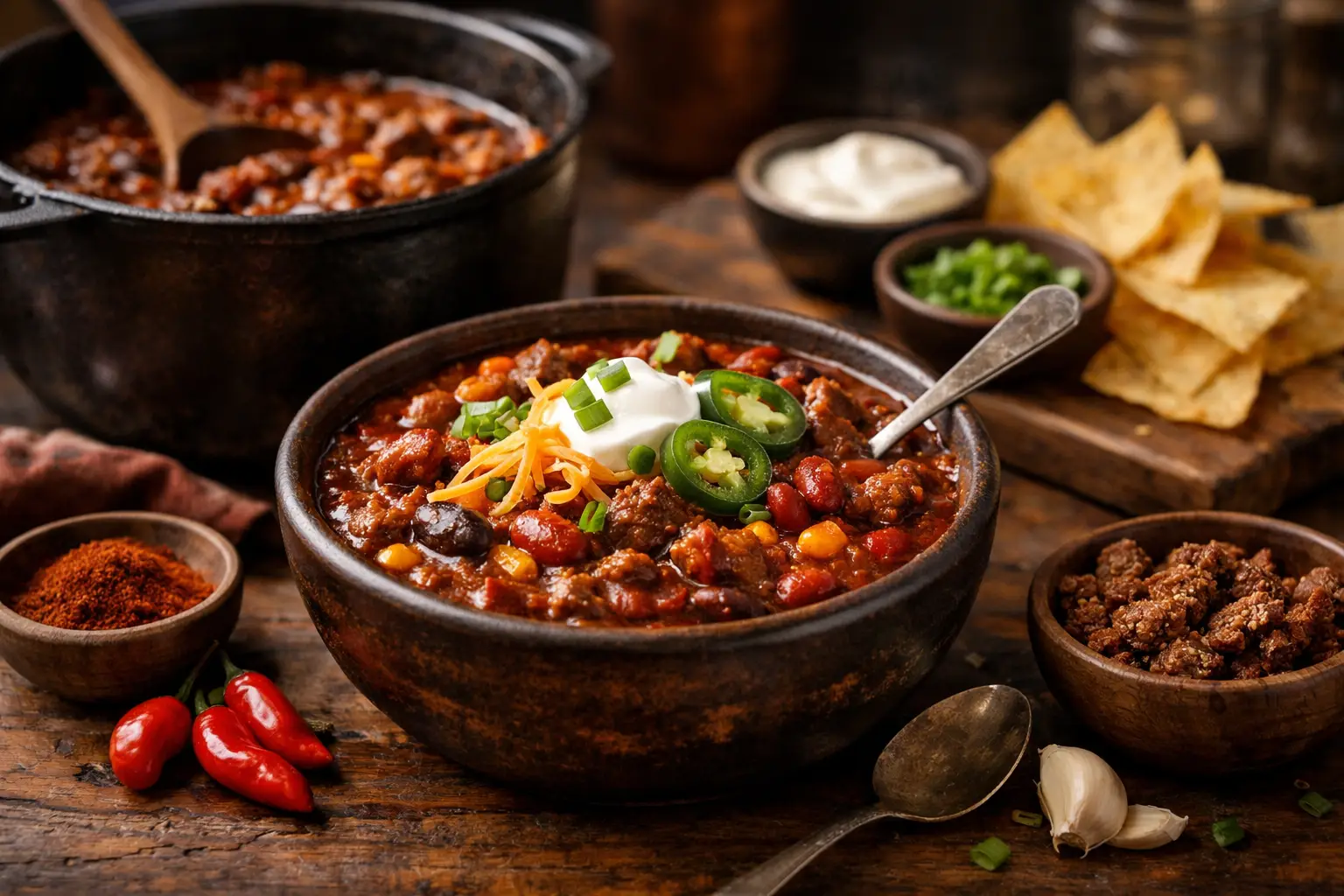
Cold night, heavy pot, and a pound of ground bison waiting in the fridge - that is exactly when a bison chili recipe earns its place in the regular rotation. Bison brings a deeper, slightly sweeter meat flavor than beef, but it stays lean, which means the chili can taste bold without turning greasy. If your usual pot of red feels a little one-note, this is the version that changes the mood.
What makes bison such a good chili protein is the balance. It has enough richness to stand up to chili powder, cumin, garlic, and tomato, but it does not flood the pot with fat. That sounds like an automatic upgrade, but there is a trade-off. Lean meat can go dry or crumbly if you treat it like standard ground chuck, so the method matters as much as the ingredient.
Why this bison chili recipe works
The best bison chili lands somewhere between hearty and clean. You still get that slow-cooked comfort-food energy, but the finish is lighter and more defined. Spices read more clearly, beans stay distinct, and the meat tastes like more than just a carrier for heat.
This version builds flavor in layers instead of trying to force everything into the pot at once. Onion and pepper go first for sweetness. Tomato paste gets a little time in the heat so it loses that raw edge. The spice blend blooms in the oil. Then the bison goes in just long enough to brown. That sequence matters because bison does not need a punishing sear or long dry cooking to prove itself.
If you like a thick, meaty chili with very little broth, reduce it a bit longer. If you want more of a spoonable game-day bowl, add an extra splash of stock. This is one of those recipes that gives you room to steer.
Bison chili recipe ingredients
You do not need an overbuilt pantry to make this work. The core lineup is familiar, which is part of the appeal.
Use 1 tablespoon olive oil, 1 medium yellow onion diced, 1 green bell pepper diced, and 3 cloves garlic minced. For the meat, use 1 pound ground bison. Add 2 tablespoons tomato paste, one 28-ounce can crushed tomatoes, one 15-ounce can diced tomatoes, and 1 cup beef stock or chicken stock.
For seasoning, use 2 tablespoons chili powder, 2 teaspoons ground cumin, 1 teaspoon smoked paprika, 1 teaspoon dried oregano, 1/2 teaspoon chipotle powder or cayenne, 1 teaspoon kosher salt, and 1/2 teaspoon black pepper. Add one 15-ounce can kidney beans and one 15-ounce can pinto or black beans, drained and rinsed.
If you want a slightly darker, rounder pot, add 1 teaspoon brown sugar or a small square of dark chocolate at the end. Neither is mandatory. Tomatoes vary, and sometimes acidity needs a little nudge into balance.
How to make bison chili without drying out the meat
Set a Dutch oven or heavy pot over medium heat. Add the olive oil, then the onion and bell pepper. Cook for about 5 to 6 minutes, stirring now and then, until the vegetables soften and start to smell sweet. Stir in the garlic and cook for 30 seconds.
Add the tomato paste and cook it for 1 to 2 minutes. You want it to darken slightly. That quick step gives the chili a more developed base and keeps the tomato flavor from tasting flat.
Stir in the chili powder, cumin, smoked paprika, oregano, chipotle powder, salt, and black pepper. Let the spices toast for about 30 seconds. Then add the ground bison. Break it up with a spoon and cook just until browned, about 4 to 5 minutes. Do not keep hammering it with heat once the pink is gone.
Pour in the crushed tomatoes, diced tomatoes, and stock. Stir well, scraping up anything stuck to the bottom of the pot. Bring it to a low boil, then reduce to a gentle simmer. Cook uncovered for 25 minutes, stirring occasionally.
Add the beans and simmer for another 20 to 25 minutes. At this point, taste it. If it feels too sharp, add the brown sugar or dark chocolate. If it tastes too thick, loosen it with a few tablespoons of stock or water. If it needs more lift, another pinch of salt is often the real answer.
That is the whole pot. Total time is usually right around an hour, and the flavor only gets better after a short rest.
Flavor notes and smart swaps
Bison has a mild wildness to it, but not the kind that scares people off. It is not gamey in the aggressive sense. It is just more character-forward than standard ground beef. That makes it especially good with smoky spices, roasted peppers, and earthy beans.
If you like a Texas-inspired direction, skip the beans and use more stock for a looser red. If you want a weeknight-friendly crowd-pleaser, keep the beans and let the tomatoes do more of the heavy lifting. Both are valid. Chili loyalty gets fierce, but this is a bowl that handles different house styles well.
You can swap the green bell pepper for poblano if you want more depth without much more heat. You can also use fire-roasted tomatoes for a smokier profile. If you love heat, canned chipotles in adobo are excellent here, but start small. Bison is flavorful, and it does not need to be buried under spice.
One more note on liquid. Because bison is lean, it does not release much fat or moisture into the pot. That means your chili may reduce a little differently than beef chili. Check it a few times near the end instead of assuming it will behave the same way every time.
The toppings that actually fit this bowl
A good topping should support the chili, not turn it into a loaded nacho situation. Sharp cheddar works because it melts into the hot surface and gives the lean meat a little richness. Sour cream cools the spice and softens acidity. Diced red onion adds crunch. Cilantro brings freshness if you are into it.
Avocado is also a strong move with bison chili because its creaminess fills in what the meat intentionally leaves out. Crushed tortilla chips can add texture, but use restraint. This bowl has plenty going on already.
Cornbread on the side is classic and makes sense, especially if your chili leans smoky and thick. Rice is less common but useful if you want to stretch leftovers into a bigger meal. A baked potato is an underrated base too, particularly for anyone who likes their chili in the steakhouse comfort-food lane.
Make-ahead, leftovers, and freezer notes
This is a strong next-day chili. The spices settle, the beans absorb more flavor, and the whole pot tastes more integrated after a night in the fridge. If you are cooking for a weekend crowd, making it a day early is not just convenient. It is arguably the better move.
Store leftovers in an airtight container for up to 4 days. Reheat gently on the stove with a splash of water or stock if it has tightened up. In the freezer, it holds well for about 3 months.
If you plan to freeze part of the batch, slightly undercook the beans by a few minutes or keep the chili a touch looser than you normally would. That gives it a better texture after reheating. Small detail, big payoff.
When to choose bison over beef
Not every chili needs bison. If you want maximum richness, visible fat, and that old-school diner-style heft, beef still has its place. But if you want a pot that tastes deep without feeling heavy, bison is an easy standout. It is especially good for people who want a cleaner finish, stronger spice definition, or simply a chili that feels a little more special than the default.
That is really the appeal of this style. It is familiar enough to crave and different enough to remember. In a world full of samey weeknight reds, a bison chili recipe gives the bowl more identity.
Make it once as written, then start tuning it to your own chili instincts. Add more smoke, pull back the beans, push the heat, or keep it classic and balanced. Every bowl tells a story, and this one starts with better meat.