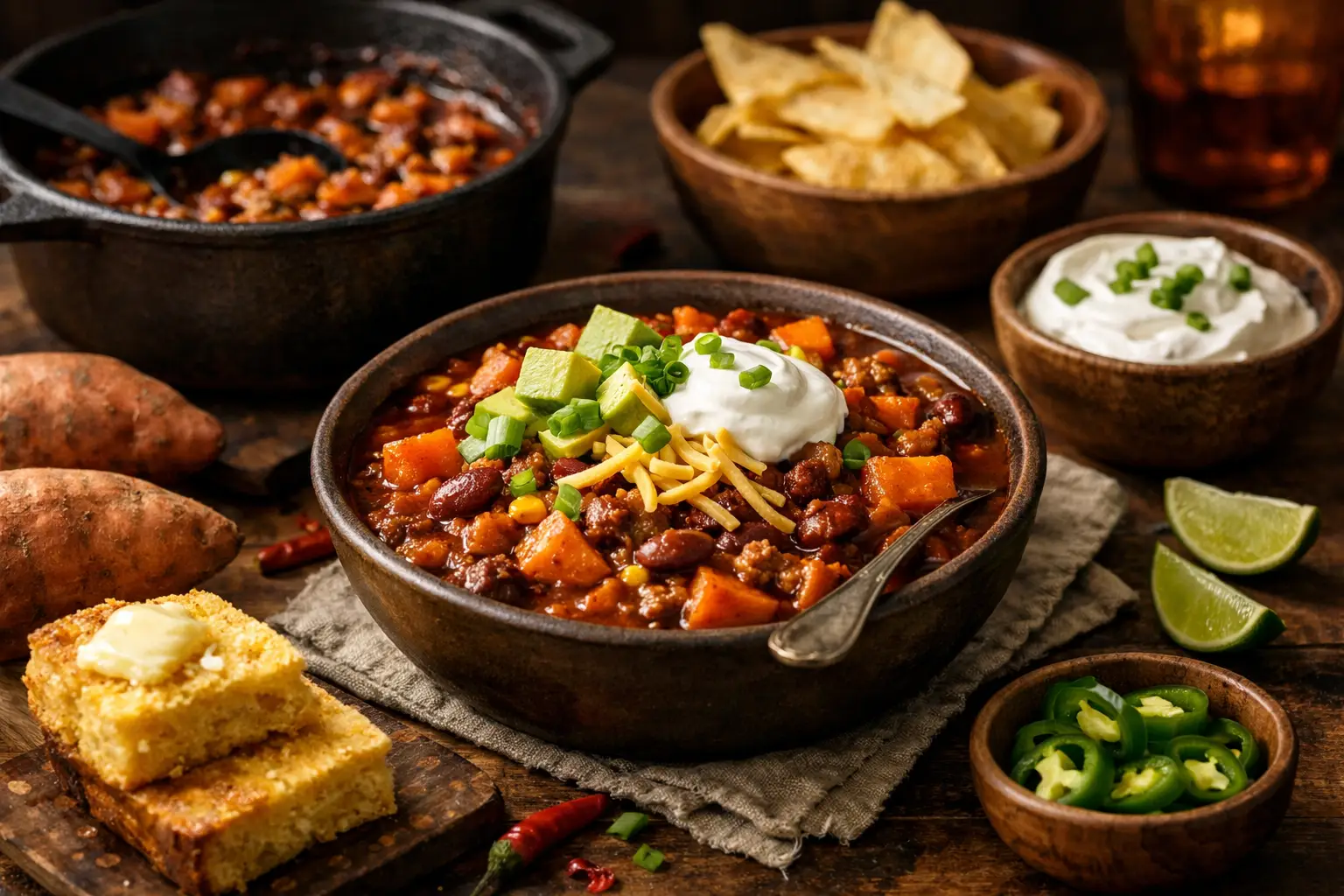
Some bowls eat like a side project. A great sweet potato chili recipe eats like the main event.
That matters because sweet potato chili can go wrong in two very specific ways: too sweet and too soft. The best version lands nowhere near either extreme. It should be smoky, savory, thick enough to cling to a spoon, and layered enough that the sweet potatoes taste like part of the chili build, not a random add-in for color.
For home cooks who want a dependable meatless chili or just a break from the usual beef-and-bean rotation, this is one of the smartest bowls in the lineup. It is affordable, weeknight-friendly, and deeply customizable. More to the point, it still feels like chili. That is the line worth protecting.
What makes a sweet potato chili recipe work
Sweet potatoes bring more than sweetness. They add body, starch, and a creamy edge once they simmer, which means they can help a chili feel rich without a long cook or a heavy hand with fat. But they need the right supporting cast.
The backbone is contrast. You want heat from chili powder or chipotle, depth from tomato paste, aromatics from onion and garlic, and enough salt and acid to keep the bowl from drifting into soft, one-note territory. Beans help, especially black beans or kidney beans, because they add structure and keep every bite grounded. Fire-roasted tomatoes are especially useful here because they push the flavor toward smoke and away from sweetness.
Texture matters just as much. Dice the sweet potatoes too small and they disappear. Leave them too large and the bowl eats clunky. Half-inch cubes are the sweet spot. They soften, but they still hold shape if you do not overcook them.
The core build for sweet potato chili
This version is designed for a Dutch oven or heavy pot and lands in that ideal middle ground between pantry dinner and recipe worth repeating.
Ingredients that pull their weight
Use olive oil, one yellow onion, and a red bell pepper for the aromatic base. Add plenty of garlic, then build with tomato paste, chili powder, cumin, smoked paprika, oregano, and a little chipotle powder or one chopped chipotle in adobo if you want more edge. Two medium sweet potatoes, peeled and diced, are enough to make their presence known without turning the pot into stew.
For the rest, use one can of black beans, one can of kidney beans, one 28-ounce can of crushed or diced fire-roasted tomatoes, and 2 to 3 cups of broth. Vegetable broth keeps it vegetarian, but chicken broth works if that is what you have. A small splash of lime juice or apple cider vinegar at the end sharpens the whole bowl.
If you like a slightly heartier finish, frozen corn works well here, though it is optional. It brings pop and color, but the trade-off is a sweeter profile, so it is best paired with enough smoke and spice.
How to cook it without flattening the flavor
Start by cooking the onion and bell pepper in oil until softened and lightly golden. Do not rush this step. A pale onion base makes a flatter chili. Add garlic and tomato paste, then let the paste darken for a minute or two. That concentrated, slightly caramelized layer does a lot of heavy lifting.
Add the spices and stir just until fragrant. Then in go the sweet potatoes, tomatoes, beans, and broth. Bring it to a boil, then lower to a steady simmer. Cover partially and cook until the sweet potatoes are tender but not collapsing, usually around 25 to 35 minutes depending on the size of your dice.
At the end, taste before you adjust anything. Sweet potato chili often needs more salt than people expect. It may also need acid. A squeeze of lime can make the pot feel brighter and more savory without changing its identity.
If the chili feels thin, simmer it uncovered for another 10 minutes. If it feels too thick, loosen it with broth. This is not cheating. Chili texture is part of the final seasoning.
Flavor moves that separate a good bowl from a repeat bowl
A lot of chili recipes are fine straight from the pot. The memorable ones have one or two deliberate moves that make the flavors stack instead of sit next to each other.
One strong move is using smoked paprika with chipotle rather than relying only on generic chili powder. Chili powder gives you the base note. Smoked paprika and chipotle give the bowl a clearer identity. Another smart move is to keep a little bitterness in the system with charred peppers, dark tomato paste, or even a pinch of cocoa powder. Not enough to taste like dessert, just enough to deepen the frame.
There is also a bean decision worth making on purpose. Black beans lean firmer and earthier, which suits sweet potato especially well. Kidney beans feel more classic and absorb seasoning nicely. Pinto beans create a softer, creamier chili. None of these is wrong. It depends on whether you want contrast, tradition, or softness.
Protein is another fork in the road. This chili works beautifully as a vegetarian bowl, but if you want more heft, ground turkey is the easiest add. It keeps the profile relatively light. Chorizo brings major payoff, though it can dominate the sweet potatoes if you go heavy. If you choose it, use less than you think and let it act as seasoning as much as substance.
Toppings are not decoration here
The right topping can correct balance, add crunch, or cool the heat. That is especially useful in a sweet potato chili recipe, where the base tends to be soft and rich.
Greek yogurt or sour cream adds tang and tempers spice. Sharp cheddar brings salt and fat. Sliced jalapenos wake the bowl up. Cilantro adds freshness. Crushed tortilla chips or toasted pepitas solve the crunch problem fast. Diced avocado works too, though it nudges the bowl in a creamier direction.
If you are serving a crowd, this is one of those chilis that benefits from a topping bar. Not because it is trendy, but because people really do want to tune the sweetness, heat, and texture to their own liking.
Common mistakes and how to avoid them
The biggest mistake is under-seasoning. Sweet potatoes absorb flavor, and beans mute salt. If the chili tastes dull, it usually does not need more sweetness or more tomatoes. It needs salt, acid, or heat.
The second mistake is cooking the sweet potatoes until they dissolve. Some breakdown is good. Total collapse gives you mashed sweet potato soup with beans. Keep an eye on the simmer and test early.
The third is building a chili with no smoke. Sweet potatoes naturally push warm and mellow, so without smoked spices, char, or chipotle, the bowl can read soft and generic. Smoke gives it backbone.
Finally, be careful with sugar-forward add-ins. Corn, sweet onions, and sweet potatoes can all coexist, but when you stack too many sweet notes without enough contrast, the chili loses its center.
Make-ahead, leftovers, and freezing
This is a strong meal-prep chili. The flavor improves overnight, and the sweet potatoes continue to absorb seasoning as it rests. The texture thickens in the fridge, so expect to add a splash of broth or water when reheating.
For freezing, let the chili cool completely and portion it into containers. It keeps well for a few months. The sweet potatoes may soften a bit more after thawing, but the flavor usually deepens. If texture is your top priority, stop cooking the potatoes when they are just tender before freezing.
This is also a smart pot for batch cooking because it can move across meals. Serve it with cornbread one night, over rice the next, or spoon it onto baked potatoes when you want maximum comfort with minimal extra work.
Who this chili is best for
If you love Texas Red, this may not scratch the exact same itch. It is bean-forward, vegetable-forward, and a little softer around the edges. But if you like modern chili variations with clear smoky structure and real weeknight utility, it earns its place.
It is especially good for cooks who want one pot, pantry support, and room to improvise. Add turkey, skip the corn, turn up the chipotle, swap black beans for pinto beans - the bowl can take it. That flexibility is part of why sweet potato chili keeps showing up in serious recipe rotations, not just healthy-eating phases.
At ChiliStation, every bowl tells a story, and this one tells a very current, very useful one: comfort food does not have to choose between hearty and bright.
Make it smoky, season it harder than you think, and let the sweet potatoes be a feature, not the whole plot.