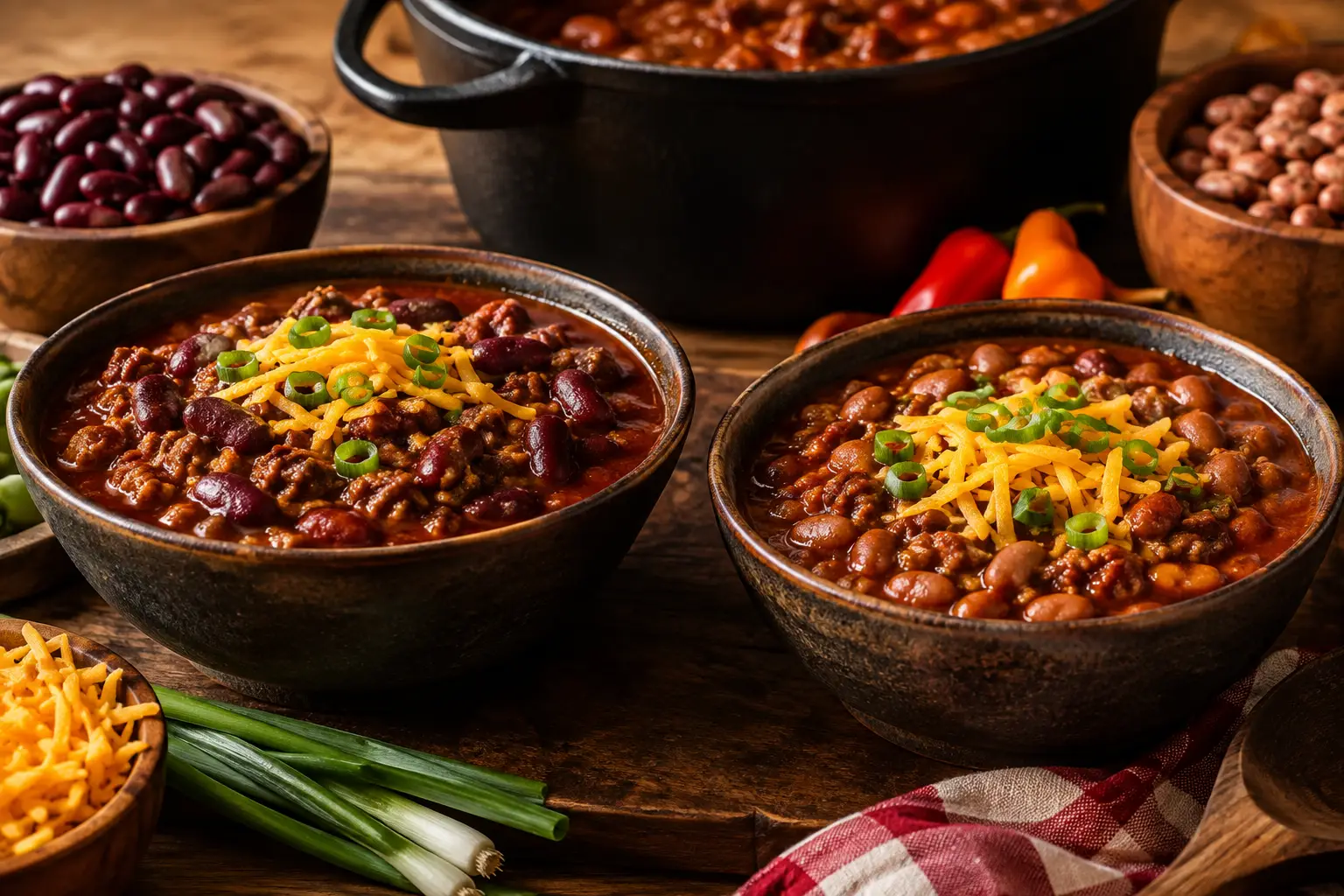
A can marked “chili beans” can look like a shortcut to a better pot, while kidney beans feel like the classic, dependable pantry pick. But chili beans versus kidney beans is not really a battle of one bean beating another. It is a question of what is already in the can, how much control you want over the flavor, and what kind of chili is headed for your bowl.
For a quick weeknight ground beef chili, chili beans can bring welcome momentum. For a slow-simmered batch where you are building a specific Texas-inspired red, smoky turkey chili, or sweet-leaning Cincinnati-style sauce, plain kidney beans usually give you a cleaner canvas. Every bowl tells a story, and the bean choice is part of the plot.
What Are Chili Beans, Exactly?
Chili beans are beans canned in a seasoned chili-style sauce. They are often pinto beans, though some brands use kidney beans or a blend. The sauce commonly includes chili powder, cumin, garlic, onion, salt, and sometimes tomato, sugar, or peppers.
That label matters: “chili beans” describes a preparation more than a single bean variety. Two cans from different brands may have very different personalities. One may be mild and tomato-forward; another may taste smokier, sweeter, or noticeably saltier. If you have a favorite chili recipe with carefully balanced spices, that variation can either help or hijack the final pot.
The biggest advantage is speed. Pour them in with their sauce and you get beans plus an instant layer of seasoning. The trade-off is less control, especially when you are also using a chili seasoning packet, canned tomatoes, broth, and salted meat.
Chili Beans Versus Kidney Beans: The Core Difference
Plain canned kidney beans are cooked kidney beans packed in water, sometimes with salt and a firming agent. They have a mild, earthy flavor and a dense, creamy interior that holds its shape through a long simmer. Dark red kidney beans are especially common in hearty American chili, while light red kidney beans tend to be a little softer and lighter in color.
Chili beans arrive already dressed for the party. Kidney beans arrive ready to wear whatever flavor profile you give them.
That difference affects more than seasoning. Chili beans contribute extra liquid and a saucier texture, which can loosen a thick chili. Kidney beans, particularly when drained and rinsed, add body without changing the sauce much. If your chili is already loose from tomatoes, stock, or beer, adding chili beans with all their sauce may push it toward soupy territory.
There is also a texture distinction. Pinto-based chili beans are generally softer and creamier, and some will break down as they simmer. Kidney beans are sturdier, with a more substantial bite. Neither is automatically better. A chunky steak chili can benefit from firm kidney beans, while a cozy, spoonable ground beef chili often welcomes softer pintos.
Flavor Control Is the Real Decider
Choose kidney beans when the seasoning is the star. This is the move when you are toasting dried chiles, layering cumin and oregano, dialing in heat with chipotle or cayenne, or trying to recreate a recipe you have already perfected. Drain and rinse canned kidney beans if you want the most neutral starting point, then season the pot on your terms.
Choose chili beans when convenience is the priority and the recipe has room for their flavor. They work especially well in a 30-minute chili, a chili-topped baked potato bar, or a casual game-day pot where a little extra savory sauce is a feature, not a complication. Taste before adding more salt or chili powder. That one small step prevents the classic too-salty, too-muddy finish.
If your recipe calls for one can of chili beans and you only have kidney beans, the swap is easy. Use the kidney beans, then add a small spoonful of chili powder, a pinch of cumin, garlic powder, and a splash of tomato sauce or broth. You do not need to replicate the canned sauce exactly. You just need to restore the seasoning and moisture the recipe expected.
Going the other direction takes more restraint. If you substitute chili beans for plain kidney beans, reduce added salt at first and consider holding back a portion of the recipe’s chili powder. Add the beans and sauce, simmer for 10 minutes, then taste. Chili rewards adjustment, not blind allegiance to a measuring spoon.
Which Bean Belongs in Which Chili?
Regional identity makes this conversation more interesting. In Texas Red, beans are famously controversial, and many traditional versions skip them entirely. If you are making a bean-friendly Texas-inspired bowl at home, kidney beans are the less intrusive choice because they let the beef and chile gravy stay in command.
For classic American beef-and-bean chili, both options work. Kidney beans deliver that familiar, hearty visual and a satisfying chew. Chili beans push the dish toward a faster, more old-school pantry-chili profile, especially when paired with ground beef, diced tomatoes, and a mellow heat level.
Cincinnati chili is its own lane. The finely textured, warmly spiced meat sauce is typically served over spaghetti and crowned with toppings, often including kidney beans as part of a “five-way.” Chili beans would bring a sauce and spice profile that clashes with the dish’s carefully distinctive character. Stick with plain kidney beans there.
For white chicken chili or Colorado green chili, neither traditional red chili beans nor red kidney beans is usually the first choice. White beans, Great Northern beans, cannellini beans, or pinto beans better match the lighter broth and green chile energy. This is a useful reminder that the best bean is often about the recipe’s color, acidity, and texture, not just what is sitting closest to the chili powder in the pantry.
Nutrition and Sodium: Read the Can, Not the Category
Beans are a strong chili addition either way. They bring plant protein, fiber, complex carbohydrates, and minerals that make a bowl more filling and balanced. The meaningful nutritional gap is usually sodium.
Plain no-salt-added kidney beans give you maximum control. Regular canned kidney beans may still contain a meaningful amount of sodium, but draining and rinsing can reduce it. Chili beans often contain more sodium because the sauce is seasoned, and some brands also include sugar. That does not make them off-limits. It just means they are an ingredient to account for, not a neutral can of beans.
If you are cooking for someone watching sodium, start with low-sodium or no-salt-added kidney beans and build flavor with toasted spices, onion, garlic, chiles, vinegar, and a little tomato paste. Big flavor does not require a heavy hand with salt.
A Few Smart Pantry Rules
Keep both on hand if chili is part of your regular rotation. Kidney beans are the flexible workhorse for soups, salads, rice bowls, and long-simmered chili. Chili beans are the emergency weeknight specialist when you want a satisfying pot without opening six spice jars.
For canned beans, check the ingredient list if you have dietary needs. Some chili bean sauces contain added sugar, wheat-based thickeners, or ingredients that may not fit a particular eating plan. And if you are starting from dried kidney beans, cook them properly. Raw or undercooked kidney beans contain a natural lectin that is neutralized by thorough boiling, so do not rely on a low-temperature slow cooker alone.
At ChiliStation, a recipe’s bean choice is one more useful filter for finding the bowl that fits your mood. Want chunky, beefy, and deeply red? Kidney beans may be calling. Want fast, saucy, and built for a Tuesday night? Chili beans have a strong case.
The next time you reach into the pantry, let the rest of the pot decide. Use chili beans when you want their seasoned sauce to join the conversation. Use kidney beans when you want every smoky, spicy, slow-built note to sound exactly like your own.