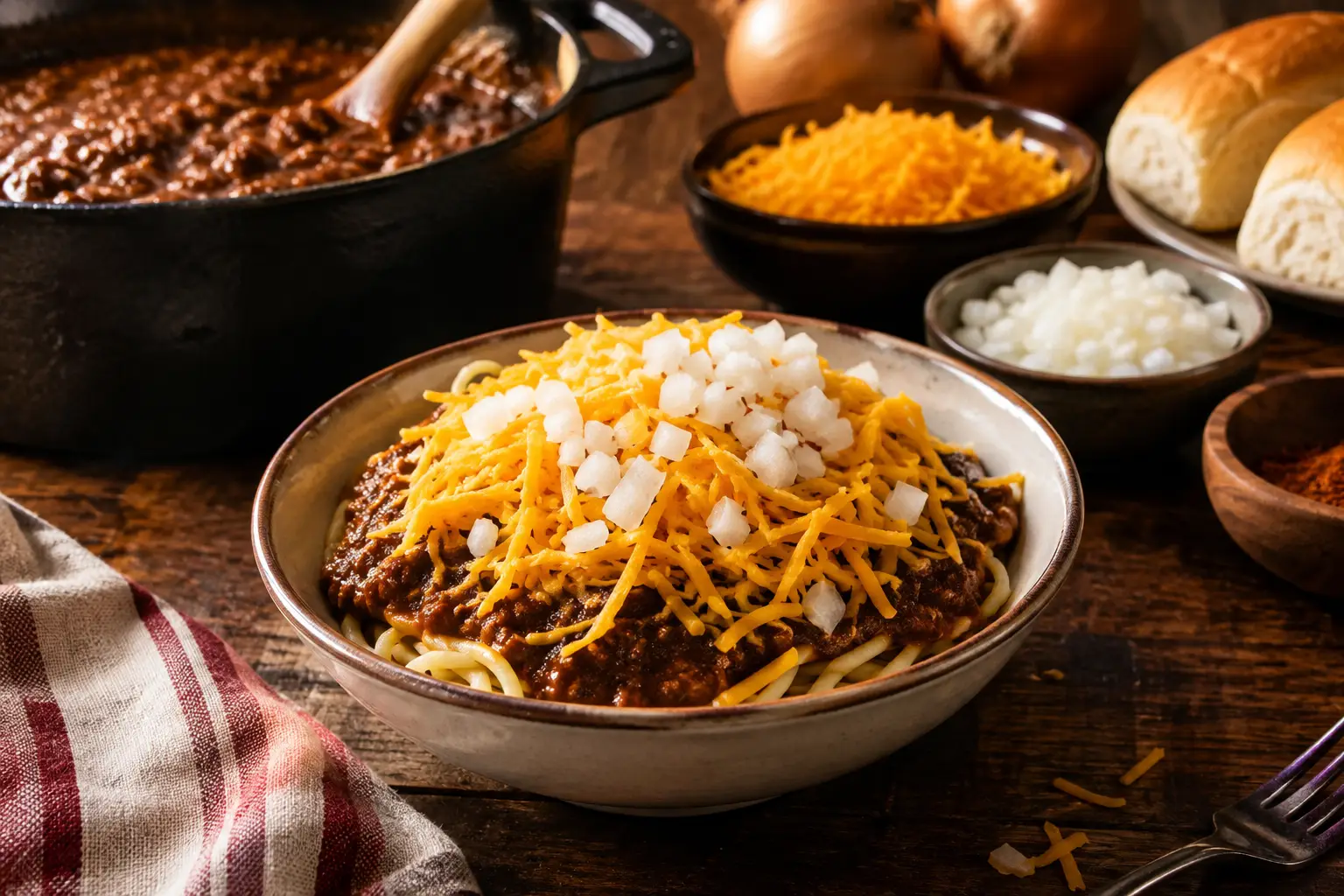
Cincinnati chili is the rare bowl that asks you to rethink what chili can be. It is loose, fragrant, lightly sweet, and built to blanket spaghetti rather than stand up a spoon. If you have wondered how to make Cincinnati chili that lands closer to the Queen City original, the secret is not heat. It is texture, a long list of warm spices, and an unapologetic pile of toppings.
This is chili with a passport stamp. Its roots trace to Greek and Macedonian immigrant cooking, and its signature flavor leans toward allspice, cinnamon, clove, and a subtle tang. Treat it like Texas Red and you will miss the point. Treat it as a spiced meat sauce with serious regional pride, and you are headed in the right direction.
What Makes Cincinnati Chili Different?
Most American chili starts with browned chunks of meat, beans, and a sturdy tomato base. Cincinnati chili goes another route. Ground beef is broken into an exceptionally fine, almost silky texture, usually by simmering it directly in water before the sauce develops. The finished chili is thinner than a standard bowl chili, with enough body to coat spaghetti but enough looseness to settle into every strand.
The flavor profile is its calling card. Chili powder is present, but it shares the stage with cinnamon, allspice, cloves, garlic, Worcestershire sauce, and often a touch of cocoa. None of those ingredients should announce themselves loudly. You are after a mysterious, savory-sweet perfume that makes the next bite feel more interesting than the last.
Beans are not cooked into the chili itself. In the classic system, they are a topping. That distinction matters if you want the full three-way, four-way, or five-way experience.
Ingredients for a True Cincinnati-Style Pot
This recipe makes enough chili for about six generous three-way servings. Use regular ground beef, not extra-lean beef. A little fat helps carry the spices and gives the sauce its satisfying, old-school richness.
- 2 pounds 80/20 ground beef
- 4 cups water
- 1 medium yellow onion, very finely grated or minced
- 1 can (15 ounces) tomato sauce
- 2 tablespoons tomato paste
- 3 tablespoons chili powder
- 2 teaspoons Worcestershire sauce
- 1 tablespoon apple cider vinegar
- 2 teaspoons unsweetened cocoa powder
- 1 1/2 teaspoons ground cinnamon
- 1 teaspoon ground allspice
- 1/4 teaspoon ground cloves
- 1 teaspoon garlic powder
- 1 teaspoon kosher salt, plus more to taste
- 1/2 teaspoon black pepper
- 1/4 to 1/2 teaspoon cayenne pepper, depending on your heat lane
- 1 tablespoon brown sugar, optional
For serving, have spaghetti, finely shredded mild cheddar, diced raw onion, and warmed kidney beans ready. Oyster crackers and hot sauce belong on the table, too.
How to Make Cincinnati Chili Step by Step
Start with the signature fine beef texture
Put the ground beef and water in a large Dutch oven or heavy pot before turning on the heat. Use a potato masher, whisk, or sturdy fork to break the raw beef into tiny pieces. This may feel backward if you are used to browning meat first, but it is the move that creates Cincinnati chili's distinct, delicate crumble.
Set the pot over medium-high heat and keep stirring as the water comes to a gentle simmer. Break up every larger clump you see. Once the beef is fully separated and no longer pink, reduce the heat to medium-low. Skim off excess fat if you prefer a lighter sauce, though removing every bit will flatten the flavor.
Build the spice-forward sauce
Stir in the onion, tomato sauce, tomato paste, chili powder, Worcestershire, vinegar, cocoa, cinnamon, allspice, cloves, garlic powder, salt, black pepper, cayenne, and brown sugar if using. Bring the mixture back to a low bubble, then partially cover the pot.
Simmer for 1 1/2 to 2 hours, stirring every 15 to 20 minutes. The sauce should reduce slightly but remain pourable. If it gets thicker than a meaty pasta sauce, add water a few tablespoons at a time. If it tastes watery near the end, simmer uncovered for another 10 minutes.
Taste only after the chili has had at least an hour to mingle. Early on, the cinnamon and allspice can seem too prominent. Time rounds them out. Adjust salt first, then acidity with a splash more vinegar, then heat with cayenne. A small additional pinch of brown sugar can soften a sauce that feels overly sharp, but do not turn this into dessert chili.
Let it rest if you can
Like many great chili styles, Cincinnati chili improves after a night in the refrigerator. The spices settle, the beef absorbs the sauce, and the whole pot tastes more unified the next day. Reheat it gently with a splash of water or beef broth to bring back its saucy consistency.
Build Your Bowl by the Way
The word “way” is Cincinnati chili shorthand, and every number tells a topping story. A two-way is spaghetti topped with chili. A three-way adds a snowy mound of finely shredded cheddar. A four-way adds either diced onion or kidney beans, while a five-way includes both.
Start with hot spaghetti in a shallow bowl or on a plate. Ladle over enough chili to coat it generously, then add your toppings in their proper layers. For the cheese, buy a block of mild cheddar and shred it yourself using the fine side of a box grater. The iconic effect is a fluffy orange mountain, not thick shreds that melt into the sauce before the first bite.
This is one place where cheddar choice matters. Sharp cheddar can be delicious, but mild cheddar is closer to the classic parlor style and lets the spice blend lead. If you want extra heat, use hot sauce at the table instead of blasting the whole pot with cayenne. Cincinnati chili should be warmly spiced, not a heat challenge.
The Small Choices That Make a Big Difference
Do not brown the beef if your goal is the classic texture. Browning creates deeper roasted flavor, but it also makes distinct chunks, pushing the result toward conventional chili. That can still taste great, just not especially Cincinnati.
Do not skip the long simmer. A quick 30-minute version will be edible, but the spices can taste dusty and disconnected. Give the sauce time to become one thing. If you are cooking on a busy weeknight, make the chili a day ahead and boil the spaghetti when dinner is ten minutes away.
Cocoa is another judgment call. It should not make the chili taste chocolatey. Its job is to deepen the background, much like a tiny amount of coffee in a chocolate cake. If it makes you nervous, start with one teaspoon. Likewise, some family recipes use a little more sugar, while others lean more tart. Cincinnati chili has a recognizable profile, but there is room for your own house version.
More Than a Spaghetti Topping
A five-way is the headline act, but leftover Cincinnati chili earns its keep. Spoon it over hot dogs for cheese coneys, pile it onto fries, or use it as the bold layer in a baked potato. The loose texture that makes it perfect for spaghetti also makes it one of the most versatile chili styles in the regional playbook.
Make the first pot close to classic, then take notes. Maybe your ideal version needs a little more allspice, a brighter splash of vinegar, or an even finer beef crumble. Every bowl tells a story, and Cincinnati chili tells its best one when you let the spices linger, the cheddar pile high, and the fork twirl through the whole glorious mess.