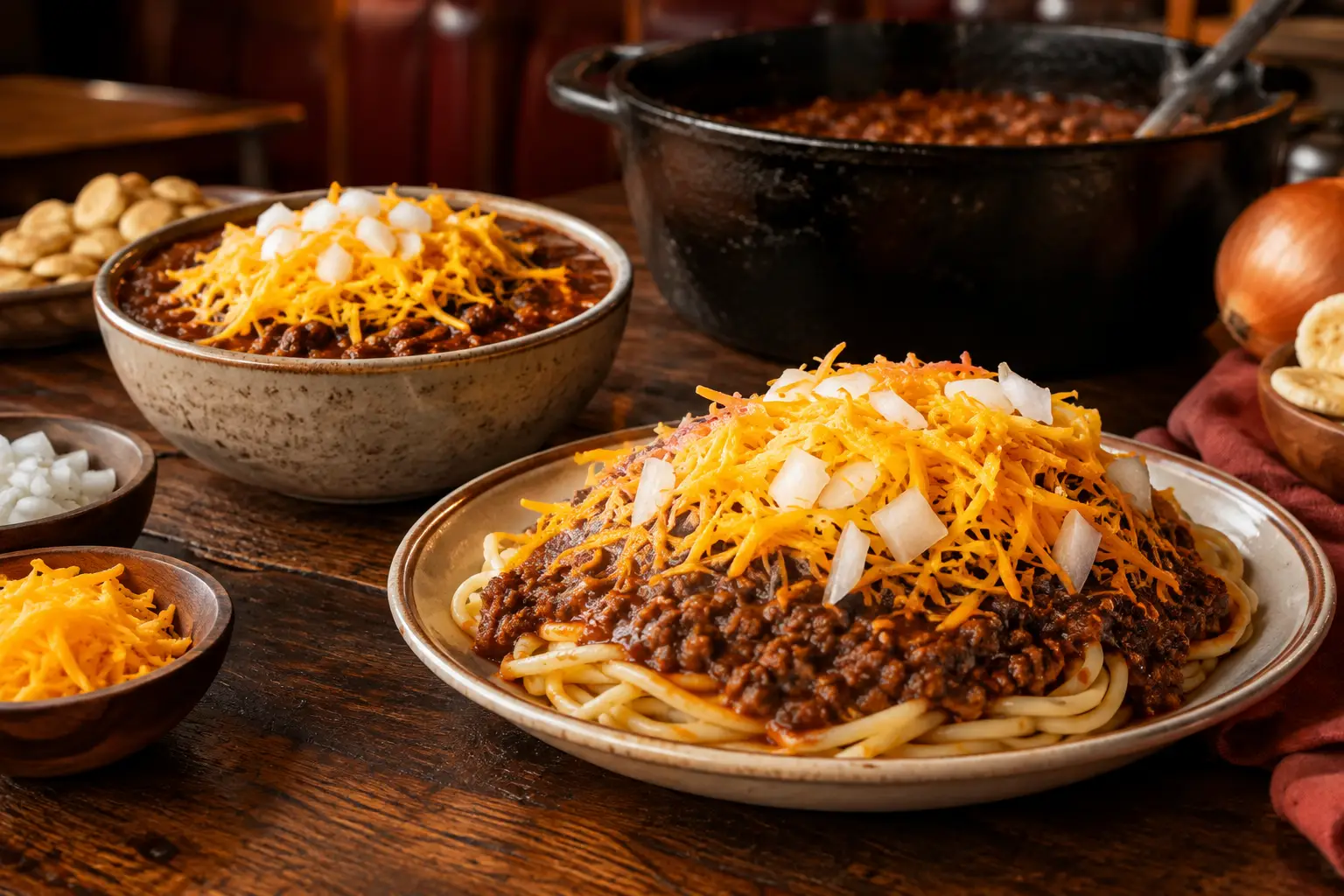
A plate of Cincinnati chili spaghetti can look like a weeknight shortcut until the first forkful hits: loose, warmly spiced meat sauce coating tender noodles, then a snowdrift of finely shredded cheddar. The Cincinnati chili vs spaghetti question is not really a contest. It is a lesson in how one regional chili style built an entire ritual around pasta.
For cooks raised on thick Texas red, bean-heavy game-day chili, or a spoonable bowl of Colorado green chili, this Ohio classic can be a curveball. Cincinnati chili is thinner, sweeter-spiced, and designed to be layered rather than ladled into a bowl. Spaghetti is not an afterthought. It is the foundation that makes the whole format work.
Cincinnati Chili vs Spaghetti: A Different Kind of Chili Night
Traditional Cincinnati chili is a finely textured beef sauce with a distinctive spice cabinet. Cinnamon and allspice are the flavors most people notice first, but recipes may also include cloves, cumin, paprika, chili powder, garlic, onion, and a touch of cocoa or unsweetened chocolate. The result is savory and aromatic, with a subtle sweetness and a gentle, building warmth instead of a full-throttle chile burn.
That profile makes it behave more like a meat sauce than a thick Southwestern stew. It is poured over spaghetti so it can travel through the noodles, rather than sitting on top in a dense mound. Think of the pasta as a flavor carrier: every twirl picks up the spiced sauce and the salty creaminess of cheddar.
This is why swapping in a chunky, thick chili often misses the point. A classic bowl chili can be excellent over spaghetti, especially when you want a hearty pantry meal, but it will eat differently. Beans, large pieces of tomato, and cubes of meat interrupt the clean, saucy forkful that defines Cincinnati style. Neither version is wrong. They simply answer different comfort-food cravings.
The Five-Way System, Decoded
Cincinnati chili has its own shorthand, and it is worth learning before you start piling toppings on a plate. A “way” is not a vague suggestion. It is the order in which the dish is built.
A two-way is spaghetti topped with chili. A three-way adds a generous layer of finely shredded cheddar, usually mild or medium cheddar with a soft, almost fluffy shred. A four-way adds either diced onion or kidney beans. A five-way gets both onions and beans.
The beans are served on top, not simmered into the chili. That detail matters. It keeps the sauce smooth and lets each diner choose the texture they want. Raw diced onion brings a sharp crunch, while kidney beans make the plate more substantial without changing the character of the chili itself.
There is also the coney route: a small hot dog in a soft bun, topped with Cincinnati chili, mustard, diced onion, and cheddar. It is the same flavor universe, just built for two hands instead of a fork.
Why the Cheese Matters So Much
The towering cheese mound is not garnish. It is temperature control, texture, and salt all at once. When it meets hot chili, the bottom layer softens into the sauce while the top stays feathery and cool. Use freshly shredded cheese from a block if possible, and grate it fine. Thick pre-shredded strands can feel clumsy and may not melt as pleasantly.
Cheddar is the traditional call, but there is room for personal preference. Mild cheddar keeps the plate closer to classic parlor style. Sharp cheddar adds a bigger tang, which can be great if your chili is especially rich or sweet. Just do not bury the sauce under a heavy blanket of low-quality cheese. The best three-way still tastes like chili first.
What Makes Cincinnati Chili Taste Like Cincinnati Chili
The style traces back to Cincinnati’s chili-parlor culture, shaped in part by Greek and Macedonian immigrant restaurateurs in the early 20th century. That history helps explain why its seasoning profile surprises people expecting a standard American chili bowl. It belongs to the broad family of American chili, but it carries Mediterranean-influenced aromatic notes and a restaurant-born way of serving.
The texture is equally intentional. Many recipes begin by breaking raw ground beef directly into water or broth, then simmering it until the meat becomes exceptionally fine. Others brown the beef first for deeper roasted flavor. The water-start method is more traditional in feel, producing a smoother sauce that clings beautifully to spaghetti. Browning is easier for many home cooks and creates a more familiar beefy base, but it can make the final chili a little chunkier.
Tomato is typically present, often as sauce, paste, or both, yet it should not dominate. This is not a bright marinara with chili powder. The spices lead, the beef gives body, and the tomato binds the flavors together.
How to Build a Better Cincinnati Chili Spaghetti Plate at Home
Start with the right expectation: this chili benefits from time. A quick simmer can taste good, but a longer, low bubble lets the cinnamon, allspice, chile, and beef settle into one cohesive sauce. Make it a day ahead if you can. Like many chili styles, it often tastes more balanced after a night in the refrigerator.
Keep the sauce loose. If it reduces into something that stands up like conventional chili, stir in a little water, beef broth, or tomato sauce until it becomes pourable again. You want enough body to coat pasta, not so much that it disappears between the noodles.
Cook spaghetti just to al dente and drain it well. Some cooks toss the noodles with a little butter to prevent sticking, while others serve them plain so the chili can do all the talking. Both approaches work. Plain pasta gives a cleaner, more classic result; butter adds a little extra comfort on a cold night.
Then build each plate in order: spaghetti first, chili second, toppings last. Do not mix the whole pot together before serving. Individual layering is part of the appeal, especially when some people want onions, some want beans, and some are here strictly for a towering three-way.
If you like heat, add it at the table with hot sauce, crushed red pepper, or a spoonful of pickled jalapeños. Changing the core pot too aggressively can overpower the delicate sweet-spice balance. Cincinnati chili can carry extra fire, but it should still taste like Cincinnati chili.
When Regular Chili Over Spaghetti Is the Better Move
Sometimes you do want a standard chili-spaghetti mashup, and that is a valid dinner. A thick beef-and-bean chili over pasta is filling, economical, and excellent for feeding a crowd. It is especially useful when you have leftover chili and need a second-night transformation that does not feel like leftovers.
Choose that route when you want bold chile flavor, big beans, and a more rugged, bowl-meets-pasta texture. Choose Cincinnati style when you want a purpose-built sauce, a precise topping ritual, and a plate that feels halfway between chili night and old-school diner food.
The difference is not authenticity versus improvisation. It is intention. One is a flexible use for chili you already love; the other is a regional specialty with a very specific texture, seasoning profile, and serving grammar.
The Best Pairings for a Cincinnati-Style Dinner
Because the plate is rich, salty, and carb-forward, sides should bring crunch or acidity. Oyster crackers are classic and useful for scooping up stray sauce. A simple green salad with a sharp vinaigrette cuts through the cheese. Pickles, pepperoncini, or a crisp slaw also work well, particularly if you have gone for a five-way.
For a crowd, set out toppings separately and let everyone choose their own way. It turns a pot of chili and a package of spaghetti into a small regional-food event. That is the magic of this style: its rules are clear enough to honor tradition, but its format is friendly enough for every cook to make a plate their own.
Next time pasta night feels predictable, skip the jarred sauce and make room for a three-way. Every bowl tells a story, but this one arrives on a plate with a fork, a mountain of cheddar, and zero interest in being ordinary.