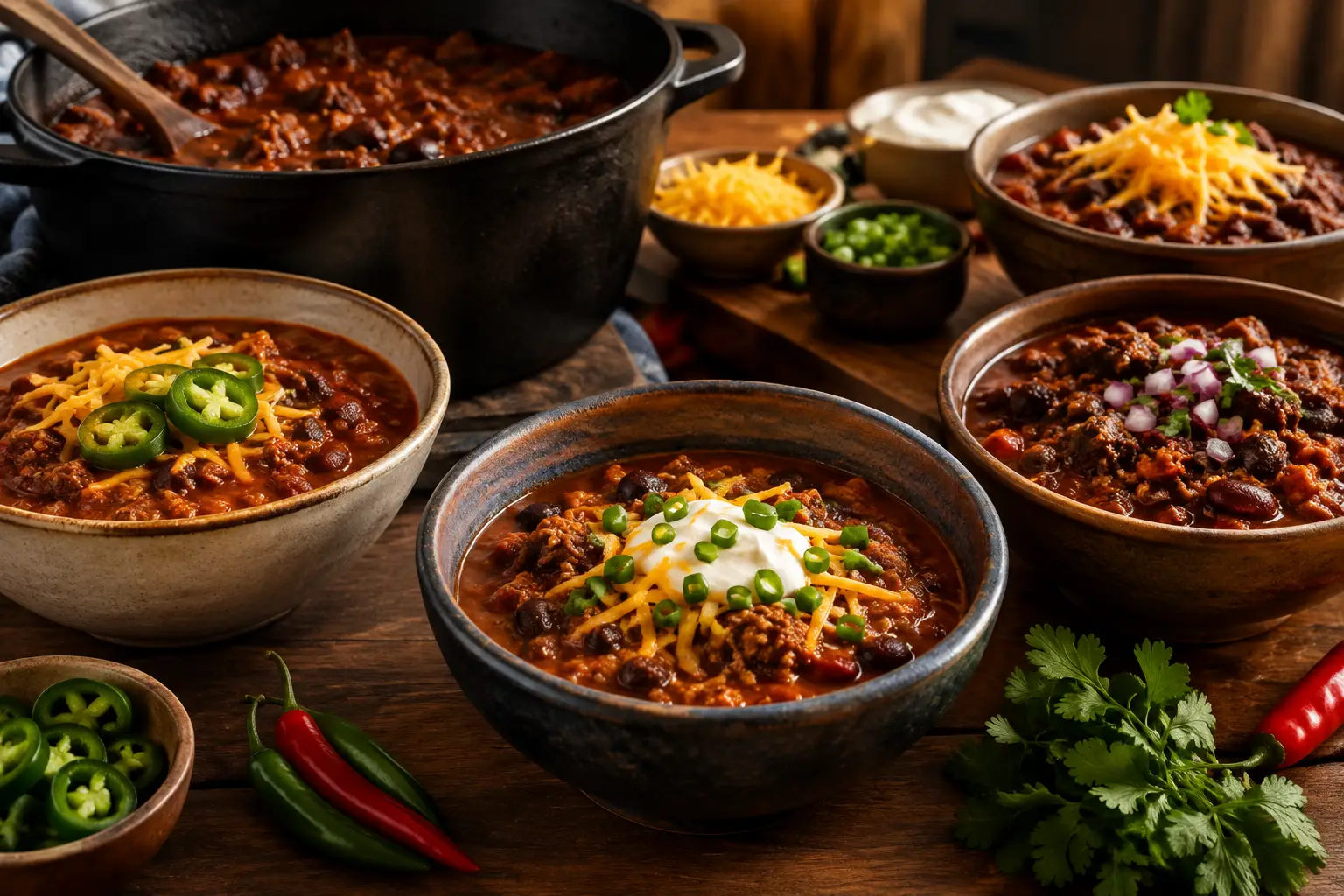
A pot of chili can mean radically different things depending on where you start. It might be a brick-red Texas bowl with no beans in sight, a tangy Cincinnati sauce piled over spaghetti, or a spoon-thick white chicken chili built for a weeknight. This guide to chili recipe categories makes the choices easier, because the best chili is not one universal recipe. It is the bowl that fits your mood, your pantry, and the people waiting at the table.
Every bowl tells a story. The trick is learning which story you want to cook tonight.
Start With the Chili Style You Crave
Regional categories are the fastest way to narrow a big field. They are not just labels for geography. They signal the ingredients, texture, toppings, and expectations that define the bowl.
Texas Red: Big Chile Flavor, No Detours
Texas Red is the purist’s answer to chili: beef, dried chiles, aromatics, and a deep, glossy gravy. Beans are traditionally left out, which puts all the pressure on the meat and chile blend. Expect ancho, guajillo, pasilla, or similar dried peppers bringing raisiny sweetness, earthy depth, and controlled smoke.
Choose Texas Red when you want a weekend project with serious payoff. Chuck roast needs time to soften, and whole dried chiles reward a little extra prep. The result is direct, intense, and built for a bowl with onions, cheese, and maybe a stack of crackers on the side. If your crowd expects beans, serve them separately rather than forcing them into the pot.
Cincinnati Chili: Spiced, Saucy, and Built for Layers
Cincinnati chili plays by different rules. This finely textured meat sauce leans into warm spices such as cinnamon, allspice, clove, and sometimes cocoa. It is less about a rugged spoonful and more about assembly: over spaghetti, under a mountain of shredded cheddar, or alongside a hot dog.
This category is ideal when you want something playful, nostalgic, and easy to scale for a crowd. The flavor can surprise cooks expecting a Southwestern-style chili, so treat it as its own glorious lane. A five-way plate is not trying to be Texas Red. That is the point.
Colorado Green Chili: Pork, Chiles, and Bright Heat
Colorado green chili centers on roasted green chiles, usually paired with pork and a savory broth or gravy. It can be spooned over burritos, eggs, fries, or simply eaten with warm tortillas. The character comes from roasted Hatch, Anaheim, Pueblo, or poblano chiles, which bring grassy flavor and heat that feels lively rather than heavy.
Pick green chili when red chile powders sound too dark or wintry. It is especially good for cooks who like a saucier texture and plenty of serving options. Potatoes can make it heartier, while tomatillos add tang. Neither is mandatory, but both change the personality of the finished pot.
Chili Con Carne, Homestyle, and Modern Mashups
Not every recipe needs a strict regional passport. Classic chili con carne often lands between Texas tradition and everyday American comfort food, with beef, tomato, chile, and sometimes beans. Homestyle beef-and-bean chili is the dependable game-day category: familiar, flexible, and forgiving.
Then there are the modern hybrids. Think Korean-inspired gochujang chili, smoky chipotle turkey chili, pumpkin black bean chili, or a cheeseburger-style pot with pickles on top. These recipes are not less legitimate because they bend the rules. They simply belong in the flavor-first category, where the question is not “Is this traditional?” but “Does this bowl deliver?”
A Guide to Chili Recipe Categories by Protein
Protein is the next major filter, and it affects more than nutrition. It changes body, cooking time, fat level, and the kind of seasoning that shines.
Ground beef makes a quick, crowd-pleasing chili with a crumbled texture that catches beans and tomatoes. Beef chunks create a richer, slower-cooked bowl with more dramatic payoff. If you have three hours and want that spoon-tender, stew-like feel, reach for chuck. If dinner needs to happen in under an hour, ground beef is the practical move.
Turkey and chicken offer a lighter canvas, especially for white chili and green chili. Ground turkey benefits from assertive aromatics, roasted chiles, and a little extra fat from olive oil or cheese. Shredded chicken is excellent when you want a creamy, mellow pot with white beans. Pork belongs naturally with green chiles, but it can also bring richness to red chili when used in small amounts alongside beef.
Vegetarian chili is not a consolation prize. Beans, lentils, mushrooms, sweet potatoes, corn, and walnuts can build a satisfying pot when they are layered with chiles, spices, and umami. The trade-off is texture: without rendered meat fat, vegetarian chili needs attention to richness. Roasted vegetables, a spoonful of tomato paste, cocoa, soy sauce, or a hit of smoked salt can give it the depth that keeps each bite interesting.
Choose Your Heat Level With Intention
Heat is not a badge of honor. It is a flavor-setting tool. Mild chili lets the sweetness of tomato, corn, and slow-cooked onions take center stage. Medium chili is the sweet spot for many tables, delivering a clear pepper presence without asking anyone to reach for sour cream after every bite. Hot chili should still taste like food, not a dare.
The smartest way to manage heat is to separate chile flavor from chile fire. Dried ancho and guajillo chiles offer rich flavor with modest heat. Jalapeños and poblanos add fresh green character. Chipotles bring smoke. Cayenne, serrano, habanero, and hotter peppers raise the stakes quickly.
For a mixed crowd, build the main pot at mild-to-medium heat, then offer hot sauce, pickled jalapeños, crushed red pepper, or fresh sliced chiles at the table. Everyone gets the bowl they want, and nobody spends dinner pretending their mouth is fine.
Let the Cooking Method Make the Call
The same flavor profile can feel completely different depending on how you cook it. A stovetop chili is responsive and fast. You can brown meat deeply, bloom spices in the fat, and adjust the thickness as it simmers. It is the right category for a spontaneous chili night.
Slow cooker chili is built for convenience and long, gentle development. Brown the meat first if you can, because that fond brings real depth, but do not let perfection turn an easy dinner into a production. Slow cookers are especially useful for beef chunks, pulled chicken, and game-day pots that need to hold warm for hours.
Pressure cooker chili is the move when you want all-day texture on a weeknight timeline. It works beautifully with dried beans and tough cuts of beef, though it can mute bright, fresh flavors if every ingredient goes in at once. Add lime juice, cilantro, roasted chiles, or a final splash of vinegar after pressure cooking to wake the bowl back up.
Smoked chili belongs in its own weekend category. Whether you smoke the meat, the vegetables, or the entire Dutch oven, the payoff is a deep outdoor flavor that feels made for tailgates and backyard gatherings. Keep the other smoky ingredients in check, though. Chipotle, smoked paprika, bacon, and a smoker can become one note when piled together.
Match the Bowl to the Occasion
For game day, choose a forgiving beef-and-bean chili that can feed a crowd and welcome a topping bar. For a cozy Sunday, go for Texas Red or a slow-cooked chuck chili with enough time to deepen. For a fast Tuesday, white chicken chili or ground turkey chili earns its place. For brunch, green chili has range that few categories can match.
Toppings matter here. A dense red chili may only need onions, cheddar, and crackers. White chili loves avocado, cilantro, and tortilla chips. Cincinnati chili needs its signature layered treatment. Think of toppings as part of the category, not a last-minute garnish.
The next time you search for chili, start with one clear question: What kind of bowl sounds right right now? Filter by region, protein, heat, and time, then let your appetite make the final call. There is always another category worth cooking.