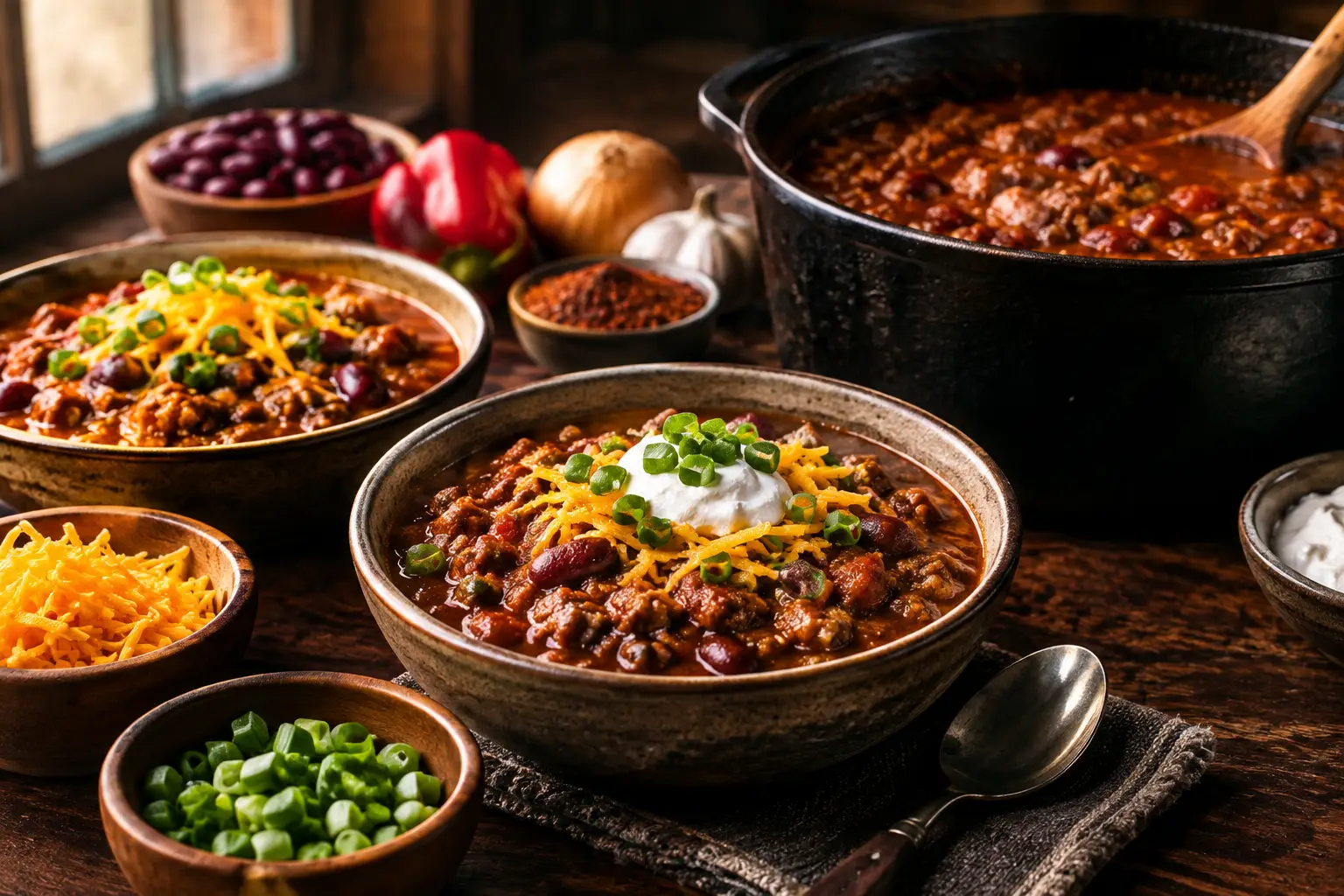
A chili recipe is not a contract. It is a starting point - one that can flex around the ground meat in your freezer, the peppers you can handle, the beans your family actually eats, and the kind of night you are cooking for. The best chili recipe adaptation examples preserve the bowl’s core identity while making it more useful, more personal, and often more delicious.
That does not mean tossing in every leftover from the crisper drawer. Great adaptations have a point of view. A Texas Red needs its chile-forward intensity. A white chicken chili needs its creamy, bright character. A Cincinnati-style pot still needs that unmistakable sweet-spiced profile, even if you make a few smart swaps. Every bowl tells a story, and the goal is to edit the story without changing the genre.
Start With What Makes the Chili Itself
Before changing ingredients, identify the recipe’s anchors. Most chili recipes have three: the primary flavor base, the body, and the heat source.
The flavor base might be toasted dried chiles, chili powder and cumin, green chiles, tomatoes, or the warm cinnamon-allspice mix associated with Cincinnati chili. The body comes from meat, beans, vegetables, dairy, or a long reduction. Heat can arrive through fresh jalapeños, chipotles in adobo, cayenne, crushed red pepper, or a hot chile powder.
Change one anchor and you are adapting. Change all three and you may be cooking a different chili altogether. That is not automatically bad, but it helps to know when you have moved from “weeknight Texas-inspired beef chili” to “smoky turkey and bean chili with Texas Red energy.”
Chili Recipe Adaptation Examples for Protein Swaps
Turn ground beef chili into turkey chili
Ground turkey is one of the easiest swaps, but it brings less fat and a milder flavor than beef. If a recipe calls for 80/20 ground beef, use ground turkey with a little strategy: brown it hard in a skillet, season it early with salt, and add a tablespoon of oil if the pan looks dry. A spoonful of tomato paste, Worcestershire sauce, or soy sauce can bring back some of the savory depth people associate with beef chili.
This version works especially well with tomato-based, bean-friendly chili. It is less convincing in a minimalist Texas Red, where beef flavor carries far more weight. For that style, chuck roast or brisket remains the move.
Make a beef-and-bean recipe vegetarian without losing heft
Simply removing the meat can leave a chili watery and a little sad. Replace beef’s bulk with a combination, not a single substitute. Two cans of beans plus sautéed mushrooms, diced sweet potato, or a cup of cooked lentils create a fuller spoonful and a more satisfying chew.
For a hearty vegetarian red chili, use black beans for creaminess, pinto beans for classic chili character, and finely chopped mushrooms for savoriness. Brown the mushrooms until their moisture cooks off before adding tomatoes or stock. That concentrated, almost meaty flavor is the difference between a real dinner and a bowl that feels like a side dish.
Trade chicken breasts for thighs in white chili
Chicken breast keeps white chili lean and clean, but thighs are more forgiving. They stay tender through a longer simmer and add a richer broth. Use boneless, skinless thighs in the same quantity, then shred them once tender.
The trade-off is that thighs can make a creamy white chili feel heavier. Counter that with lime juice, cilantro, or a spoonful of salsa verde near the finish. Brightness is not a garnish here - it is balance.
Adjust the Heat Without Flattening the Flavor
Heat adaptation is more than using less cayenne. Chiles bring fruitiness, smoke, bitterness, grassiness, and sweetness along with their burn. Remove them carelessly and a recipe can taste strangely empty.
If you want a milder red chili, reduce cayenne first while keeping ancho, guajillo, or regular chili powder in place. Ancho brings raisin-like depth with manageable heat. Guajillo adds a tangy red-fruit note. Neither needs to punish the person at the table who thinks black pepper is adventurous.
For a hotter bowl, add heat in layers. Keep the recipe’s original chile base, then introduce one bolder element: diced serrano for sharp green heat, chipotle for smoke, habanero for fruity fire, or a few dashes of a vinegar-forward hot sauce at the end. Adding every spicy ingredient at once creates heat, sure, but not necessarily a better chili.
A smart crowd-friendly move is to cook the main pot at medium heat and serve the serious fire on the side. Pickled jalapeños, hot sauce, chile crisp, crushed red pepper, and sliced fresh chiles let everyone build their own danger level.
Change Beans and Vegetables With Texture in Mind
Beans are not interchangeable in every chili, even though they can look that way on a grocery shelf. Kidney beans hold their shape and bring classic red-chili confidence. Pinto beans turn creamy as they simmer. Black beans have a slightly firmer skin and pair naturally with corn, chipotle, and Southwestern flavors. White beans belong beautifully in chicken chili, green chile stew, and creamy pots.
If you swap one bean for another, keep the volume the same but adjust your expectations. Pintos may thicken the pot more than kidneys. Black beans can darken the broth. Canned beans should be rinsed if the recipe is already salty or relies on a clean-looking sauce; leaving a little of their liquid can be useful when you want extra starch and body.
Vegetables follow the same rule: adapt for texture, not just nutrition. Zucchini is soft and fast-cooking, so add it late. Sweet potatoes need a longer head start. Corn adds pops of sweetness that play well with smoky chiles but may feel out of place in a stripped-down Texas-style bowl. Bell peppers are excellent in a weeknight ground-beef chili, though they can pull focus from the dried-chile profile of a more traditional regional recipe.
Make a Thick Chili Thinner, or a Soupy Chili Thicker
Texture is where many adaptations go sideways. A recipe may call for one cup of stock, but tomato brands, bean liquid, slow cookers, and altitude can all change the final result. Treat liquid amounts as a range, not a command.
For thicker chili, simmer uncovered for 15 to 25 minutes before reaching for a thickener. Reduction concentrates flavor, while flour or cornstarch can make a pot taste pasty if used too aggressively. If it still needs body, mash a scoop of beans against the side of the pot, stir in a little masa harina, or blend part of a bean-and-broth mixture. Masa harina is especially good in Southwestern-style chili because it adds a subtle corn aroma along with thickness.
For a thinner, brothier bowl, add stock a quarter cup at a time. Chicken stock suits white chili and green chile stews; beef stock supports beefy red chili; vegetable stock keeps a plant-based pot focused. Water works too when the chili is already intensely seasoned. The goal is not maximum richness. It is a sauce that coats the spoon without turning into cement.
Adapt Cooking Method Without Sacrificing Flavor
A stovetop recipe can move to the slow cooker, Instant Pot, or oven, but browning still matters. For ground meat, mushrooms, onions, and tomato paste, do the flavor-building in a skillet first. Then transfer everything to your chosen vessel.
For a slow cooker adaptation, reduce added liquid by roughly one-quarter because evaporation is limited. Add delicate ingredients such as corn, cream, cilantro, and lime near the end. For a pressure cooker, use less liquid than a stovetop version and save dairy until after pressure cooking. Cream can split, and nobody is chasing a grainy white chili.
An oven-braised chili is the sleeper hit for a lazy Sunday. A Dutch oven at a low temperature gives cubed chuck or pork shoulder time to become spoon-tender while the sauce reduces gently. It takes longer than a weeknight skillet chili, but the payoff is a deeper, more integrated pot.
Keep Regional Identity, Even When You Freelance
Regional chili styles are not rules designed to stop you from having fun. They are useful flavor maps. If you adapt a Texas Red, keep the focus on beef and dried chiles, and think twice before adding a parade of beans and corn. If you adapt Colorado green chili, protect the roasted green chile character and the pork-forward comfort. If you make Cincinnati chili your own, keep the sweet-spiced sauce and serve it over spaghetti or with the toppings that make the style instantly recognizable.
The sweet spot is a recipe that respects its roots while meeting your table where it is. Maybe that means turkey instead of beef, three-bean instead of meat, medium heat instead of five-alarm, or a slow cooker instead of an afternoon by the stove. Browse by style, protein, and spice level at ChiliStation, then let the recipe give you permission to cook the bowl you actually want to eat.
The next time a recipe calls for an ingredient you do not have, do not abandon the pot. Ask what job that ingredient was doing, replace the job rather than just the item, and taste as you go. Your signature chili is probably one good adaptation away.