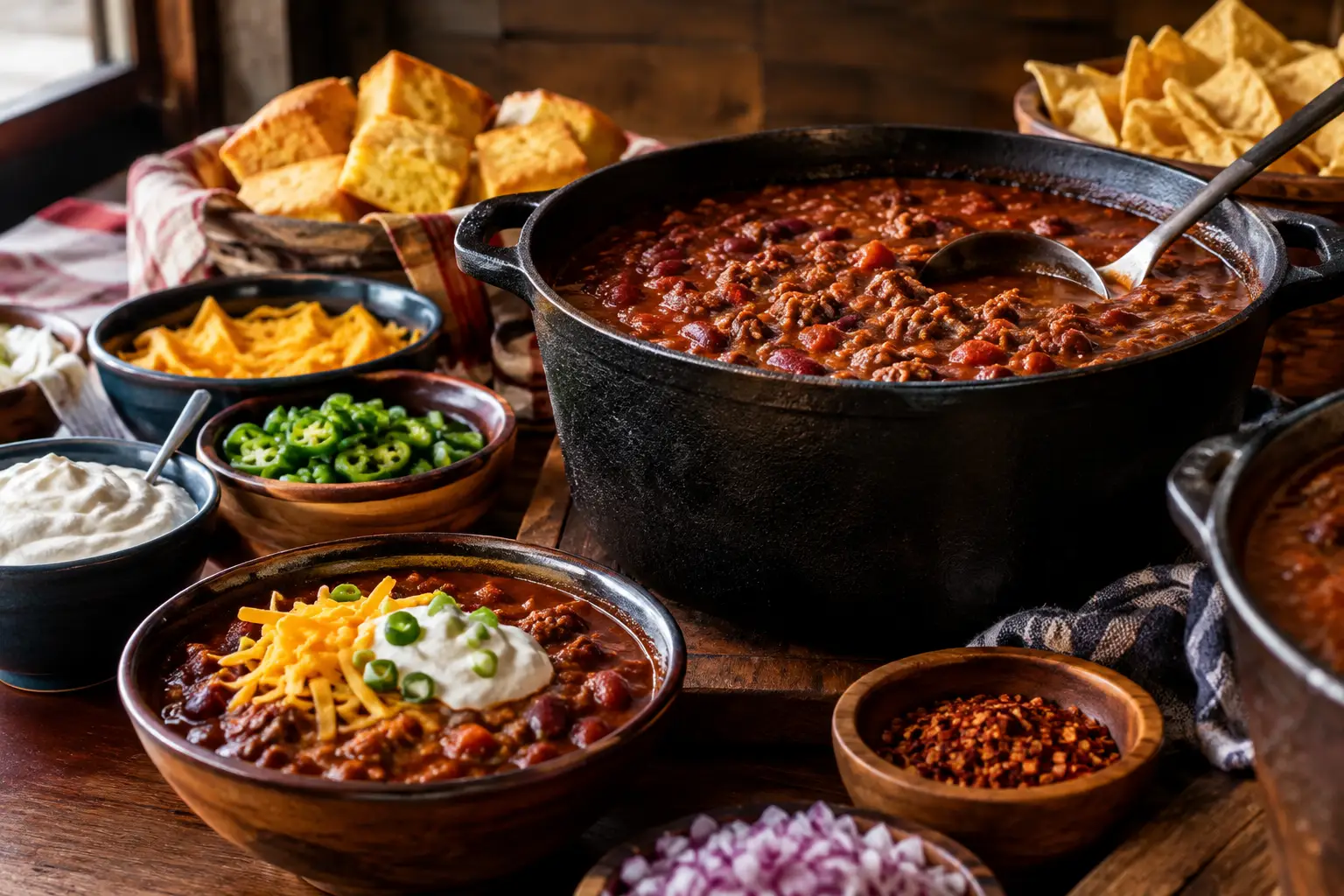
A chili bar is what happens when one big pot of comfort food gets a full supporting cast. Guests build the bowl they actually want: extra cheese, no onions, all the jalapenos, or a mountain of Fritos. If you are figuring out how to serve a chili bar without turning your kitchen into a traffic jam, the secret is not more food. It is better structure.
The best chili bars feel generous without being fussy. They give guests a clear path from bowl to toppings, make room for different heat tolerances, and keep the chili hot long enough for everyone to get a proper second helping. Every bowl tells a story, whether it starts with Texas Red, white chicken chili, Colorado green chili, or a weeknight beef-and-bean classic.
Start With the Right Chili Bar Format
First, decide whether chili is the main event or part of a larger game-day, potluck, or winter gathering spread. For a casual dinner, one substantial chili with a deep topping lineup is plenty. For a larger crowd, or for guests with different dietary needs, serve two chilis: one familiar, meaty option and one vegetarian or chicken-based option.
Two pots create variety, but they also create a real hosting trade-off. More choices mean more labels, more warmers, and more counter space. Do not make three kinds of chili just because it sounds impressive. A great beef chili and a great vegetarian bean chili will beat three rushed, competing recipes every time.
Think in flavor lanes. Pair a rich, smoky red chili with something brighter, such as white chicken chili with lime and green chiles. If your crowd loves heat, keep the base moderately spicy and let hot sauces, pickled jalapenos, and fresh chiles handle the escalation. That approach welcomes cautious eaters without disappointing the fire-breathers.
How to Serve a Chili Bar Without Bottlenecks
Set up the bar in the order guests naturally build a bowl: bowls first, chili second, toppings third, crunchy extras and sauces last. Put spoons, napkins, and drinks at a separate station if possible. Nothing slows a line faster than someone balancing a filled chili bowl while hunting for a spoon.
Use slow cookers, Dutch ovens set over low heat, or electric warmers to hold chili at a safe serving temperature. Keep lids nearby, but do not seal them shut all evening. Guests need to see what is available, and a partially covered pot holds heat while staying easy to serve from.
Place each chili on a trivet or heat-safe board with its own ladle. Label the pot with the style and the heat level: “Beef and Bean - Medium” says more than a mysterious red stew ever could. If a chili contains a major allergen or a common dietary conflict, say so clearly. A small card reading “contains dairy” or “made with turkey” makes guests feel considered, not singled out.
A good bar should move from warm and hearty to cool, fresh, crunchy, and spicy. Arrange toppings in small bowls, refill them as needed, and keep the messy, drippy items toward the end. Sour cream and hot sauce belong after cheese, not before it.
Build a Topping Line With Contrast
Chili does not need twenty toppings. It needs the right contrasts. Rich chili wants cool dairy, sharp acidity, fresh crunch, and something salty enough to make a second bowl feel inevitable.
For a crowd, cover these seven topping categories:
- Creamy: shredded cheddar, Monterey Jack, sour cream, or Greek yogurt
- Fresh: chopped cilantro, scallions, diced red onion, or avocado
- Spicy: sliced jalapenos, pickled jalapenos, crushed red pepper, and hot sauce
- Crunchy: Fritos, tortilla chips, oyster crackers, or cornbread crumbles
- Tangy: lime wedges, pickled onions, pickled peppers, or a vinegar-forward slaw
- Hearty: bacon crumbles, crumbled chorizo, or an extra spoonful of beans
- Regional wildcard: Cincinnati-style cheese and onions, hatch green chiles, or a cinnamon-spiced hot sauce
You do not need every item in every category. Choose two cheeses, two fresh toppings, one or two spicy options, one crunchy option, and a bright acidic element. That is a full bar. Adding more is useful only if it serves a specific crowd, such as a vegetarian group or guests who love regional chili styles.
Skip toppings that wilt, weep, or create a lot of prep for very little payoff. Pre-shredded cheese is completely acceptable for a busy gathering, although freshly shredded cheese melts better. Store-bought pickled jalapenos are also a smart shortcut. Save your energy for the chili itself and for keeping the table stocked.
Plan Portions Before You Start Cooking
For chili as the main meal, plan on about 1 1/2 cups per adult. That is roughly 24 ounces for guests likely to come back for seconds, especially at a football watch party. If you are serving sides like cornbread, baked potatoes, or a big salad, 1 cup per person may be enough.
For 10 guests, make about 12 to 15 cups of chili. For 20 guests, aim for 24 to 30 cups. It sounds like a lot until you remember that chili bars invite sampling, topping-heavy bowls, and repeat visits. Leftovers are not a problem. Chili is one of the rare party foods that often tastes even better the next day.
Toppings are easier to estimate than people think. Buy or prepare around 1/4 cup of shredded cheese per guest, 2 to 3 tablespoons of sour cream per guest, and one large bag of crunchy toppings for every 10 to 12 people. If you know your friends treat cheese as a personality trait, add another bag.
Cornbread is the side with the strongest chili-bar credentials. Make it in a sheet pan, cut it into small squares, and serve it with butter or honey. Baked potatoes are another strong move when you want the bar to feel more like dinner, since chili turns them into a full meal. Rice works well with saucy chili, but it can make the table feel heavier, so it depends on the style you are serving.
Keep the Food Hot and the Fresh Stuff Fresh
Chili is forgiving, but the serving window matters. Cook it ahead if you can, then reheat slowly before guests arrive. Once it is hot, hold it at 140°F or above. Stir occasionally, especially around the edges of a slow cooker, where thick chili can stick and overcook.
Keep sour cream, cheese, avocado, and other chilled toppings out in smaller batches. Refill them from the refrigerator rather than leaving a giant bowl on the counter for hours. This also keeps the bar looking fresh instead of picked-over.
Give every topping its own spoon, tongs, or scoop. It is a small detail that prevents cheese from landing in the onions and keeps a gluten-free crunchy option from getting mixed into everything else. If you have a guest with a serious allergy, set aside a clearly separate portion of chili and toppings before the party begins.
Make the Setup Feel Like a Chili Destination
A chili bar does not need themed signs or matching bowls to feel special. It needs visual cues that make choices easy. Use small cards for chili styles and toppings, and add a heat key: mild, medium, hot, or “proceed with confidence.” That little bit of editorial framing makes guests more curious about what they are eating.
If you are serving two chilis, place the milder one first. Guests can start there, then graduate to the hotter pot if they want. Keep hot sauce at the end of the line so no one accidentally turns the shared chili into a dare.
Bowls matter more than plates. Use wide, sturdy bowls that can hold chili and toppings without spilling over the rim. Put a stack of small plates nearby for cornbread, plus plenty of napkins. Chili is proud of its messiness, but nobody wants it on the sofa.
Your job is not to assemble perfect bowls for everyone. It is to build a spread where a vegetarian, a spice fiend, and a kid who only wants cheese can all walk away happy. Get the chili simmering, set out the good toppings, and let the crowd make the magic.