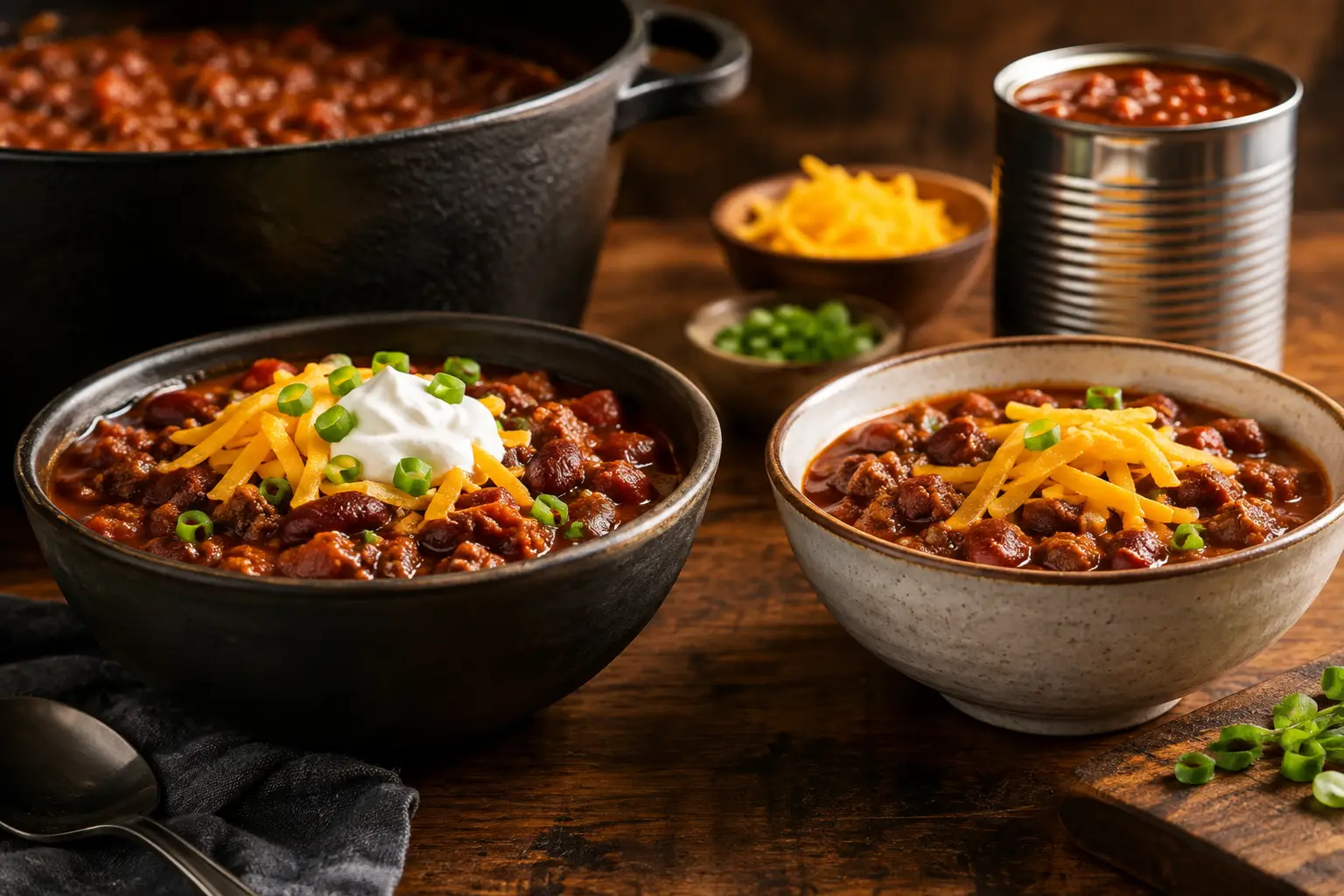
A can of chili can rescue a late lunch in about three minutes. A homemade pot can perfume the whole house, feed a crowd, and spark highly personal opinions about beans, spice, and whether a cinnamon roll belongs anywhere near the table. That is the real homemade chili vs canned debate: not which option is morally superior, but which bowl fits the moment in front of you.
Both have a place in a chili-loving kitchen. The better choice depends on your schedule, budget, heat tolerance, and standards for leftovers. One is a convenience play. The other is a choose-your-own-adventure built around browned meat, toasted spices, slow-simmered sauce, and the particular regional style you are craving.
Homemade Chili vs Canned at a Glance
Canned chili wins on speed. It is shelf-stable, portionable, and ready when the only available cooking energy is opening a pull tab. It also works beautifully as an ingredient: spoon it over fries, layer it into nachos, fold it into a chili mac skillet, or use it to turn a baked potato into dinner.
Homemade chili wins on control. You decide whether the base is chunky or silky, bean-heavy or bean-free, mild enough for kids or hot enough to make your forehead glisten. You can build a Texas-style red with dried chiles and beef, a bright Colorado green chili with pork and roasted Hatch chiles, or a Cincinnati-inspired spiced sauce for coneys and spaghetti.
Flavor is where the gap usually opens widest. Most canned products aim for consistency and broad appeal, which often means a softer texture, a salt-forward profile, and restrained heat. A well-made homemade chili has more layers because you can brown the protein deeply, bloom the spices in fat, balance acidity at the end, and let everything settle together over time.
That does not mean every from-scratch pot automatically wins. Thin, underseasoned chili made from rushed ground beef and a random shaker of chili powder can be less satisfying than a dependable can. The goal is not to glorify effort. It is to get the bowl you actually want.
When Canned Chili Is the Smart Move
Convenience is not cheating. It is a tool, and canned chili is one of the more useful ones in the comfort-food pantry. Keep it around for emergency dinners, game-day toppings, road-trip cabins, and those nights when chopping an onion feels wildly ambitious.
It is also practical for one or two people. Homemade chili is famously generous, which is great if you love leftovers or are feeding a table full of people. But if you want a single chili dog, a quick lunch, or a snack-size plate of cheese fries, opening a can prevents the familiar problem of making six servings when you only needed one.
Canned chili can be especially effective when it is not expected to carry the entire meal alone. Think of it as a base layer. A handful of shredded sharp cheddar, diced onion, sliced jalapenos, hot sauce, crushed crackers, or a squeeze of lime can wake it up fast. The bowl still takes minutes, but it tastes less like it came straight from a warehouse shelf.
Pay attention to labels, particularly if sodium, protein, or ingredient preferences matter to you. Bean chili, no-bean chili, turkey chili, vegetarian chili, and chili with beans all behave differently on the plate. A smooth no-bean canned chili is often built for dogs and burgers. A chunkier bean version is more likely to feel like a stand-alone lunch.
Why Homemade Chili Tastes More Like Yours
The biggest advantage of homemade chili is not just freshness. It is sequence. Great chili develops flavor in stages, and each stage gives you a lever to pull.
Start by browning meat rather than merely cooking it gray. Letting beef, turkey, pork, or plant-based crumbles take on real color creates savory depth that canned chili cannot recreate after the fact. Then cook aromatics until sweet and fragrant. Add spices to the fat for a brief toast, so cumin, chile powder, oregano, paprika, and coriander smell alive instead of dusty.
From there, the chili's identity starts to show. Tomato-forward red chili gets richness from tomatoes, broth, chile paste, and a long simmer. A Texas Red leans into beef and dried chiles, with no beans required. White chicken chili trades tomato tang for creamy beans, chicken, and green chiles. Colorado green chili builds around roasted peppers and pork. Every bowl tells a story, and homemade cooking lets you choose the setting.
The finishing moves matter just as much. A splash of vinegar brightens a heavy pot. A pinch of sugar can round out sharp tomatoes without making the chili sweet. Extra salt may be needed, but add it gradually. If the flavor feels flat, more chili powder is not always the answer. It may need acid, salt, or a little savory depth from Worcestershire sauce, soy sauce, cocoa powder, or a spoonful of masa harina.
Texture is another homemade advantage. You can leave beans intact, mash some against the side of the pot for body, shred meat into the sauce, or keep cubes of beef pleasantly substantial. If you like chili thick enough to hold a spoon upright, you can get there. If you want it looser for chili spaghetti, you can get there too.
The Real Cost Depends on How You Cook
A single can may look cheaper at checkout, and for a one-person meal, it often is. Homemade chili becomes the value champion when you are feeding four or more people, using pantry staples, or turning leftovers into future meals. A big pot can cover dinner, freezer portions, lunches, and a weekend chili baked potato situation.
Still, homemade costs can climb quickly. Beef chuck, specialty dried chiles, premium broth, fresh garnishes, and multiple toppings add up. There is nothing wrong with that if you are cooking for the experience, but it is worth being honest about the trade-off.
For a budget-friendly pot, use ground beef, turkey, or beans as the foundation and build flavor with onions, garlic, canned tomatoes, broth, and spices you already own. Stretch meat with beans if that suits your style. Or make a meatless chili that relies on black beans, pinto beans, lentils, and roasted vegetables. Cheap chili should not taste like compromise.
Time Is More Than the Clock
Canned chili is fast from start to finish. Homemade chili has active time and inactive time, and that distinction matters. You may spend 20 minutes chopping, browning, and stirring, then let the pot do its work for an hour. Slow cooker and pressure cooker recipes shift the equation further, especially on busy days.
A weekend batch is not always about dinner that night. It is about buying back time later. Chili usually improves after a night in the refrigerator, when the spices settle and the sauce thickens. Freeze it in meal-size containers, and future-you gets something much closer to homemade comfort than a last-minute takeout order.
If you are new to cooking chili, do not assume you need an all-day project. A solid weeknight turkey chili or bean chili can land in 45 minutes. Save the dried-chile purist project for a day when you want the house to smell incredible and have time to taste, adjust, and linger over the pot.
How to Upgrade Either Bowl
The most satisfying answer is often a hybrid approach: use the convenient option, then add a little personality. For canned chili, sauté onion and garlic first, stir in the chili, and finish with a few spoonfuls of crushed tomatoes or beans if it needs more body. A small spoonful of chipotle in adobo brings smoke and heat, while a dash of cider vinegar cuts through heaviness.
For homemade chili, build a topping bar instead of trying to make the pot do everything. Sharp cheddar, sour cream, diced white onion, scallions, cilantro, pickled jalapenos, avocado, crushed tortilla chips, and cornbread all change the experience. Put the heat on the table too. One person’s perfect medium is another person’s alarm bell.
This is also where regional curiosity pays off. Make the same basic chili recipe twice and change the finish: serve one batch with Fritos and cheese for a hearty chili pie feel, then turn the next into chili dogs. Or follow a new flavor path entirely. ChiliStation’s curated categories make it easier to choose a bowl by protein, region, heat level, or cooking method instead of scrolling through a hundred nearly identical recipes.
So, Which Should You Choose?
Choose canned chili when you need food now, want a reliable topping, are cooking for one, or simply do not feel like managing a pot. Choose homemade chili when flavor, leftovers, customization, and the pleasure of cooking are part of the plan.
Keep a few cans for the nights that need saving, then keep one go-to homemade recipe in your rotation for the nights that deserve a bigger bowl. The best chili strategy is not picking a side. It is knowing exactly what kind of comfort you need before dinner gets loud.