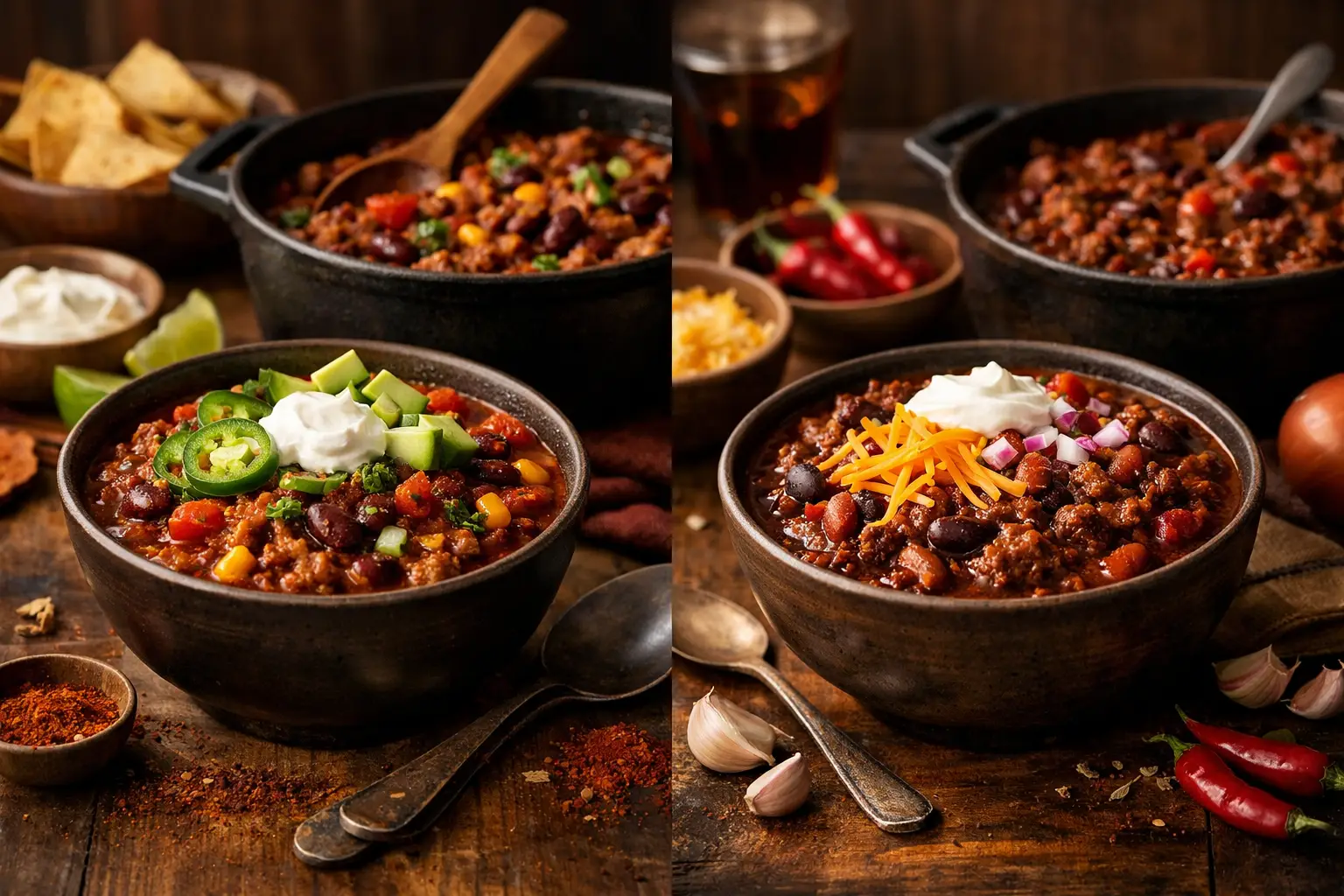
A pot of chili is rarely just a pot of chili. It is a weeknight dinner plan, a game-day flex, a freezer strategy, or a highly personal argument about beans. In the turkey chili vs beef chili matchup, the better choice is not about crowning one protein forever. It is about matching the bowl to the mood, the crowd, and the flavor you want to chase.
Beef brings the classic, deep-red chili profile many cooks picture first: rich meat, toasted spices, and a broth with real swagger. Turkey can be lighter, cleaner, and just as satisfying, especially when it gets enough fat, aromatics, and seasoning support. Every bowl tells a story. These two just tell it in different voices.
Turkey Chili vs Beef Chili: The Flavor Split
Beef chili has built-in bass notes. Ground beef, chuck, brisket, or stew meat release savory fat as they cook, and that fat carries the flavor of chili powder, cumin, dried chiles, garlic, and oregano through the whole pot. The result is round, hearty, and unmistakably comfort-food forward. When someone says they want “real chili,” this is often the flavor profile they mean, whether they are making a bean-heavy home-style pot or a no-beans Texas Red.
Turkey chili starts in a brighter lane. Ground turkey has a milder flavor, so tomatoes, peppers, onions, beans, and spices show up more clearly. That can make a turkey pot taste fresher and less heavy, but it also means bland seasoning has nowhere to hide. A timid turkey chili can taste like tomato sauce with ground meat floating around in it. A well-built one tastes layered, smoky, and warmly spiced without putting you into a post-dinner couch coma.
The key distinction is richness. Beef delivers it naturally. Turkey asks you to build it on purpose.
What makes turkey taste fuller
For a turkey chili with real presence, begin with dark-meat ground turkey or a blend that is not ultra-lean. Brown it properly rather than steaming it in an overcrowded pot. Then give it a serious flavor foundation: sautéed onion, poblano or bell pepper, garlic, tomato paste cooked until darkened, and a generous amount of chili powder.
Smoky ingredients also earn their keep. Chipotle in adobo, smoked paprika, roasted green chiles, or a little cocoa powder can give turkey the depth people expect from beef. A small amount of olive oil is useful, too. This is not a shortcut or a cheat. It is simply flavor engineering.
What makes beef taste balanced
Beef needs balance more than help. Because it is richer, it can become greasy or one-note if the pot is loaded with fatty meat and heavy toppings. Drain excess fat after browning if needed, then bring in acid and brightness with crushed tomatoes, a spoonful of cider vinegar, lime, or a sharp hot sauce added near the end.
Beef also thrives with dried chiles. Ancho brings raisiny warmth, guajillo adds tang and red-fruit character, and chile de árbol supplies direct heat. That combination turns a basic ground-beef chili into something with regional personality.
Texture Is Where the Choice Gets Personal
Ground beef creates distinct, tender crumbles that stay juicy as the chili simmers. Cubed chuck goes even further, turning soft and shreddable over a long cook. It gives a bowl that steakhouse-style heft, especially with a thick chile gravy and minimal beans.
Ground turkey has a finer, softer texture. It can disappear into a thick bean chili in a good way, making the finished pot feel cohesive rather than chunky. That makes it especially friendly for meal prep, chili-stuffed baked potatoes, nachos, and mac-and-chili situations where you want the sauce to cling to every bite.
If texture matters more than calories, choose based on the experience you want. Beef is the move for a big, rugged bowl with chew and richness. Turkey works beautifully when beans, vegetables, and toppings are part of the main event.
Nutrition: Leaner Does Not Automatically Mean Better
Turkey is usually the lighter option, particularly if you use lean ground turkey. It often has less saturated fat than standard ground beef, and it can make a high-protein chili that feels less filling in the heavy sense. For cooks trying to fit chili into a lighter lunch rotation, that is a real advantage.
But labels matter. Ground turkey can include both light and dark meat, and fat levels vary widely. Very lean turkey may be lower in fat, but it can dry out quickly and leave the finished chili tasting thin. A moderately lean blend can be the sweet spot for flavor and texture.
Beef brings more saturated fat in many common grinds, along with iron, zinc, and vitamin B12. Lean ground beef narrows the gap significantly, especially if you drain it after browning. So the nutrition question is less “turkey good, beef bad” and more about the specific meat, portion size, and everything else going into the pot.
A turkey chili piled with cheese, sour cream, cornbread, and tortilla chips can be every bit as indulgent as a beef version. A lean beef chili packed with beans, tomatoes, and vegetables can be a smart, satisfying dinner. Chili is a whole-bowl food. Judge the whole bowl.
Cost, Convenience, and Crowd Appeal
Prices move around by region and season, but ground turkey is often competitively priced with ground beef and occasionally cheaper. It is also usually easy to find in one-pound packages, which makes scaling a recipe simple. Turkey’s mild flavor can stretch well with two kinds of beans, corn, zucchini, sweet potato, or extra peppers without making the pot feel skimpy.
Ground beef remains the crowd-pleasing default for many households. It is familiar, forgiving, and easier to sell to guests who hear “turkey chili” and assume they are being handed a compromise. If you are feeding a game-day group and want zero debate at the table, beef is the safer bet.
That said, turkey chili wins plenty of fans when you frame it around flavor instead of restraint. Call out the roasted poblanos, black beans, chipotle, or white-bean-and-green-chile base. Nobody gets excited about “healthy chili.” They get excited about a bowl that smells incredible.
Cooking Style Changes the Answer
For a quick 30- to 45-minute weeknight chili, either ground turkey or ground beef works. Beef is more forgiving if you need to rush the browning stage. Turkey benefits from a few extra minutes of patient browning and a stronger spice bloom, but it is still firmly weeknight-friendly.
For a slow-simmered, meat-forward red chili, beef has the edge. Chuck, brisket, or coarse-ground beef reward time in a way turkey cannot quite match. The meat becomes part of the sauce, and the rendered richness gives the pot its signature body.
Turkey shines in styles that celebrate ingredients beyond the meat. Think white turkey chili with cannellini beans and green chiles, black bean turkey chili with corn and chipotle, or a smoky red turkey chili with sweet potato. These are not beef chili stand-ins. They are their own excellent category.
How to Choose the Right Pot Tonight
Choose beef chili when you want classic depth, a richer texture, or a long-simmered centerpiece for a cold night. It is the right call for a Texas-inspired red, a beef-and-bean cookout pot, or any meal where the chili itself is the headline.
Choose turkey chili when you want a lighter-feeling dinner, a protein that lets vegetables and chiles speak up, or a pot built for lunches all week. It is also a smart choice for spice lovers, because a clean turkey base makes smoky and fiery chile flavors pop.
If your household is split, do not force a winner. Make a boldly seasoned turkey chili and set out beef-style toppings: shredded cheddar, diced onion, pickled jalapeños, Fritos, sour cream, and hot sauce. Or make a beef chili with enough beans and vegetables to keep the bowl balanced. ChiliStation exists for exactly this kind of delicious overthinking.
The best test is simple: cook the version that sounds right for tonight, then save a portion for tomorrow. Chili has a habit of getting better after a night in the fridge, and your favorite bowl may reveal itself on the second reheated spoonful.