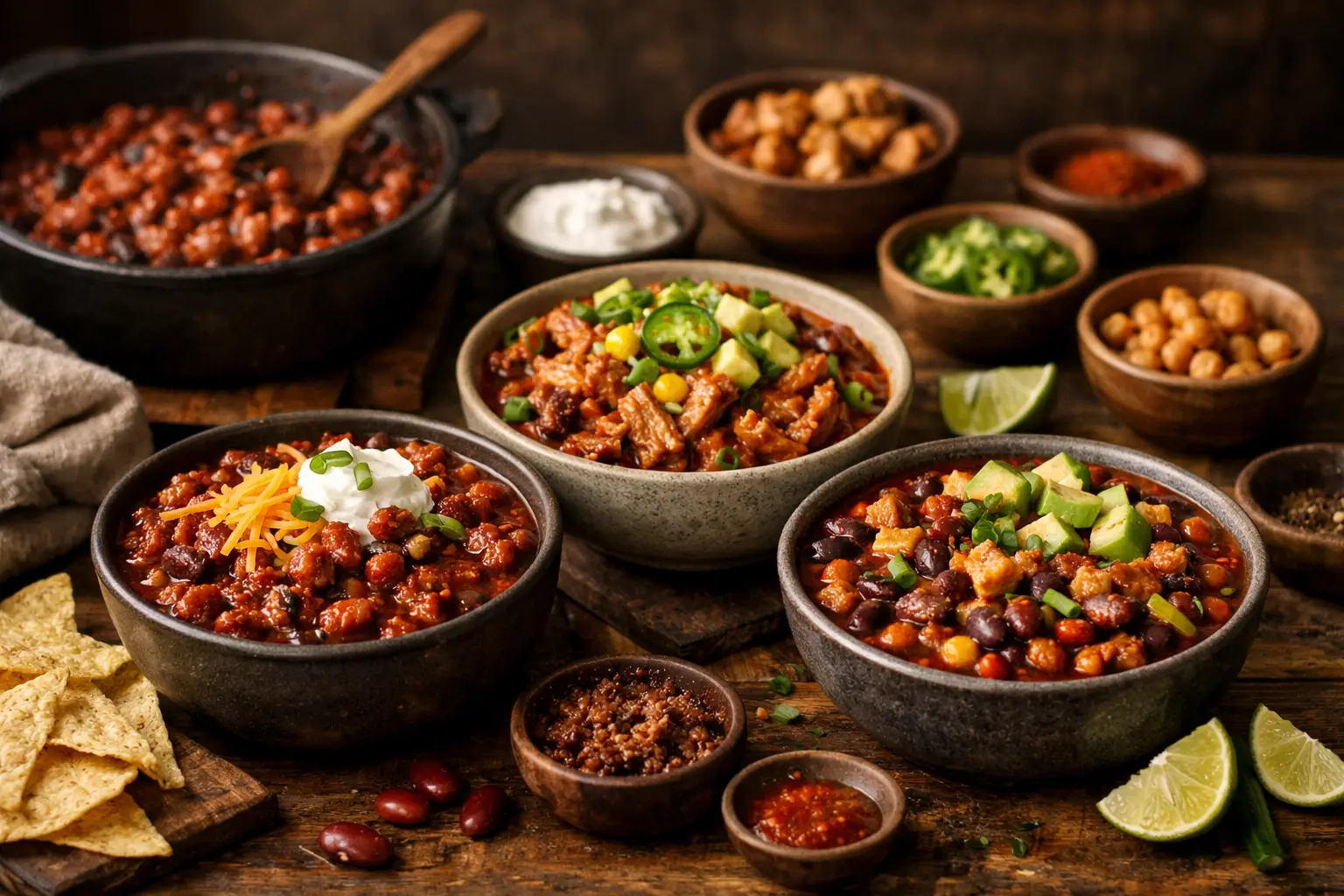
The biggest decision in chili happens before the first onion hits the pot: what protein is carrying the bowl? This chili protein guide is built for that moment. The right choice shapes everything from the richness of the broth to the kind of spice blend that makes sense, whether you are craving a dark, beefy Texas-style red or a bright green chili loaded with chicken.
Protein is not just an ingredient checkbox. It is the backbone of texture, fat, cooking time, and regional personality. Every bowl tells a story, and the meat, beans, or plant-based base decides what kind of story it can tell.
The Chili Protein Guide to Flavor and Texture
Start with the eating experience you want. Rich and spoon-coating calls for a fattier protein. Clean, lighter, and weeknight-friendly points toward poultry or beans. If you want chunks that hold their own after a long simmer, choose cubed meat over ground meat. If you want every bite to feel integrated into the sauce, ground protein is the move.
Here is the fast version for choosing a bowl base:
- Ground beef brings classic chili-shop richness, browned flavor, and a texture that disappears beautifully into a thick red sauce.
- Beef chuck creates tender, substantial chunks for long-cooked Texas red, steak chili, and big weekend pots.
- Ground turkey keeps a red chili lighter while still giving spices, tomatoes, and beans something hearty to cling to.
- Chicken thighs stay juicy through simmering and shine with tomatillos, roasted green chiles, cumin, and lime.
- Pork shoulder brings savory depth and a little natural sweetness, especially in green chile and slow-cooker recipes.
- Beans and lentils add body, fiber, and satisfying chew without requiring meat to make the bowl feel complete.
- Plant-based crumbles offer a familiar ground-meat texture, but need assertive seasoning and careful timing to avoid going soft.
Beef: The big, bold standard
Beef is the natural center of gravity for many red chilis, but not all beef works the same way. Ground beef is fast, familiar, and ideal for a thick, scoopable bowl. An 80/20 blend gives you enough fat to carry chile powder, cumin, garlic, and smoky dried peppers without turning the finished chili greasy. Brown it hard, then drain only excess fat if needed. Those browned bits are flavor, not clutter.
Chuck roast takes more patience but pays it back with real presence. Cut it into bite-size cubes, sear it in batches, and let it simmer until a fork slides through with little resistance. This is the protein for cooks who want a chili that feels like an event. It also makes sense when beans are not invited, as in many Texas red traditions, because the meat has to do more of the structural work.
Short rib, brisket, and leftover smoked beef can be spectacular, though they are less predictable choices. Their trade-off is richness. Use them when you want a special-occasion pot, and keep the rest of the ingredient list focused so the beef does not get buried.
Turkey and chicken: Lighter does not mean less chili
Ground turkey is often treated like a substitute, which sells it short. It has a mild flavor that welcomes smoky chipotle, toasted cumin, cocoa, roasted peppers, and a generous hit of garlic. Dark ground turkey usually gives a more satisfying result than ultra-lean breast meat, especially in a long simmer. If your turkey chili tastes thin, the fix is often not more salt. It may need a better sear, a spoonful of tomato paste, or a little fat from olive oil or rendered bacon.
Chicken is at its best in chilis that lean green, tangy, or creamy. Boneless thighs are forgiving and flavorful; breasts work when you watch the timing and shred them as soon as they are cooked. White chicken chili can be cozy and lush with white beans, green chiles, stock, and a finishing swirl of cream cheese or sour cream. A tomatillo-forward chicken chili is sharper and brighter. Same protein, entirely different lane.
Pork: Built for slow heat and green chile
Pork shoulder has the fat and connective tissue to thrive in a slow cooker, Dutch oven, or pressure cooker. As it cooks, it becomes shreddable, succulent, and deeply savory. That makes it a powerhouse with Hatch-style green chiles, poblano peppers, tomatillos, and oregano.
Ground pork is an underrated shortcut for red chili, too. It brings more richness than turkey and a slightly sweeter edge than beef. It pairs particularly well with ancho, guajillo, chipotle, and black beans. Just remember that pork can take over a delicate spice profile, so use a lighter hand with sugar and heavy sweet sauces.
Beans, Lentils, and Meatless Chili Proteins
Beans are not merely filler. They are a protein choice with their own flavor and texture. Kidney beans are sturdy and classic in tomato-based chili. Pinto beans turn creamy and earthy. Black beans have a firmer bite and a flavor that works especially well with corn, chipotle, and southwest-style bowls. White beans belong naturally beside chicken, turkey, pork, or green chiles.
Lentils make an excellent meatless base when you want a thick, hearty chili without relying on processed substitutes. Brown or green lentils hold their shape better than red lentils, which tend to melt into the sauce. For a deeper, more savory vegetarian bowl, layer mushrooms, walnuts, soy sauce, or a small amount of cocoa with the lentils. The goal is not to imitate beef perfectly. It is to build a chili that tastes intentional.
Plant-based crumbles are convenient, especially for a quick weeknight pot, but they are usually already seasoned and can soften quickly. Add them later than ground beef and taste before salting. Their best role is in a boldly spiced chili where peppers, aromatics, and beans are doing plenty of the heavy lifting.
Match Your Protein to the Chili Style
Regional style can narrow your choice fast. Texas red usually favors beef chunks or ground beef, a rich chile paste, and no beans. Cincinnati-style chili uses finely ground beef and a loose, pourable texture designed for spaghetti, hot dogs, and towering toppings. Colorado green chili often goes with pork, though chicken is a strong lighter option. White chili is a natural home for chicken, turkey, or white beans.
For a game-day crowd, ground beef or a beef-and-bean blend is hard to beat because it is familiar, affordable, and easy to stretch. For meal prep, turkey, chicken, lentils, and beans reheat especially well without becoming overly rich. For a chilly Sunday project, chuck or pork shoulder earns its long cooking time with texture you cannot rush.
At ChiliStation, filtering by protein is a smart first step, but use cooking method and heat level right alongside it. A spicy beef chili made in 35 minutes has a completely different personality from a low-and-slow beef chuck pot, even when both begin with the same cut.
Cook the Protein for the Bowl You Want
Browning is your flavor advantage. Ground meat needs room in the pan or it steams instead of sears. Cook it in batches if necessary, and let it develop dark edges before breaking it into smaller pieces. Cubed beef and pork need the same respect: dry the meat first, avoid crowding, and sear in batches.
Do not overcook poultry before it enters the chili. Chicken thighs can simmer longer than breasts, but both benefit from being added at the right point rather than punished from the beginning. For shredded chicken, poach or gently simmer it until just cooked, shred it, then return it to the pot near the end so it absorbs flavor without becoming stringy.
Beans need their own timing, too. Canned beans should go in late enough to keep their shape. Dried beans should be cooked separately or given enough time and liquid to become tender before acidic tomatoes arrive. Acid can slow bean softening, which is one reason a pot that tastes great can still have stubborn, chalky beans.
The best protein is the one that fits your time, budget, and craving. Choose beef when you want deep red-bowl drama, pork or chicken for green chile energy, turkey for a lighter classic, and beans or lentils when you want a hearty pot that lets the chiles lead. Then trust your taste buds, make it yours, and give that next bowl a story worth sharing.