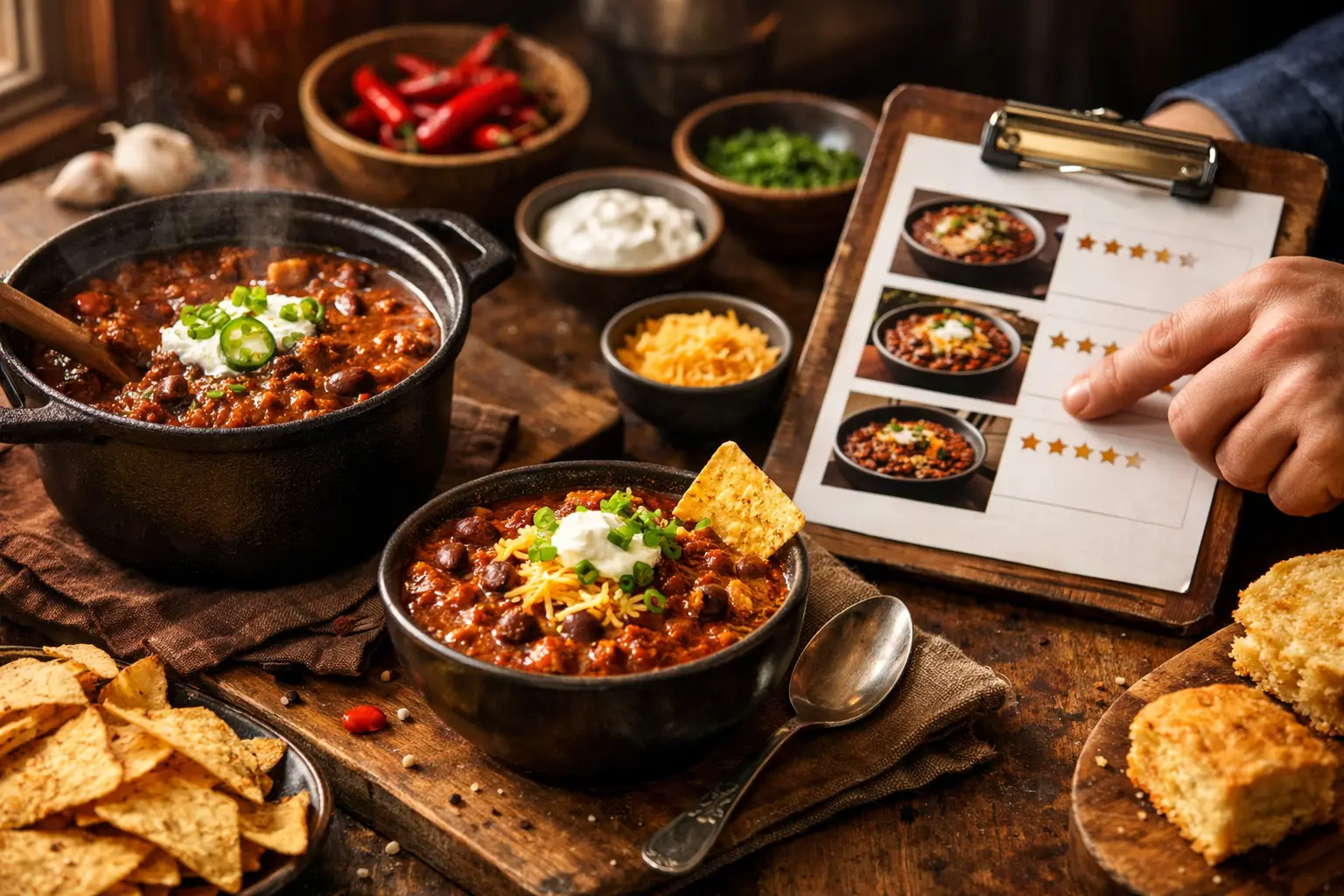
A five-star chili can still be the wrong chili for your night. Maybe the reviewers loved its slow-simmered brisket and smoky chipotle depth, but you need a weeknight turkey chili that lands before the game starts. That is the real skill behind reading chili recipe ratings: spotting what people are actually praising, then deciding whether it matches the bowl you want to make.
Ratings are useful signals, not universal verdicts. Chili is too regional, personal, and occasion-driven for one number to settle the matter. A Texas Red loyalist may dock points for beans. A family feeding kids may call a fiery habanero recipe “too hot,” while a heat chaser sees that same comment as an invitation. Every bowl tells a story, and the rating tells only part of it.
Why Chili Recipe Ratings Need Context
A high rating usually means a recipe delivered on its own promise. It does not necessarily mean it is the best choice for every cook. Before treating a 4.9 as gospel, look at the recipe’s identity: Is it a meaty, no-bean red? A sweet-and-savory Cincinnati-style chili meant for spaghetti? A pork-forward Colorado green chili with roasted chiles? These dishes share a name, but they are not chasing the same finish line.
The number of ratings matters, too. A 5.0 from eight cooks is encouraging, especially if the comments are detailed. A 4.7 from 600 cooks has survived a much wider range of kitchens, ingredient substitutions, spice tolerances, and cooking skills. Neither is automatically better. The smaller sample may point to a hidden gem; the larger one is often the safer bet when you are cooking for company.
Think of the average rating as a headline. The individual reviews are the reporting underneath it.
Look for the reviewer’s goal
The most useful reviews reveal context. “My picky kids ate it” says something about broad appeal. “Added two serranos and doubled the cayenne” says something about the recipe’s original heat level. “Better the next day” tells you it is a strong make-ahead candidate, while “needed an extra hour for tender beef” can save your schedule.
Reviews that name what changed are especially valuable. If several cooks say they reduced salt, increased broth, or added a touch of acid at the end, you are seeing a pattern rather than one person’s preference. That pattern can tell you where a recipe is flexible and where it may need a little kitchen judgment.
Read Beyond the Star Average
The best chili reviews describe sensory results. Search for comments about richness, thickness, smoke, sweetness, bean texture, chile flavor, and the way the heat arrives. A chili can be spicy without tasting flat, and mild without tasting timid. Those distinctions matter more than a simple “delicious.”
Pay attention to repeated language. When multiple reviewers call a chili “thick,” ask whether that is exactly what you want. Thick can mean a hearty spoon-standing pot, perfect for a chilly Sunday and cornbread. It can also mean a sauce that needs extra stock if you are serving it over rice, pasta, or baked potatoes.
Likewise, “smoky” may come from chipotle, smoked paprika, bacon, charred vegetables, or all four. If smoke is the star, great. If you are craving clean chile flavor from ancho, guajillo, Hatch, or poblano, those comments should influence your pick.
Separate heat from flavor
A recipe rating can get dragged down because it was too hot for some cooks, even when the flavor is excellent. That is why heat-related comments deserve a second look. Find out whether the heat comes from a single easy-to-adjust ingredient or from a layered blend of fresh chiles, dried pods, hot sauce, and pepper flakes.
A recipe with optional jalapeños is usually simple to tame. A chili built around several tablespoons of chile powder may still be manageable, but its depth can change if you remove too much. The smart move is not always to cut heat blindly. Often, you can reduce a fresh hot pepper, keep the dried chiles that supply fruitiness and color, then adjust after simmering.
For a crowd, ratings that call a recipe “medium” are not enough. Medium is wildly subjective. Comments such as “my eight-year-old liked it” or “we needed sour cream” offer a more practical read on real-world heat.
Watch for texture clues
Texture is where a lot of otherwise excellent chili recipes divide a room. Some cooks want ground beef and tender beans in a brothy, scoopable bowl. Others want shredded beef, a glossy gravy, or beans that hold their shape. A reviewer calling a chili “chunky” may be thrilled. Someone expecting a smoother, diner-style chili may rate it lower for the same reason.
Look for notes on meat tenderness, bean softness, and whether the final pot needed thickening. If a recipe earns glowing marks but multiple reviewers mention watery results, that may be a climate, pot-width, or lid-on-versus-lid-off issue. It is not necessarily a deal-breaker. It simply means you should plan for a final reduction or keep a slurry nearby.
Compare Ratings to Your Cooking Reality
The highest-rated recipe is rarely the best choice if it does not fit your ingredients, equipment, or timeline. A six-hour chuck chili can be worth every minute, but it should not compete against a 35-minute pantry chili on a Tuesday night. Rate the fit, not just the recipe.
Start with the practical filters that shape dinner: protein, heat level, cooking method, and time. Then use ratings to break the tie. If two turkey chili recipes look good, the comments may reveal that one tastes bright and tomato-forward while the other leans cumin-heavy and thick. If you own a slow cooker, reviews can tell you whether a recipe stays rich after a long cook or turns beans mushy.
ChiliStation’s organized categories make this comparison more useful because they put like against like. A Colorado green chili should be judged beside other green, pork-forward chile stews, not against a classic beef-and-bean pot with a totally different mission.
Consider ingredient friction
Ratings can hide the fact that a recipe asks for a specialty chile, a rare cut of meat, or a long list of spices. For some cooks, that is the fun. For others, it becomes the reason a five-star recipe never gets made.
Read reviews for substitution reports, but use them carefully. Swapping ground turkey for beef is one thing. Replacing dried ancho and guajillo with generic chili powder can push a recipe into a different flavor zone. If several reviewers made the same substitution successfully, that is meaningful. If one person rewrote half the ingredient list and loved it, treat their rating as a review of their own version.
What Low Ratings Can Teach You
Do not skip the one-, two-, and three-star reviews. They often surface useful problems: unclear instructions, timing that runs short, a seasoning balance that felt off, or an ingredient measurement that confused multiple cooks. A few low ratings among many high ones are normal. The key is whether the complaints repeat.
Be skeptical of criticism rooted in a mismatch of expectations. A one-star review saying “This has beans, so it is not real Texas chili” may be passionate, but it does not tell you whether a bean chili is good. A low score from someone who hates cumin is similarly limited. Regional pride belongs at the table, but it needs context in the comments.
The most helpful lower-rated reviews are specific and fair: “The flavor was great, but the stated simmer time left the chuck chewy,” or “Too sweet for us, though the texture was excellent.” Those details let you decide whether the issue is a deal-breaker, an easy adjustment, or simply not your palate.
Build Your Own Rating Instinct
After a few batches, you will read chili ratings faster because you will know your own nonnegotiables. Maybe you want beans every time, a clear medium heat, and leftovers that improve overnight. Maybe you want no tomatoes, a thick red sauce, and enough chile character to make the kitchen smell like a proper cookoff.
When you rate a recipe yourself, give future cooks the details you wish you had found. Mention the protein you used, any changes you made, the true heat level, and whether it fed the number of people promised. Say whether it was better fresh or on day two. A simple star rating helps, but a sharp comment helps someone choose dinner.
The next time two chili recipes are tied on the screen, do not let a decimal point make the call. Pick the bowl whose reviews sound like your kind of night, set the pot on the stove, and leave a note for the cook coming after you.