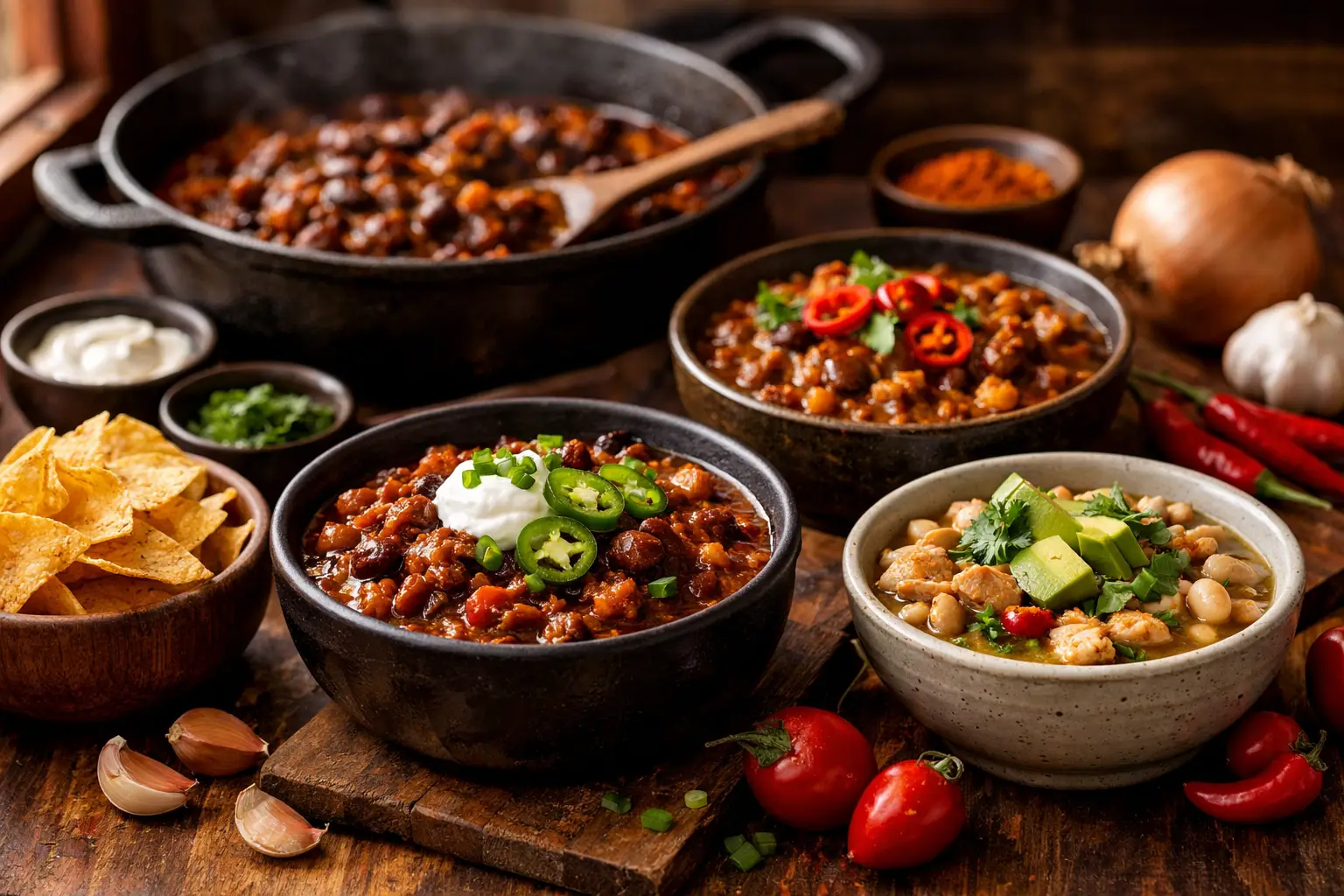
A tomato-free chili is not a compromise bowl. It is a different branch of the chili family tree: darker, creamier, greener, smokier, or more chile-forward depending on where you take it. The best chili recipes without tomatoes prove that a rich pot does not need red sauce to feel complete. It needs a clear flavor plan, enough body to carry the spices, and a finish that makes you reach for one more spoonful.
For cooks avoiding tomatoes because of an allergy, acid sensitivity, or a simple dislike of that familiar tang, the options are far broader than bland white chili. Think velvety beans, roasted green chiles, toasted dried peppers, squash, mushrooms, stock, and slow-cooked meat. Every bowl tells a story, and none of these stories need canned tomatoes.
Why chili recipes without tomatoes taste so different
Tomatoes usually bring three things to chili: acidity, sweetness, and a thick, saucy texture. Take them out, and the other ingredients become much easier to taste. Beef can lean deeply savory. Dried chiles can show off their raisiny, earthy side. Green chiles can stay bright and vegetal instead of getting buried in red sauce.
That does mean you have to replace what tomatoes were doing. A squeeze of lime, a splash of cider vinegar, or a spoonful of pickled jalapeno brine can sharpen a heavy pot at the end. For body, use mashed beans, pureed roasted peppers, cornmeal, pumpkin, or a long reduction with the lid partly off. The right choice depends on the style. A Texas red wants chile puree and beefy depth; a white chicken chili wants beans and a creamy finish.
One practical heads-up: check your spice blends. Some taco seasonings and chili powders include tomato powder, and packaged broths occasionally hide surprising ingredients. Whole dried chiles, ground cumin, oregano, garlic, and individual spices give you more control.
7 chili recipes without tomatoes to put on repeat
1. Texas red chile con carne
This is the no-bean, no-tomato heavyweight: cubes of beef chuck simmered until spoon-tender in a brick-red sauce made from dried chiles. Use a mix of ancho for mellow fruitiness, guajillo for bright red chile flavor, and a small amount of chipotle or chile de arbol if you want heat with teeth. Toast the chiles briefly, soak them in hot stock, then blend them smooth with garlic and onion.
Sear the beef hard before it braises, and give the pot time. Two and a half to three hours turns the chile puree, rendered beef fat, cumin, and stock into something glossy and serious. Skip the urge to add tomato paste for color. The chiles already own the color department.
2. Creamy white chicken chili
White chicken chili earns its fan club with a gentler, cozier profile, but it should never taste flat. Start with onion, garlic, cumin, coriander, and canned or roasted Hatch-style green chiles. Add chicken thighs or breasts, white beans, and chicken stock, then simmer until the chicken pulls apart easily.
For a thick, satisfying bowl, blend a cup or two of the beans with broth and stir that puree back in. Finish with Monterey Jack, cream cheese, or a little sour cream, depending on how rich you want it. Lime juice, cilantro, and crushed tortilla chips bring the final contrast. It is a weeknight-friendly chili, especially when a rotisserie chicken is doing the heavy lifting.
3. Colorado-style green pork chili
Green chili is built around roasted peppers, and that roasted flavor is the whole point. Pork shoulder is the classic move because it stays juicy through a long simmer, while tomatillos are often used for tang. If you want a truly tomato-free and tomatillo-free pot, use more roasted poblano and Anaheim peppers, plus a little lime at the finish.
Cook diced pork with onion and garlic, add peeled chopped green chiles and stock, then let it simmer until the pork is tender enough to break with a spoon. A small spoonful of flour cooked into the onions can provide a lightly thickened, old-school texture. Serve it with warm tortillas, rice, or a pile of crisp potato chunks. Green chili is messy, fragrant, and absolutely worth it.
4. Black bean, sweet potato, and chipotle chili
For a meatless pot with real staying power, sweet potatoes and black beans are a power pairing. The potatoes add sweetness and body, while the beans bring creaminess and earthy depth. Chipotle powder or minced chipotles in adobo add smoke, but use them carefully if tomato is a strict ingredient concern, since adobo sauces can contain tomato.
A safer route is smoked paprika plus chipotle powder. Bloom the spices in oil with onion and garlic, then add cubed sweet potato, black beans, vegetable stock, and corn. Once the potatoes soften, mash a few against the side of the pot. The result is thick without being heavy. Top it with avocado, pepitas, and a bright squeeze of lime.
5. Turkey, pumpkin, and white bean chili
Pumpkin belongs in chili when you want a silky texture and gentle autumn sweetness, not a pie-spice situation. Ground turkey keeps this version light enough for a big weeknight batch, while white beans make it feel like a proper meal. Use plain canned pumpkin puree, not pumpkin pie filling, and season boldly with cumin, smoked paprika, oregano, garlic, and plenty of black pepper.
The trade-off is that pumpkin can mute spice as it cooks. Taste near the end, then adjust with salt, chile flakes, and acid. A splash of apple cider vinegar works particularly well here. This is a smart choice for meal prep because the flavor settles in beautifully overnight.
6. Bison and mushroom stout chili
Bison has a clean, slightly sweet beef flavor, and mushrooms make it feel fuller without turning the bowl into a cream sauce. Brown the mushrooms until they lose their moisture and develop real color, then add the bison. A dark stout, beef stock, ancho chile powder, and a little cocoa powder create depth without a single tomato in sight.
This is not the chili to rush. Let it simmer gently so the stout loses its sharp edge and the mushrooms melt into the sauce. If the pot tastes too bitter, add a small amount of brown sugar or maple syrup, then balance it with vinegar. The goal is dark and savory, not dessert-like.
7. Red lentil and roasted cauliflower chili
Red lentils cook down fast, which makes them excellent for a thick, plant-forward chili on a tight schedule. Roasted cauliflower adds caramelized edges and a slightly nutty flavor that makes the bowl feel more substantial than lentils alone. Use vegetable stock, roasted garlic, cumin, smoked paprika, and either ancho powder or mild New Mexico chile powder.
Add the roasted cauliflower near the end so it keeps some texture. If you prefer a smoother chili, stir it in earlier and let it soften into the lentils. A dollop of Greek yogurt or a cashew crema adds richness, while sliced radishes bring crunch. This is the kind of recipe that converts the person at the table who claims chili needs meat.
Build body, brightness, and heat on purpose
A good tomato-free chili needs balance, not a random pile of substitutes. Start with the body. Beans are the easiest answer, especially when you mash or blend a portion. For bean-free styles, collagen-rich cuts of meat, reduced stock, dried chile puree, and a modest flour or cornmeal thickener can do the job.
Then add brightness late. Citrus is clean and lively, but vinegar brings more edge, and pickled pepper brine adds acid plus salt. Add small amounts, stir, taste, and repeat. Acid cannot fix an underseasoned pot, so make sure the salt level is right first.
Finally, separate heat from chile flavor. Ancho, guajillo, and New Mexico chiles can build huge flavor with moderate heat. Cayenne, chile de arbol, serrano, and habanero are your heat tools. Treat them as adjustable controls, not mandatory ingredients. A chili that is too hot to taste is not winning any bowl contest at your own table.
Choose the bowl that fits the moment
If you want the fastest route to dinner, make white chicken chili or red lentil chili. If the weekend calls for a pot that perfumes the whole house, Texas red or green pork chili is the move. For a crowd with mixed preferences, black bean sweet potato chili is easy to customize with toppings, while turkey pumpkin chili hits the sweet spot between familiar and unexpected.
The real fun is that tomato-free chili makes room for a different kind of regional and personal expression. Keep the toppings bold, keep the seasoning honest, and let the chiles lead. Your next favorite bowl may be the one that never needed tomatoes in the first place.