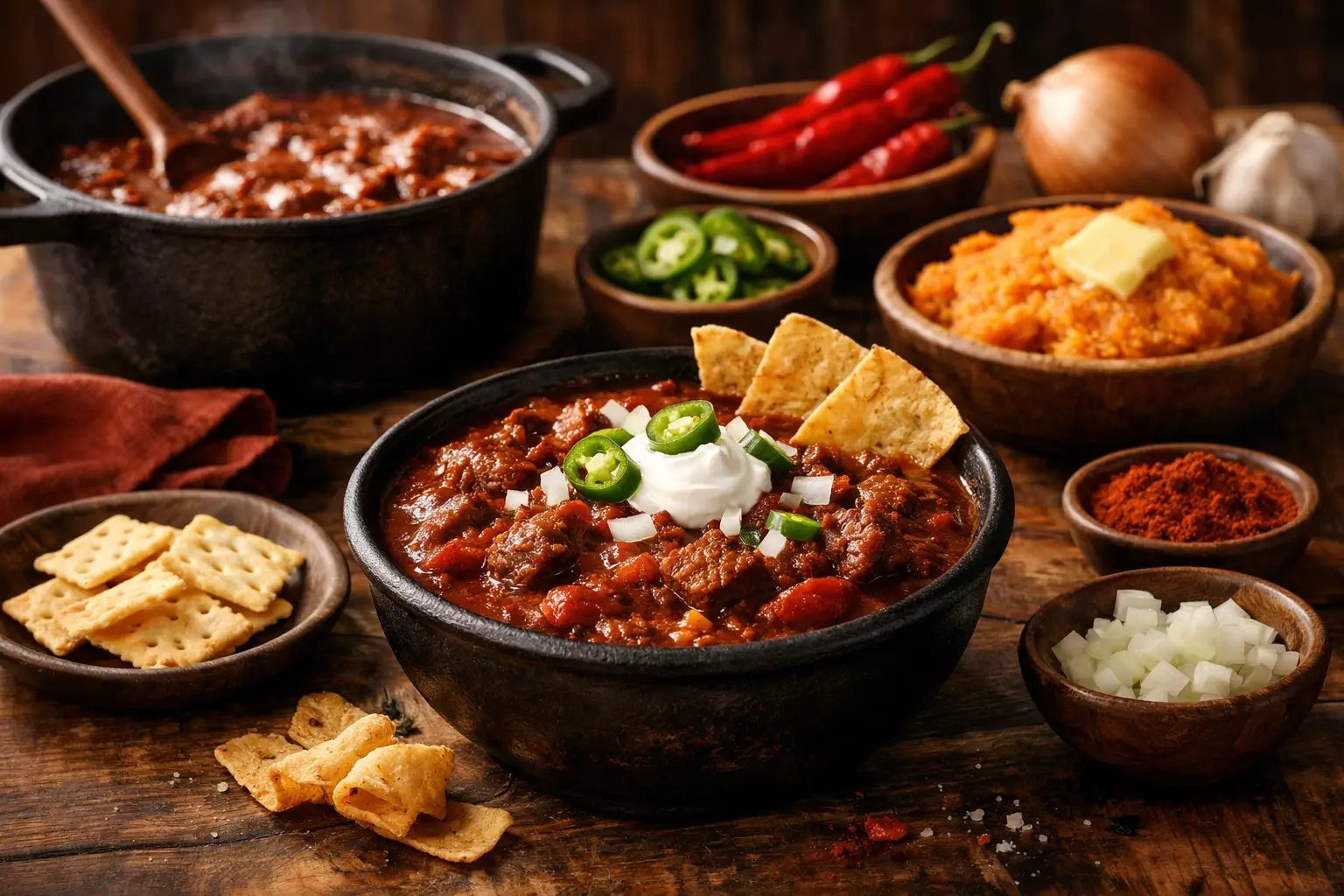
A serious pot of Texas chili does not hide behind a pantry full of extras. It puts beef, dried chiles, and a low, slow simmer in the spotlight, then asks one simple question: does every bite taste bigger than the last? This is chili with a point of view - dark red, deeply savory, a little smoky, and built for people who want their comfort food to bring some swagger.
Texas chili, often called Texas Red or a bowl of red, is one of America’s most recognizable regional styles. It is also one of the most debated. Ask ten cooks whether tomatoes belong, whether ground beef is acceptable, or which chile makes the best base, and you may get ten confident answers. The defining rule is clearer: traditional Texas chili contains no beans.
That does not make it a stripped-down dish. It makes every ingredient earn its place.
What Defines Texas Chili?
At its core, Texas chili is a chile-and-beef stew. Cubes of chuck roast are the classic choice because they become tender and rich over a long cook, while still giving the finished bowl real texture. Ground beef can make a faster, weeknight-friendly version, but it delivers a different experience: less stew-like, more spoonable, and usually less dramatic.
The red color and much of the flavor come from dried chiles, not a heavy hit of bottled hot sauce. Cooks commonly reach for ancho, guajillo, New Mexico, pasilla, and chile de árbol. Each one brings a different lane of flavor. Ancho adds raisiny depth. Guajillo tastes bright and tangy, with a berry-like edge. New Mexico chiles bring clean earthiness, while árbol chiles turn up the heat without adding much bulk.
That chile blend is the heart of the pot. Toasted briefly, soaked until supple, then blended into a smooth paste, dried chiles create the kind of layered flavor that plain chili powder cannot fully duplicate. Chili powder is useful, especially when dinner needs to happen tonight, but whole dried chiles make the bowl taste more intentional.
A Texas-style pot often includes garlic, onion, cumin, oregano, beef stock, and salt. Some recipes use tomatoes or tomato paste for acidity and body; others leave them out. A little masa harina can thicken the broth late in cooking and add a gentle corn aroma. What it should not become is a vegetable-heavy soup. Texas Red is beef forward, chile forward, and proud of it.
The Chile Blend Is Where the Personality Lives
If you want a bowl that tastes flat-out memorable, do not treat every dried chile as interchangeable. Build your blend around a base chile, then use other varieties for depth or heat.
For a mellow, crowd-pleasing Texas chili, lean on ancho and guajillo. That combination is warm, reddish, and rich without being punishingly spicy. Add one or two New Mexico chiles if you want a more classic Southwest profile. For a bolder pot, add chipotle for smoke or árbol for a sharper burn. The smart move is restraint: it is easier to raise heat than to rescue a chili that bulldozes every other flavor.
Dried chiles should smell fragrant and feel pliable, not dusty or brittle. Remove stems and most seeds, toast them in a dry skillet for just a few seconds per side, and watch closely. Burned chiles go bitter fast. Cover them with hot water, let them soften for 15 to 20 minutes, then blend with some soaking liquid, garlic, and onion until very smooth.
If your blender struggles with skins, strain the paste before adding it to the pot. It is one extra step, but it creates that glossy, velvety sauce that makes a great bowl of red feel restaurant-worthy.
Chili Powder vs. Whole Chiles
There is no shame in a chili powder recipe. A well-seasoned pot made with quality powder can be deeply satisfying, particularly when you are feeding a crowd on a Tuesday. The trade-off is complexity. Whole chiles give you control over heat, sweetness, smoke, and color. Chili powder gives speed and consistency.
A useful middle path is to use whole chiles for the sauce, then add a spoonful of chili powder later if the pot needs a familiar, concentrated boost. Taste before you season aggressively. Chiles deepen as they simmer, and salt changes what you can perceive.
How to Build a Better Bowl of Texas Red
Start by browning the beef in batches. Crowding the pot steams the meat, and steamed meat will not build the dark, savory foundation that Texas chili needs. Let the beef develop a real crust, then set it aside while you cook the aromatics.
Once the onions are soft and the garlic is fragrant, add your chile paste and cook it for a minute or two. This brief fry wakes up the paste and rounds out any raw edge. Return the beef, add stock, season with cumin and oregano, and bring everything to a gentle simmer.
Then leave room for time to work. Chuck generally needs two to three hours at a low simmer to become fork-tender. The liquid should bubble lazily, not rage. Stir now and then, scrape the bottom of the pot, and add a splash of stock or water if the chili tightens too quickly.
The final adjustment is where home cooks can separate a good batch from a great one. If the flavor feels heavy, add a small splash of cider vinegar or lime juice. If it tastes thin, simmer uncovered. If the sauce needs body, whisk masa harina with warm water and stir it in during the last 15 minutes. If it lacks depth, it may need salt rather than another spice.
Texas chili is often better after a rest. Make it a day ahead, cool it properly, and reheat gently the next day. The beef absorbs more chile flavor, the sauce settles, and the whole pot tastes like it had time to get acquainted.
Beans, Toppings, and the Great Texas Chili Debate
The no-beans rule is real in traditional Texas chili, but dinner is not a courtroom. If you love beans, serve them on the side. That preserves the character of the bowl while letting everyone build their own plate. Pinto beans, cornbread, and rice all make excellent supporting players, just not the main event inside the pot.
Toppings follow the same logic. Texas Red is flavorful enough to eat straight, but a few cool or sharp accents can make it sing. Diced white onion brings crunch. Shredded cheddar adds salty richness. Sour cream cools a hot batch. Pickled jalapeños add brightness, and saltines offer old-school comfort. A wedge of lime is especially useful for a beefy, long-simmered chili that needs a quick lift.
For a chili cook-off mood, set out toppings separately and let the pot speak for itself first. Every bowl tells a story, and the base should be strong enough to tell its own.
Choose Your Texas Chili by Mood
Not every Texas-style chili needs the same game plan. A traditional chunked-beef Texas Red is the move for weekends, game days, and anyone who enjoys the ritual of tending a Dutch oven. Ground beef chili is faster and friendlier for weeknight meal planning. Brisket chili feels like a barbecue-adjacent flex, especially if you have leftover smoked brisket waiting in the fridge.
Heat level matters, too. A mild bowl should still taste full, not timid. Use anchos and guajillos, then let black pepper, cumin, and garlic carry the warmth. For medium heat, add New Mexico chiles or a restrained amount of chipotle. For hot, bring in árbol chiles, fresh serranos, or both, but keep a cooling topping nearby.
This is where a focused collection pays off. At ChiliStation, comparing Texas Red recipes by protein, spice level, and cooking method makes it easier to find the pot that matches your appetite instead of forcing every cook into the same recipe lane.
A great Texas chili does not need to prove its authenticity by being difficult. Choose good beef, build a chile sauce with purpose, simmer until the flavors turn dark and generous, and serve it to people who appreciate a bowl with backbone.